


7 Best Sales Chatbots to Drive Engagement & Conversions (2026)
- April 7, 2026
- 22 mins read
- Listen
Customers expect quick answers and personalized experiences when interacting with a business online. If your business can’t respond instantly, they move on to someone who can. So, how can you make sure your responses reach customers at the right time? Try sales chatbots to fill this gap.
Sales chatbots help companies engage visitors, qualify leads, and boost conversions efficiently. If you run an online store, a SaaS business, or a service-based company, the right sales chatbot keeps potential customers engaged to buy your product.
In this blog, I will talk about the 7 best sales chatbots for 2026, how they work, and what makes them effective. You will also learn how to set up and use a sales chatbot. So, let’s begin.
What is The Best Sales Chatbot?
The best sales chatbot is an artificial intelligence (AI)-powered automated software program designed to engage with customers and automate sales-related tasks. It uses the power of NLP ( natural language processing) and ML (machine learning) technologies to understand customer queries and respond as humans do.
AI sales chatbots can help with various sales activities once they are integrated into websites, messaging apps, or customer service platforms. These bots rely on prewritten scripts or algorithms to simulate human-like communications. So, they can respond to customer queries, offer product information, and guide customers through the sales funnel.
Many businesses today use sales chatbots to improve customer engagement and generate leads through qualifying prospects. Sales teams can save time when bots are used for managing the sales pipeline. They can be available round the clock to help and guide prospects, which can ensure lead qualification.
How Does The Best Sales Chatbot for Sales Work?
The best sales chatbots for sales rely on pre-scripted conversation paths. They combine artificial intelligence (AI) and natural language processing (NLP) functionality to work effectively. These bots are dependent on their programming to deliver relevant responses after recognizing words, phrases, and sentence structures. Additionally, machine learning (ML) is also a key aspect of an AI chatbot for sale as this technology helps it adapt and improve based on previous responses and search patterns.
Let’s look at a detailed understanding of how an AI chatbot for sales works –
- Understanding user queries – Understanding user queries is the first step in how these bots work. NLP is the reason how an AI chatbot for sales can analyze and interpret customer queries.
- Establish the intent behind the message – Once the bot understands user queries, it will then establish the intent behind any message.
- Generate Responses – Once the intent is established, it means the chatbot has understood the query and it can now generate a response. For generating responses, sales chatbots rely on AI models so that the answer is specific to the customer query.
- Improve Responses Over Time – Over time, chatbots become experts by continuously handling interactions and machine learning helps them improve responses.
- Predict User Needs – Since chatbots can analyze past conversations and interactions, it helps them predict user needs more accurately over time, leading to personalizing the experience.
- Access Customer Information – Sales chatbots can be integrated with CRM systems and databases to help them access customer information in detail.
- Lead Qualification – Integration with CRM systems and databases can help the bot effectively do lead qualification by asking prospects key questions.
- Involve Human Agents for Follow-Up – The bots are programmed to work in unison with human agents so that they can handle routine sales queries on their own and pass on the qualified leads to human agents.
- Handle Queries in Real-Time – Sales chatbots can handle customer queries in real-time and also guide them through the sales funnel, all because they rely on pre-programmed scripts.
What are the Benefits of Using The Best Sales Chatbots?
Chatbots have evolved a great deal in recent years. From once handling basic sales queries, today they are a game changer for sales teams for the ability to handle dynamic conversations. They are a big addition to sales teams looking to engage prospects, qualify leads, and drive conversions.
Here are some of the key benefits of using sales bots –
Automate Customer Support
Chatbots can automate various aspects of the customer support process. They can automate responses to customer queries and ensure real-time access to support. A sales team can trigger a bot for different situations so that it can pop up at any stage of the sales funnel, guiding customers through the funnel.
Provide a Personalized Customer Experience
Customers are more loyal when they get a personalized experience. AI sales chatbot can analyze and learn from past customer interactions. It can also be integrated with CRM systems to access customer information. Based on that, the bot can learn more about audiences, understand their needs better, and provide tailored responses.
Generate Leads
Chatbots can generate leads. They can guide customers having questions or seeking information. A bot can connect customers with your sales teams or also redirect leads to a demo request. For ecommerce setups, the sales chatbot can handle transactions even after working hours and track abandoned carts. You can also use them to suggest cross and upsell opportunities based on previous customer interactions.
Save Time for Sales Staff
Bots are smart enough to handle routine sales queries. They can engage with customers and answer their queries easily, leading to an improved customer experience. At the same time, sales teams will be spared the effort and time to deal with routine queries and rather focus on more important tasks of nurturing leads or closing deals.
Account Prioritization
Today, sales teams rely on chatbots for account prioritization tasks as they don’t want to be engaged with every potential customer. Since AI chatbots are intelligent, they can be programmed to pass over important conversations to human agents. This helps the sales team engage with prospects in the advanced stages of conversions.
How Can The Best AI Chatbot Drive Sales?
Great conversations with customers are always at the center of accelerating leads and growing conversions for any business. Thanks to the AI chatbot marketing features, you can think of delivering great experiences to customers via timely conversations and engaging them with the perfect message, therefore giving a much-needed boost to the sales pipeline.
Here are the ways AI chatbots can drive sales –
1. Pre-qualify Leads 24×7
Chatbots can be a great tool when it comes to optimizing the customer experience and boosting lead generation.
Since bots are conversational and always available, your business can modify them based on the different stages of the customer journey and bolster the lead qualification effort.
However, you first need to build the chatbot for lead generation flow in your chatbot with the relevant questions to ensure better engagement with customers.
It is also important to consider the human touch in building the bot flow to avoid sounding robotic, get more visitors hooked to your website, and generate more leads.
2. Automate Appointment Bookings
Customers like the reservation system via chatbot as it’s fun and quite interactive to book appointments based on availability.
They also like the idea of navigating through a tree of options, answering questions, and getting recommendations for bookings or reservations.
Your business can automate appointment scheduling with chatbots and let visitors self-schedule. It is how you benefit from chatbot use cases and gather data to generate leads for the sales team.
Further, integration of the chatbots with Google Calendar will help you display the available slots to customers and prevent overbooking.
The calendar integration will always ensure that both, you and the lead, receive a timely email invite so that the dates are remembered.
3. Offer Product Recommendations
Most customers look for some help to smoothly proceed through the final stage of the sales funnel.
With quick answers to their queries and a bit of guidance, your business can meet their preferences easily and help them convert.
It is where customer service chatbots can prove extremely helpful as they can engage with customers via conversations, understand their needs better, and then recommend products accordingly.
These chatbots can efficiently guide users and eliminate the need to have a sales agent and at the same time, buyers won’t need to waste their time searching and knowing about the products by themselves.
4. Reduce Cart Abandonment Rate
Cart abandonment is a big issue faced by retailers and the e-commerce industry across the world.
After all, there could be many reasons why customers might leave the purchase mid-way, whether a complex checkout process, poor website navigation, or high shipping costs.
AI chatbots can help reduce cart abandonment by filling the gaps between what customers want and what they should get.
Your business can adeptly use bots to trigger messages at various stages of the sales funnel and stop buyers from ditching the purchase.
5. Offer Multilingual Sales Support
76% of online shoppers want to make purchases in their own language and they would not go ahead at all if this option was not available.
It clearly shows how most of the customers are comfortable conversing in their first language of choice, and English is not always that.
So, if your business is selling products across the globe, it’s going to have customers with different choices for conversations.
In such scenarios, AI chatbots can prove handy as you can program them to offer multi-lingual support and increase your conversions.
When you’re able to help with sales-related queries in multiple languages, your business can become more accessible and expand to new markets easily.
How I Evaluated The Best Sales Chatbots
While evaluating sales chatbots, I have checked many facts such as which ones help convert visitors, support customers, and make daily work easier.
1. Ability to support sales growth
Chatbots were reviewed for how well they handle more conversations as a business grows. Plans, performance, and add-ons were checked to make sure teams can expand without switching tools.
2. Support for sales teams
Sales agents need context to close deals. Each chatbot was tested to see how well it shows customer details like past visits, questions, and intent. The human handoff process was also reviewed.
3. CRM compatibility
A chatbot must sync smoothly with systems like HubSpot, Salesforce, Zoho, or Pipedrive. Tools were checked for real-time updates and clean data flow, so lead records stay accurate.
4. Customization options
Chatbots should fit a brand’s style. Colors, widgets, messages, triggers, and flow builders were reviewed. The ability to remove the software’s logo also played a role.
5. Easy to use
A simple interface helps teams work faster. The setup process, dashboard layout, and flow builder were tested to see if non-technical users could manage everything without confusion.
6. Automation quality
Good automation helps qualify leads and guide visitors. Chatbots were checked for routing rules, follow-ups, question paths, and how well they keep people engaged without feeling forced.
7. Reporting and insights
Useful data helps teams improve. Reports were reviewed for clarity on conversions, response times, agent workload, and drop-off points. The focus was on insights that help teams take action.
7 Best Sales Chatbots For Your Business
Let’s learn about the 7 best chatbots for your business here:
| Tool | Price | Best For |
|---|---|---|
| REVE Chat | Free for 1 user; Paid from $14.99/month | 24/7 support, capturing leads, and chatting on multiple platforms |
| Drift | Starts at $2,500/month; custom plans for bigger businesses | B2B sales and marketing chats, qualifying leads |
| HubSpot | Free plan; Paid from $15/user/month | Teams using HubSpot, scheduling meetings, qualifying leads |
| Intercom | Starts at $29/seat/month; higher plans available | Talking to customers through the whole buying process |
| Freshworks | Free plan; Paid $9–$15/user/month | Sales and support together for small and mid-sized teams |
| Landbot | Free test plan; Paid from $45/month | Making simple, interactive chatbots without coding |
| Qualified | Custom pricing | Big B2B companies focusing on high-value leads |
1. REVE Chat
Best for 24/7 delightful customer support with AI chatbots
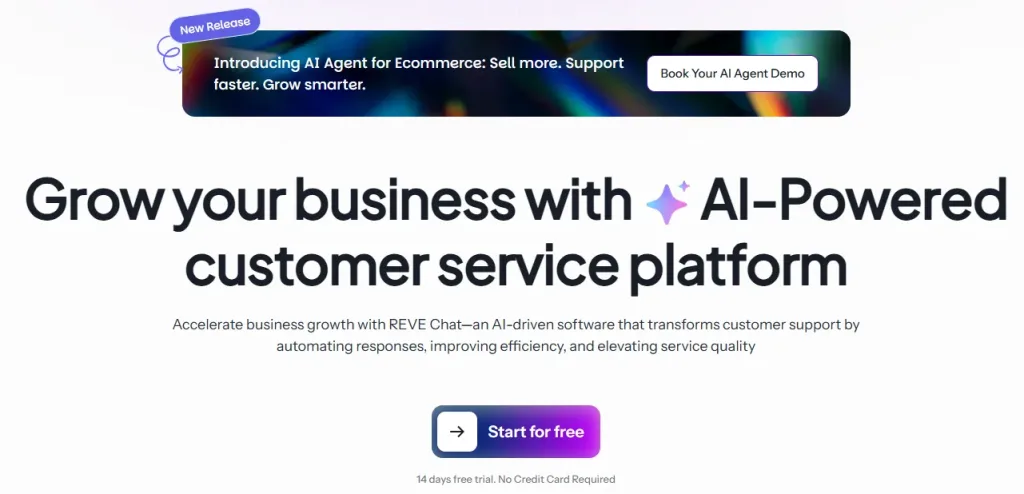
REVE Chat is an AI-powered customer engagement solution that allows businesses to create sales chatbots that help to generate more revenue. It engages visitors with personalized messages, captures leads, and qualifies them instantly to drive conversions.
The AI chatbot handles initial conversations, answers product questions, and identifies high-value prospects. Hot leads are passed to live sales agents for closing, so no opportunities are lost.
REVE Chat works excellently with popular integrations such as WhatsApp, Facebook, Instagram, Shopify, major CRMs, and other integrations, making it easy to reach customers wherever they are. It features a no-code builder that lets your team set up chat flows easily without technical help.
By engaging visitors 24/7, qualifying leads, and assisting agents with relevant data, REVE Chat increases sales, boosts conversions, and drives repeat purchases. It is a complete AI sales chatbot for businesses that want faster growth.
Key Features
- Visual Flow Builder: Create chatbots easily with a drag-and-drop, no-code interface.
- Rich Action Library: Add buttons, carousels, text, and other elements to make chats more interactive.
- Multi-Flow Management: Split your chatbot into smaller flows for smoother operation.
- Omnichannel Engagement: Talk to customers across your website, email, and social media.
- Smooth Human Handover: Let an agent take over a conversation anytime with a single click.
- Smart Conversations: Chatbots understand context and can respond naturally to users.
- Advanced Workflows: Connect your chatbots to APIs, webhooks, and custom scripts for more powerful actions.
- Brain AI: Train your bots with FAQs and knowledge from your databases for accurate answers.
- Store Integration: Help customers browse products, create checkout links, and complete purchases directly through chat, boosting conversions and reducing cart abandonment.
- Analytics Dashboard: Track performance, see which chats work best, and measure results.
- Data Security & Compliance: Keep all conversations safe with encryption and GDPR/PCI DSS compliance.
- Multilingual Support: Chat with customers in over 40 languages worldwide.
- Proactive Triggers: Automatically reach out to users based on their actions to improve engagement.
Pros
- Easy to set up without technical knowledge
- Works across multiple channels from one dashboard
- An AI chatbot handles repetitive questions automatically
- Proactive chat helps reduce cart abandonment
- Real-time visitor monitoring gives useful insights
- Integrates well with popular eCommerce platforms
- Free plan available for a single operator
Cons
- Mobile app experience can be better
- Some advanced features require higher-tier plans
Pricing
- Offers a forever-free plan for a single operator.
- Paid plans start at $14.99 per operator per month.
- A 14-day free trial is available with advanced features
2. Drift
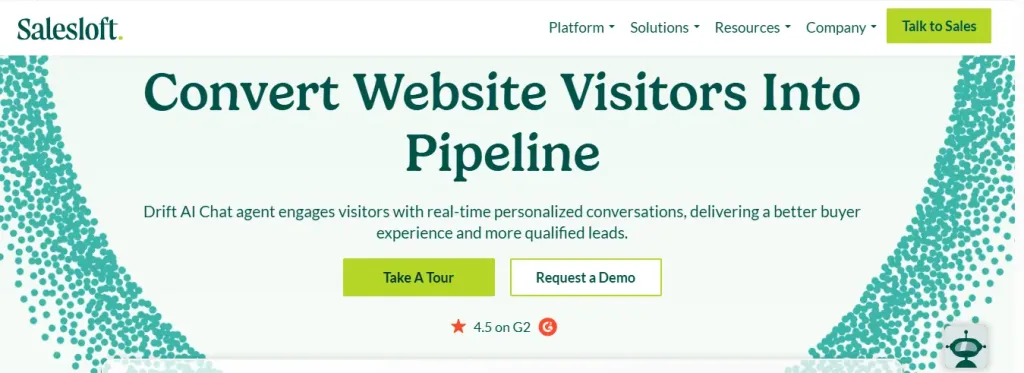
Best for conversational marketing and sales automation
Drift is a conversational marketing and sales platform that helps businesses engage website visitors in a personal way. It uses AI to automate lead qualification and meeting booking. Sales teams save time because the chatbot handles the first step of every conversation.
Drift is built for B2B companies that want to speed up their sales cycle. It connects website activity to your CRM automatically. The platform also allows a smooth handoff from a bot to a human agent. Businesses that deal with a high volume of inbound traffic find it useful. It turns anonymous visitors into warm leads for your sales team.
Key Features
- Conversational AI for automatic lead qualification.
- Book meetings directly in chat.
- Account-based marketing for targeted outreach.
- Real-time alerts when important visitors arrive.
- Smooth handoff from bot to human agent.
- CRM integration for automatic data sync.
- Drag-and-drop chatbot builder.
Pros
- Speeds up sales with automated lead qualification.
- Easy transition from bot to live agent.
- Targets the right accounts effectively.
- Real-time alerts keep teams informed.
- Works with CRMs like Salesforce and HubSpot.
Cons
- Expensive for small or medium-sized businesses.
- Advanced features require premium plans.
- Customization of chat flows can be limited for complex workflows.
Pricing
- Drift’s Premium Plan starts at $2,500 per month.
- Advanced and Enterprise plans are available with custom pricing based on business needs
3. HubSpot
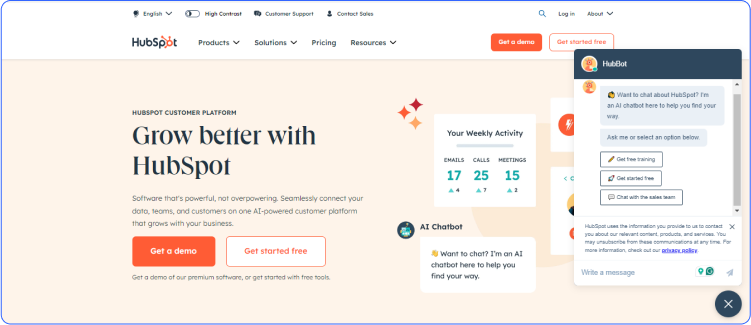
Best for businesses already using the HubSpot CRM ecosystem
HubSpot is a well-known all-in-one marketing and sales platform. It offers a built-in chatbot tool called HubSpot Chatflows. The chatbot connects directly to the HubSpot CRM with no extra setup needed. This means every lead captured in chat is automatically saved to your contacts.
It is a good option for teams that already use HubSpot for email and marketing. The chatbot can qualify leads, answer FAQs, and book meetings automatically. HubSpot also provides detailed reports on chatbot performance. Small and medium businesses find it easy to get started with the free plan. It grows with your business as your needs increase.
Key Features
- Built-in HubSpot Chatflows chatbot with no-code setup.
- Automatically saves contacts in HubSpot CRM.
- Schedule meetings directly in chat.
- Live chat for real-time visitor conversations.
- Lead qualification to filter low-quality leads.
- Email follow-ups are triggered after chats.
Pros
- Free plan with useful basic features.
- Works seamlessly with HubSpot CRM.
- Easy setup with no coding.
- Convenient in-chat meeting booking.
- Supports both marketing and sales teams.
Cons
- Full features need paid HubSpot plans.
- Chatbot customization is limited.
- Best for teams already using HubSpot.
Pricing
- HubSpot offers a free plan with basic chat features.
- Paid plans with advanced sales tools start at $15 per user per month under the Sales Hub Starter plan.
4. Intercom
Best for customer engagement across the full buyer journey
Intercom is a customer messaging platform used by thousands of businesses. It combines live chat, AI chatbots, and customer support in one place. The platform helps businesses talk to customers at every stage of their journey.
You can use it for onboarding, sales, and support all from one tool. Intercom’s AI assistant called Fin can resolve complex customer questions without human help. It pulls answers from your help articles and knowledge base automatically.
Sales and support teams work together inside one shared inbox. It is popular among SaaS companies and product-focused businesses. It is a good pick if you want one platform to handle both sales and support.
Key Features
- Fin AI answers support and sales questions automatically.
- Teams can work together through a shared inbox.
- You can send messages based on user actions in the app.
- Segment users for more targeted outreach.
- Create onboarding flows to guide new users.
- The bot pulls answers from your help center.
- Product tours show users how to use your tool.
- Syncs with CRM tools like Salesforce and HubSpot.
Pros
- Fin AI handles many questions without human help.
- Combines sales, marketing, and support in one place.
- Behavior-based messages work well.
- Product tours improve onboarding.
Cons
- Costs can rise as your contacts increase.
- Setup can be complicated for new users.
- Some features only available in higher plans.
Pricing
- Intercom’s Essential Plan starts at $29 per seat per month.
5. Freshworks
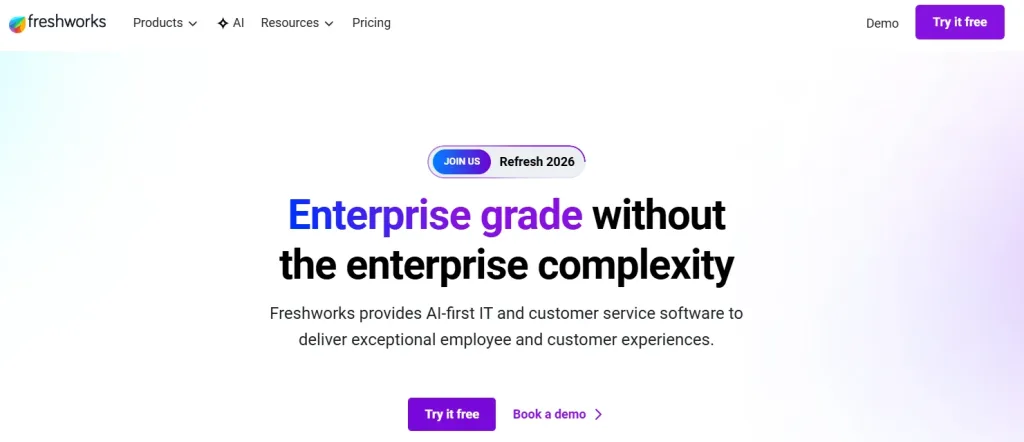
Best for businesses wanting an all-in-one sales and support solution
Freshworks offers a suite of business tools including Freshdesk and Freshsales. Its chatbot product, called Freddy AI, is built into all Freshworks products.
Freddy AI helps qualify leads, suggest replies, and automate tasks. It works well for sales teams that also need good customer support features. The platform is known for being affordable compared to many other tools.
Freshworks connects your sales pipeline, support tickets, and chat in one system. Teams can see the full history of every customer interaction easily. It is a solid choice for mid-sized companies looking to grow. The interface is clean and does not take long to learn.
Key Features
- Automatically qualifies leads and handles support.
- Built-in CRM tracks deals and customer chats in one place.
- Chat with customers via website, email, and social channels.
- Smart routing sends tickets to the right team member.
- Handoff to agents when a human is needed.
- Quick reply templates speed up responses.
Pros
- Quick to set up and use.
- Combines CRM and support tools in one platform.
- Affordable pricing.
- Easy interface.
- Supports social and email channels.
Cons
- Advanced AI needs higher-tier plans.
- Some integrations aren’t very reliable.
- Takes time for new users to get used to the platform.
Pricing
- Freshworks offers a free plan for basic features.
- Paid plans for Freshdesk start at $15 per agent per month.
- Freshsales CRM plans start at $9 per user per month.
6. Landbot
Best for building interactive and no-code conversational chatbots
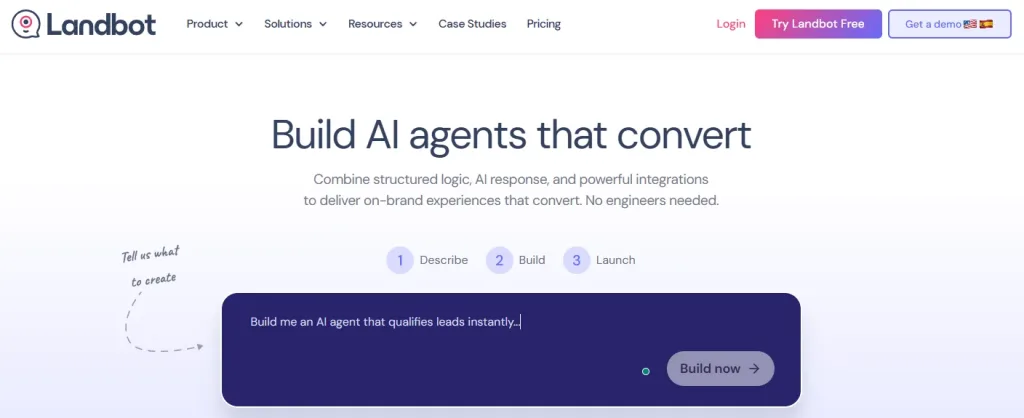
Landbot is a no-code chatbot builder made for marketing and sales teams. It lets you build conversational landing pages and chat flows without writing any code. The tool uses a visual drag-and-drop editor that is easy to pick up.
Landbot is popular for lead generation campaigns and product qualification flows. It works on websites, WhatsApp, and Facebook Messenger. The chatbot feels more like a conversation than a traditional form.
This approach increases completion rates and captures more leads. Landbot also connects with tools like HubSpot, Mailchimp, and Google Sheets. It is a good option for marketers who want engaging and interactive chatbot experiences.
Key Features
- Drag-and-drop chatbot, no coding needed.
- Conversational landing pages and forms.
- WhatsApp integration for direct messaging.
- Sync with Google Sheets, HubSpot, and Mailchimp.
- Smart chat flows with conditional logic.
- Pre-built templates for leads, onboarding, and surveys.
- Real-time analytics and performance tracking.
Pros
- Easy to use.
- Improves form completion.
- Personalizes lead campaigns.
- Works with popular tools.
- Looks good and user-friendly.
Cons
- Not for complex enterprise setups.
- Costs more as chats increase.
- AI is basic compared to others.
Pricing
- Landbot offers a free sandbox plan for testing.
Paid plans start at $45 per month for the Starter plan.
7. Qualified
Best for enterprise B2B companies focused on pipeline generation
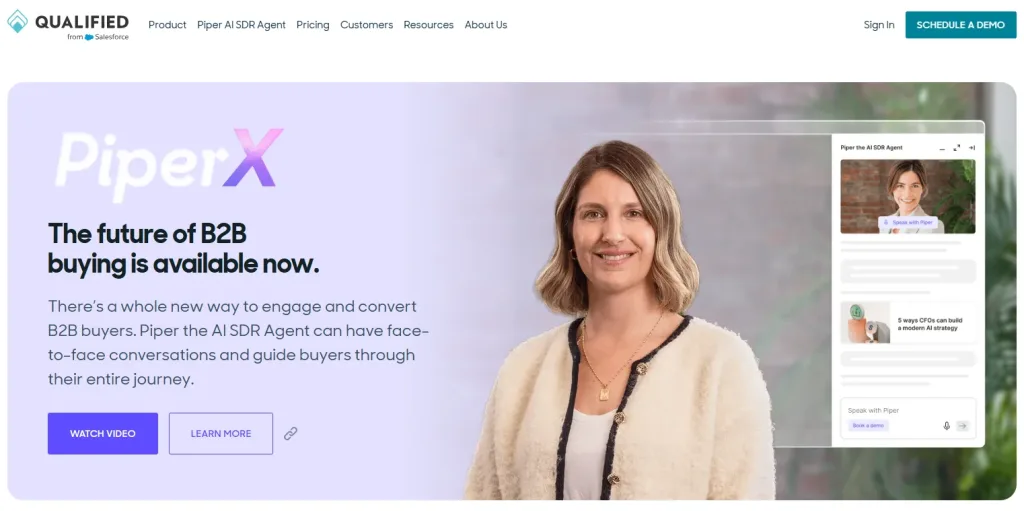
Qualified is a conversational sales platform built for enterprise B2B teams. It focuses on identifying high-value visitors and connecting them with sales reps instantly. The platform uses AI to detect buying intent from website visitor behavior.
Sales reps get alerts when important accounts are on the site right now. Qualified works closely with Salesforce CRM for deep data integration. It helps revenue teams have the right conversations at the right time.
The chatbot can qualify leads and book meetings automatically without rep involvement. Qualified is designed for companies with a dedicated sales team and a large volume of inbound traffic. It turns your website into a live sales floor.
Key Features
- AI detects high-value visitors in real time.
- Sends instant alerts to sales reps when target accounts visit.
- Automatically qualifies leads and filters low-intent visitors.
- Let’s users book meetings directly in chat.
- Deep Salesforce integration keeps data synced in real time.
- Routes visitors to the right sales rep.
- Chatbot engages leads after hours.
- Dashboard shows who is on your site now.
Pros
- Identifies and acts on high-intent B2B visitors quickly.
- Strong Salesforce integration.
- Fast alerts improve response times.
- Account-based routing connects visitors to the right rep.
- Pipeline reporting helps track ROI.
- AI chatbot covers leads 24/7.
Cons
- Expensive for small or medium businesses.
- Works best with Salesforce.
- Needs a dedicated sales team to be effective.
Pricing
- Pricing is available on request
How to Build and Implement a Sales Chatbot Using REVE Chat: A Step-by-Step Process
Building a sales chatbot with REVE Chat is simple and does not require any coding. You can build conversational flows, train the AI with your information, and deploy the bot on your website or Facebook.
Here is a step-by-step process.
Step 1: Sign Up and Open Bot Builder
Create a REVE Chat account and start the 14-day free trial. Go to the Bot Builder section and click Create New Bot to begin.
Step 2: Customize Your Bot
Give your bot a name for your team and a display name for visitors, like Sales Assistant. Pick an avatar and write a tagline. Choose the channels where it will chat, like your website or Facebook.
Step 3: Train the Bot with Brain AI
Use Brain AI to build a knowledge base. Add info from your website, FAQs, product pages, or documents. This helps the bot answer customer questions correctly.
Step 4: Create the Conversation Flow
Use the visual builder to set up the chat steps. Start with a greeting. Ask questions to qualify leads. Add product suggestions. Include options for upselling or cross-selling.
Step 5: Add Sales Features
Add forms to collect visitor details like name, email, and phone. Connect Shopify or WooCommerce so the bot can show cart details, suggest products, and help with purchases. Set up messages for abandoned carts.
Step 6: Enable Human Handover
Allow live agents to take over when needed. This ensures complex questions or high-value leads get personal attention.
Step 7: Test and Refine
Simulate customer conversations. Check responses, product suggestions, and lead capture forms. Adjust the flow to make it smooth and easy to follow.
Step 8: Deploy and Monitor
Publish the chatbot and add the widget to your site. Track engagement, sales, and performance. Update as needed to improve results.
Step 9: Add Proactive Engagement
Set proactive messages based on visitor actions. Welcome new visitors, follow up on abandoned carts, or suggest popular products. Keep visitors engaged and boost conversions.
Final Thoughts
We have seen in recent years how AI chatbots are turning out to be amazing tools for improving the customer experience and boosting sales. Many businesses now realize the importance of them and use them to streamline sales processes. These bots are adding great value by ensuring lead generation through qualifying prospects and customer engagement.
In this blog, we have understood in detail what is an AI sales chatbot and how it works. The biggest learning has been the benefits of using these best sales chatbots as they can contribute to automating customer support, help generate leads, and provide personalized customer experiences.
We also saw how businesses can use AI chatbots to drive sales in many ways like by pre-qualifying leads on a 24×7 basis, offering product recommendations, and reducing cart abandonment. We also discussed the 5 best sales chatbots for your business in the form of REVE Chat, Tidio, Zendesk, Intercom, and Drift.
The time has come when you should understand how to build and implement a sales chatbot to drive your profits and revenue. You can sign up with us and build a powerful, feature-rich sales chatbot for your business.
Frequently Asked Questions
No, a sales chatbot can’t resolve all customer issues. Even the most advanced chatbot can’t guarantee that. But yes, it can resolve most basic sales queries, and even handle some complex queries as well.
While AI sales chatbots can manage routine queries on their own, they might face some issues with complex queries. In that, it can use he human handover feature ad transfer the conversations o a live sales agent for help.
Sales chatbots can perform many sales tasks that once humans did. They can automate lead generation and custom engagement. In addition, AI bots can reduce response time for customer queries which can have a positive impact on the overall sales process.
Yes, AI chatbots ar customizable. A business can customize its workflows and scripts to match the specific needs of a business.
Yes, sales chatbots are affordable for small businesses. Today, you can build a chatbot using a ready-to-use chatbot builder platform. These platforms have a visual editor and drag and drop features. Building a chatbot through a platform builder is a very cost-effective option.