



Table of Content
Your support tool should solve problems, not create them. But if Intercom is slowing your team down, causing delays, or frustrating customers, it is already costing you more than you think.
Most businesses try to push through it, patch issues, and hope things improve. But over time, response times increase, tickets pile up, and customers who could have been saved end up leaving.
In 2026, customer support has higher expectations than ever. Your platform needs to handle large volumes smoothly, keep every channel connected, and automate repetitive work that drains your team. Customers want fast, clear answers, and if your tool cannot keep up, they will move on.
The good news is you are not stuck. There are faster, simpler, and more affordable Intercom alternatives available right now that are built for modern support teams.
To help you choose without guesswork, I’ve put together 10 of the best Intercom alternatives for 2026, with features, pricing, pros, and cons so you can find the right fit for your team.
What Features and Functionalities Should You Look for in an Intercom Alternative?
Before choosing another platform, it helps to understand where Intercom feels limiting and what your next tool should do better. Many teams move away because the costs add up quickly or certain features are harder to use than expected.
Simple and Clear Pricing
Intercom is known for being expensive, especially when your contact list grows. The pricing can also get confusing because extra fees appear for things like AI resolutions, messaging channels, or add-ons. This often leads to bills that are hard to predict. A good alternative should keep pricing easy to understand, so you always know what you will pay.
Reporting and Insights
Intercom’s reports are fairly basic, and deeper insights usually require exporting data or adding extra tools. When comparing options, make sure you can see why customers reach out and how your team is performing without extra steps.
Collaboration Tools
Many support teams need more than chat. Features like cobrowsing, voice calling, and video help agents solve issues faster. Intercom does not include voice support on its own, so teams need outside tools. If you deal with technical issues or guided support, make sure your next platform includes these options.
Ease of Use
Intercom comes with many features, but setting up workflows, bots, and automation can feel complicated. A simpler platform makes it easier for your team to get started and stay organized.
Customization Options
Intercom’s chat widget works well, but customization is limited. If matching your brand style is important, choose a platform that gives more control over appearance and layout.
Centralized Messaging Hub
Intercom does not handle messages from Instagram or X, which can be a problem for teams that need all channels in one place. An alternative should bring web chat, email, and social messages together so nothing is missed.
Data Access
Some Intercom plans limit how much historical data you can keep or export. This makes it harder to track older conversations. Your next platform should give you easy access to all your data.
How I Evaluated Each Tool
I looked at the areas that matter most to support teams. To understand how each tool performs in real daily use. I wanted to see how easy the tools are, how well they handle customer messages, and how smoothly they fit into an online store setup.
So, what I did was:
User Reviews
Real user feedback was analyzed to identify what works well and what causes problems. Reviews highlight practical issues that may not appear on a feature page.
Features and Functionality
Core features were tested to determine if they help complete everyday tasks like chat management, ticketing, automation, and workflows.
Value for Money
The features and performance were compared to the pricing to determine if the tool provides fair value.
Integration with E-commerce Platforms
Connections with Shopify, WooCommerce, and Magento were tested to ensure order and customer data appear correctly without extra steps.
Multichannel Management
The ability to handle messages from chat, email, and social media in one place was evaluated to ensure faster and smoother customer responses.
Mobile Experience
Mobile apps were tested to confirm that teams can manage conversations effectively on the go.
Setup and Onboarding
The setup process was observed to check how easy it is for teams to get started and become productive quickly.
Top 10 Intercom Alternatives On The Market Right Now
Here, I will talk about a list of the top 10 intercom alternatives on the market right now. So, the list is:
Quick Comparison Table
| Rank | Tool | Best For | Starting Price |
|---|---|---|---|
| 1 | REVE Chat | Omnichannel AI support with video and co-browsing | $15/license/month |
| 2 | Zendesk | Large enterprises needing deep ticketing | $55/agent/month |
| 3 | HubSpot Service Hub | Teams already using HubSpot CRM | $15/seat/month |
| 4 | Freshdesk | Multichannel support on a budget | $15/agent/month |
| 5 | Help Scout | Email-first support teams | $20/user/month |
| 6 | Tidio | eCommerce stores needing chat and bots | $29/month |
| 7 | Crisp | Startups wanting free multichannel chat | $25/workspace/month |
| 8 | Zoho Desk | Social media-heavy support teams | $14/user/month |
| 9 | LiveAgent | Global teams needing multilingual support | $15/agent/month |
| 10 | HelpCrunch | Support and email marketing in one place | $12/user/month |
1. REVE Chat
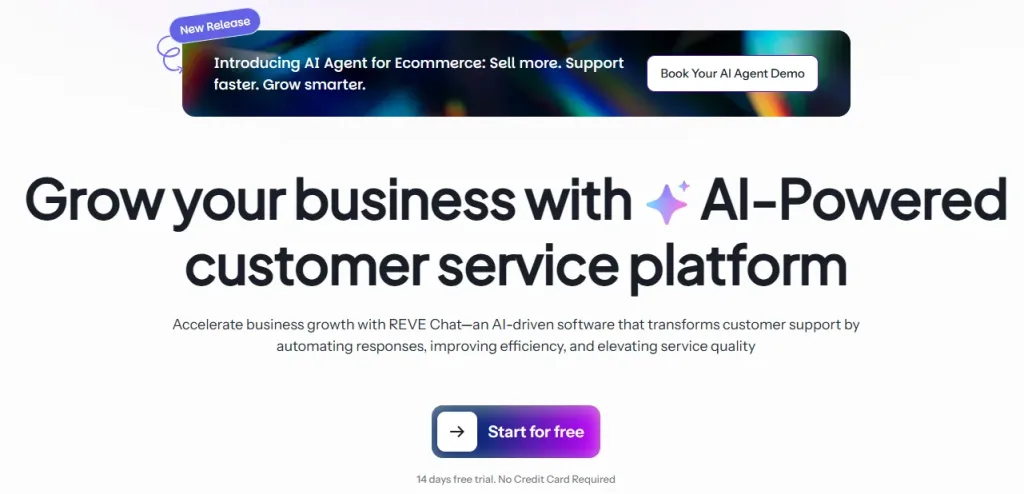
REVE Chat is an AI-first omnichannel customer engagement platform that helps businesses manage all customer conversations in one place. It brings live chat, chatbots, AI Agents, AI Copilot, voice bot, voice and video calls, co-browsing, ticketing, and social messaging into a single platform so teams can work without switching tools.
It is built for startups and large companies across industries like BFSI, eCommerce, and telecom, where fast customer response matters. Teams can manage chats from website, WhatsApp, Facebook, and other channels in one inbox, which makes daily work easier and more organized.
REVE Chat is not only for support. It also helps with sales and customer engagement. Using campaigns on multiple channels, businesses can attract new customers with personalized offers. Also, AI Agents and Voice bot can qualify leads and convert potential customers with ease.
Hence, REVE Chat is the best Inercom alternative that helps teams manage support, sales, and customer engagement. It lets businesses respond faster, stay organized, and handle all conversations easily.
Key Features
- Omnichannel Inbox lets you manage conversations from WhatsApp, Facebook, Instagram, Telegram, and website chat all in one dashboard.
- Voice Bot answers customer calls, handles basic questions, and sends calls to the right agent. It reduces waiting time and keeps support smooth.
- AI Copilot helps agents by suggesting replies and showing useful info so they can respond faster.
- No-Code Visual Flow Builder lets anyone on the team build chatbots and AI agents. No technical knowledge needed. Just drag and drop.
- Co-Browsing and Video Chat let agents see a customer’s screen in real time. They can guide customers through issues visually without switching to another tool.
- Ticketing System lets you create, assign, categorize, and track tickets. It comes with built-in status management and analytics.
- Role-Based Access Management helps you set up departments and assign roles so your team stays organized and operations stay secure.
- WhatsApp Campaign Manager lets you run automated, personalized outreach through WhatsApp to re-engage customers before they leave.
- Advanced Analytics Dashboard tracks agent performance, resolution rates, CSAT scores, and chat metrics across all products in one view.
- Integrations connect REVE Chat with HubSpot, Salesforce, and over 40 other business tools for a complete picture of every customer.
Advantages of Using REVE Chat Over Intercom
Intercom uses a pricing structure that rises quickly. Costs increase when an AI agent resolves a ticket. Costs also go up when you add new team members.
REVE Chat takes a different approach. Its pricing is modular and clear. You pay only for agent seats and chatbot sessions that your team actually uses.
Intercom treats phone and video support as smaller add-ons. REVE Chat includes voice and video calling as core features. Intercom also depends on outside tools for co-browsing. REVE Chat has co-browsing built in, which makes live support smoother and faster.
REVE Chat has an advanced AI that handles complex conversations with stronger context. It understands layered questions and ongoing issues more accurately. Intercom’s Fin performs well for usual customer support, but it often struggles with deeper or multi-step conversations with sales or other actions required.
Teams that need a full package will feel the difference. Chat, bots, video calls, ticketing, and campaigns all come together inside REVE Chat. It delivers features Intercom talks about, but does not always cover completely. And it does this at a much lower cost, making it a practical upgrade for growing support teams.
Pricing
- Starts at $14.99 per month.
- Free forever plan available.
- 14-day free trial with no credit card required, and enjoy advanced features.
2. Zendesk
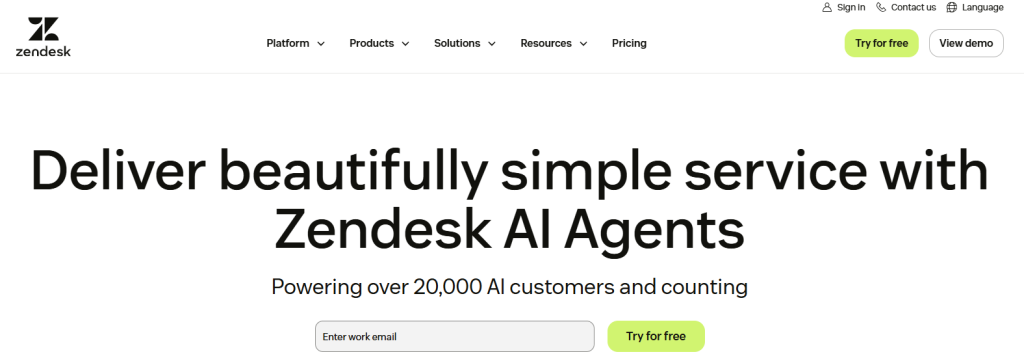
Zendesk is one of the most established names in customer support software. It was built for scale. It comes with enterprise-grade ticketing, reporting, and workflow management tools.
Thousands of large businesses use it to manage high-volume support across email, chat, voice, and social media. The platform has over 1,200 integrations available in its marketplace.
Key Features
- Omnichannel support across email, chat, phone, and social media from a single inbox
- Customizable workflows and ticket routing built for complex support operations
- AI-powered bots and agent-assist tools that help resolve tickets faster
- Advanced reporting with SLA tracking and management
- A large marketplace with pre-built integrations for most business tools
Advantages of Using Zendesk Over Intercom
Intercom focuses mainly on live chat. When a support case has many steps, it often gets lost in long message threads. The ticketing system feels limited and does not give teams the structure they need for serious ticket work.
Zendesk was built with ticketing at the center. It handles high ticket counts with ease. It supports SLAs, clear escalations, and simple workflows that help teams stay organized. These features give Zendesk an edge in daily support work.
For teams that manage hundreds of tickets each day, Zendesk offers the depth and control they need. The reporting tools are also more detailed and help teams understand what is happening inside their queue.
Pricing
- Starts at $55/agent/month.
- 14-day free trial available.
3. HubSpot Service Hub
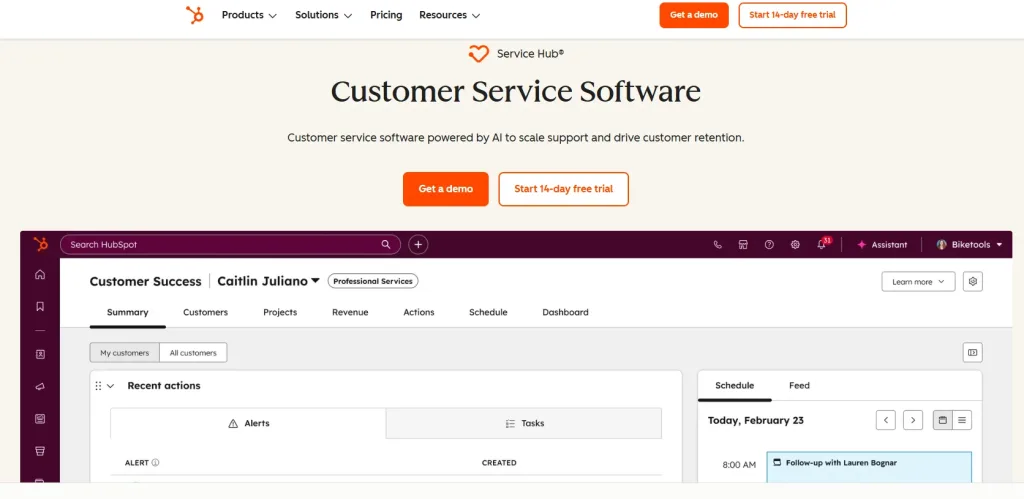
HubSpot Service Hub is the customer support part of the HubSpot ecosystem. If your team already uses HubSpot for CRM or marketing, adding Service Hub is a natural move. It connects support tickets directly to contact records, deals, and marketing data. Agents get full context on every customer interaction without switching between tools.
Key Features
- Ticket management with automation and smart routing
- Customer portals where users can track their own support requests
- Knowledge base builder for customer self-service
- CSAT and NPS survey tools built into the platform
- Native integration with HubSpot CRM, marketing, and sales tools
- Playbooks and conversation intelligence for agent coaching and training
Advantages of Using HubSpot Over Intercom
Intercom has some CRM-like features. But they are shallow. Agents do not get a full picture of the customer relationship. Past purchases, deal status, and marketing touchpoints are not all visible in one place.
HubSpot Service Hub changes that entirely. Because everything lives inside the same platform, context never gets lost as customers move between marketing, sales, and support.
Intercom also charges extra for outbound campaigns. HubSpot includes email marketing, sequencing, and contact management in the same subscription.
For businesses that want one platform for the full customer lifecycle, HubSpot is one of the most practical alternatives to Intercom available right now.
Pricing
- Starts at $15/seat/month.
- Free tools plan available.
4. Freshdesk
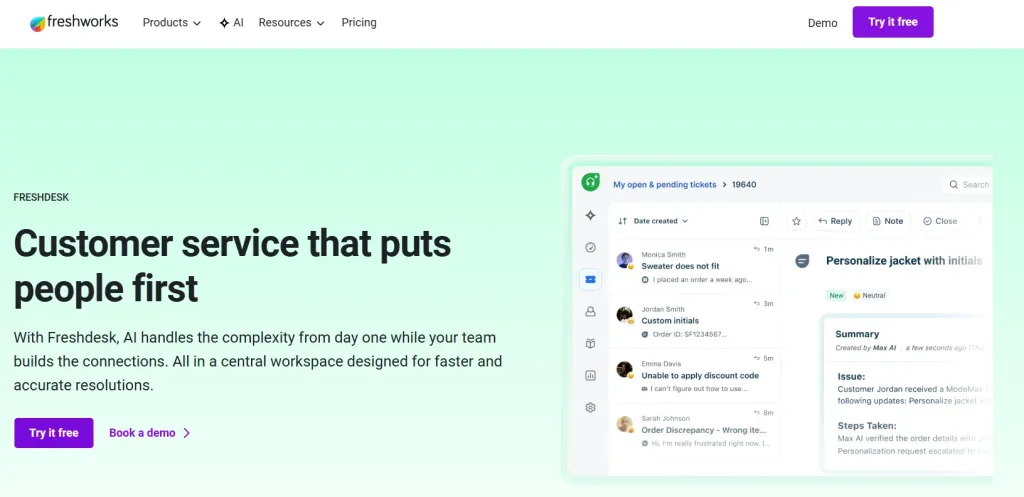
Freshdesk is a cloud-based helpdesk platform from Freshworks. It covers email, chat, phone, and social media in a clean and easy-to-use interface. It is especially popular with small and mid-sized businesses that want multichannel support without the complexity of enterprise-level tools.
Key Features
- Multichannel ticket management across email, chat, phone, and social media
- AI-powered automation for routing, tagging, and response suggestions
- Community forums for customer self-service
- Collision detection to stop two agents from replying to the same ticket
- Detailed helpdesk reports and analytics dashboards
- A free plan that supports up to 10 agents
Advantages of Using Freshdesk Over Intercom
Intercom’s pricing model works against you as you grow. Every new active user adds to the bill. Every AI resolution adds another charge. Freshdesk keeps things predictable. It uses a straightforward per-agent structure. There is even a free tier that actually works well for small teams starting out.
The ticketing system in Freshdesk is also more organized and reliable than Intercom’s conversation-based approach. Intercom can feel messy when handling large volumes.
Freshdesk stays clean and structured. For teams that need multichannel support without unpredictable overage charges, Freshdesk is genuinely one of the best Intercom alternatives for budget-conscious businesses.
Pricing
- Free plan for up to 10 agents.
- Paid plans start at $15/agent/month.
5. Help Scout

Help Scout is a customer support platform focused on keeping things simple and human. It is designed around shared inboxes and email-first support. It works best for teams that deal primarily with email conversations rather than live chat. The interface is intentionally clean. Setup is quick and the learning curve is very low.
Key Features
- Shared inboxes so teams can work together on customer emails
- Beacon, which is an embeddable help widget that lives directly on your website
- Knowledge base builder for customer self-service articles
- Automated workflows for repetitive routing and tagging tasks
- Customer profiles with full conversation history
- CSAT surveys built into the platform
Advantages of Using Help Scout Over Intercom
Intercom is built around chat and proactive messaging. If your support is mostly email-based, you end up paying for a lot of features you never use. Help Scout is entirely focused on email support. It does that job with a level of polish Intercom cannot match in that specific area.
There are no per-resolution fees. There are no confusing seat tiers. The pricing is flat and easy to plan around. Help Scout is similar to intercom in spirit but far more affordable for teams that do not need a full chat and campaign platform. It is a sensible pick for teams that value simplicity over feature bloat.
Pricing
- Starts at $20/user/month.
- 15-day free trial available.
6. Tidio
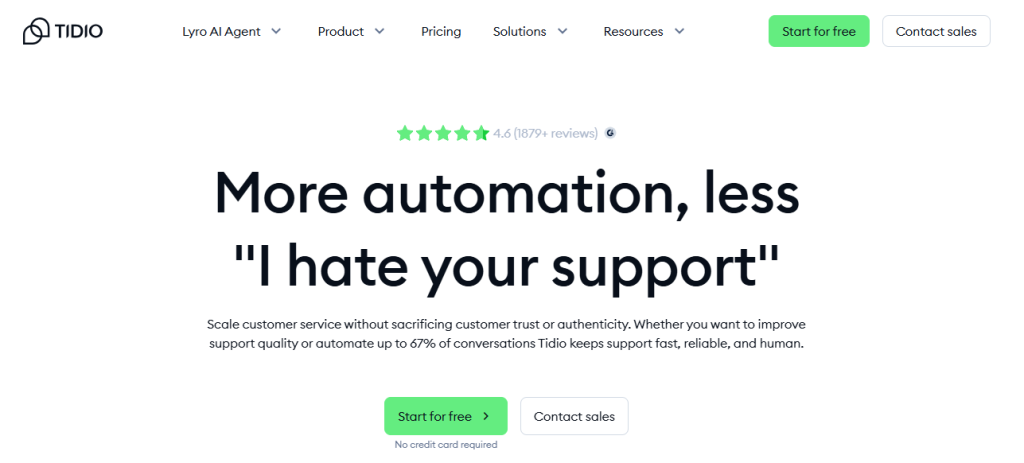
Tidio is a live chat and AI chatbot platform built for small to medium eCommerce businesses. It combines a well-designed chat widget, pre-built chatbot templates, and cart abandonment recovery tools in one affordable package. The AI agent learns over time and comes pre-trained for common eCommerce use cases right from the start.
Key Features
- No-code chatbot builder with over 35 pre-designed templates
- AI that handles up to 70% of customer queries automatically
- Cart abandonment recovery through automated chat triggers
- Native integrations with Shopify, WooCommerce, and other eCommerce platforms
- Mobile app for managing chats from anywhere
- Live chat combined with email and messenger support
Advantages of Using Tidio Over Intercom
Intercom is expensive for what most small eCommerce stores actually need. Tidio starts at $29/month and includes a free plan. That makes it one of the most accessible free alternatives to intercom on the market today.
The chatbot is pre-trained for retail use cases so setup is genuinely fast and simple. Intercom’s AI needs more configuration. It also charges $0.99 per resolution, which gets expensive quickly for stores with high query volumes. Tidio also includes cart abandonment tools that help recover sales. Intercom does not focus on this at all.
Pricing
- Free plan available.
- Paid plans start at $29/month.
7. Crisp
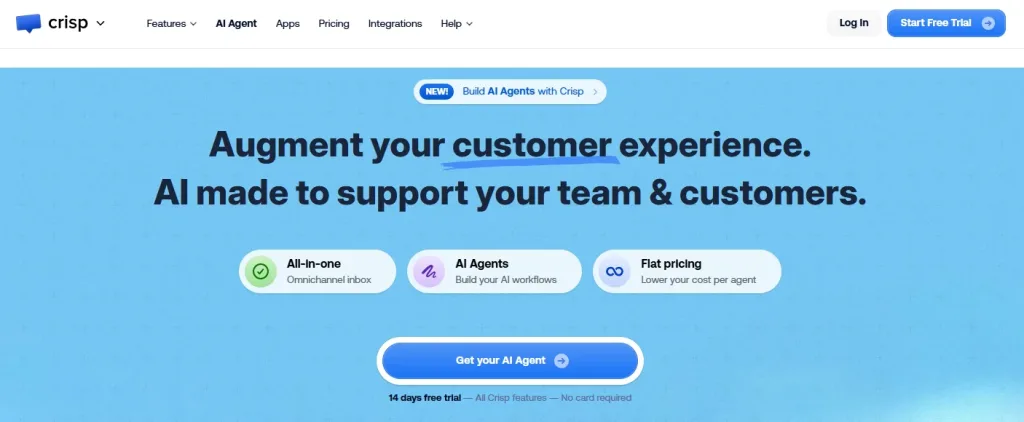
Crisp is an all-in-one communication platform built for startups and small businesses. It gives you live chat, chatbots, email, WhatsApp, and social messaging in one place without enterprise pricing. The free plan is genuinely generous. The shared inbox keeps every channel organized neatly in one view.
Key Features
- Shared inbox combining live chat, email, WhatsApp, and social media messages
- Chatbot builder with flow-based automation
- Unlimited conversations on the free tier with limited features
- Video call and screen sharing for higher-touch support situations
- Knowledge base builder for customer self-service
- Shopify and WordPress integrations
Advantages of Using Crisp Over Intercom
Intercom does not offer a free plan. You need a paid subscription to access anything useful. Crisp gives you unlimited conversations at no cost. That makes it one of the genuinely usable free alternatives to intercom for teams just getting started. For startups watching their budget carefully, this is a meaningful difference.
Crisp also includes multichannel messaging like WhatsApp, email, and social media in its lower plan tiers. Intercom charges extra for each additional channel. Crisp does not have the same AI depth as Intercom. But for price-to-value, it competes very well for smaller teams.
Pricing
- Free plan available.
- Paid plans start at $25/workspace/month.
8. Zoho Desk
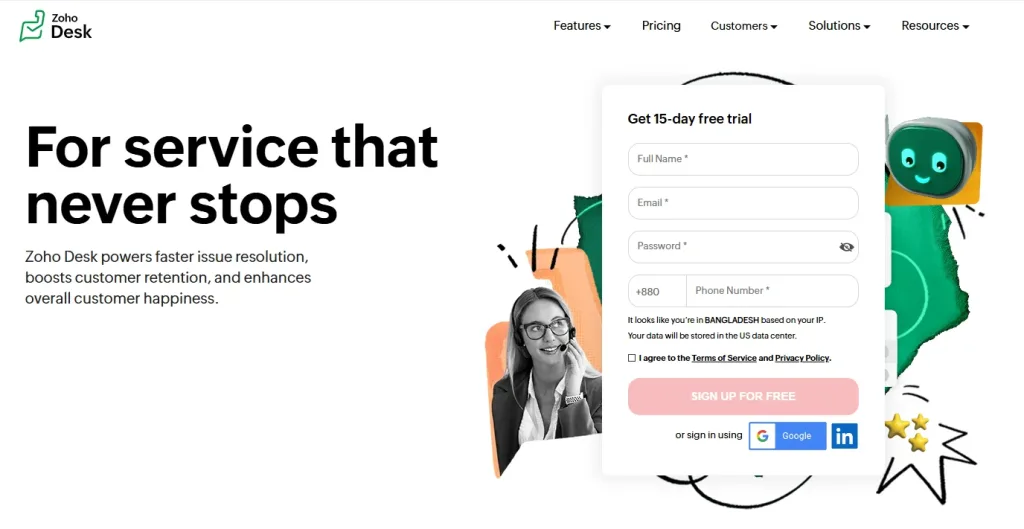
Zoho Desk is a context-aware helpdesk platform from Zoho. It automatically converts social media messages, emails, and chat messages into tickets. Everything stays in one organized workflow. It also fits naturally with the rest of the Zoho ecosystem including Zoho CRM and Zoho Analytics.
Key Features
- Multichannel ticket management across email, chat, phone, and social media
- Automatic conversion of Twitter and Facebook messages into support tickets
- Ticket prioritization and status tracking covering open, overdue, and unassigned tickets
- Knowledge base with full brand customization options
- Community forums that can be embedded on your website or mobile app
- Workflow automation for routing and sending notifications
Advantages of Using Zoho Desk Over Intercom
Intercom started as a messaging tool and added ticketing later. Zoho Desk was built with ticketing at its core. That shows clearly in how well it handles ticket organization, prioritization, and reporting.
For businesses that rely on social media for customer support, Zoho Desk’s automatic social ticket conversion is a practical feature Intercom does not offer out of the box.
The pricing is also significantly lower. For teams already working inside the Zoho ecosystem, it is one of the most sensible competitors to intercom you can find.
Pricing
- Starts at $14/user/month.
- Free plan available for up to 3 agents.
9. LiveAgent
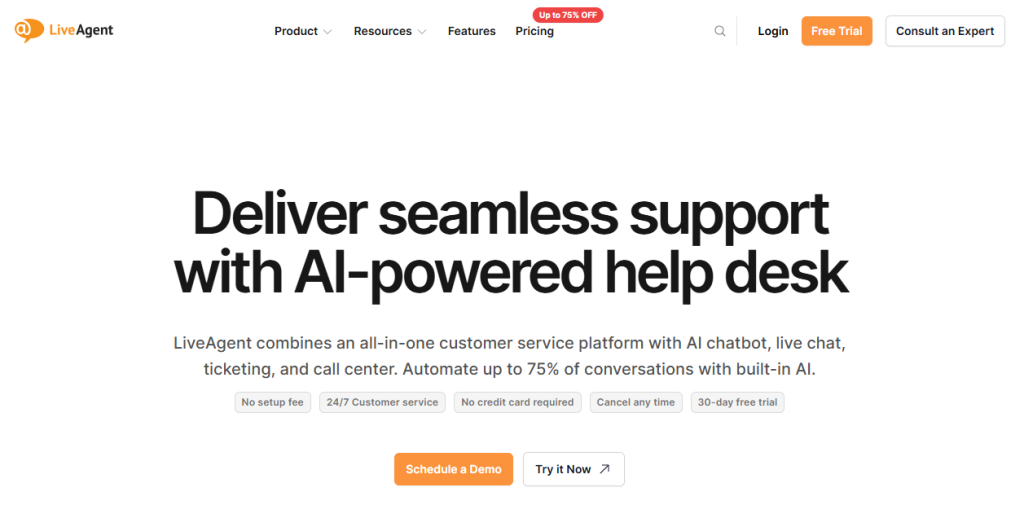
LiveAgent is a customer support platform with particular strength in live chat and multi-channel ticketing. It is a fully multilingual system. It has native mobile apps for both Android and iOS, which makes it practical for global and remote support teams. It also has one of the better real-time chat analytics dashboards among tools in this price range.
Key Features
- Unified inbox for email, live chat, voice, and social media
- Real-time typing view so agents can see what a customer is typing before they even send it
- Canned responses for faster replies to common questions
- Comprehensive reports accessible directly from the dashboard
- Mobile apps available for both Android and iOS
- Customizable live chat widget to match your brand
Advantages of Using LiveAgent Over Intercom
Intercom’s real-time chat works well. But the analytics and reporting at entry-level plans are fairly basic. LiveAgent provides real-time chat analytics that include customer satisfaction scores and agent performance metrics. You do not need to upgrade to an expensive plan to access them.
The multilingual support is also a clear advantage for businesses with international customers. Intercom handles this inconsistently. LiveAgent is one of the best Intercom alternatives for teams that want stronger reporting depth without paying significantly more money.
Pricing
- Starts at $15/agent/month.
- Free plan available for up to 1 agent.
10. HelpCrunch
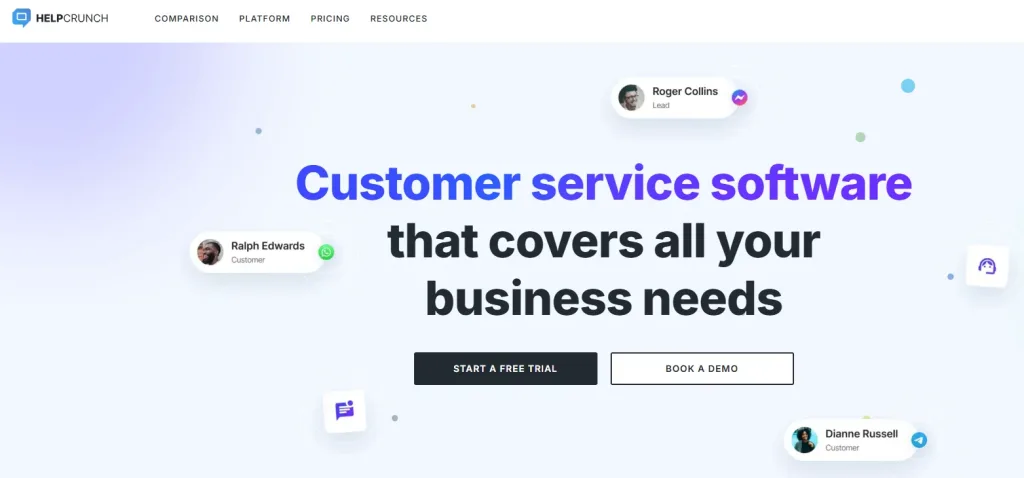
HelpCrunch is an all-in-one customer communication platform. It combines live chat, email marketing, chatbots, and helpdesk tools under a single subscription. It works especially well for businesses that want to handle customer support and marketing outreach from the same platform without paying add-on fees for every channel they use.
Key Features
- Live chat with automated message triggers based on customer behavior
- Email marketing campaigns with audience segmentation
- Chatbot flows for automated support and lead qualification
- In-app messaging designed for SaaS products
- Multi-channel support across chat, email, and social platforms
- Shared inbox with internal notes for team collaboration
Advantages of Using HelpCrunch Over Intercom
One of the most consistent complaints about Intercom is that every extra feature costs more. Outbound campaigns, AI Copilot, and additional channels all come with separate charges. HelpCrunch includes more in each plan tier without adding fees on top.
The email marketing tools are built right in. Teams that handle both support and outreach do not need to pay for two separate platforms.
HelpCrunch does not have Intercom’s brand name. But for businesses looking at similar to intercom tools with cleaner and more honest pricing, it is a genuinely practical choice.
Pricing
- Starts at $12/user/month.
- 14-day free trial available.
How to Choose the Right Intercom Alternative
There is no single answer that works for every team. But here are a few things worth thinking about before you decide. So, the ways to choose the right intercom alternatives are:
Budget and pricing model
If Intercom’s usage-based billing is the main issue, look for tools with flat per-seat pricing. REVE Chat, Freshdesk, and HelpCrunch all keep costs predictable.
Channels your customers actually use
If your customers reach you through WhatsApp, Instagram, or phone, make sure the tool you pick handles those channels natively without expensive add-ons.
Ticketing vs. chat
If your support is mostly conversation-based, tools like Help Scout or HelpCrunch are a better fit. If you deal with complex, multi-day tickets, Zendesk or Zoho Desk gives you more structure. If you need the best overall
AI needs
In this AI-driven world, you want an AI that resolves queries on its own and keeps improving over time.
Existing tools
If your team already uses HubSpot or Zoho, their native support tools will save you a lot of integration work.
End Note
In the end, the right support tool depends on what your team handles on a daily basis and the rate of your business growth. If Intercom no longer fits your needs, one of the best Intercom alternatives can offer clearer pricing and features that match your workload.
Each option in this list has its own benefits, so choose the one that fits how your team works. With the right platform in place, your support will feel easier to manage and more reliable for your customers.
If you need the best support at an affordable rate, try REVE Chat as they offer a 14-day free trial with advanced features. Sign up today.
Frequently Asked Questions
Crisp is budget-friendly with a free plan and low-cost upgrades. Help Scout is simple and easy to use. REVE Chat is a good option for small businesses, offering live chat, AI chatbots, and omnichannel support at reasonable pricing. Front works well for teams that rely on shared inboxes.
Drift is built for B2B sales and lead generation. It helps book meetings and engage with high-value prospects more efficiently than some other tools.
Check the full cost, including any AI add-on fees. Look at setup ease, chatbot quality, and whether voice support is included. REVE Chat combines chat, voice, video, and AI in one platform, which can make setup simpler.
Yes. Many alternatives, like REVE Chat and Crisp, offer plans for small teams. They are easy to set up and don’t require advanced technical knowledge.
Yes. REVE Chat, Front, and Zendesk allow you to manage email, chat, social media, and messaging apps from one dashboard, making it easier to respond quickly.
Build AI-powered support with Wize AI
Connect business knowledge, automate support conversations, and improve response quality without managing a complex AI stack.
Explore Wize AI Agent Rate the article

Rahat Hassan
Product Marketing Manager
Rahat Hassan is a strategic Product Marketing Manager at REVE Chat specializing in customer experience & communication. He is passionate about creating compelling content for diverse audiences. Beyond work, he enjoys reading articles and watching videos on trending technological shifts in the IT industry.
View all articles