Table of Content
AI SUMMARY
Quick Answer
Lead generation in 2026 focuses on attracting qualified prospects, understanding their buying intent, and guiding them toward conversion. Businesses can improve results through AI agents, live chat, SEO, social media marketing, valuable content, webinars, customer testimonials, strategic partnerships, and personalized email campaigns. Optimizing landing pages, identifying buying signals, and responding quickly help capture high-intent leads. Effective strategies also require clear customer targeting, consistent follow-ups, and performance tracking. By combining the right channels and technologies, businesses can generate quality leads, strengthen customer relationships, and increase sales opportunities.
Lead generation is not limited to collecting as many email addresses as possible.
Customer acquisition costs are rising, market competition is growing, and buyers are conducting more independent research.
In this scenario, businesses need to focus on attracting the right prospects and guiding them toward the next step. They need to understand customer intent, offer useful information, respond quickly, and create consistent experiences across channels.
Prospects now expect relevant answers and personalized interactions, whether they are reading a blog, comparing solutions, attending a webinar, or speaking with a sales representative. A successful lead generation strategy combines the right channels, content, technology, and follow-up process.
In this blog, we explore 10 practical lead generation ideas for 2026, along with best practices to help businesses generate higher-quality leads and build a more repeatable path to conversion.
What is Lead generation?
Lead generation is the strategic process of identifying, attracting, and converting prospects into potential customers. It involves drawing in a target audience, capturing their contact information or interest through various channels, and nurturing those relationships until they become qualified sales opportunities.
Website visitors are individuals who land on your site through organic search, social media, ads, or other channels. At this stage, they are often strangers who are simply browsing or conducting initial research.
On the other hand, Sales-qualified leads are prospects who have communicated with the sales team, demonstrating a clear intent to buy. They take specific actions that signal they are ready to buy, such as asking questions about product features, requesting a demo, or meeting criteria related to budget, authority, and timeline.
How Lead Generation Works Across the Customer Journey
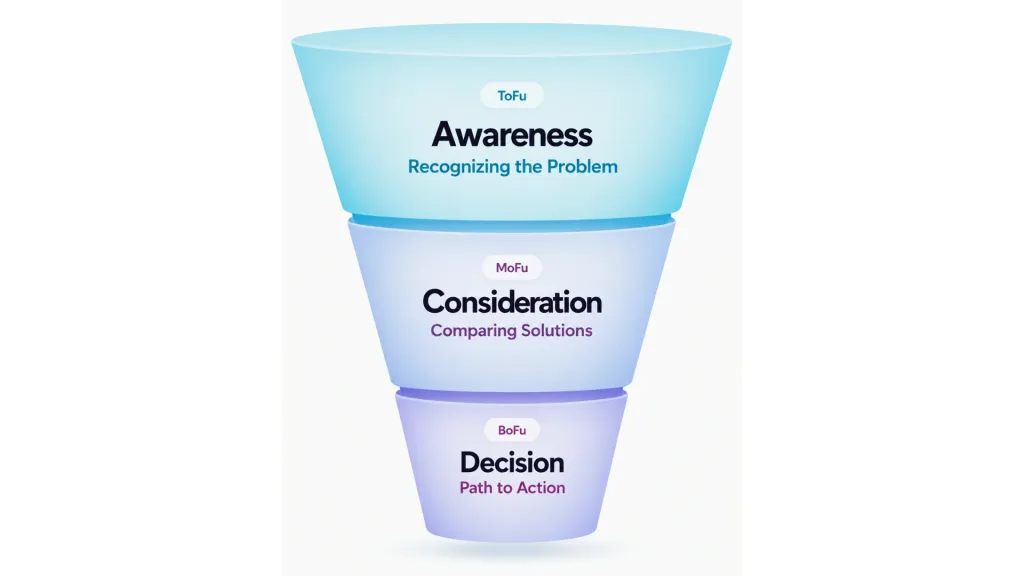
Lead generation is a continuous strategic process of engagement that moves customers or prospects from initial discovery to the final purchase decision. Let’s look at the customer journey stages that lead generation works across.
Awareness: Recognizing the Problem
This is the initial Top of the Funnel (ToFu) stage, where prospects identify a need or problem and conduct extensive research to weigh the pros and cons of seeking help.
Consideration: Comparing Solutions
The consideration stage is the Middle of the Funnel (MoFu) stage, during which prospects have defined their needs and are actively comparing possible solutions.
Decision: Path to Action
In this final Bottom of the Funnel (BoFu) stage, prospects are well-informed and need the confidence to act on the purchase.
10 Practical Lead Generation Ideas for 2026
Here’s a discussion of 10 practical lead generation ideas for businesses in 2026:
1. Engage Website Visitors with AI Agents and Live Chat
AI Agents and live chat help businesses engage high-intent website visitors before they leave. Led by either a human agent or AI, they proactively start conversations with visitors and answer product and pricing-related questions.
By asking specific qualification questions, both live agents and AI Agents can recommend plans and book demos or consultations in real time.
The AI Agents also route qualified prospects to the right sales representative. Human agents then handle complex requirements, negotiations, sensitive concerns, or high-value opportunities.
2. Optimize Your Website for Lead Conversion
Generating website traffic creates opportunities to get prospects. But even website traffic won’t be utilized well if there is no path guiding them towards action. To optimize conversion, use a clear value proposition and focused landing pages.
Ensure visible contact options, strong CTAs, and short, relevant forms to minimize friction.
Also, mandatorily include a mobile-friendly design and fast loading speeds. Strategically timed pop-ups and exit-intent offers can capture visitors before they leave, while thank-you pages should clearly explain the next step.
3. Use Buying Signals to Prioritize High-Intent Leads
Not every lead is likely to be converted with the same intent. Businesses can identify stronger opportunities by tracking buying signals. The signals can include repeated pricing-page visits, product comparisons, demo requests, trial activity, cart abandonment, and return visits.
Prospects asking questions about implementation, contracts, timelines, or integrations can also indicate buying intent. These behavioral and conversational signals help teams evaluate, segment, and route leads more effectively.
4. Create Content for Each Stage of the Buying Journey
Content should help prospects move forward, not just attract website traffic. The content should be customized for every stage:
Awareness content
- Blog articles
- Educational videos
- Industry reports
- Social media insights
- Beginner guides
Consideration content
- Webinars
- Comparison guides
- Checklists
- Templates
- Product tutorials
- Interactive assessments
Decision content
- Case studies
- ROI calculators
- Product comparisons
- Implementation guides
- Customer success stories
Content should help prospects make progress rather than existing only to attract website traffic.
5. Build an SEO-Driven Lead Generation Engine
To attract visitors who are actively searching for solutions, target problem-aware and solution-aware keywords, create topic clusters, and optimize product, service, comparison, and industry pages around search intent.
Refreshing outdated content, strengthening internal linking, and improving technical SEO make sure that pages are easier to find. Also add relevant calls to action and lead magnets to organic pages so visitors can move from research to conversion.
6. Generate Leads Through Social Media
Social media success requires active participation over passive linking. For B2B, businesses should utilize the option of thought leadership on LinkedIn and run lead ads on Facebook and Instagram.
Businesses can also publish short educational videos and use polls or interactive posts to encourage engagement.
Prioritize employee and expert-led content to humanize your brand, increasing connectivity and relatability.
7. Host Webinars, Virtual Events, and Industry Sessions
Webinars and industry events address real audience problems through relevant discussions. These can attract more potential prospects. Such events include educational webinars, product demonstrations, expert panels, workshops, networking sessions, and hybrid conferences.
Each event should be promoted to the niche audience segments. From each engagement with potential prospects, collect useful registration details and engage attendees through polls, questions, and live discussions.
Follow up based on attendance, participation, and expressed interest to identify stronger leads. Recordings, presentations, and supporting resources can also be repurposed as on-demand lead magnets, allowing the event to continue generating leads after the live session ends.
8. Use Customer Stories and Social Proof
Building trust requires unbiased evidence from clients. The evidence and social proof help reduce uncertainty by showing prospects that others have already achieved positive results.
Social proof can consist of customer testimonials, case studies, review ratings, video testimonials, user-generated content, customer logos, and industry-specific success stories to build credibility.
Whenever possible, legally include and collect measurable outcomes such as conversion improvements, time saved, or revenue growth. Strategically place this proof in landing pages, pricing pages, product pages, demo pages, lead forms, email campaigns, and social ads.
Relevant customer stories can make your claims more believable and encourage hesitant prospects to take the next step.
9. Build Referral, Influencer, and Strategic Partnerships
Partnerships can generate qualified leads through audiences that already trust the source. Encourage satisfied customers to refer relevant contacts by offering rewards, discounts, or other incentives.
Also, collaborate with industry influencers to tap into established audiences via authentic storytelling and micro-influencer campaigns. Finally, form strategic partnerships with non-competing businesses to launch co-hosted webinars, joint reports, or bundled offers.
These relationships can support co-hosted webinars, joint reports, referral programs, guest content, bundled offers, collaborative events, or product integrations.
10. Build and Nurture a Permission-Based Email List
Permission-based email marketing remains unmatched for relationship-building. Capture subscribers by offering valuable resources like ebooks or webinars, then segment the contacts by industry, role, or behavioral signals to ensure relevance
Use welcome sequences, educational content, case studies, and follow-up emails after downloads or events to maintain engagement. Use behavioral triggers based on website activity to deliver timely case studies and educational content.
As interest grows, guide prospects toward a suitable next step, such as booking a meeting, requesting a demo, or starting a trial.
KEY TAKEAWAY
Quality Leads Drive Better Conversions
Focus on attracting the right prospects, engaging them at the right time, and nurturing their interest through relevant communication
How REVE Chat Helps Businesses Generate and Qualify Leads
REVE Chat helps businesses turn website and channel interactions into qualified sales opportunities.
Wize AI Agent: Intelligent Lead Qualification
Wize AI Agent is built to drive customer actions by understanding intent and automating sales journeys. Its current lead generation capabilities specifically include:
Buying-Signal Capture: It identifies visitors who are researching pricing, plans, and product comparisons
Fit Assessment: It can determine which products or service plans best suit a prospect’s requirements
Lead Enrichment: It automatically collects contact details, company information, and budget context
Demo Conversion: It guides sales-ready prospects toward booking demos, consultations, or meetings
Sales-Ready Handoff: It passes qualified leads to human representatives with the prospect’s intent and context clearly defined
Real-Time Live Chat and Proactive Engagement
REVE Chat’s live chat enables businesses to connect instantly with visitors, turning inquiries into immediate sales opportunities. To maximize engagement, REVE Chat supports proactive engagement, allowing agents to start conversations based on real-time visitor behavior, such as landing on a high-value pricing page or demonstrating specific browsing patterns
Seamless Human Handover
For high-value, sensitive, or complex inquiries, REVE Chat utilizes smart escalation to facilitate a human handover. The AI Agent can automatically transfer the journey to the appropriate sales or support team while sharing the full conversation context and history, ensuring a smooth transition without the prospect having to repeat information.
High-Touch Visual Collaboration
To close complex deals, REVE Chat offers co-browsing and video chat. Agents can use video calls for face-to-face consultations and product walkthroughs. Through co-browsing, agents can see a visitor’s screen in real time to jointly navigate and complete complex applications.
Omnichannel Communication and Integrations
REVE Chat’s omnichannel inbox centralizes lead communications from website chat, WhatsApp, Facebook Messenger, Instagram, and email, ensuring conversation continuity and allowing teams to follow a lead’s journey across different platforms without losing context.
WhatsApp Campaigns for Targeted Follow-Up
To drive higher returns, businesses can launch WhatsApp Campaigns to engage opted-in audiences. These targeted campaigns support lead generation by automating follow-up messages, sending webinar invitations, recovering abandoned carts, and promoting time-sensitive offers with personalized rich media.
Lead Generation Best Practices to Follow
Let’s briefly discuss the best practices for lead generation to follow:
1. Define Your Ideal Customer and Qualified Lead
Success in lead generation begins with a clear Ideal Customer Profile (ICP). Specify the industries, job roles, company sizes, and budgets that represent your best opportunities.
Use data to distinguish between Marketing Qualified Leads, who are still researching the product and purchase, and Sales Qualified Leads, who demonstrate clear intent to buy.
2. Match Every Idea to a Customer Journey Stage
Avoid using generic messaging for every visitor. Content and calls-to-action must align with the prospect’s customer journey stages, such as awareness, consideration, and decision.
3. Focus on a Few Strong Channels First
Rather than using every lead generation channel at once, start with the ones most likely to reach your target audience. Measure their performance, refine your approach, and gradually expand into additional channels.
4. Provide a Clear Value Exchange
Prospects only share information when they receive significant value in return. Use high-value lead magnets, such as well-researched ebooks, webinars, or interactive tools, to incentivize the exchange of contact details.
5. Reduce Lead Capture Friction
Make it easy for prospects to convert. Keep forms short, provide visible contact options, use clear CTAs, and remove unnecessary steps that may cause visitors to abandon the process.
6. Respond While Interest Is High
Fast follow-up can help maintain momentum. Use automation to acknowledge inquiries or handle initial questions, then involve human representatives when prospects need detailed consultation, negotiation, or specialized assistance.
7. Personalize Follow-Up Using Context
Generic follow-ups are often ignored. Use a prospect’s browsing behavior, downloaded content, and previous conversations to deliver hyper-targeted next steps.
8. Track Lead Quality, Not Just Volume
Focus on meaningful outcomes rather than just total contact numbers. Essential metrics include:
- Visitor-to-lead conversion rate
- Cost per lead and lead-to-customer conversion rate
- MQL and SQL volume
- Lead response time and revenue generated by source
9. Test and Improve Continuously
Regularly test landing pages, forms, CTAs, offers, qualification questions, and follow-up sequences. Monitor competitors and changing customer behavior as well, then use the findings to continuously improve your lead generation strategy.
Conclusion
Businesses do not need to implement every lead generation idea at once. Start by identifying where prospects enter the funnel, where they lose interest, and which channels already show the most potential. Then focus on the tactics that best match your audience and connect them with consistent nurturing and follow-up.
The goal is not simply to generate more leads, but to attract the right prospects and move them toward meaningful conversations.
With REVE Chat, businesses can engage website visitors in real time, qualify prospects with Wize AI Agent, and connect high-intent leads with human sales teams when needed. Start your free trial or book a demo to see how REVE Chat can support your lead generation process.
Frequently Asked Questions
AI agents can engage website visitors in real time, answer product-related questions, collect contact information, and identify potential customers based on their needs and buying intent. They can also recommend suitable products or services, assist with demo bookings, and connect qualified prospects with sales representatives.
Lead generation focuses on attracting potential customers and capturing their interest or contact information. Lead qualification evaluates whether those prospects are a good fit for your products or services.
Small businesses can start with cost-effective strategies such as SEO, educational blog content, organic social media engagement, customer referrals, and email marketing. Optimizing existing website pages and adding clear calls to action can also improve lead capture.
Lead generation success can be measured using metrics such as visitor-to-lead conversion rate, cost per lead (CPL), marketing-qualified leads (MQLs), sales-qualified leads (SQLs), and lead-to-customer conversion rate.
Build AI-powered support with Wize AI
Connect business knowledge, automate support conversations, and improve response quality without managing a complex AI stack.
Explore Wize AI Agent Rate the article

Ehsanur Rahman
Head of Customer Communication
Ehsanur Rahman, the Head of Customer Communication at REVE Chat is dedicated to implementing advanced solutions that boost customer interactions and satisfaction. Ehsanur's passion for technology and customer service drives his commitment to delivering exceptional experiences.
View all articles