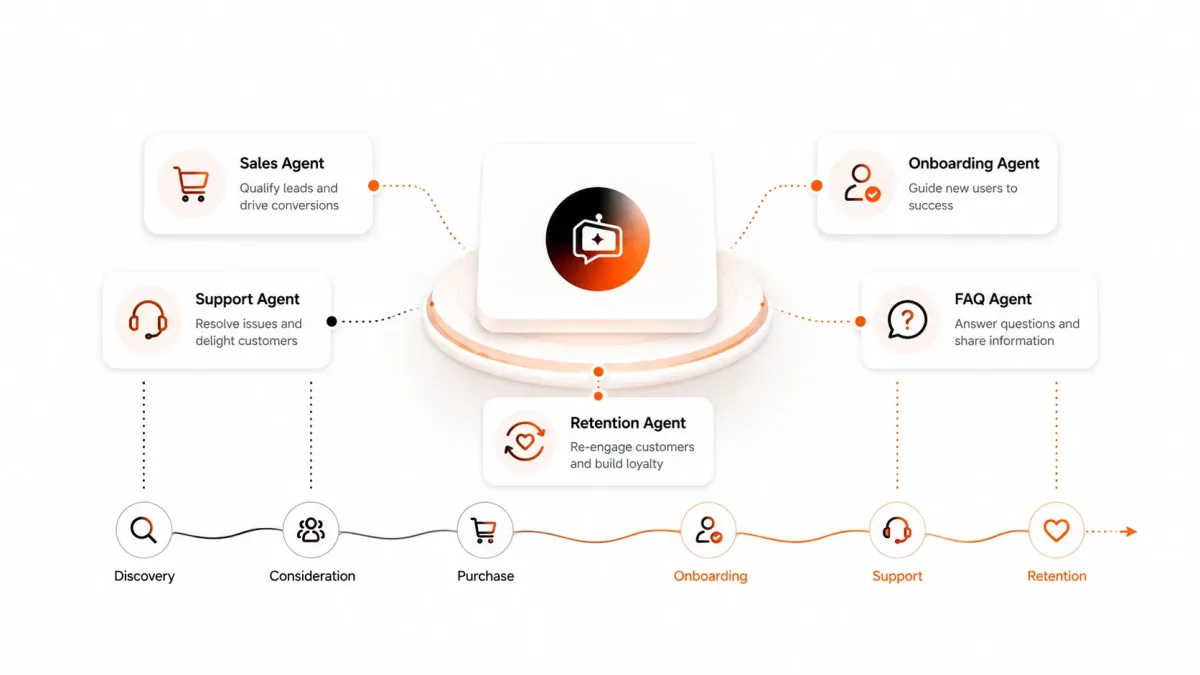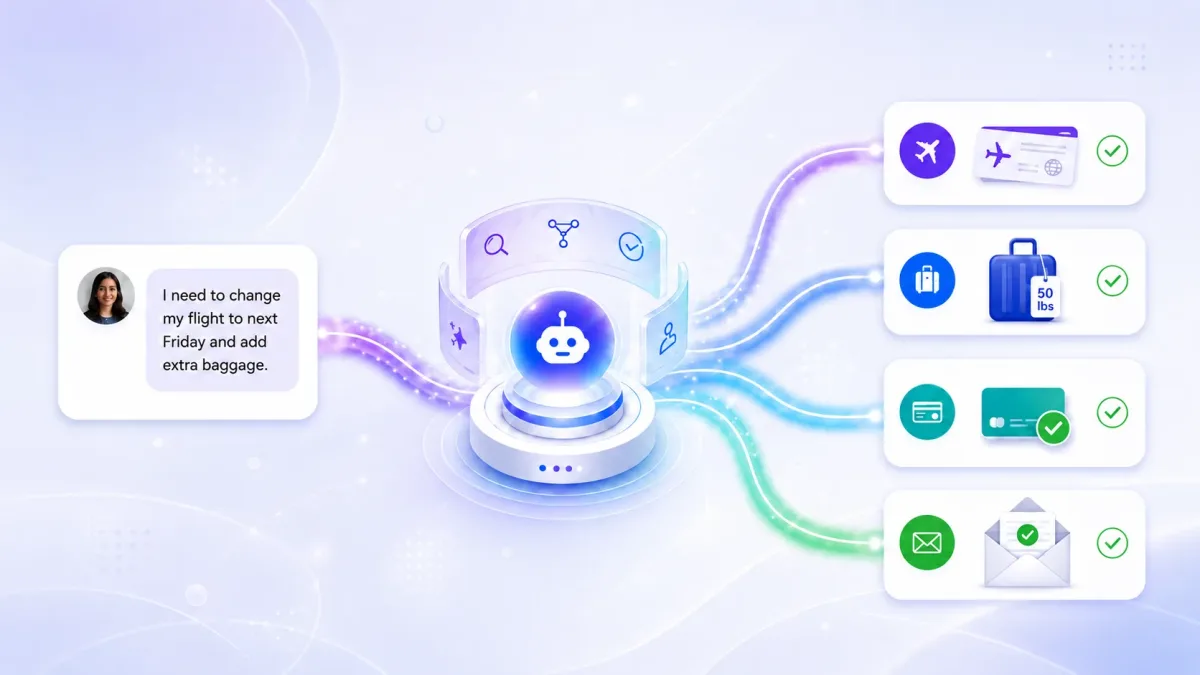

Go beyond basic chatbot replies with REVE Chat AI Agents that understand customer intent, decide the next best action, connect with your business systems, and help customers complete tasks across sales, support, commerce, and operations.
Get your personalized product demo today!
Build intelligent customer journeys that can answer questions, qualify leads, recommend products, create requests, retrieve information, and hand over to human agents when needed
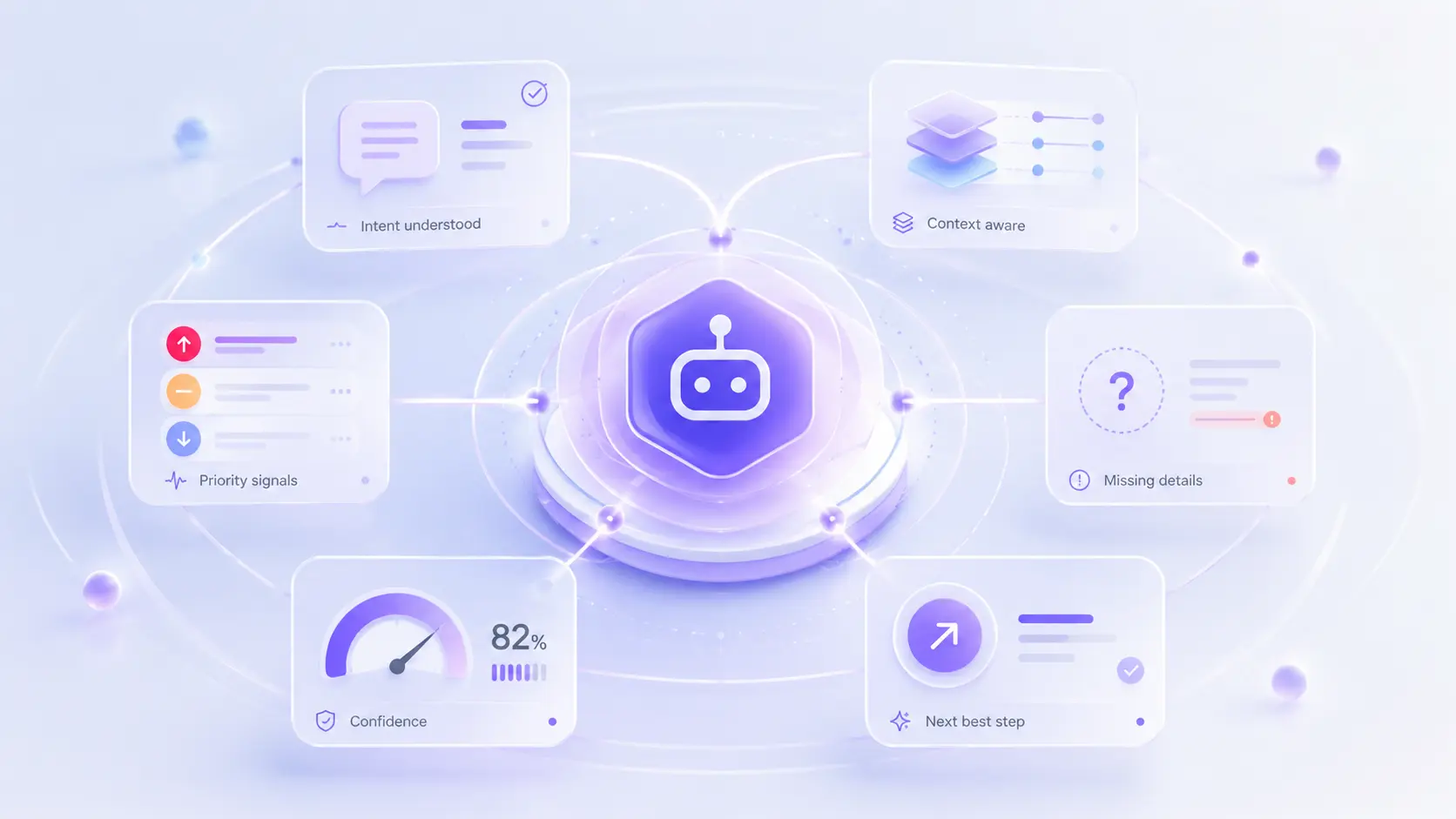
Identify whether the customer wants support help, sales assistance, product information and more.

Remember what the customer has already said within the conversation

Decide whether to answer, ask, recommend, route, trigger a workflow, or hand over in real-time
Know what details are missing before completing the next step
Detect and flag conversations that need faster attention, such as complaints or high-value requests for human intervention

Clarify or escalate when the right response or action is not clear

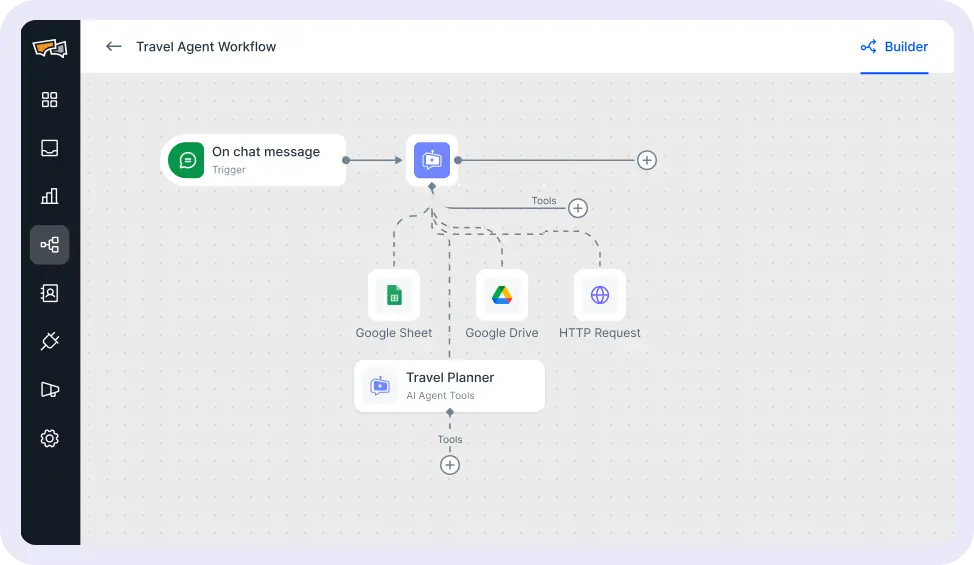
Drag and drop triggers, nodes, and tools you need to create the right AI Agent for your business
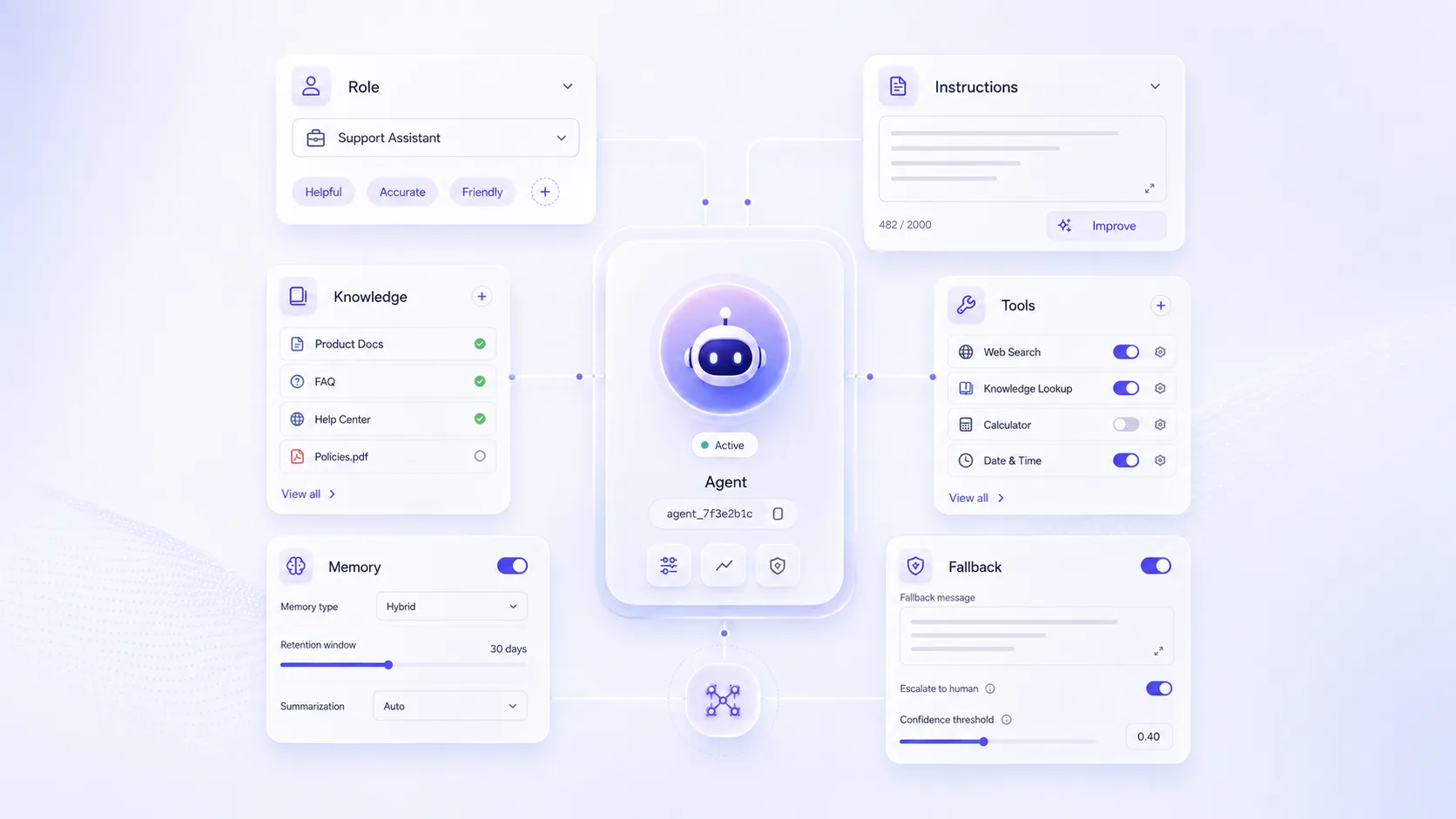
Choose which tools each agent can use for data lookup, actions, and workflows

Set how each agent should respond, guide, escalate, and stay within boundaries
Connect approved business information so answers stay relevant and accurate
Define how much previous conversation context should influence the response
Build different agents for different channels and use cases such as sales, support, ecommerce, bookings, claims, and more
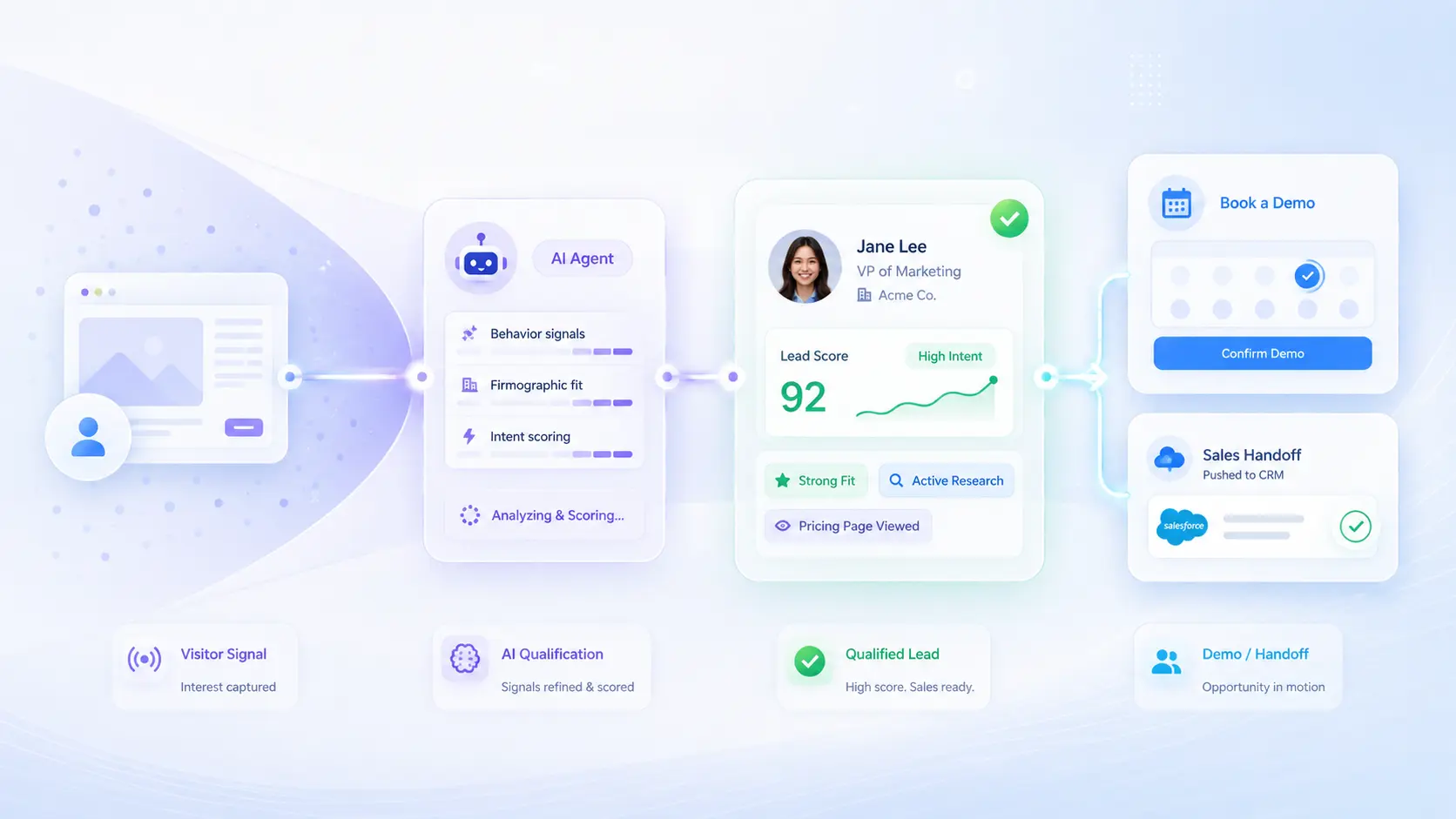
Identify visitors asking about pricing, plans, demos, comparisons, and such
Ask for business needs, team size, use case, channels, timeline, and goals
Identify which product, plan, service, or sales path the prospect fits the best
Collect contact details, company information, role, budget, and decision context
Move ready prospects toward demos, consultations, callbacks, or sales meetings
Pass qualified leads to sales with intent, context, and next steps already clear
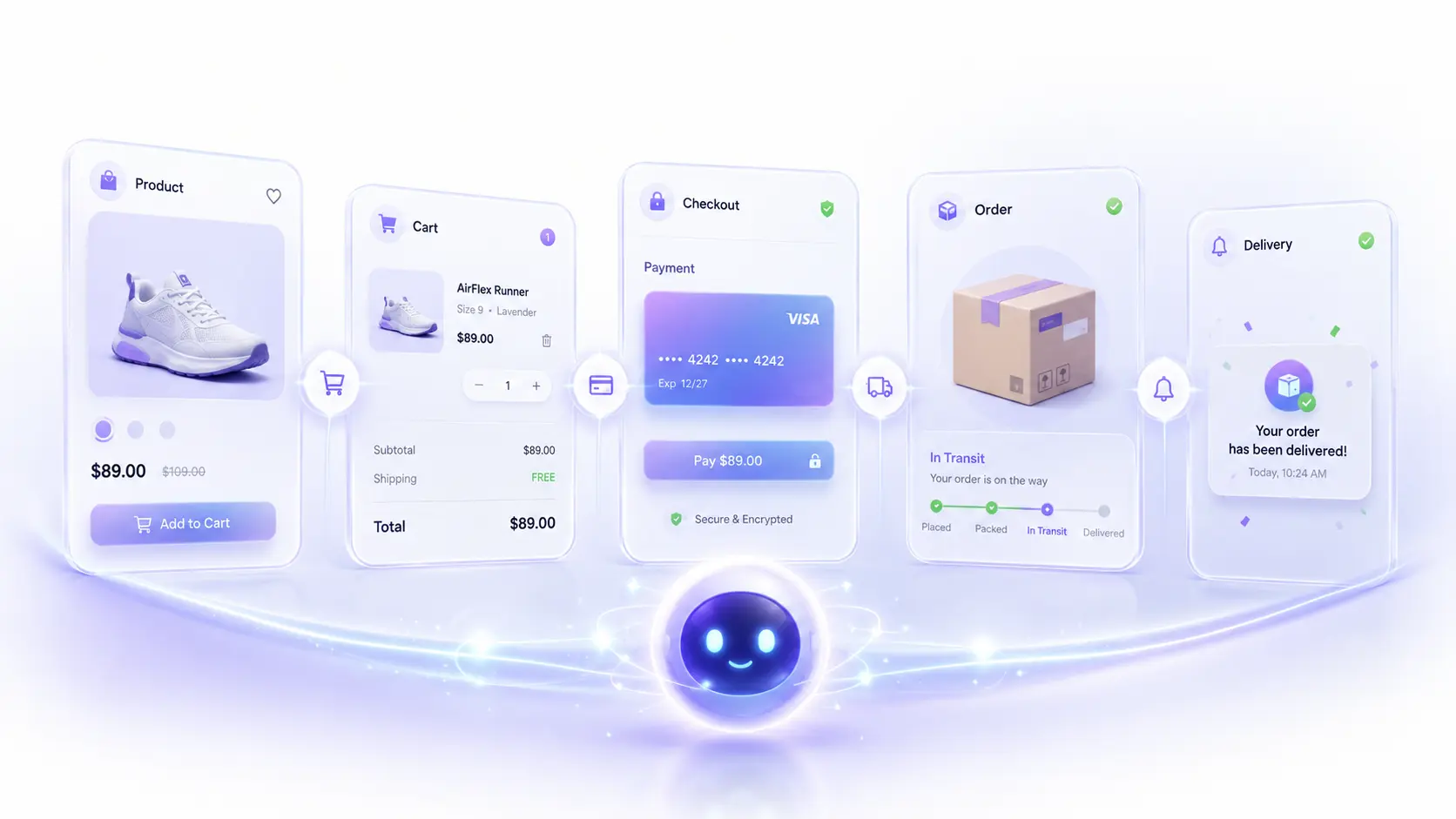
Guide shoppers toward relevant products based on interest, preferences, and buying needs
Help customers compare items, prices, variants, and offers
Check stock, size, color, delivery options, or product availability
Recover abandoned carts, apply offers, start checkout, share payment links, or trigger purchase actions
Help customers place orders, modify order details, cancel requests, reorder items, or check purchase history
Send order status, delivery updates, return details, refund information, exchange updates, and proactive notifications
Accurately resolve common questions using company and product information
Identify billing, technical, delivery, account, claim, or service-related requests accurately
Collect the right details before creating a ticket or involving your support staff
Pull order, ticket, claim, shipment, booking, payment, or application status
Create, update, or manage tickets efficiently and route tickets to the right teams
Summarize the issue so your team can continue with full context
Start a flow when a customer sends a message, a webhook request is received, or another workflow calls it
Add AI-powered steps that understand the request, respond, collect details, or decide the next path
Use rules and customer inputs to send people through the right branch of the journey
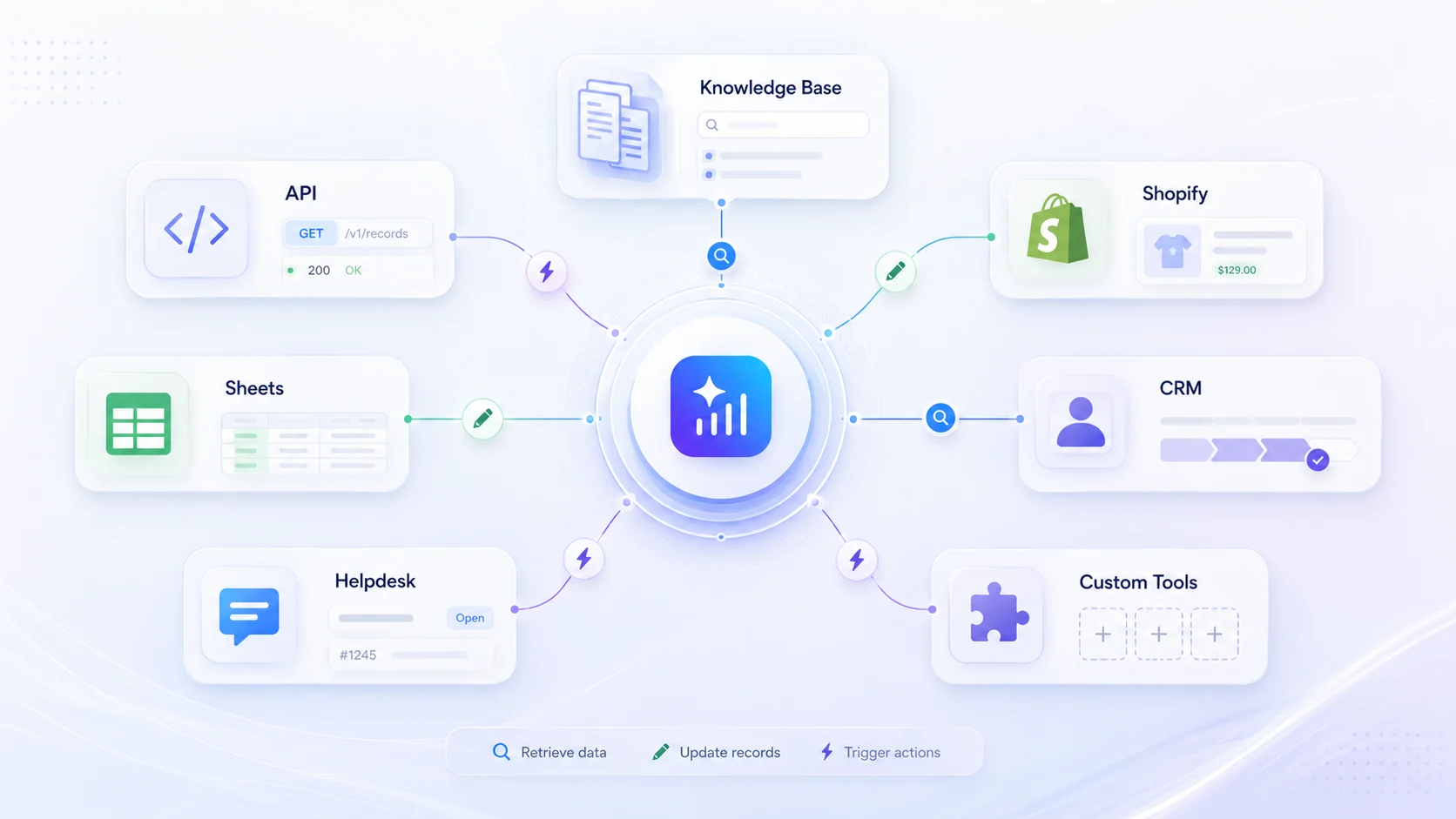
Connect workflow steps with knowledge base, API, Shopify, Google Sheets, or other available tools
Reuse smaller flows inside larger journeys to keep complex automation easier to manage
Transfer the journey to a live agent when the flow needs human support or review
Set up knowledge bases with company information, product details, and the like to empower your AI Agent for accurate responses
Connect your store with an AI Agent and retrieve product information and manage order-related actions
Create leads, update records, create tickets, or route cases in a seamless manner
Integrate your internal system and sheets using APIs and custom actions, creating a fully automated system
Detect and route urgent, sensitive, complex, or high-value requests to a agent
Pass the customer’s details and previous interaction history to the agent
Send requests to the right team, such as sales and support for urgent or advanced workflows
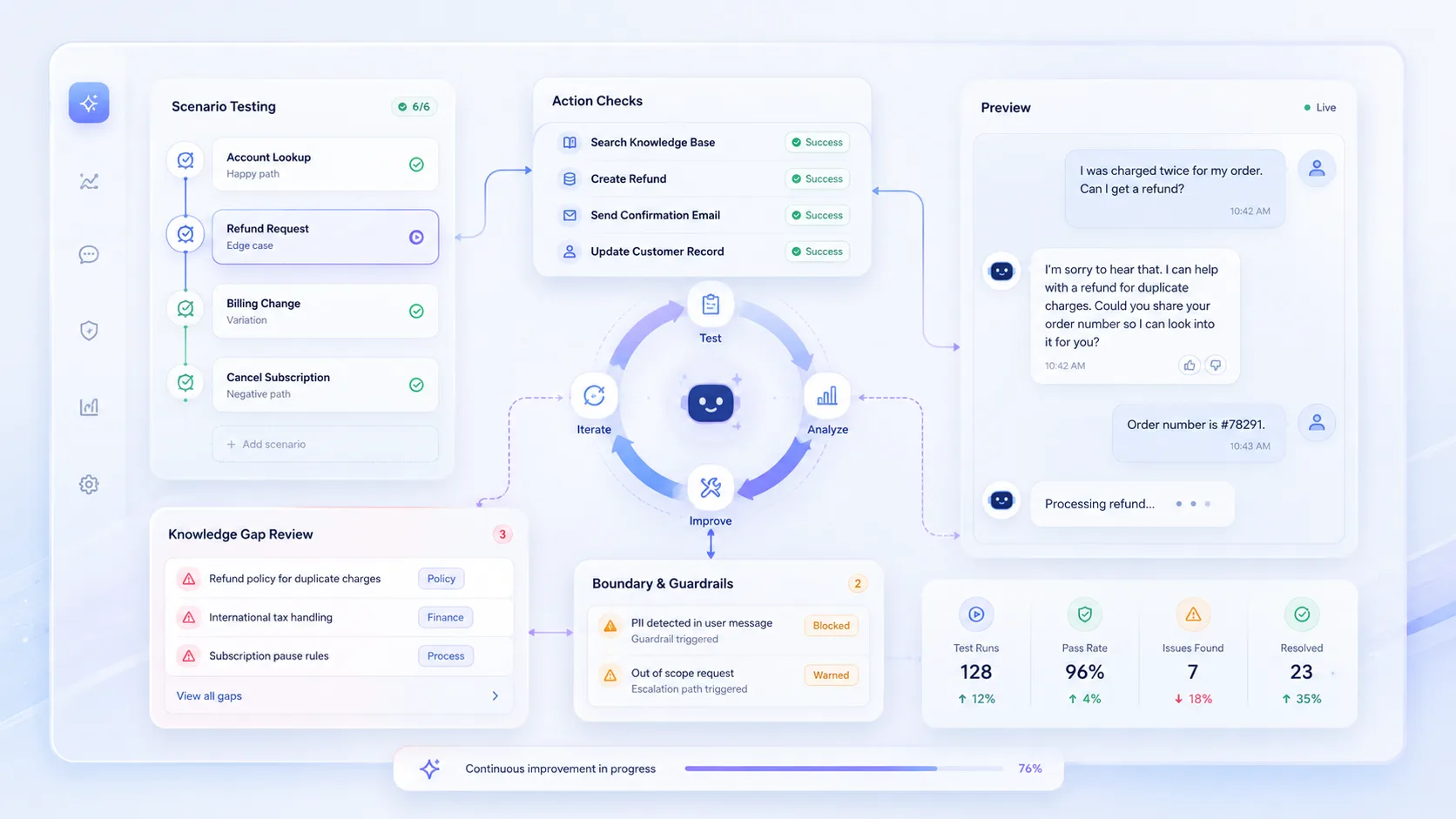
Test the agent before it goes live by conversing with it
Try FAQs, product questions, pricing queries, support issues, order tracking, and more to check efficiency of the agent
Confirm and monitor whether the AI agent is using tools, APIs, routing, and handover steps correctly
Identify and address missing information, unclear instructions, or weak answers by providing more info or optimizing agent prompt
Check what happens when customers ask something the agent should not handle
Review performance regularly and improve the agent as business needs change
Support customers across different languages and regions.
Keep agents active, inactive, or in preparation as your team builds and updates them.
Decide what the AI Agent should avoid, clarify, or escalate.
Organize different agents from one place instead of managing every use case separately.
Prepare an agent privately and test it out before customers start using it.
Label agents by purpose, such as order tracking, demo qualification, or product recommendation.
Choose the chat model used to handle responses where setup allows it.
Organize interactions by topic, intent, urgency, source, or customer journey.
Set safe responses when the AI Agent is unsure or missing information.