



Table of Content
Do you know one single decision could recover 1 in 3 lost carts, cut your customer service payroll in half, and let you finally take a weekend off without the store exploding?
But what’s that decision? You just need to enable ecommerce automation, the quiet revolution letting mid-sized stores compete with global brands using AI chatbots, predictive workflows, and omnichannel magic that works while you sleep.
Within months, stores see 15–35 % of abandoned carts magically returned, 85 % of routine tickets vanish, and customer happiness scores that turn first-time buyers into lifelong fans.
This isn’t future tech. It’s live right now, and the brands ignoring it are already falling behind. Let’s fix that.
What is Ecommerce Automation?
Ecommerce automation refers to technology-driven solutions that execute routine tasks without human intervention, leveraging tools like machine learning (ML) and natural language processing (NLP).
Think of it as your store’s invisible workforce: automatically updating stock levels after a sale, sending tailored email reminders for abandoned carts, or routing support tickets based on urgency.
Unlike basic scripting, modern ecommerce automation integrates seamlessly with platforms like WooCommerce or BigCommerce, handling everything from order fulfillment to customer segmentation.
For instance, AI agents can analyze browsing history to suggest products in real-time, creating a frictionless shopping journey that feels human but scales effortlessly.
How Does Ecommerce Automation Actually Work?
eCommerce automation works like an invisible, hyper-efficient team that never sleeps, never gets tired, and never forgets a step. Below, let’s see how it works.
Trigger
A real-time event instantly kicks things off, someone abandons a cart, places an order, runs low on stock, or asks a question across any channel.
Condition Check
The system instantly evaluates customer behavior, purchase history, location, cart value, and dozens of other signals in under a second to decide the smartest response.
Action
The perfect move happens automatically: AI replies, discount fires, inventory updates, ticket routes, or cobrowsing starts, flawless and instant every time.
Learning Loop
Every outcome is analyzed, allowing the AI to self-improve daily and boost conversion rates, recovery success, and personalization without requiring manual tweaks.
Why Ecommerce Stores Need Automation in 2026
eCommerce isn’t growing, it’s exploding past $8.5 trillion while customer patience collapses to near zero. The stores that thrive won’t be the ones working harder; they’ll be the ones automating smarter.
Customer Expectations Have Hit a Breaking Point
Shoppers now expect instant answers 24/7, replies in their native language, and personalized help the moment they hesitate.
One delay or generic response, and 80 % are gone forever. Automation is the only way to meet that standard without a global army of agents.
Peak Seasons Are Becoming Unmanageable Monsters
Black Friday-style traffic spikes now happen multiple times a year. Manual teams collapse under 10× volume, but automated systems handle 100,000 chats or orders as easily as 100 without overtime or hiring chaos.
Profit Margins Are Squeezed Tighter Than Ever
Rising ad costs, returns fraud, and labor expenses are crushing margins. Automation recovers 15–20% of abandoned carts (with rates averaging 70% globally), cuts support costs by up to 30%, and turns routine tasks into silent profit engines.
Global & Mobile Shift Waits for No One
Over 62 % of sales will come from mobile, and cross-border shopping is surging. Automation delivers real-time translation, currency switching, localized recommendations, and omnichannel support that manual processes simply can’t scale.
24/7 Availability Without Burning Out Your Team
Your customers shop at 3 a.m. from Tokyo, Berlin, or New York; automation answers instantly in their language while your team sleeps.
No night shifts, no burnout, just happy agents who log in refreshed to solve the cases that actually need a human touch.
Seamless Scalability During Peak Seasons
Black Friday traffic jumps 10× overnight, and your systems don’t flinch. Automation handles the surge with the same calm efficiency as a quiet Tuesday, so you never scramble for seasonal hires or watch revenue leak because support collapses.
True Omnichannel & Multilingual Reach
One unified inbox manages website chat, WhatsApp, Instagram, Facebook, and email while speaking 50+ languages fluently.
You become a global brand overnight without building separate regional teams or learning every messaging platform.
Enhanced Personalization at Scale
Every visitor now feels like your only customer; AI remembers their size, favorite color, and browsing habits, then serves perfect recommendations and offers.
What used to require a personal shopper for VIPs is now standard for everyone.
Reduced Operational Errors & Risk
Manual processes breed mistakes: oversold inventory, wrong refunds, lost tickets. Automation follows perfect rules every time, catching fraud in milliseconds and eliminating the costly human errors that quietly eat margins.
Better Data Insights & Decision Making
All your customer interactions, sales patterns, and support trends flow into one clear dashboard. You spot winning products, slow-moving stock, or emerging issues the moment they appear, no more guessing or waiting for monthly reports.
Core Areas You Can Automate Today
Ecommerce automation is ready to deploy right now across every part of your store. These five core areas deliver the fastest ROI and integrate seamlessly with Shopify, WooCommerce, BigCommerce, and more, often with just a few clicks.
Inventory & Order Management Automation
Stock levels sync in real time across all sales channels, preventing costly oversells and stockouts. When inventory hits your predefined threshold, purchase orders are sent automatically to suppliers and 3PL partners.
Shipping labels are generated the moment an order is placed, cutting fulfillment time dramatically and freeing your team from endless spreadsheet updates.
E-commerce Marketing Automation
Every customer action, page view, add-to-cart, or abandonment, triggers personalized email, SMS, WhatsApp, or push sequences without you touching a single campaign.
Segmentation updates itself based on behavior and purchase history, so high-value buyers get VIP treatment while one-time visitors receive win-back flows.
The result is higher open rates, better conversions, and marketing that runs 24/7 on complete autopilot.
Learn More: E-commerce Marketing Automation
Abandoned Cart Recovery
Timed reminders with personalized incentives fire within minutes of abandonment across email and SMS, quietly rescuing 15–25 % of lost revenue.
Dynamic offers (free shipping, 10 % off) adjust based on cart value and customer history for maximum recovery.
Personalized Email & SMS Campaigns
Post-purchase thank-yous, birthday discounts, replenishment reminders, and cross-sell sequences launch themselves based on actual behavior.
No more manual sends, every message feels handcrafted even when you’re reaching thousands.
Segmentation & Behavioral Triggers
Customers are instantly grouped by lifetime value, browsing patterns, location, or device so the right message hits at the perfect moment.
Triggers fire-up sell pop-ups, loyalty rewards, or re-engagement flows exactly when they’re most effective.
Customer Service Automation
AI now handles 80–85 % of routine inquiries instantly while live agents focus only on high-value conversations.
Support becomes truly omnichannel and 24/7 without hiring night-shift teams or watching your payroll explode.
Payment, Fraud & Returns Automation
Fraud detection rules block suspicious orders in milliseconds while approving legitimate ones faster than ever.
Returns become self-service: customers generate labels, inventory updates instantly, and low-risk refunds are processed automatically, saving hours of manual review.
Reporting & Analytics Automation
All your data, sales, marketing performance, support tickets, and traffic flows into one clean dashboard with automatic daily digests and anomaly alerts.
Spot bestselling products, underperforming campaigns, or support bottlenecks the moment they happen, no more digging through spreadsheets every Monday morning.
How to Choose the Best Ecommerce Automation Tools in 2026?
With hundreds of tools promising to “10× your store,” picking the right ones can feel overwhelming. Use this simple 6-point checklist to cut through the noise and build a stack that actually grows with you instead of creating more work.
Match the Tool to Your Biggest Pain Point First
Start with the area that hurts most today: abandoned carts, slow support, stockouts, or manual marketing. A tool that fixes your #1 bottleneck in week one beats a “perfect” all-in-one suite you’ll set up next quarter.
Native Integrations
Look for direct, deep integrations with your platform (Shopify, WooCommerce, BigCommerce, Magento) and channels (WhatsApp, Instagram, Amazon). The fewer middle-layer apps you need, the fewer things break during updates or traffic spikes.
Omnichannel & Multilingual Out of the Box
If you sell (or plan to sell) outside your home country, prioritize tools that support 50+ languages and consolidate website chat, WhatsApp, Facebook, Instagram, and email in one inbox. REVE Chat, for example, does this natively, no extra plugins required.
Real AI vs Marketing AI
Many tools slap “AI” on basic rules. Test for actual natural-language understanding, sentiment detection, and self-learning behavior. Chat with the demo bot, if it can’t understand “Is this dress available in navy?” without a keyword, keep shopping.
Scalability & Pricing Transparency
Check what happens when you go from 1,000 to 50,000 monthly conversations. Some tools triple in price; others stay predictable. Always calculate cost per resolution or per order, not just per agent seat.
Speed of Implementation & Support Quality
The best tool in the world is useless if it takes 3 months to launch. Favor platforms with drag-and-drop builders, pre-built ecommerce templates, and 24/7 support that actually answers in minutes, not days. Bonus points if they offer free onboarding calls.
Best Ecommerce Automation Tools & Software in 2026
You know what, not all automation tools are created equal. Some quietly recover lost carts while others slash support costs overnight.
These seven platforms are the best eCommerce automation tools in 2026 because they integrate deeply, automate intelligently, and turn customer service into a revenue engine.
Whether you’re a startup or hitting seven figures, one of these will be your unfair advantage.
1. REVE Chat
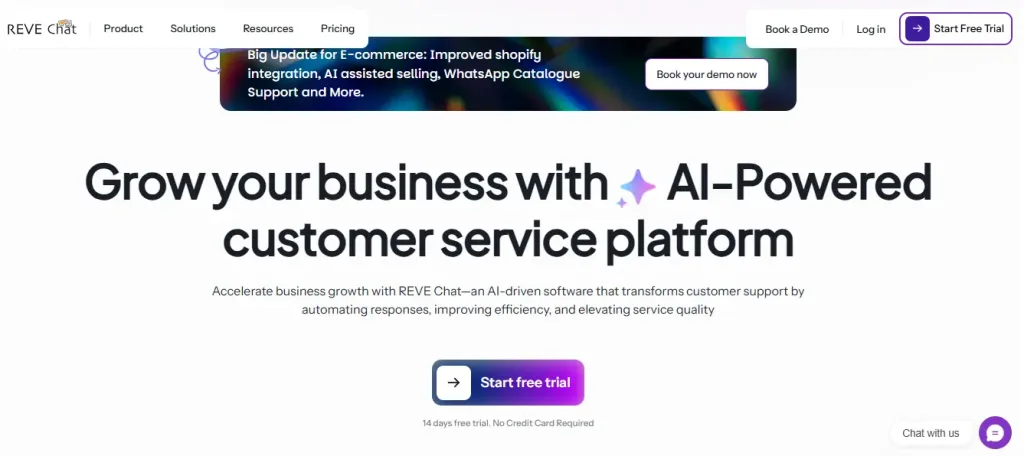
In ecommerce, where cart abandonment rates hover around 70% and customer expectations demand instant, personalized support, the right automation tools can transform chaos into seamless growth.
REVE Chat stands out as a powerful tool for customer engagement, automating up to 85% of inquiries while integrating deeply with platforms like Shopify and WooCommerce to deliver real-time order tracking, proactive recommendations, and omnichannel support.
This not only slashes response times by 60% but also boosts conversions through dynamic actions like upsell prompts during chats.
Centralizing live chat, AI bots, and ticketing, REVE Chat frees teams from repetitive tasks, enabling focus on high-value interactions that drive loyalty and revenue.
Let’s take a look at its ecommerce AI agent and how it helps to leverage your eCommerce store.
eCommerce AI Agent
Powered by advanced AI, REVE Chat’s eCommerce AI Agent delivers fully autonomous support across the total customer journey, requiring minimal human oversight.
It instantly checks inventory availability, provides dynamic product recommendations and upsells, assists with full order processing and checkout, tracks shipments, handles returns/refunds, and re-engages abandoned carts through proactive, multi-channel nudges.
By managing virtually everything, from discovery to loyalty-building follow-ups, in natural, context-aware conversations, it automates the vast majority of interactions, turning your online store into a 24/7 self-running sales and support machine that maximizes conversions and efficiency.
Live Chat
Live chat feature enables real-time, proactive engagement, popping up with personalized greetings or offers when users show intent, like lingering on a product page.
For ecommerce stores, it supports direct ordering and payment links within the chat, streamlining conversions without redirecting customers.
Rich media like images and voice notes enhance visual shopping, while session tracking provides agents with context for faster resolutions.
Catalog Integration
Seamless syncing with Shopify, WooCommerce, and Magento brings your full product catalog into chats, allowing agents to showcase items, check availability, and facilitate purchases on the spot.
This automates inventory-linked support, preventing oversells and enabling one-click ads to cart. For global stores, it supports multilingual displays, enhancing accessibility and conversion rates across borders.
Deep Integrations with Shopify and WooCommerce
REVE Chat offers seamless, no-setup-required integrations with Shopify and WooCommerce, pulling real-time data on catalogs, carts, order history, and customer details directly into chats.
Agents and bots can view/share products, check availability, track orders, and even facilitate direct purchases without leaving the conversation.
This enables proactive support like abandoned cart recovery, personalized upsells, and instant resolutions, reducing response times by 60% and turning support into a seamless sales driver.
2. Klaviyo
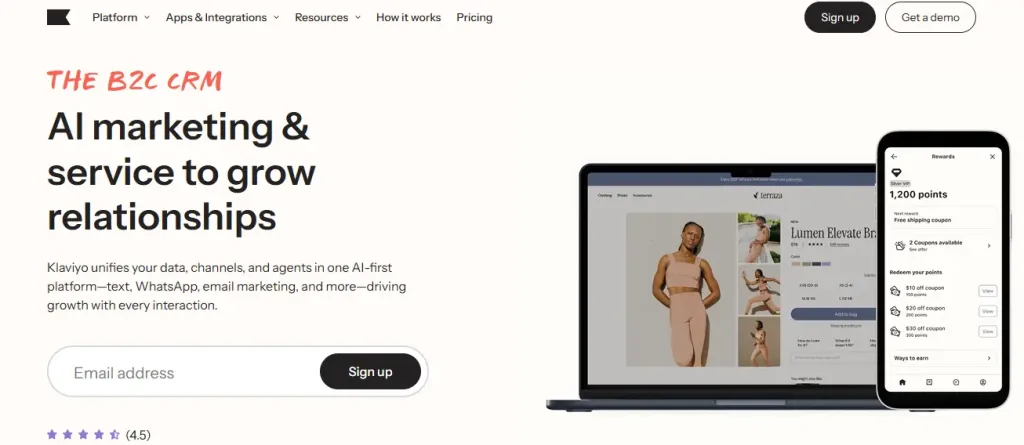
Klaviyo is an AI-powered marketing automation platform tailored for ecommerce, excelling in data-driven personalization to recover lost revenue and nurture customer journeys.
By syncing real-time data from Shopify, WooCommerce, and other platforms, it automates targeted email, SMS, and push campaigns that respond to behaviors like cart abandonment or browsing patterns.
- AI-Driven Automation Workflows
- Real-Time Customer Segmentation
- Omnichannel Messaging
- Abandoned Cart Recovery Flows
- Personalized Product Recommendations
- Predictive Send-Time Optimization
- Deep Ecommerce Integrations
- Comprehensive Revenue Analytics
3. Gorgias
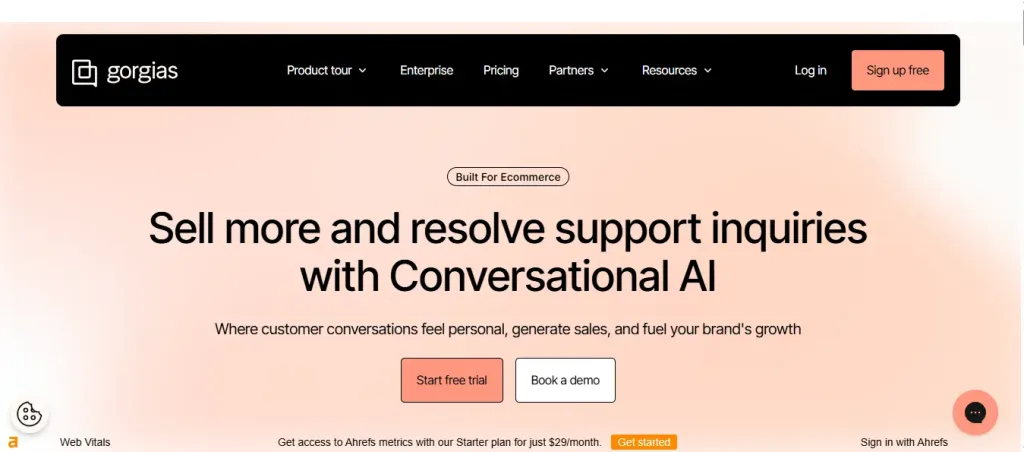
Gorgias is a Shopify-centric helpdesk platform revolutionizing ecommerce support with AI agents that automate up to 60% of tickets, turning service into a revenue driver.
It unifies channels like email, chat, and social into one inbox, pulling order data directly for instant resolutions on tracking, returns, or upsells.
Brands leverage macros, triggers, and conversational flows to handle complex queries autonomously, reducing response times by 50% and boosting CSAT.
- AI Agent for Ticket Automation
- Unified Multichannel Inbox
- Order Management Integrations
- Macros and Rule-Based Triggers
- Conversational Flows for Returns/Refunds
- Proactive Shopping Assistance
- Fraud Detection and Risk Scoring
- Performance Analytics Dashboard
4. Omnisend

Omnisend is a user-friendly omnichannel automation tool designed for ecommerce, specializing in email, SMS, and push workflows to recover carts and nurture leads effortlessly.
It offers 33+ pre-built templates for scenarios like welcome series, or post-purchase upsells, with drag-and-drop builders that integrate natively with Shopify and BigCommerce for real-time data syncing.
Brands achieve 4x higher open rates through behavioral segmentation and A/B testing, driving revenue without coding.
- Pre-Built Automation Workflows
- Drag-and-Drop Email/SMS Builder
- Advanced Audience Segmentation
- Abandoned Cart Recovery
- Omnichannel Campaigns
- Product Picker and Dynamic Content
- A/B Testing and Analytics
- Ecommerce Platform Integrations
5. Zapier

Zapier is a no-code workflow automation powerhouse connecting over 7,000 apps, enabling ecommerce teams to build custom “Zaps” for seamless data flow across inventory, marketing, and support.
It automates tasks like order syncing from Shopify to CRMs or triggering SMS for abandoned carts, eliminating manual entry and errors.
With multi-step logic, filters, and AI enhancements, Zapier scales operations for growing stores, offering real-time alerts and integrations without developer help.
- Multi-Step Workflow Builder
- No-Code App Integrations
- Conditional Logic and Filters
- Abandoned Cart and Order Triggers
- Real-Time Data Syncing
- Custom Webhooks for Ecommerce
- AI-Powered Task Automation
- Performance Monitoring and Alerts
6. Shopify Flow
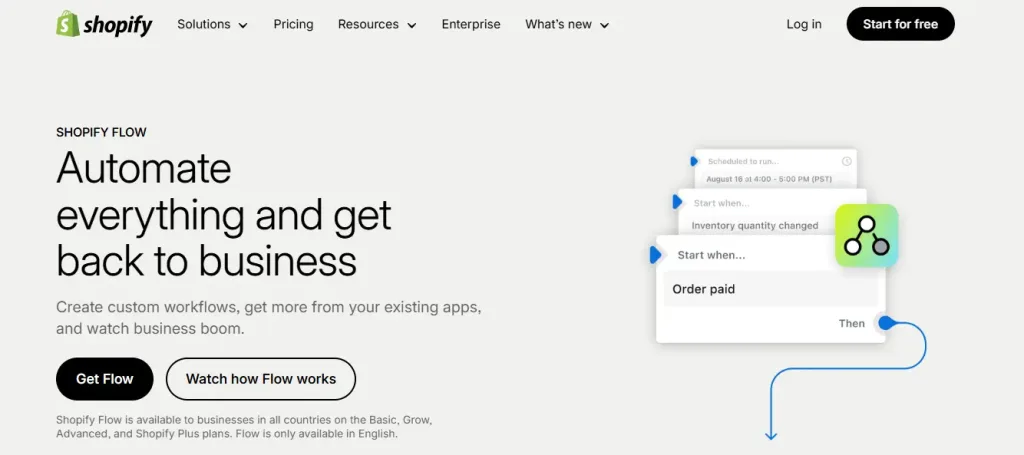
Shopify Flow is a native, free automation app for Shopify merchants, empowering no-code workflows to handle inventory, orders, and marketing with trigger-condition-action logic.
It automates tasks like tagging VIP customers, reordering stock, or fraud alerts, integrating deeply with Shopify’s ecosystem for real-time execution. Hundreds of templates speed setup, reducing manual work by 50% and enabling scalability without external tools.
Perfect for DTC brands, Flow’s drag-and-drop interface turns data into actions like personalized emails or segment updates, boosting efficiency and revenue while keeping everything within Shopify’s secure environment.
- Trigger-Condition-Action Workflows
- Inventory Management Automations
- Order Tagging and Routing
- Customer Segmentation Templates
- Fraud Prevention Rules
- Marketing Flow Integrations
- Custom App Connections
- Usage Analytics and Limits
7. Zendesk

Zendesk is a robust CX platform with AI-driven automation for ecommerce support, deflecting 25% of tickets through self-service and intelligent routing.
It centralizes omnichannel conversations such as email, chat, and social with order integrations for Shopify, enabling agents to resolve issues like refunds in one view.
AI agents handle 24/7 queries with sentiment analysis, while macros and triggers automate responses, cutting resolution times.
- AI Agents for Self-Service
- Omnichannel Ticket Management
- Intelligent Routing and Triage
- Macros and Automation Triggers
- Ecommerce Order Integrations
- Sentiment Analysis and Insights
- Knowledge Base Automation
- Reporting Dashboards
Examples of Ecommerce Automation in Action
Here are five everyday automations that thousands of stores are running right now, each one takes under an hour to set up and pays for itself in weeks.
Abandoned Cart Rescue on Autopilot
A visitor adds a $120 jacket to the cart and leaves. Within 10 minutes, they get a WhatsApp message: “Still thinking about the navy jacket? Here’s 10 % off + free shipping if you complete it in the next hour.” 22 % come back and buy, no human touched it.
Instant 24/7 Order Tracking & Upsell
Customer types “where’s my order?” → AI chatbot instantly replies with a live tracking link + says “Your shoes ship tomorrow, want matching socks 20 % off?” 1 in 4 add the upsell without an agent ever waking up.
Smart Restock + Back-in-Stock Alerts
A bestseller hits 5 units left → system auto-creates purchase order to supplier and emails everyone on the waitlist the second new stock lands. No manual spreadsheets, no sold-out rage reviews.
Cobrowsing Close for High-Value Carts
Someone with $450 in the cart hesitates at checkout. AI detects hesitation → live agent gets pinged → joins their screen in 8 seconds, highlights the “Apply coupon” field, and closes the sale. Happens 40+ times a day for some fashion brands.
Post-Purchase Replenishment & Loyalty Loop
30 days after buying vitamins or coffee pods, the customer gets a friendly SMS: “Running low? Reorder your usual with one click + free shipping.” 35 % reorder instantly, turning one-time sales into predictable subscriptions.
How to Get Started: Step-by-Step Implementation
Getting ecommerce automation live doesn’t require a six-month IT project. Follow this dead-simple 4-step plan, and you’ll see real results in weeks, not quarters.
Audit Your Current Pain Points
Spend one afternoon pulling the numbers: cart abandonment rate, average first-response time, number of manual tracking requests, stockouts last month, and support tickets per order. Pick the single metric that hurts revenue or sanity the most; that’s your first target.
Choose the Right Stack
Focus on tools that integrate natively with your platform and each other. For most stores, the winning combo is: Shopify/WooCommerce + a marketing automation tool (Klaviyo or Omnisend) + a customer engagement suite like REVE Chat’s AI chatbot, live chat, cobrowsing, ticketing, WhatsApp, all in one. Avoid Frankenstein setups with 17 Zapier connections.
Measure & Scale
Track three numbers for every new automation: revenue recovered or generated, time saved, and CSAT change.
Once something is clearly winning (usually within 14–30 days), double down, add more channels, refine triggers, or expand to the next pain point.
Repeat monthly and watch your store transform on autopilot.
The Future of Ecommerce Automation
The next five years won’t just improve automation; they’ll completely redefine what “shopping” even means.
Here are the three breakthroughs already in pilots at major brands.
Voice Commerce Automation
Over 40 % of orders will start with voice (Alexa, Google, Siri, or your own branded assistant). Future systems will understand full conversations (“I need a birthday gift for my sister who loves plants, under $50, arrives by Friday”) and complete the purchase end-to-end: recommend, add to cart, apply coupon, checkout, and schedule delivery; no screen required.
Predictive Inventory with Generative AI
GenAI will forecast demand down to the SKU-city-weather level, then auto-negotiate with suppliers and reroute shipments mid-transit to avoid stockouts.
Picture your store knowing a heatwave is coming to Texas next week and pre-moving 2,000 extra fans from the Atlanta warehouse, before the first customer even searches.
Fully Autonomous Customer Journeys
The entire path from first visit to repeat purchase will run without human input. AI agents will greet, recommend, and negotiate (“Can you do free shipping?”), close, support, upsell, and re-engage across voice, chat, AR try-on, and metaverse stores; all while feeling warmer and more human than most live agents today.
The only time a real person gets involved? When the customer specifically asks, or when something truly delightful is about to happen.
Conclusion
The gap between thriving ecommerce brands and those just surviving keeps widening, and ecommerce automation is what’s creating that divide.
Every day without it means lost carts, burned-out agents, and missed global opportunities slipping through your fingers.
You now have the roadmap: the core areas to automate, the best tools available, and a simple step-by-step plan to get started. Don’t wait for the next peak season to force your hand.
Take control today with solutions like REVE Chat that turn customer service into your strongest revenue driver. Book a Demo now and bring tremendous growth to your business.
Frequently Asked Questions
No, automation delivers massive value even for small and mid-sized stores starting at 50–100 orders per day. Tools like AI chatbots and abandoned cart flows provide immediate ROI by recovering lost sales and reducing manual work, allowing solo founders or small teams to compete with bigger players without hiring extra help.
Modern tools are designed to feel warm and human: AI chatbots use natural language and personalize responses based on browsing history, while seamless handoffs to live agents ensure complex issues get a real person.
No, most leading tools in 2026 are completely no-code with drag-and-drop builders, pre-built templates, and one-click integrations. You can launch abandoned cart recovery, AI chatbots, or inventory alerts in under an hour without writing a single line of code.
Good tools have built-in safeguards: test modes, approval steps for high-value actions, and easy rollback. Most also provide detailed logs and real-time alerts so you can pause or fix any flow instantly, and starting small minimizes risk while you learn.
Build AI-powered support with Wize AI
Connect business knowledge, automate support conversations, and improve response quality without managing a complex AI stack.
Explore Wize AI Agent Rate the article

Nur-Nabi Siddique
CTO
Nur-Nabi Siddique is the CTO at REVE Chat. He is renowned for his deep proficiency in the Spring Framework, NLP, AI and Agentic Development. He brings a wealth of knowledge and a forward-thinking approach to technological innovation.
View all articles