




Table of Content
You show up everywhere for your customers, yet you feel disconnected from them. Have you ever wondered why this is happening? Maybe you are missing out on the omnichannel customer service approach.
Suppose your customers come to your website and later on Facebook Messenger, Instagram, or elsewhere. And, every time they repeat their queries. This is frustrating for them and overwhelming for your customer service team, too.
Customers don’t see channels. They just see your brand. And when every conversation feels like starting from scratch, it chips away at trust and lessens the customer experience.
And maybe that’s the concern that led you here. To figure out how to make customer service feel more like a conversation and less like a chase.
An omnichannel customer service can save you from this. Not just being available, but being present in a way that feels smooth for your customers, and manageable for your team.
In this comprehensive article, we will explore what omnichannel customer service is, its benefits, strategies, examples, and more.
What is Omnichannel Customer Service?
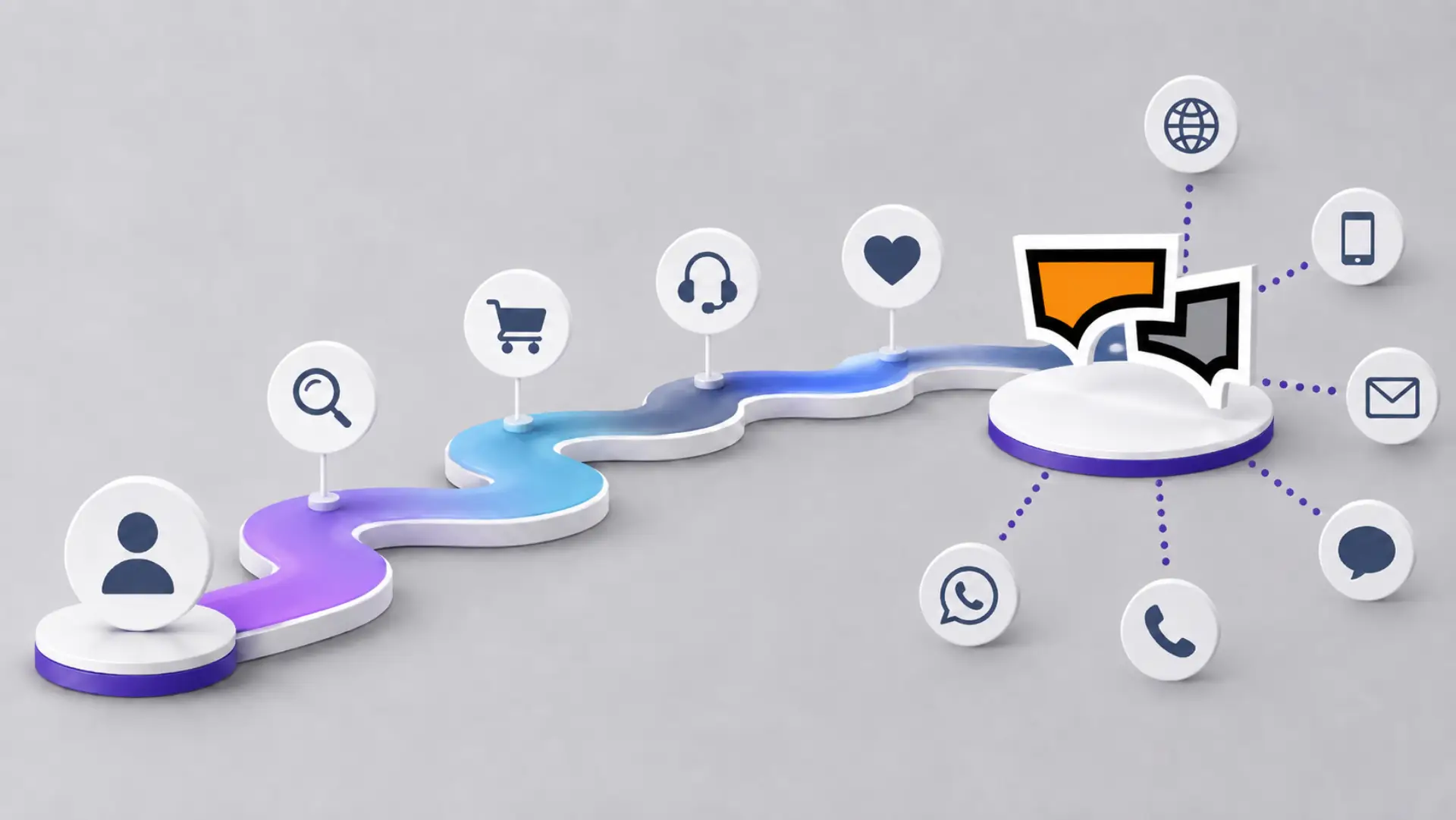
Omnichannel customer service is a strategy that aims to provide a consistent customer experience across all communication channels, like apps, websites, email, social media, phone, etc, within a single system.
For example, a customer who first reaches out to a clothing brand via Instagram DMs to ask about a jacket. Later, they continue the conversation through the brand’s website live chat and finally complete the purchase through a mobile app.
With omnichannel customer service, the brand’s support team would have access to the entire conversation history, allowing them to assist the customer without making them repeat their questions or explain the situation again. It creates a smoother, more human experience that builds trust and encourages loyalty.
Multichannel Vs Omnichannel Customer Service
In a word, the key differences between multichannel and omnichannel customer support are, multichannel customer service indicates multiple channels that work separately, whereas omnichannel customer support connects all communication channels into one single system.
| Aspect | Multichannel | Omnichannel |
|---|---|---|
| Channel availability & focus | Support across multiple channels, but separated | Support across multiple channels, but integrated |
| Customer Experience | Fragmented and repetitive | Seamless, consistent, and personalized |
| Data Sharing | Limited or no sharing between channels | Full data and context sharing between channels |
| Focus | Offering many channels for accessibility | Delivering consistent, personalized experiences |
| Customer Satisfaction | Often low due to gaps in service | High due to seamless support |
| Investment | Lower initial effort and cost | Higher initial effort with greater long-term value |
| Team Collaboration | Limited visibility across teams | Full visibility for all agents |
| Response Time | Slower due to a lack of context | Faster with full customer context |
Benefits of Omnichannel Customer Service
Omnichannel customer service benefits include enhancing the customer experience, building stronger loyalty, and boosting satisfaction. At the same time, it drives more sales and improves customer retention. Let’s take a closer look.
For Customers:
Omnichannel customer service provides personalized interactions, seamless customer experiences, and higher customer satisfaction.
Personalized and Convenient Interactions
Omnichannel customer service ensures personalized and more convenient interactions with customers. Whether they prefer chat, email, phone, or social media, they can move across channels without feeling disconnected. This freedom to choose builds comfort and meets customers where they are.
Seamless and Connected Experiences
One of the biggest frustrations for customers is repeating themselves. Omnichannel eliminates that pain point. It connects every conversation, making transitions smooth and natural. Customers can start a chat, continue over email, and finish by phone without missing a beat or having to start over.
Higher Customer Satisfaction and Loyalty
When customers feel heard and supported across every touchpoint, trust and loyalty naturally grow. A consistent, connected experience makes them feel valued, and this increases customer satisfaction.
For Support Teams:
Omnichannel customer service improves agent productivity, streamlines operations, and ensures better service delivery.
Improved Agent Productivity
By having access to all customer interactions in one place, agents can work more efficiently without switching between platforms. This improves response times, reduces manual workload, and a smoother overall workflow.
Streamlined Operations With Integrated Tools
Omnichannel platforms bring multiple tools and communication channels under one roof. This integration removes friction in daily operations, helping support teams handle more queries with better accuracy and less effort.
Unified Customer Views for Better Service Delivery
With a complete view of a customer’s journey across all touchpoints, agents can personalize their assistance, resolve issues faster, and create a more consistent and satisfying service experience.
For Businesses:
Omnichannel customer service helps businesses to drive smarter strategies, combine insights, increase revenue potential, and make operations more efficient.
Increased Customer Insights
Omnichannel brings together insights from all channels into one unified customer profile. Businesses can understand the full story, preferences, behaviors, and past interactions. This makes it easier to offer relevant, timely support that feels personal rather than generic.
Data-Driven Decisions That Boost Growth
When you have a deeper understanding of customer behavior across channels, decisions become sharper. Businesses can use these insights to fine-tune marketing campaigns, shape better products, and create personalized experiences that resonate more deeply.
Higher Revenue Through Improved Customer Retention
A connected customer journey often leads to better outcomes, higher conversion rates, more cross-sell and upsell opportunities, and stronger customer lifetime value. When every interaction feels effortless, customers are more likely to stay. Customer retention is one of the biggest wins of going omnichannel.
As reported by Uniformmart, companies that implement strong omnichannel engagement strategies retain 89% of their customers, while those with poor omnichannel experiences only manage to retain around 33%.
Competitive Edge Through Seamless Customer Experience
Omnichannel service makes every interaction smoother, faster, and more personalized. When customers enjoy consistent, effortless experiences across all touchpoints, they are more likely to stay loyal and recommend your brand. A focus on improving customer experience not only builds stronger relationships but also sets businesses apart in a crowded market.
Key Channels Used in Omnichannel Customer Service
The most popular channels used in omnichannel customer service are emails, social media channels, websites, mobile apps, and messaging apps.
Emails
Email remains one of the most popular communication platforms due to its flexibility and wide accessibility. It allows customers to describe their issues in detail and attach all necessary documents.
Email support is important because it provides a written record of all interactions, making it easier to track and resolve issues over time. To enhance the customer experience, make sure that you add email communication to your omnichannel customer service strategy.
Social Media Channels
Social media platforms such as Facebook, Twitter, LinkedIn, YouTube, and Instagram have become integral parts of our lives. We also contact the customer support of any brand through social media.
These channels are ideal for handling customer inquiries, addressing complaints, and collecting feedback. So, make sure to integrate these platforms when you offer omnichannel customer support.
Website
As the digital face of a brand, your website is often the first point of contact where customers land to get more information about your product offerings or resolve issues.
In the customer journey, the website serves an important role, offering self-service options, live chat, and access to other support channels. So, make sure you integrate the website as a major communication channel in omnichannel customer service.
Mobile Apps
We all use mobile phones to browse various company websites, also expect a company to have its own mobile app where we cannot only place orders but also get in-app support if required.
By integrating various features like live chat, FAQs, and push notifications, companies can make sure that they offer best-in-class services and assistance on their mobile apps too.
These apps provide a seamless user experience and allow businesses to engage with customers in a personalized and efficient manner.
Messaging Apps
Messaging apps like WhatsApp, Facebook Messenger, and Viber are becoming increasingly popular among customers, and they have started using these platforms for communicating with brands too.
These platforms allow for quick, real-time interactions and support multimedia messaging, such as photos and videos. They also enable businesses to automate responses for common inquiries and offer personalized services to their customers.
Signs Your Business Needs Omnichannel Customer Service?
Omnichannel customer service is crucial for your business when you are using multiple customer touchpoints, your customers need to get notifications of agent replies, security & privacy, and so on.
It’s a smart way to unify customer interactions across platforms and provide a seamless, consistent experience. But how do you know when it’s time to make the shift? Let’s break down the signs that indicate your business needs to go omnichannel.
When You are Using Multiple Customer Touch Points
As your business grows, you keep on adding more communication channels—email, social media, WhatsApp, live chat, phone, and more.
Managing these touchpoints separately often leads to fragmented customer experiences. Customers might receive inconsistent responses or have to repeat their issues on each platform.
An omnichannel strategy helps you to centralize all these interactions into one dashboard. This means agents can pick up the conversation where it left off, regardless of the platform, ensuring a smooth experience for the customer.
When Support Teams Face Information Silos
When customer data is scattered across so many departments or tools, it becomes difficult for the support agents to deliver a consistent customer experience. Customers are forced to re-explain their issues every time they contact your support team.
Omnichannel platforms break down these silos by integrating CRM, ticketing systems, chat tools, and communication channels into one unified system, collecting all the data and keeping everyone on the same page.
When Privacy Becomes a Priority
While platforms like Facebook Messenger, Twitter, and WeChat are excellent for brand visibility and getting in touch with your support team, they come with a backdrop: you are operating on someone else’s turf. Conversations on these channels are subject to the policies, data practices, and algorithms of the tech giants behind them.
For many privacy-conscious businesses, this raises red flags. Sharing sensitive customer interactions on such platforms known for data harvesting isn’t ideal, especially in industries where trust and confidentiality are key.
However, you can still meet your customers where they are, on these popular, public channels, but seamlessly transition the conversation to a more secure, brand-owned environment like your website chat, a secure mobile app, or an encrypted messaging platform.
When Customers Need to Get Notifications of Agent Replies
Customers expect quicker responses and real-time updates. If your current system isn’t providing notifications of agent replies, it can lead to frustration and missed opportunities.
An omnichannel support system ensures customers are notified of agent replies across all communication channels, so they don’t have to keep checking back for updates. This leads to quicker follow-ups, better engagement, and higher customer satisfaction.
How to Build an Omnichannel Customer Service Strategy?
To build an omnichannel customer service strategy, map the customer journey, choose the right channels, and integrate them for seamless communication. Use AI and CRM tools for personalization, consistency, and data tracking. Continuously improve by gathering feedback and analyzing performance.
Step 1: Understand Your Customer Journey
Before implementing an omnichannel strategy, it’s crucial to map out the customer journey. This means understanding how customers interact with your business at every stage, from awareness to post-purchase support.
- Identify Key Touchpoints: Consider all the moments where customers engage with your business. This could be on your website, social media, or even through phone support.
- Analyze Customer Behavior: Dive into data analytics to track how customers interact across different channels. This will help you see patterns and understand preferences, leading to more informed decisions.
- Identify Pain Points: Look for areas in the journey where the customer experience feels inconsistent or frustrating. These pain points are opportunities to improve the omnichannel customer experience.
Step 2: Choose Your Channels and Integrate Them
Once you understand the customer journey, the next step is to choose the right channels for communication and integrate them seamlessly.
- Select the Right Channels: Choose channels based on your audience’s preferences. Consider options like live chat, social media, WhatsApp, or even traditional phone support.
- Ensure Seamless Integration: Ensure that customers can switch from one channel to another without losing context. For example, if a customer starts a chat on your website and later follows up via email, the support agent should have access to the previous conversation.
- Centralize Data: Use tools like CRM systems to centralize customer data. This gives your team a single, unified view of customer interactions, allowing for quicker and more personalized responses.
Step 3: Enhance the Customer Experience
To make your omnichannel strategy truly effective, focus on enhancing the customer experience at every interaction.
- Prioritize Self-Service: Empower customers to help themselves by offering resources like FAQs, knowledge bases, or AI-powered chatbots that provide instant answers to common questions.
- Personalize Communication: Use the data you collect to tailor messages and offers to each customer’s preferences. Personalized service leads to higher satisfaction and stronger customer loyalty.
- Maintain Consistency: Make sure your brand voice and service experience remain consistent across all channels. Whether customers interact with you on social media or via live chat, they should feel like they’re communicating with the same brand.
Step 4: Leverage Technology to Optimize Communication
Technology plays a pivotal role in a successful omnichannel strategy. Implementing the right tools enhances communication, efficiency, and personalization.
- Use AI-Powered Tools: Integrate AI-driven chatbots, predictive analytics, and automation to enhance customer interactions. These tools allow for quicker response times and more accurate problem-solving.
- CRM System Integration: By connecting your customer service channels with your CRM system, you centralize all communication and customer data, making it easier to track, respond to, and personalize every interaction.
- Monitor and Track Performance: Keep an eye on key metrics like customer satisfaction, effort, and churn rate to ensure your omnichannel strategy is delivering results. Regularly review your metrics to identify areas for improvement.
Step 5: Adapt and Refine Your Strategy
Building an omnichannel customer service strategy doesn’t stop once it’s implemented. Continuous improvement is key to staying ahead of customer needs and expectations.
- Gather Feedback Regularly: Consistently ask for feedback through surveys or direct interactions. This provides insights into what’s working and what isn’t, allowing you to make targeted improvements.
- Analyze Data: Use data analytics to track performance and uncover trends. This helps you adjust your strategy to better meet customer needs.
- Adapt and Iterate: Based on feedback and data, refine your strategy over time. The goal is to continuously enhance the customer experience, making it more seamless, personalized, and efficient.
Challenges of Implementing Omnichannel Customer Service
An omnichannel customer service strategy can make support faster and more connected, but implementing it is not simply a matter of adding more communication channels. Businesses must connect their technology, customer data, workflows, and support teams around one consistent experience.
Here are some common challenges businesses may face and how to address them.
Integrating Disconnected and Legacy Systems
Many businesses use separate systems for live chat, email, phone support, social media, ticketing, and customer relationship management. Some older systems may not support direct integration with newer communication platforms.
As a result, customer information remains scattered, and agents still need to move between several tools to understand an issue.
To overcome this challenge, identify the systems that contain essential customer information and prioritize those integrations first. APIs, native integrations, and a unified customer engagement platform can help information flow between communication channels, CRM tools, ticketing systems, and other business applications.
Eliminating Customer Data Silos
Omnichannel service depends on having a complete view of the customer. However, data is often divided among support, sales, marketing, billing, and ecommerce systems.
Connecting the channels without connecting the data only creates the appearance of an omnichannel experience. Agents may see previous messages but still lack important information such as order history, subscription details, account status, or unresolved tickets.
Businesses should create a unified customer profile that brings together conversation history and relevant account information. Access should also be controlled according to employee roles and data privacy requirements.
Maintaining Consistency Across Channels
Every communication channel has different characteristics. Live chat is immediate and conversational, while email may require more detailed explanations. Social media interactions may be public, whereas phone calls are often used for urgent or sensitive issues.
The communication style can adapt to the channel, but the information, policies, and overall service quality should remain consistent.
Create shared support guidelines, maintain an updated knowledge base, and make approved information available to both human agents and automated systems. This reduces the risk of customers receiving conflicting answers from different channels.
Transferring Conversations Without Losing Context
A customer may begin with an AI Agent, continue through live chat, and later require a phone call or video conversation. If their intent, previous messages, and completed steps do not transfer, the customer has to start again.
Define clear escalation and handover rules for each channel. When a conversation is transferred, the next agent should receive the conversation history, customer details, detected intent, actions already taken, and the reason for escalation.
A successful handover should feel like the same conversation continuing, not a new support request.
Preparing Customer Service Teams
A unified platform changes how support agents work. Instead of managing only one channel, they may need to handle conversations from several touchpoints through a shared inbox.
Training should cover more than platform navigation. Agents need to understand how to review customer history, adapt their communication style, collaborate with other departments, use AI assistance responsibly, and maintain context during channel transitions.
Ongoing training is especially important as businesses introduce new channels, workflows, and automation capabilities.
Scaling Without Increasing Complexity
As customer volume grows, manually routing every conversation and switching between tools becomes difficult. Adding more agents may provide temporary relief, but it does not solve the underlying workflow problem.
Businesses can use intelligent routing, automation, AI Agents, predefined workflows, and workload management to distribute conversations more efficiently. Routine requests can be handled automatically, while complex or high-value interactions are directed to the most suitable human agent.
The objective is not to automate every interaction. It is to use automation where it reduces effort and bring in human expertise where judgment, empathy, or advanced problem-solving is required.
Technologies That Power Omnichannel Customer Service
An effective omnichannel experience requires more than a collection of communication channels. Several systems must work together to preserve context, coordinate workflows, and give support teams a complete view of every customer.
Unified Omnichannel Inbox
A unified inbox brings conversations from website chat, email, WhatsApp, Facebook, Instagram, and other connected channels into a single workspace.
Agents can view and manage interactions without opening separate applications. It also reduces the risk of missed conversations and makes it easier to maintain consistent response standards across the support team.
Customer Relationship Management Integration
A CRM stores customer information such as account details, purchase history, sales activity, preferences, and previous interactions.
Connecting the CRM with the customer service platform allows agents to see relevant customer information during a conversation. This makes responses more personalized and reduces the time spent searching for context.
Ticketing and Case Management
Not every issue can be resolved in a single real-time conversation. Ticketing allows businesses to record, assign, prioritize, and track issues that require follow-up.
When ticketing is connected with omnichannel communication, conversations from different channels can become part of the same case. Customers can follow up through another channel without creating an entirely disconnected support request.
AI Agents and Customer Service Automation
AI Agents can provide immediate assistance, answer common questions, retrieve business information, qualify requests, and complete connected actions.
For example, an AI Agent may check an order status, collect information for an appointment, create a support ticket, or guide a customer through a standard process. When the request requires human involvement, the conversation can be transferred with its context intact.
Automation can also support routing, follow-up messages, customer notifications, ticket categorization, and internal workflow updates.
Knowledge Base and Self-Service
A knowledge base gives customers and support teams access to consistent, approved information. It can include FAQs, troubleshooting guides, policies, product instructions, and other support resources.
Self-service becomes more effective when it is connected to the wider customer journey. If a knowledge article does not solve the problem, the customer should be able to contact an agent without repeating what they searched for or the steps they have already attempted.
Intelligent Routing
Routing sends each conversation to the most appropriate agent, department, AI Agent, or workflow.
Rules may consider the communication channel, customer language, intent, location, account type, agent availability, or issue priority. More advanced routing can also use customer history and conversation context to improve the assignment.
Effective routing shortens waiting time and reduces unnecessary transfers between departments.
Analytics and Reporting
Omnichannel analytics combines data from connected communication channels. It helps businesses understand conversation volume, response performance, customer satisfaction, channel usage, agent workload, and recurring customer issues.
A consolidated view is important because evaluating every channel separately can hide problems that occur when customers move between channels.
Omnichannel Customer Service Best Practices
Technology provides the foundation for omnichannel customer service, but the quality of the experience depends on how the strategy is designed and managed.
Focus on the Channels Customers Actually Use
Offering every possible channel does not automatically create a better customer experience. Begin by identifying where customers currently contact your business, which channels generate the most conversations, and where they experience the most difficulty.
Prioritize the channels that matter most to your audience before expanding further.
Start With a Focused Rollout
Connecting all communication channels and business systems at once can make implementation difficult to control.
A phased rollout allows the business to connect its most important channels first, test the customer journey, train the support team, and correct workflow problems before expanding. This also makes it easier to measure the effect of each implementation stage.
Preserve Context During Every Transition
Review what happens when a customer moves from one channel, department, or automated system to another.
The customer’s identity, conversation history, intent, completed actions, and unresolved issue should remain available throughout the journey. Context preservation should be treated as a core requirement rather than an optional convenience.
Create Clear Human Handover Rules
Automation should not trap customers in a repetitive loop. Define the situations in which an AI Agent or chatbot must transfer the conversation to a human.
Handover conditions may include repeated failed attempts, negative sentiment, requests involving sensitive information, high-value opportunities, complaints, or issues that require approval.
Agents should receive a useful summary and complete conversation history when the transfer occurs.
Keep Information Consistent
Maintain one reliable source for product information, policies, pricing, troubleshooting steps, and service guidelines.
When information changes, update the connected knowledge sources so agents and automated systems do not provide outdated or contradictory answers.
Maintain a Consistent Brand Experience
Customers should recognize the same business regardless of whether they communicate through email, live chat, social media, or WhatsApp.
Create practical guidelines for tone, terminology, response quality, and escalation. The exact writing style may vary by channel, but the personality, information, and level of care should remain aligned.
Build Continuous Feedback Loops
Customer feedback can reveal problems that operational reports do not always show. Collect feedback after important interactions and examine complaints about repetition, transfers, delays, or inconsistent answers.
Combine direct feedback with conversation analytics and support metrics to identify where the journey is breaking down.
Balance AI Automation With Human Support
Use AI and automation for repetitive, high-volume, and clearly defined requests. Human agents should remain available for complex decisions, emotionally sensitive situations, negotiations, complaints, and cases requiring advanced expertise.
The most effective model is not AI replacing agents. It is AI and agents working together to resolve conversations with less customer effort.
How to Measure Omnichannel Customer Service Performance
Measuring an omnichannel strategy requires more than checking the performance of email, chat, or phone separately. Businesses should evaluate whether customers can receive consistent and efficient support throughout the complete journey.
The following metrics can help measure omnichannel customer service performance.
First Contact Resolution
First contact resolution measures the percentage of customer issues resolved during the first interaction without requiring another contact.
Formula:
First Contact Resolution =
(Number of issues resolved on first contact ÷ Total number of issues) × 100
A high first contact resolution rate can indicate that agents have sufficient information, routing is effective, and customers are reaching the right resource.
Customer Satisfaction Score
Customer satisfaction score measures how satisfied customers are with a particular interaction or resolution.
Formula:
Customer Satisfaction Score =
(Number of satisfied responses ÷ Total survey responses) × 100
CSAT can be collected after conversations across different channels. Comparing the results can help identify channels or workflows that need improvement.
Customer Effort Score
Customer effort score evaluates how easy or difficult it was for a customer to receive help.
A typical survey asks customers to rate a statement such as:
“It was easy to resolve my issue.”
This is especially relevant to omnichannel service because customers may be technically served across several channels while still experiencing excessive transfers, repetition, or delays.
Average First Response Time
Average first response time measures how long customers wait before receiving the first meaningful response.
Track this metric by channel as well as across the complete support operation. Expectations may differ between live chat, email, social media, and messaging applications.
Average Resolution Time
Average resolution time measures the total time required to resolve a customer issue.
Formula:
Average Resolution Time =
Total resolution time for all resolved issues ÷ Number of resolved issues
A unified customer history, effective routing, and connected business systems should help agents resolve issues more quickly.
Transfer and Escalation Rate
This metric tracks how frequently conversations move between agents, departments, or automated and human support.
Transfers are not always negative. Some issues genuinely require specialized assistance. However, a high or increasing transfer rate may indicate inaccurate routing, unclear responsibilities, insufficient agent access, or ineffective automation.
Repeated Contact Rate
Repeated contact rate measures how often customers return about the same unresolved issue.
A high rate may suggest that customers receive incomplete answers, channel transitions are losing context, or cases are being closed before the problem is fully resolved.
Channel Switching Rate
Channel switching rate shows how frequently customers move from one communication channel to another while trying to resolve an issue.
Switching is not automatically a problem. A customer may naturally move from social media to a private channel for security. However, frequent switching caused by channel limitations or failed support can indicate friction.
Review why customers switch, whether context transfers successfully, and whether the second channel leads to resolution.
Customer Retention and Churn
Operational support metrics should eventually connect to wider business outcomes.
Tracking retention and churn among customers who contact support can help determine whether the omnichannel experience is contributing to stronger customer relationships. This is particularly useful when combined with CSAT, effort, resolution, and repeated-contact data.
Agent Productivity
Agent productivity metrics may include conversations handled, resolution time, occupancy, after-conversation work, and the number of applications used during an interaction.
These metrics should not be assessed only as measures of speed. A faster interaction is valuable when it also maintains accuracy, customer satisfaction, and resolution quality.
How to Use Omnichannel Performance Data
Avoid reviewing each metric in isolation. For example, a decrease in resolution time may appear positive, but not if repeated contacts and customer effort are increasing.
Create a consolidated reporting view and examine relationships among:
- Response and resolution performance
- Customer satisfaction and effort
- Repeated contacts and transfers
- Channel usage and switching behavior
- Agent workload and productivity
- Retention and churn
Review these results regularly and use them to improve routing, automation, knowledge content, staffing, training, and channel selection.
Omnichannel Customer Service Examples & Use Cases
Here, let’s look into some of the standout examples of companies that have mastered the art of omnichannel customer service, offering best-in-class services and experiences to their customers.
Saudi Telecom Company (stc)
Saudi Telecom Company (stc) is the leading telecommunications provider in Saudi Arabia and a major force in the Middle East’s telecom and information technology (IT) sectors. With a commitment to innovation, stc continuously looks for ways to elevate its customer service experience.
Challenges:
As a rapidly growing telecom giant, stc needed a unified system to handle customer interactions across an increasing number of digital platforms. Managing communications separately across their website, mobile app, WhatsApp, Facebook, Instagram, Google Business Messages, YouTube, Playstore, Appstore, LinkedIn, and Twitter was leading to fragmented customer experiences and operational inefficiencies.
The Solution:
stc adopted REVE Chat’s omnichannel customer engagement platform to centralize and streamline customer interactions. By integrating all digital channels into a single dashboard, stc enabled their support teams to deliver consistent, real-time assistance, without missing a conversation, no matter where it originated.
Results:
- Unified Customer Support Across 12+ Channels: stc streamlined communications from WhatsApp, Facebook, Instagram, and more. All managed from a single dashboard.
- 2.5 M+ Customers Served Seamlessly: Faster responses and consistent experiences delivered across every touchpoint.
- Full Customer Context at Every Interaction: Agents accessed complete conversation histories, reducing repetition and boosting personalization.
- Higher Team Productivity and Customer Satisfaction: Centralized workflows improved agent efficiency and significantly enhanced customer satisfaction scores.
Scotiabank
Scotiabank is one of Canada’s Big Five banks, providing banking, wealth management, and financial services to millions globally.
Challenges:
Customers expected a consistent, personalized banking experience across online, mobile, and in-branch touchpoints, but siloed systems made it difficult.
The Solution:
Scotiabank implemented an omnichannel service model connecting online chat, mobile app, call center, and in-branch customer service, ensuring all data synced in real-time.
Results:
- Seamless Channel Switching: Customers moved from online chat to phone or branch visits without repeating information.
- Personalized Experiences: Integrated CRM tools helped tailor interactions based on full customer profiles.
- Faster Issue Resolution: Consolidated data reduced customer wait times and improved service quality.
iNeuron
iNeuron is a fast-growing Indian edtech platform offering high-quality, affordable tech education and upskilling programs.
Challenges:
Handling massive student inquiries across WhatsApp, emails, website chat, and social media while maintaining personalization.
The Solution:
iNeuron adopted an omnichannel communication approach, combining live chat, WhatsApp support, Facebook Messenger, and email channels into one system.
Results:
- Unified Student Support: Queries from multiple platforms are managed in one centralized inbox.
- Increased Engagement Rates: Faster, more responsive communication kept students better engaged.
- Higher Student Satisfaction: Personalized support improved enrollment rates and retention.
Conclusion
Omnichannel customer service is about delivering a consistent and seamless support experience across all communication channels, whether it’s chat, email, social media, phone, or in-person interactions. It ensures that customers can connect with a brand however and whenever they choose, without losing the context of previous conversations.
By embracing omnichannel customer service, you can not only unify your support efforts but also personalize experiences, resolve issues faster, and foster long-term loyalty. It’s no longer a “nice-to-have,” it’s a critical strategy for any business that wants to thrive in an increasingly digital and connected landscape.
Combining a robust omnichannel platform with a well-trained, dedicated support team is important for your company if you want to stand strong in the competition. With REVE Chat, you can turn the promise of a truly omnichannel experience into reality. Sign up today and offer omnichannel customer service effortlessly.
Frequently Asked Questions
Omnichannel customer service is a strategy that offers customers a seamless and consistent experience across multiple communication platforms. This approach integrates various channels such as phones, websites, physical stores, email, and social media to ensure customers can switch between channels without disruption.
Small businesses can start by integrating a few key channels, like a website and social media, using several CRM solutions, customer service tools, and gradually expanding as they grow.
The future trends we can expect are: AI and machine learning integration, advanced analytics and data utilization, increased use of augmented reality (AR) and virtual reality (VR), IoT-driven customer service, and an increased focus on self-service options.
Balancing automation and human touch in omnichannel customer support requires a strategic approach that uses the best of these two. Chatbots can be used to automate various business operations and reply to customer queries 24/7 or when all the support reps are busy. On the other hand, complex issues that bots can not handle should be transferred to human agents for faster resolution.
Build AI-powered support with Wize AI
Connect business knowledge, automate support conversations, and improve response quality without managing a complex AI stack.
Explore Wize AI Agent Rate the article

Rasheek M. Rayat
Customer Success Manager
Rasheek M. Rayat is a dedicated Customer Success Manager at REVE Chat, where he leverages his expertise to empower businesses with innovative live chat and chatbot solutions. Passionate about enhancing customer experiences, he combines strategic insight with a customer-centric approach to drive satisfaction and growth.
View all articles