


A bit of work, but doable. Most let you export lists and data, then import elsewhere. Starting simple keeps the switch painless if your needs change down the road.
Table of Content
Running an online store wears you down quickly. Around 70% of shoppers fill their carts then walk away without buying, according to Baymard Institute. That’s potential sales vanishing. You spend time crafting emails by hand, chasing leads, and fielding the same questions like “Where’s my package?” day after day.
Shoppers now want answers fast; 64% expect a reply in under an hour, or they move on to someone else.
The daily grind adds up. Time slips away. Money stays on the table. Frustration grows.
Flip to automation, though, and things shift. Tools kick in to send cart reminders, tailored notes, and handle routine support all hours. Those forgotten carts start coming back; one solid flow can pull in 10-15% of them. Revenue picks up without piling on more work.
This guide lays out straightforward ways to fix those headaches, with practical tools that tie marketing to customer service. Get ready for calmer days and stronger sales.
What is Ecommerce Marketing Automation?
Ecommerce marketing automation means using software to handle repetitive tasks for you. It tracks what shoppers do, such as browsing, adding to cart, buying, and sends the right message at the right time.
Emails, texts, WhatsApp notes, and reminders about abandoned carts. All automatic. No manual work needed. It keeps messages personal, even with thousands of customers, and helps turn browsers into buyers without the daily hassle.
Benefits of Ecommerce Marketing Automation
Turn those everyday frustrations into real wins. Automation handles the heavy lifting so you focus on growing your store.
Here are the standout advantages that make a difference.
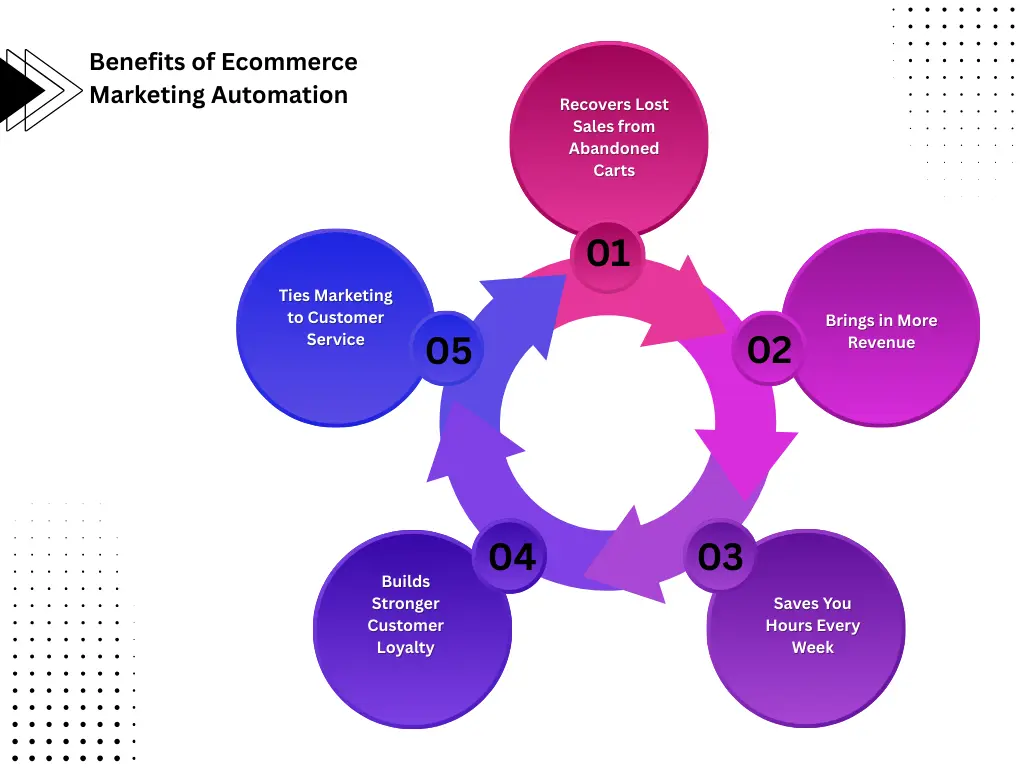
Recovers Lost Sales from Abandoned Carts
Carts sit empty about 70% of the time these days, per Baymard Institute’s 2026 numbers. A quick automated reminder, such as email, text, or WhatsApp, nudges shoppers back. Many stores see 10-20% of those sales return. That’s cash you almost wrote off, flowing in without you chasing anyone.
Brings in More Revenue
Plain bulk messages get ignored. When automation pulls in browsing or purchase history to suggest the right products, things change.
Personalized flows often pull 320% more revenue than basic ones, or even up to 760% from segmented campaigns in some reports. Same customers, way more spending.
Saves You Hours Every Week
You no longer sort lists, schedule sends, or write the same follow-ups over and over. The software runs it all on triggers.
Store owners commonly gain back 20-30 hours a month. Suddenly, there’s room for new ideas, like testing products or planning bigger promotions.
Builds Stronger Customer Loyalty
Buyers return when they feel noticed. Automated thank-yous, special offers on anniversaries, or gentle nudges for inactive folks keep connections alive.
Retention jumps noticeably, and repeat sales grow steadier. Loyal customers spend more over time and spread the word without you asking.
Ties Marketing to Customer Service
Support questions never stop coming. Pair automation with chatbots or instant WhatsApp replies, and issues are resolved fast, day or night.
That happy vibe carries over to marketing; better data means sharper messages. Customers stay satisfied, spot fewer problems, and buy again sooner.
Learn More: Ecommerce Automation Streamline Your Online Store
Ecommerce Marketing Automation Key Components and Strategies
These are the building blocks that actually move the needle in your store. Get a few of them running well, and you’ll see sales pick up while your daily workload drops. Simple setups can deliver big results fast.
Customer Segmentation and Personalization
You can’t treat every shopper the same anymore. Segmentation splits your list by what people do, like new visitors, big spenders, and folks who haven’t bought in months.
Tools watch behavior automatically and tag customers. Once that’s in place, messages change based on those tags. Someone who loves sneakers gets sneaker deals.
A first-time buyer gets gentle nudges. Stores doing this well often double their open rates and see way more clicks turning into orders. It feels personal without you writing hundreds of different emails yourself.
Omnichannel Automation
Shoppers bounce between email, text, WhatsApp, and push alerts. Omnichannel means your messages follow them wherever they are. A cart reminder starts with email, then hits SMS if ignored, and maybe ends with WhatsApp.
Consistency matters; they see the same offer across channels. You set the rules once, and the system handles the rest. Stores using multiple channels together often get 2-3 times higher engagement than sticking to just email.
Abandoned Cart Recovery
This one pays for itself quickly. Most carts, around 70% never check out. Automation spots when someone leaves items behind and sends reminders within minutes or hours.
Add a small discount or free shipping nudge, and watch sales roll in. Top stores recover 15-30% of those lost orders this way.
You can run different messages for first-time abandoners versus repeat offenders. It’s quiet money sitting there waiting to be picked up.
Learn More: Ways to Reduce Online Shopping Cart Abandonment Rate
Post-Purchase and Upsell Flows
After someone buys, the conversation shouldn’t stop. Send a thank-you note, ask for a review a week later, then suggest matching items. Replenishment reminders work great for things people buy regularly like coffee or skincare.
These flows turn one-time buyers into regulars. Many stores make 20-30% of total revenue from post-purchase messages alone. You keep customers longer and get more from each one without feeling pushy.
Win-Back Campaigns for Inactive Customers
People drift away. Automation flags anyone who hasn’t opened an email or bought in 60-90 days. A gentle “We miss you” message with a special offer often brings them back. Stack a few messages over weeks if needed.
Shops running solid win-back flows regain 5-10% of sleeping customers. It’s cheaper than finding brand-new traffic, and those returning buyers usually spend more than before.
Integrating Customer Service Automation
Marketing and support work better together. When chatbots or automated WhatsApp replies handle common questions such as order status, returns, and sizing, you free up time and keep customers happy. That satisfaction feeds straight back into marketing data.
Tools like REVE Chat let you run support chats and send marketing campaigns from the same place. Issues get solved fast, buyers stay loyal, and you spot upsell chances during conversations. Everything feels connected.
Role of Customer Service Automation in Ecommerce
Customer service isn’t just about fixing problems anymore. It plays a huge part in keeping shoppers happy and turning them into repeat buyers. Automation here takes away the constant back-and-forth so you can focus on sales and growth.
Handles Common Questions Around the Clock
Shoppers hit you with the same stuff: nonstop order tracking, return rules, and sizing help. A chatbot or automated WhatsApp reply answers instantly, at any hour. No more waiting till morning. Tickets drop by half in most stores once this runs.
Customers get quick fixes, feel valued, and rarely leave upset. You sleep better knowing basic support never stops.
Cuts Down Response Time and Frustration
People hate waiting these days. Studies show over 60% expect answers in under an hour. Automation delivers replies in seconds. Fast service means fewer angry messages and abandoned carts from unresolved issues.
Happy buyers finish their purchases and come back next time. Your team only jumps in for the tricky stuff that really needs a human touch.
Feeds Valuable Data Back to Marketing
Every chat or ticket tells you something, such as popular questions, pain points, and product confusion.
Automated tools log all that and share it with your marketing setup. Spot a sizing complaint spike? Send a quick guide email to similar customers.
Notice lots asking about a sold-out item? Trigger back-in-stock alerts. This loop keeps messages relevant and turns support chats into sales chances.
Blends Support with Proactive Outreach
Good tools don’t just wait for questions. Platforms like REVE Chat let you start conversations, such as send order updates, collect feedback, or run WhatsApp campaigns, right from the same spot.
A customer asks about delivery. Follow up with a related product suggestion. Support feels helpful, not salesy. Buyers stay engaged longer, trust grows, and extra orders slip in naturally.
Lowers Costs While Scaling Your Store
Hiring more support staff gets expensive fast as orders grow. Automation handles 60-80% of routine inquiries without adding payroll.
You serve thousands instead of hundreds with the same team. Money saved goes toward ads or new inventory. Many stores double their customer base without doubling support headaches once this piece clicks into place.
Top Marketing Automation Tools for Ecommerce
Picking the right tool changes everything for your store. These stand out in 2025 for handling emails, texts, flows, and more. Each brings something useful depending on your size and needs.
1. Klaviyo
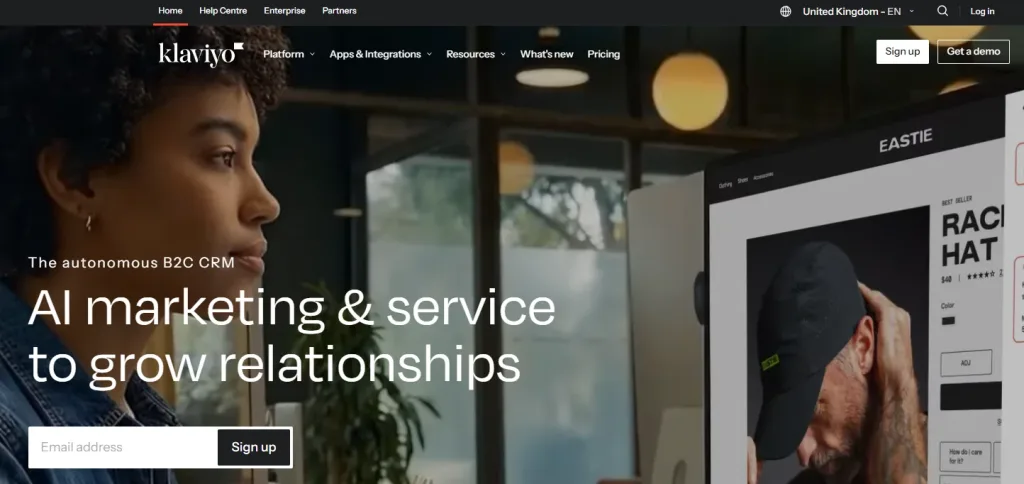
You see it everywhere for good reason. Klaviyo digs deep into Shopify or other platform data to trigger messages based on exact customer moves like viewing a product or abandoning a cart.
It seamlessly integrates email and SMS, with built-in tests to quickly identify winners. Many stores attribute it to significant revenue jumps from personalized flows. Pricing starts free for small lists, then scales with contacts.
Great when you want a heavy focus on data-driven campaigns.
2. REVE Chat
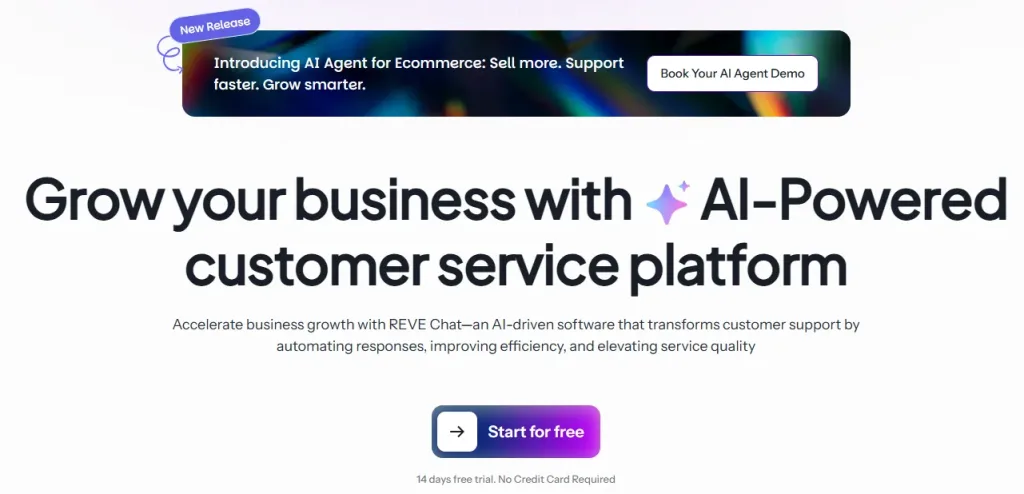
When customer support ties straight into marketing, this becomes a must-have. REVE Chat’s AI-powered chatbots handle questions instantly, such as order status, returns, and sizing, around the clock on your site, WhatsApp, or Facebook.
They qualify leads, guide buyers, and even run proactive campaigns like promotions or updates via WhatsApp. No-code builder lets you set up smart flows quickly, handing off to humans only when needed.
Stores see huge drops in tickets while keeping shoppers happy and engaged longer. It feeds chat data back for better targeting elsewhere.
Perfect for blending support automation with outreach to build loyalty and extra sales without separate tools.
3. Omnisend
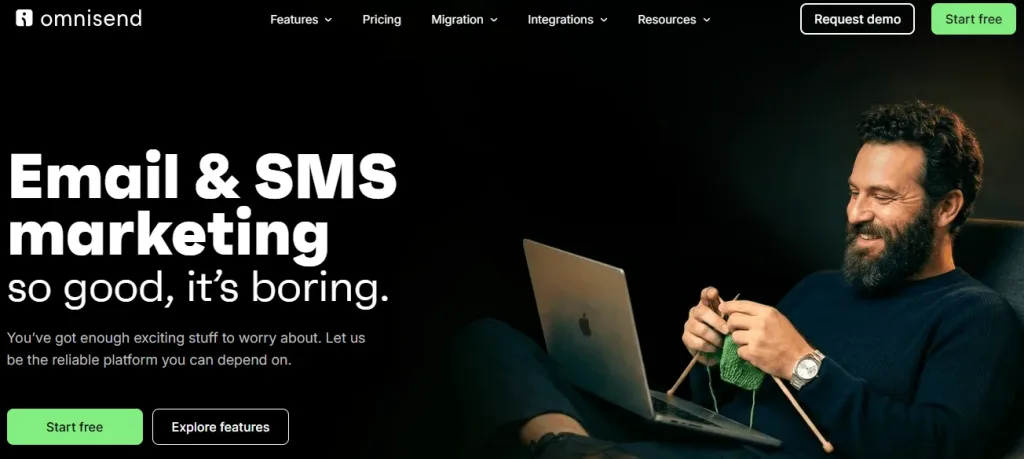
This one keeps things straightforward while covering email, SMS, and push notifications in one spot.
Pre-made workflows for welcome series or cart recovery get you going quickly. It plays nicely with Shopify and others, pulling in real-time info for spot-on messages.
Smaller shops like the generous free plan and how it handles multiple channels without extra hassle. Costs rise as your list grows, but it saves time on setup.
4. ActiveCampaign
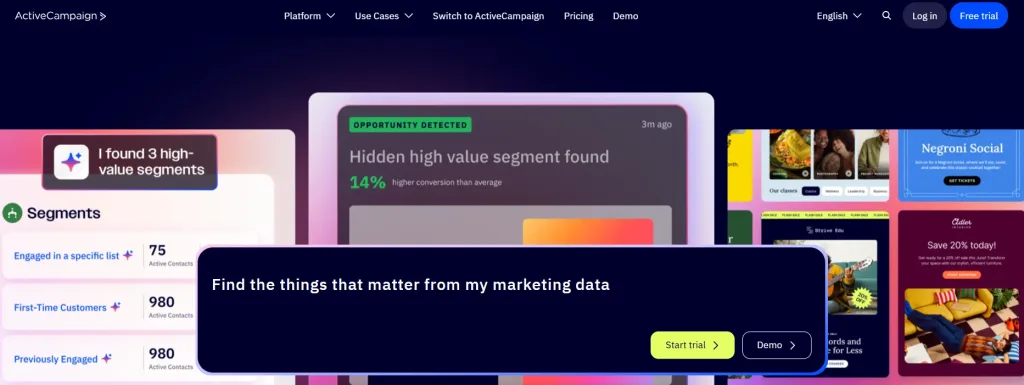
If you crave complex paths like if-this-then-that branching based on behavior, this delivers. It combines marketing automations with basic CRM features, so leads flow straight to sales follow-ups.
Email builder feels solid, and it connects to tons of apps. Stores needing detailed journeys without switching tools lean here. Starts affordable, but shines more for mid-size setups ready for advanced rules.
5. Drip
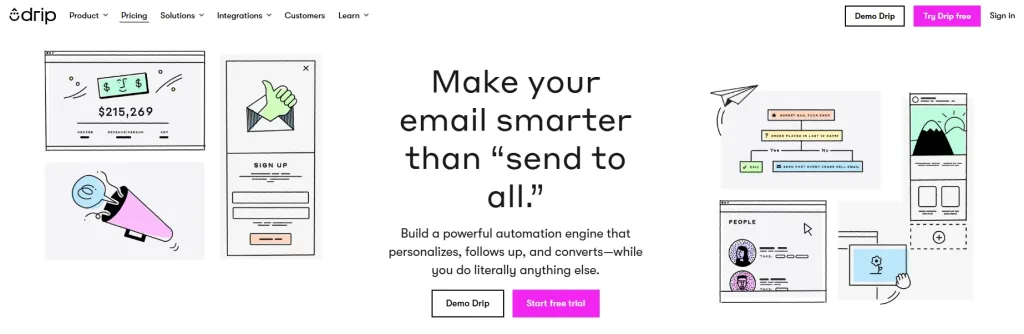
Drip keeps the spotlight on behavior tracking. It watches every click and purchase to build smart segments and send just-right suggestions.
Workflows feel light and fast to tweak. Ecommerce folks who love clean data views and revenue tracking pick this often.
Integrates well with major platforms, though it sticks mostly to email with some SMS add-ons. Solid choice when you want simplicity wrapped around strong personalization.
How to Implement Ecommerce Marketing Automation?
Getting automation running in your store doesn’t have to be complicated. Many owners start small and build from there.
Follow these practical moves, and you’ll see results without getting overwhelmed.
Pick the Right Tool for Your Store
Look at what you already use, such as Shopify, WooCommerce, or something else. Choose a tool that connects easily, like Klaviyo or Omnisend, for heavy email and SMS work.
Check free trials first. Think about your list size and channels. A good fit pulls in data automatically and lets you start with simple flows. The wrong choice means headaches later.
Connect It to Your Platform and Data
Once signed up, link the tool to your shop. Most have one-click setups for popular platforms. This lets customer info, such as orders, browses, carts, flow in real-time.
Add any other apps, like your payment gateway. Test a few purchases yourself to make sure the data shows up right. Clean connections mean accurate triggers and personal messages down the line.
Start with One Simple Flow
Don’t try everything at once. Kick off with abandoned cart reminders, an easy win since carts drop off so often.
Use a ready template, tweak the message, and add a discount if it fits. Set it live in a small group first. Watch how many come back. Quick success here gives you confidence to add welcome emails or post-buy notes next.
Build and Test More Flows
Add things like a welcome series for new sign-ups or thank-yous after orders. Throw in upsell suggestions based on what they bought.
Split test subject lines or send times, send two versions, and see which pulls better. Keep messages short and friendly. Run small tests before going full. Good testing turns okay results into steady extra sales.
Watch Results and Make Tweaks
Check numbers often, open rates, clicks, and actual orders from flows. Tools show which messages work and where people drop off. Pause weak ones, copy strong patterns.
Add customer service ties, like REVE Chat bots feeding chat info back for smarter follow-ups. Regular checks keep things fresh as your store changes, and shoppers shift habits.
Stay on Top of Rules and Privacy
Shoppers care about their info. Follow laws like GDPR or CAN-SPAM, easy unsubscribes, and clear consent. Only message folks who opted in.
Tools have built-in checks, but double-check. Mobile views matter too; most open on phones. Staying compliant builds trust, keeps deliverability high, and avoids trouble that hurts your sending reputation.
Future Trends in 2026 and Beyond
Things move fast in online shopping. What works today gets sharper tomorrow with smarter tech and changing shopper habits. Keep an eye on these shifts; they’ll shape how your store connects and sells.
AI Predicting What Customers Want Next
Tools start guessing shoppers’ moves before they happen. Using past buys and clicks, systems forecast demand, spot who might leave, or suggest items right on time.
Stores running this see inventory stay balanced and fewer stockouts. Predictive setups guess churn early, letting you send the perfect note to keep folks around.
It turns guesswork into steady wins without constant watching.
Zero-Party Data Taking Center Stage
Cookies fade away, so direct info from customers, like quiz answers or preferences, it becomes gold. Shoppers share willingly for better experiences. Brands build trust this way and craft messages that hit home.
Privacy rules tighten, making this clean data the smart path forward. Your automations get sharper when based on what people actually tell you.
Deeper Omnichannel Experiences
Messages flow smoothly across email, texts, WhatsApp, and social media without breaks. Shoppers switch devices or apps mid-journey, and everything stays connected. Automation ties channels together for a consistent feel.
Engagement jumps when reminders or offers follow wherever the customer goes. Tools handling multiple spots at once make your store feel everywhere.
Conversational Bots and WhatsApp Rising
Chatbots get way better at real talks, handling questions, guiding buys, and even closing sales on WhatsApp.
Customers chat naturally, get instant help any time. Platforms like REVE Chat shine here, blending support with proactive notes or campaigns.
Bots resolve most issues quickly, feed info back to marketing, and turn chats into extra orders.
Learn More: How Can a Conversational Chatbot Add Value to Your Business
Self-Adjusting Campaigns
Systems tweak themselves live, changing sends, offers, or timing based on what’s working right then. No more waiting weeks to fix a weak campaign.
AI watches results and shifts spend or content on the fly. Stores save money on ads that flop and grab more from ones that click. It feels like having a constant tuner on your flows.
Conclusion
Running an online store gets easier once automation handles the repetitive stuff. You stop chasing every abandoned cart or late reply. Customers feel noticed, issues vanish quickly, and revenue climbs without extra hours from you.
All the pieces we covered, such as flows, tools, and trends, add up to calmer days and stronger numbers. The shift happens faster than you think. Want to add round-the-clock chatbots and WhatsApp campaigns that tie straight into support? Go sign up at REVE Chat. The free trial lets you test it risk-free and feel the difference right away.
Frequently Asked Questions
Abandoned cart reminders top the list. They set up in minutes, use ready templates, and often bring back 10-15% of lost sales right away. You’ll see money coming in fast with almost no effort.
No, even a few hundred contacts work fine. Many tools have free plans for small lists, and you start building flows as people sign up. Early automations help that list grow quicker anyway.
Not if you keep them relevant and timed right. Trigger them off real actions like browsing or buying, and write like a friendly person. Shoppers actually like helpful reminders more than random blasts.
Plans start free for tiny lists, then run $20-100 a month for most small to medium stores. Some charge by contacts or sends, others flat. The extra sales usually cover the cost within weeks.
Plenty of tools cover both now. Chatbots answer questions instantly while feeding info back to marketing flows. REVE Chat, for example, runs support bots and WhatsApp campaigns from one place.
Build AI-powered support with Wize AI
Connect business knowledge, automate support conversations, and improve response quality without managing a complex AI stack.
Explore Wize AI Agent Rate the article

MD. Shadman Sabik Zaim
Assistant Marketing Manager
MD. Shadman Sabik Zaim is the Assistant Marketing Manager at REVE Chat. With a strong writing background, he contributes with high quality SaaS and tech blogs, educating interested readers on a variety of topics.
View all articles