





Table of Content
A study says 93% of customers say they will buy again after receiving excellent customer service. Customer service begins the moment a customer reaches out, and your team chooses to respond with care. This matters as customers are the most important asset of a business.
If customers do not feel comfortable with your customer service, they choose another brand almost instantly.
Many businesses still do not understand it fully. So what is customer service, and why does it matter? Well, you will get your answer here.
In this blog, you will learn what it is, how it works, the main types, the channels, common mistakes, and more.
What Is Customer Service?
Customer service is the support a business provides before and after a purchase. It includes guidance, answers, solutions, and quick help when customers need it.
This support helps customers feel confident using what they paid for. When service is done well, it builds trust and keeps them coming back.
How Customer Service Works
When a customer faces a problem and reaches out, the client service process begins.
What they do is:
- Listen properly so you understand the customer from the start.
- Reply fast and keep things clear.
- Talk in a friendly, calm tone.
- Check past details so customers don’t repeat themselves.
- Keep the flow smooth: question → answer → solution → follow-up.
- Give the same clear info on chat, phone, and email.
- Use complaints and feedback to fix weak spots and improve service.
Importance of Customer Service
Does a business really need to offer support services to its customers? Well, the answer is yes! Good customer service has become a must for businesses.
Have a look at the importance of service for customers here.
Retains More Customers
Good service makes people want to stay. It can cost up to 5 times more to get a new customer than to keep one. So, keep in mind that you must take care of your existing customers, as this pays off in the end.
Build Relationships
People come back when they feel listened to. A study shows that 89% of customers say that they buy again from the same place after they experience good service. So, yes, good services for customers build a good, loyal base among your customers.
Strengthens Your Brand
How your team treats customers shapes how people see your business. Friendly, reliable service helps build a strong and positive reputation that people remember.
Get More Referrals
Well, satisfied customers naturally talk about good experiences among their friends and family. This means your business gets more referrals, which leads to more customers. So, this creates a positive impact on your business.
Increase Sales
Customers spend more when they trust you. Loyal customers often bring in 60 to 70% more sales because they return more often and buy with confidence.
12 Different Types of Customer Service
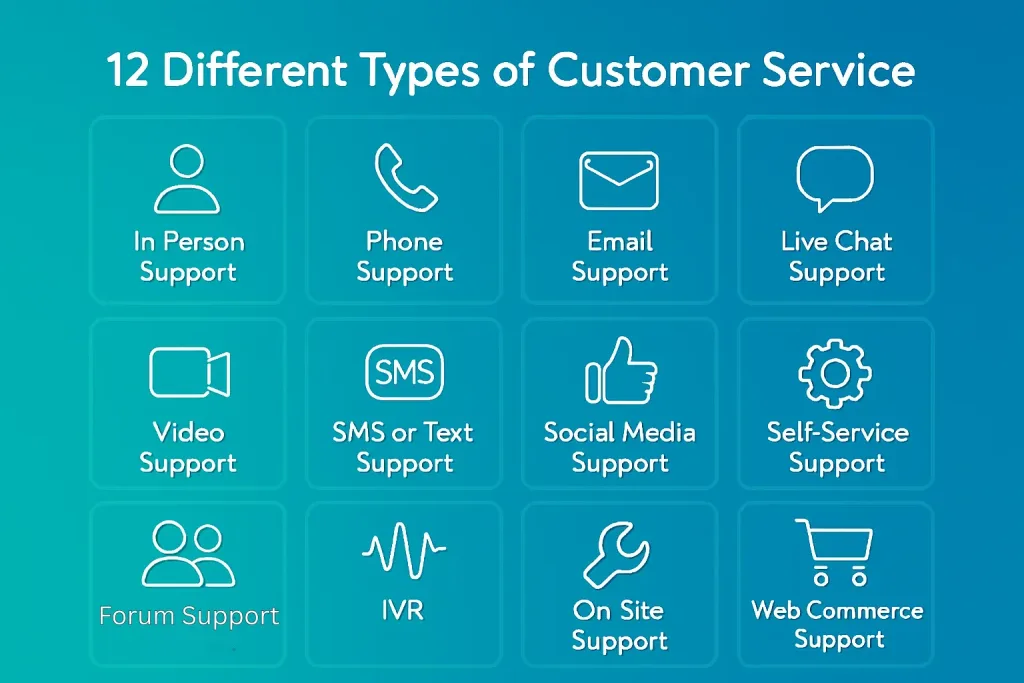
Learning about the types of customer service is a must to understand the work process and ways an agent can communicate with a customer. Here are the top 12 types of customer service:
- In-Person service
This is face-to-face help. A staff member listens, checks the problem, and fixes it right there. It feels personal and works well when people need hands-on support.
- Phone Support
Customers call and talk to a real person. It helps when someone feels worried or needs answers fast. Hearing a calm voice makes the whole experience easier.
- Email Support
Customers write in and share details at their own pace. It gives space to explain the problem clearly and attach files or screenshots. It is helpful for issues that need careful steps.
- Live Chat Support
This happens on a website or app. Customers type their questions and get quick replies. It works well when someone is shopping online and needs support right away.
- Video Support
Video calls let customers show the issue instead of trying to describe it. It works for setup help, tech problems, or any task that is simpler when you can see what’s going on.
- SMS or Text Support
Short messages make communication quick and simple. Customers can ask small questions or get updates without calling or waiting. It is a convenient option for people on the go.
- Social Media Support
Many customers reach out on Instagram, Facebook, or similar platforms. Support teams reply there so people get help where they already spend their time. Social media customer service has become a popular type nowadays.
- Self-Service Support
Customers help themselves through FAQs, guides, or small how-to tutorials. It saves time for simple tasks and gives people control over finding answers.
- Community and Forum Support
Customers help each other. People share advice, tips, and fixes based on real experience. It builds trust and reduces repeated questions.
- Interactive Voice Response IVR
This is the automated menu when someone calls. It provides basic information and directs callers to the right person. It saves time and keeps calls organized.
- On-Site Customer Support
A trained professional visits the customer. It is used for installations, repairs, or anything that must be handled in person.
- Web Commerce Support
Customers ask questions right on a product page. The support team or other shoppers reply and help them understand the item before buying.
7 Pillars of Great Customer Service
You must learn about the 7 pillars of it after learning ‘what is customer service?’, so that you can offer the best service. So, the 7 pillars are:
Connect Service Across the Organization
Your customers hate repeating themselves. When your service team can see everything in one place, such as past orders, messages, and issues, you help them faster.
Connecting your service tools with the rest of your company gives you a full picture of each customer, so every person they talk to already knows what they need.
Offer Support on Every Channel
People reach out in different ways. Some call. Some text. Some use social media or email. So, ensure that you offer them the services in a way that they prefer. This makes the customer experience better. Try a basic help center or chatbot, as they save customers time.
Balance Quality and Speed
Customers always want a quick solution to their issue, but the right solution. So, with proper steps and using the right tool, you and your team can work fast and offer the best customer experience. When quality stays high, customers leave the conversation feeling understood and respected.
Train Agents on Soft and Hard Skills
Humans should stop learning at whatever age. So, train your agents well with different tips and tricks so that they can offer better service.
Remember, a good team always knows how to stay calm, listen, and speak clearly. So, training them regularly on soft and hard skills helps the team feel more confident.
Promote a Collaborative Team Culture
Agents usually work with customers. But, ensure that they don’t feel alone. Promote a collaborative team culture within your team so that they support each other and share ideas. Collaboration becomes easy through communication, and this keeps morale high.
Turn Customer Service into a Revenue Driver
Customers mostly welcome helpful suggestions when they have trust in you. With this, you can generate more revenue. Always remember, when you understand a customer’s needs, recommending the right product feels smooth and genuine.
Measure Success Is A Must
You may provide fast service, but this is not enough. This is just a part of your success, and you must measure the success properly.
Ensure that you track satisfaction, effort, and repeat success, which is a reflection of how customers truly feel. Through these numbers, you can find out what you’re lacking and what needs to improve.
4 Levels of Customer Service
Four levels show how customer support grows from basic help to exceptional care. So, the 4 levels of customer service are:
Level 1: Bare Minimum Service
Customers feel ignored when they get the bare minimum service. This is even considered the poorest level of service. Replies are slow, and most customers don’t get their expected support. They feel frustrated and may share negative stories or reviews, too.
Level 2: Meeting Customer Expectations
Here, the company does the basics. They answer on time and solve simple problems. Customers get what they expect, but nothing extra. It avoids major complaints, but it does not build strong loyalty.
Level 3: Exceptional Customer Service
This level feels warm and personal. Customers are heard and appreciated. The team solves problems quickly and with care. Remember, customers always feel comfortable at this level of customer service and keep coming back.
Level 4: Exceeding Customer Expectations
At this level, customers feel totally satisfied. They get the best service beyond their expectation. Here, the agents make an emotional connection with the customers. Customers always refer to this type of service to others.
Customer Service vs. Customer Experience vs. Customer Support
Have a look at the top 5 differences among customer service, customer experience, and customer support:
| Key Area | Customer Service | Customer Experience | Customer Support |
|---|---|---|---|
| Main focus | Give quick, clear help when customers reach out | How the entire journey feels from start to finish | Solve technical or product issues |
| What it covers | Daily questions and small problems | Every stage: first visit → purchase → after-purchase | Set up issues, errors, and deeper product troubles |
| Who’s involved | Front-line agents | Multiple teams across the company | Specialists with strong product knowledge |
| Result | Customers feel supported | Customers feel connected and cared for | Customers get accurate, reliable fixes |
| Success measure | Fast replies & satisfied customers | Strong overall brand experience | Quick, precise problem resolution |
| When it happens | Fast replies & satisfied customers | Strong overall brand experience | Quick, precise problem resolution |
What Are The Key Customer Service Channels?
Have a look at the key customer service channels here:
By Phone
Customer support through phone calls is the most trusted channel for it. Customers call when they need quick solutions to solve an issue. Talking to a real person helps them feel heard.
By Email
Email is great for issues that need details. Customers can explain everything clearly and attach photos or files. It also gives both sides a written trail, which makes follow-up easy. This works well when the problem needs a bit more time to solve.
Live Chat
Live chat is simple and fast. While browsing a website, if customers face any issues, they can ask questions. Live chat will help them immediately with proper answers. This is a direct solution to problems.
SMS
SMS works as a simple customer service channel that keeps communication quick and direct. Businesses can use short texts to answer questions and share important updates. Customers get the help they need in real time right on their phones.
Online Community Engagement
Community groups give customers a space to help each other. People share advice, ask questions, and learn from real experiences. This also lowers the pressure on support teams and shows how services for customers now include learning from other customers, too.
Top 5 Skills You Need to Offer The Best Customer Service
Only knowing the answer to ‘what is customer service?’ is not enough. You need a few simple skills to offer good service. Read this section to learn about the top 5 skills that one needs to offer the best service to their customers.
Show Empathy
Here, empathy means understanding your customer’s situation for better support. This means you must listen carefully before offering any solution.
Many people feel stressed when something goes wrong. A gentle tone can lower that stress right away. This is one of the golden rules of customer service, and it makes every other step easier.
Solve Problems Quickly
Quick help matters. When a problem drags on, customers lose trust. They want things fixed without a long wait. So, yes, speed and care to solve issues matter.
Communicate Clearly
Clear communication keeps everything smooth. Use short sentences. Ensure that you use everyday words to create more conversation with customers. Tell them what actually happened and what your next plan is. In this way, your customers will trust you and won’t feel lost.
Listen Actively
Good listening helps you find the real issue. Let the customer finish speaking. Ask small questions if something is unclear. Repeat key details to show you understand. Customers notice this and appreciate it.
Know Your Products
You must know everything about your products to offer the right solutions to your customers. Knowing about the products makes you confident. Even the chance of making mistakes will be reduced, which makes the entire process easier.
Top 5 Common Customer Service Challenges
Many teams deal with the same problems when helping customers. These issues show why it is important to understand what is customer service and how it works in everyday situations.
So, you may face:
1. Slow Response Times
When customers wait too long, they feel ignored. Many quietly leave without saying a word. A recent survey shows that 73% of people switch to another company after one bad service experience. Even a slow response time is considered a major issue.
2. Inconsistent Service Across Channels
A customer might get quick help through chat, but wait much longer for an email reply. When support changes from one channel to another, customers lose trust. So, keeping consistency is a must!
3. Difficulty Handling High Support Volume
When too many requests come in at once, things fall behind. Handling everything together becomes a challenge. Customers end up waiting longer, and simple issues turn into bigger frustrations.
4. Lack of Knowledgeable Staff
When the team doesn’t know the product well, customers notice right away. Wrong or unclear answers create confusion. Proper training helps everyone give better support.
5. Struggling to Manage Angry or Demanding Customers
Most customers seek help from customer service when they are stressed. A calm, patient tone can pacify a customer’s anger. However, this anger or demanding issue turns a tense moment into a chance to fix the problem.
How Businesses Can Improve Their Customer Service
Start improving the services for customers by learning about your customers’ expectations. It also means preparing your team to help correctly. Every business should understand what good service looks like and try to offer it every day.
Training Staff
Good service comes from well-trained people. Staff should know the products. They should also understand common problems. Simple customer service training helps them listen, stay patient, and talk clearly. This makes every customer feel heard.
Collecting Customer Feedback
Feedback shows what customers really think. Short surveys and quick follow-ups work well. Reviews also give helpful clues. These comments show what customers enjoy and what they want changed. This makes it easier to improve.
Faster Replies
A quick reply shows customers that their problem matters. Even a short acknowledgment helps calm frustration.
Consistent Support on Every Channel
Customers want the same quality of help whether they contact a business by chat, email, or phone. A shared system helps teams see past conversations and give steady, clear support every time.
Better Handling of High Volume
Busy moments slow everything down. A simple queue system, clear priorities, and helpful self-service pages can prevent delays. This keeps small issues from turning into big complaints.
Calm Support for Angry Customers
A slow or confused reply can make a tense situation worse. A calm tone, patient listening, and clear steps toward a solution can turn frustration into relief.
Clear Resources for Customers
Guides, FAQs, and simple how-to pages reduce dependency on support teams. Customers appreciate finding answers on their own, and this frees up agents for more important cases.
Future of Customer Service
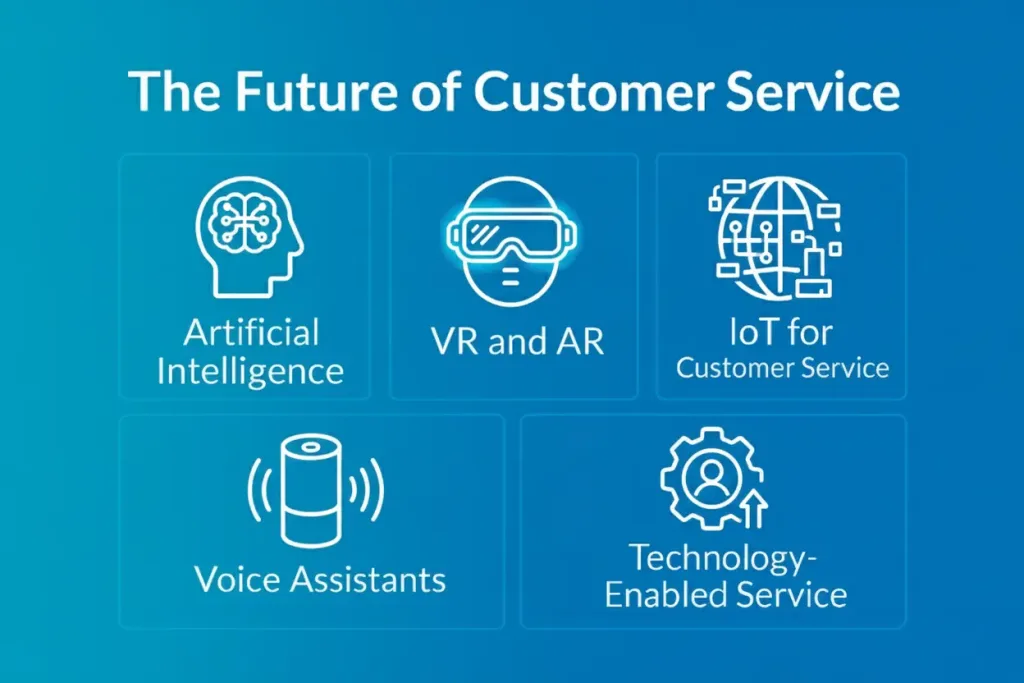
Now, wondering what the future of customer service is? Well, we have entered a tech era, and companies are working hard to add new technology in this field too. So, in the future, there will be more tools to offer the best service to your customers.
So, the trends of the future will be:
More Advanced AI
AI is more advanced now. AI in customer service answers simple questions fast and helps customers follow easy steps. It handles small tasks so human agents can focus on tougher problems. This makes service quicker and more helpful for everyone.
A study shows that 72% of customers like the service when AI is used. It means people enjoy AI’s fast and accurate help. So, in the future, AI will play an important role here by offering more convenient human-like conversations and solutions.
Virtual Reality (VR) and Augmented Reality (AR)
Developers are focusing more on VR and AR so that in the future, they can help customers by offering better services prominently. Now, VR and AR can walk through instructions and view product details, which makes CX better. In the future, they will provide clearer support and also reduce customer confusion.
Intelligent Voice Assistants
Voice assistants offer services that mostly feel natural. During odd times when a human agent can’t offer services, a voice assistant does that for you. Customers can talk to them at any time and get answers. So, people who don’t like texting can speak to them and get their desired support.
Internet of Things IoT for Customer Service
IoT allows devices to report issues before the customer even notices a problem. Companies can fix things early, send alerts, or guide customers through small steps. This creates smoother experiences and builds trust.
Business Impact of Technology-Enabled Service
Customers stay longer when a business offers technology-enabled services. Customers feel better, supported, understood, and valued. So, yes, businesses are involving more tech-enabled services to gain better loyalty, higher satisfaction, and stronger business growth.
End Note
In the end, now you know the answer to ‘what is customer service?’ Well, customers want to feel heard. They want clear answers. Every call, chat, or message shapes how they see your business.
Keep listening to people and stay patient. Pay attention to what customers tell you. Use their feedback to make things better.
When your team speaks with kindness and solves problems without confusion, customers notice it. They begin to trust your business. Trust keeps people coming back and makes them feel comfortable choosing your business again.
Looking for the best customer service software? Begin your journey with REVE Chat to get the best support. Also, sign up today to get a free 14-day trial.
Frequently Asked Questions
Good service feels warm, honest, and fast. It gives clear answers and solves the real problem. It also makes the customer feel heard. When people feel respected, they are more likely to return.
They answer questions, solve issues, guide customers, and make people feel supported. They help on calls, chats, emails, or social messages. Their attitude sets the tone for the whole experience. A good representative can save a bad situation fast.
Lower your voice, let them speak, repeat their concern, and give a simple plan for what happens next. This helps them feel heard and understood. A calm tone reduces stress. Clear steps make the problem feel controllable.
A customer explains a problem once, gets a clear answer, receives quick help, and feels appreciated. They walk away feeling the business truly cares. The support feels personal, not forced. They end the interaction with more trust than before.
Their voice changes, replies get shorter, and mistakes increase. Short breaks help them reset. Support from the team also makes a big difference. A rested agent handles tough calls much better.
Build AI-powered support with Wize AI
Connect business knowledge, automate support conversations, and improve response quality without managing a complex AI stack.
Explore Wize AI Agent Rate the article

Ehsanur Rahman
Head of Customer Communication
Ehsanur Rahman, the Head of Customer Communication at REVE Chat is dedicated to implementing advanced solutions that boost customer interactions and satisfaction. Ehsanur's passion for technology and customer service drives his commitment to delivering exceptional experiences.
View all articles