




Table of Content
Do you know that 50% of customers pick your competitors over you? Because your competitors seemed more relevant and satisfied your customers’ needs better?
But why do your customers feel unsatisfied and that your services are irrelevant? The most prominent answer is that you are handling different customer types in the same way.
If you’re not strategically segmenting your customers and handling them accordingly, things are going wrong. And if you continue to do so, you are bound to lose tons of loyal customers and a big chunk of your sales.
Each of your customer’s types massively differs from other customers in many ways. And that is why dealing with all your customers the same way could be the biggest mistake you’re making in your retail business.
What are the Types of Customers? Why Should You Handle Them Differently?
Your customers have different personalities and are spread across the various stages of your sales funnel. Customers show different personalities and behaviors. When they are potential customers or even when you need to support them in the customer service and customer success stages.
So in such cases, having the same approach to handle all your customers leads to bad customer experiences. Studies show that 33% of customers leave a brand they leave just after one bad experience!!
Instead of handling all your customers the same way, if you segment your customers into different stages and personalities, and handle them accordingly, you can make a huge difference in your revenue and brand authority.
You also need to understand the stages of a customer journey to better serve them and provide value at each step of the way.
So let’s find out how you can approach different customer types.
How to Identify Customer Types for Your Business?
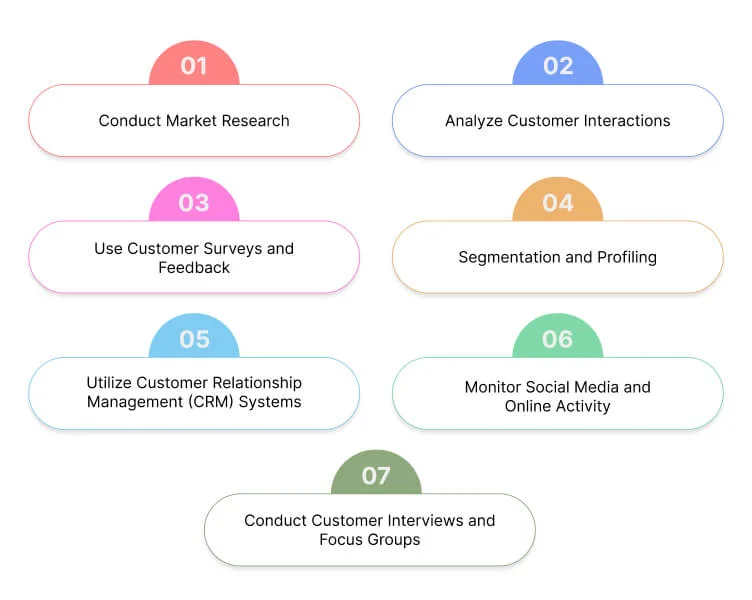
It is crucial for personalizing your marketing strategies, improving customer satisfaction, and maximizing sales opportunities. Here are seven key points to help you identify customer types for your business:
1. Conduct Market Research
You can conduct thorough market research to gather demographic, psychographic, and behavioral data about your target audience. This includes age, gender, income level, lifestyle preferences, purchasing habits, and pain points.
2. Analyze Customer Interactions
Always analyze customer interactions across various touchpoints, including in-store visits, website browsing behavior, social media engagement, and customer service inquiries. You can look for recurring themes, questions, and preferences expressed by customers to gain insights into their needs and preferences.
3. Use Customer Surveys and Feedback
You can utilize customer surveys, feedback forms, and reviews to gather direct insights from your audience. Ask questions about their preferences, satisfaction levels, purchase motivations, and pain points.
4. Segmentation and Profiling
This may involve demographic segmentation (age, gender, location), psychographic segmentation (lifestyle, values, interests), or behavioral segmentation (purchase frequency, product usage). You can create detailed customer profiles for each segment to better understand their motivations and needs.
5. Utilize Customer Relationship Management (CRM) Systems
You can use CRM data to identify patterns and trends within your customer base, such as repeat purchase behavior, product preferences, and communication preferences. This information helps to personalize marketing efforts and improve customer retention.
6. Monitor Social Media and Online Activity
You always have to pay attention to mentions of your brand, competitor comparisons, and product feedback. You can engage with customers directly to address concerns, answer questions, and gather insights into their preferences and opinions.
7. Conduct Customer Interviews and Focus Groups
In this stage, you can conduct in-depth customer interviews and focus groups to gain qualitative insights into customer attitudes, motivations, and pain points. Ask open-ended questions to encourage discussion and uncover valuable insights that may not be captured through quantitative data alone.
Different Types of Customers and How to Deal With Them

These are the customers that are in the awareness stage of your sales funnel. So, your focus for such customers should primarily be to make them aware of your services, win their trust, and lead them toward their first purchase with you.
Let’s find out about the different customer types and how to deal with them. Note that any customer can fall into more than one type as well.
1. The Lookers
Lookers are the customers who are just browsing through your services and probably looking through your competitors as well. They’ve shown some interest, but they have yet to decide on anything.
With such types of customers, it’s essential to catch their attention somehow.
How to deal with them?
- Make your website look intriguing and attractive. Write a compelling copy on your web pages and keep the design innovative. Make sure that you drive the onlooker’s attention to the right places by planning the right website engagement strategies.
- Remove any obstacles or objections in this initial stage and focus on good customer experience. Even small elements such as intrusive pop-ups, disturbing ads, difficulty navigating, or lack of quick customer support can turn them away.
2. Discount Customers
Discount customers are interested in your product only because you are offering it at a discounted price. There’s no way that discount customers are going to get it at the usual price.
These customers can be tricky to handle, but you can keep them with you if you handle them the right way.
How to deal with them?
- Make them understand the value you are adding even at the discounted price. This will make the customer feel that they did get a good deal. Thus they will value your product more and will stick around for longer.
- Discount customers are usually looking for the best deals possible. They would want to understand your offer and terms in detail. So get in touch with them through options like live chat or customer service. This will turn them into your loyal customers.
3. Researchers
These categories of customers have done their research, compared you with your competitors, and are looking for the best possible option.
For researchers, just attractive websites or good discounts won’t work.
How to deal with them?
- You can change researchers’ decisions by adding social proof like testimonials and case studies. They will look into every detail. So it is best to go all out and provide details as extensive as possible.
- Add wireframes, white papers, and feature comparisons to your website to help them understand your services better.
- Focus on your value proposition. Make them realize that you’re offering something that no one else is going to provide them.
4. Impulse Customers
This type of customer has not really planned on purchasing your products, or any products for that matter. They make purchase decisions at the spur of the moment.
How to deal with them?
- Provide them with a seamless experience throughout the funnel. Remove even the slightest obstacles and make the whole purchase journey a slippery slide.
- Time-sensitive offers work best with these kinds of customers. So offer them time-bound deals that create urgency.
- Keep your website copy crisp and compelling. Then the user will make the impulse buying decision in your favor.
5. Unsure Customers
These types of customers are similar to lookers but are more confused and unsure about which direction to move forward.
How to deal with them?
- Make all your contact channels such as chatbots, or live chat options easily available. This step can turn their decision in your favor.
- Focus heavily on your USP and value proposition. Propose unique solutions, provide top-notch customer service, and guide them through every step.
6. Looking-To-Switch Customers
The looking-to-switch customers who have subscribed to a similar product or service but are unsatisfied with them. This is why they are looking at you as an alternative.
The good news is that these customers are ready to spend. All you have to do it to nudge them in your direction.
How to deal with them?
- The first thing you must do is research your competitors. Find out what they are missing or where they are lagging. Try to cover these gaps with your services.
- Once again, focus on your USP and value proposition. Let them know what makes you a better choice. Get to know their objections and hurdles and offer solutions to them.
7. New Customers
New customers have just made their first purchase. They are still trying to understand your product and need guidance. This is the stage where you make a lasting first impression.
How to deal with them?
- Have a smooth, onboarding process. Guide them through each step and provide them with comprehensive guidance.
- Did you know that the #1 reason customers switch to your competitors is that they feel unappreciated? Hence, you should try and make the extra effort by providing options such as live chat, video chat, and co-browsing. By providing such options, your customers will know that you genuinely value them and you can turn your new customers into loyal customers this way.
8. Active Customers
Active customers are the ones who are actively using your products or services. But they’re not your loyal customers yet. This means, that if offered a better deal by your competitors, active customers are likely to switch.
Hence it is crucial to nurture them the right way, instead of ignoring them because they are already using your products.
How to deal with them?
- Delivering best-in-class customer service is the key here. Continuous engagement and interactions will let your new customers attach to your brand more. If you guide such new customers throughout their journey, they will think twice before switching to your competitors.
- Focusing on customer success is another key thing you must take care of. Your customers are here to achieve their goals. So, if you make the extra effort to lead your customers towards success that will make them stick with you for a long time.
9. Lapsed Customers
Things went wrong, and these customers have left you already even if you did not decline a request politely. But don’t lose hope yet. There’s still time to fix things and earn your lapsed customers back. Again, being quick and proactive is the key here. You need to identify these lapsed customers as soon as possible. Or it may be too late for you to win them back.
Also, remember that you have an advantage over your competitors here. Your lapsed customers are familiar with you. And switching would mean that they need to go through the onboarding process all over again. This is why you must proactively take steps to convince them to purchase from you again.
How to deal with them?
- After segmenting these lapsed customers, your first step should be to find out why they left you. Did they have any customer service complaints? Did they get any better deals with your customers?
- Next, fix these issues ASAP. Then let your lapsed customers know that you’ve fixed them. Reach out to them, apologize, and let them know that you’ve resolved all their pain points. By doing this, you have a fair chance of getting them back.
10. Unhappy Customers
Unhappy clients are the most delicate ones to handle. Such customers have made purchases from you but are unsatisfied with your brand or your services.
You can find them through different signals like customer service complaints, stopping auto-renewals for subscriptions, downgrading their plans, or negative reviews/comments on social media.
Not tending to unhappy customers at the right time can lead to increased churn rates or even negative backlash and bad publicity. Hence it’s crucial to handle angry customers the right way.
How to deal with them?
- Monitor your customer service channels and social media for complaints or negative comments. Using this, you can identify unhappy customers before it is too late.
- Then you can actively follow up with your customers. You can follow up through different support channels like live chat and ask customers for feedback. By doing this, you’re nipping the problem in the bud and stopping some mildly unhappy customers from turning into outright angry customers.
- Once you’ve identified these customers, talk to them, and understand their complaints and objections. Then start fixing them ASAP. This step can turn your unhappy customers into loyal customers.
11. At-Risk Customers
At-risk customers are similar to unhappy customers, but unlike them, they are not unhappy. Rather, at-risk customers may have stopped using your services because they lost interest, opted for your competitors, or got busy with something else.
You can identify these customers again through specific signals. For example, if it’s been a long time since they logged in or used your services indicates that they are going to churn.
How to deal with them?
- You should try to get in touch with these customers personally to check why they haven’t been using your services lately. But you should ensure that you’re not bothering them this way.
- Some customers may have already made up their minds, but a few might change their decision based on your interaction with them. So this is definitely worth a try. Again, understand their pain points and go out of your way to fix them.
12. Referral Customers
Referral customers are those who have been referred to your brand by one of your loyal customers. So it’s highly likely that they know very little about your services.
Also, your loyal customers have convinced these customers to go with you. So their hopes may be really high with you. It’s also possible that they are completely lost and clueless about which direction to move towards.
How to deal with them?
- Again, have a clear and comprehensive onboarding plan for these customers. Make sure that you guide them throughout so that they experience a smooth onboarding process with you.
- Referral customers may be here because they are interested in some specific products or services that your loyal customer told them about. So, it’s best to interact with such customers and figure out their expectations from you.
13. Loyal Customers
Loyal customers are the best kind of customers to have for your business. Repeat customers types keep coming back to you for different products and services and they seem to be impressed with your brand.
Apart from keeping them with you for a longer time, you should understand what factors made them loyal in the first place.
How to deal with them?
- Feature your loyal customers on your case studies or get their testimonials. This will make them feel more valuable, and you get more social proof to add to your website.
- Connect with them and understand their success story. You should understand what they like about your brand and what made them your loyal customers in the first place. Use their experiences and try to replicate the same for all your other customers.
14. Lifetime Customers
Lifetime customers are your loyal customers, but even better! They have opted for a lifetime subscription to your product or service.
How to deal with them?
- Since they are already your lifetime customers, it’s easy to forget about them and focus on other customers. But remember that these customer types are going to bring you tons of new customers and good PR. Hence, creating value for them and making them a part of your community will make your lifetime customers feel special.
- Another good thing to do is educate your lifetime customers about your referral programs and provide them with some incentives for referring you to other people.
15. Referring Customers
These types of customers are happy with your products or services and are willing to refer you to new customers.
How to deal with them?
- Referring customers types are rarely going to refer new customers themselves. This is why you should take the first step by identifying all the willing-to-refer customers. You can do that by asking for feedback from your active customers. If you receive any glowing positive feedback, ask them if they would be willing to refer your services to other people.
- You can also provide referring customers with some incentives for referring some new customers to you. This will again motivate them to refer more people to your brand.
16. Advocate Customers
Advocates are the types of customers who are, by far, the most profitable clients of yours. Apart from being loyal or lifetime customers, they are also your brand’s loyal advocates.
They talk about your company and your services at every chance they get. And they’ve already referred a bunch of customers to you.
How to deal with them?
- Put your advocate customers in the limelight at every chance possible. You can use them for your case studies, and put up their testimonials on your home page. This will encourage them to advocate for your brand even more.
- Make sure that you never disappoint your advocate customers with any bugs or customer service issues. Always be there for them throughout their journey. And strive to lead them toward customer success.
17. The Busy Bee
Time-strapped and always on the go, this customer values convenience above all else and appreciates efficient service and streamlined processes.
How to deal with them?
- You’ll have to streamline the purchasing process with easy-to-use online platforms, mobile apps, or automated services.
- Offer convenient options such as express checkout, curbside pickup, or subscription services to save them time and effort.
18. The Eco-Conscious Consumer
This category of customers is mindful of environmental impact, this customer seeks out sustainable and eco-friendly products and companies.
How to deal with them?
- Focus on highlighting your company’s sustainability efforts, eco-friendly initiatives, and green certifications to align with their values.
- Offer environmentally friendly product alternatives and packaging options to reduce their carbon footprint.
19. The Status Seeker
Motivated by prestige and social status, this customer gravitates towards luxury brands and exclusive experiences.
How to deal with them?
- You can deliver a luxurious experience, exclusive perks, and limited-edition products to satisfy their desire for prestige.
- Focus on brand storytelling and heritage to create an emotional connection that resonates with their aspirations.
20. The DIYer
Resourceful and hands-on, this customer prefers to tackle projects themselves rather than outsourcing or purchasing ready-made solutions.
How to deal with them?
- Always you should offer comprehensive guides, tutorials, and DIY resources to empower them in their projects.
- Provide customizable products or kits that cater to their creative instincts and allow for personalization.
21. The Trendsetter
Fashion-forward and ahead of the curve, this customer sets trends and influences the purchasing decisions of others in their social circle.
How to deal with them?
- Keep them informed about upcoming trends, product launches, and collaborations to maintain their interest and engagement.
- Encourage user-generated content and collaboration opportunities to leverage their influence within their social circles.
22. The Nostalgic
Sentimental and nostalgic, this customer is drawn to products or experiences that evoke fond memories from the past.
How to deal with them?
- Evoke feelings of nostalgia through retro designs, vintage packaging, or throwback experiences that resonate with their memories.
- You can share stories and anecdotes that tap into shared experiences or cultural references from the past to create a sense of connection.
23. Health-Conscious Consumer
Prioritizing wellness and self-care, this customer seeks out products and services that promote health, fitness, and overall well-being.
How to deal with them?
- You need to emphasize the health benefits, natural ingredients, and wellness features of your products or services.
- Provide educational content, workshops, or events focused on promoting healthy living and self-care practices.
24. Minimalist
Preferring simplicity and functionality, this customer values quality over quantity and seeks out products with clean, minimalist designs.
How to deal with them?
- You can simplify your product offerings and streamline the shopping experience to align with their minimalist lifestyle.
- Focus on quality craftsmanship, functionality, and timeless design to appeal to their preference for simplicity and longevity.
25. Socially Responsible Consumer
Committed to making ethical purchasing decisions, this customer supports businesses that prioritize social responsibility, ethical sourcing, and fair labor practices.
How to deal with them?
- Showcase your company’s commitment to social responsibility, ethical sourcing, and community involvement through transparent practices and initiatives.
- You can engage them in meaningful conversations about important social issues and collaborate on projects or campaigns that support shared causes.
26. Determined Customers
Determined customers know what they want and are close to making a purchase.
Unlike researchers, who may still be comparing several alternatives, determined customers have generally completed most of their evaluation. They may already know the product, plan, feature, or service they want and are primarily looking for a smooth way to complete the purchase.
At this stage, unnecessary friction can be costly.
How to deal with determined customers
- Remove purchase friction. Keep forms, checkout steps, account creation, and other processes as simple as possible.
- Make important information easy to find. Pricing, product details, delivery information, policies, and terms should be clear.
- Provide immediate assistance. Make live chat or other support options easy to access for last-minute questions.
- Address final objections quickly. Product comparisons, FAQs, reviews, case studies, or demonstrations can reinforce the customer’s decision.
- Avoid unnecessary distractions. Determined customers often need completion rather than persuasion, so avoid interrupting them with irrelevant promotions or excessive messaging.
For these customers, your goal should be to shorten the distance between purchase intent and successful conversion.
27. International Customers
International customers interact with your business from another country or market and may have expectations that differ from your primary customer base.
Language is only one part of the experience. Time zones, cultural expectations, currencies, communication preferences, purchasing processes, and support availability can all influence how international customers perceive your brand.
How to deal with international customers
- Offer multilingual communication. Let customers communicate in a language they are comfortable using whenever possible.
- Consider time zones. Provide self-service or automated support when human teams are unavailable.
- Localize important information. Adapt product information, FAQs, policies, and other customer-facing content where necessary.
- Maintain context across channels. Customers should not have to repeatedly explain the same issue when moving between messaging, chat, email, or other channels.
- Set expectations clearly. Make regional differences involving availability, delivery, pricing, policies, or service hours transparent.
- Understand cultural differences. Communication styles and service expectations may vary between markets, so avoid assuming one approach will work everywhere.
Businesses serving multiple markets should design customer engagement around accessibility and consistency rather than expecting international customers to adapt to a single local experience.
How to Group Different Types of Customers
Knowing individual customer types is useful, but businesses also need a simple way to organize them. Not every customer type represents the same thing. Some describe where a customer is in the buying journey, while others describe buying behavior, relationship with the brand, or personal preferences.
A practical approach is to group customer types into four broader categories:
| Customer category | What it represents | Examples |
|---|---|---|
| Journey-based customers | Where customers are in their relationship with your business | Lookers, new customers, active customers, lapsed customers |
| Behavior-based customers | How customers evaluate and purchase products | Researchers, discount customers, impulse customers, unsure customers |
| Relationship-based customers | The strength of the customer's relationship with your brand | Loyal customers, referring customers, advocates, lifetime customers |
| Preference-based customers | Values or preferences that influence purchase decisions | Eco-conscious consumers, status seekers, minimalists, socially responsible consumers |
This framework makes customer segmentation easier to act on.
For example, a shopper may be an eco-conscious consumer based on personal preferences, a researcher based on current buying behavior, and a new customer immediately after making a purchase.
Instead of forcing every customer into one permanent category, businesses should consider several signals together to understand what the customer needs at that particular point in the journey.
Customer Types Are Dynamic, Not Permanent
Customer types should not be treated as permanent labels.
A person who is browsing your website today may become a researcher tomorrow. After comparing products, that same person may become a determined buyer, make a purchase, become a new customer, and eventually turn into a loyal customer or brand advocate.
The reverse can happen too.
A loyal customer who repeatedly encounters unresolved problems may become an unhappy or at-risk customer. Similarly, someone who normally buys based on quality may temporarily behave like a discount customer during a promotion.
This means businesses need to look beyond static customer profiles.
Pay attention to the customer’s current intent
Historical information tells you who the customer has been. Current behavior tells you what the customer needs now.
Useful signals can include:
- Pages or products the customer is viewing
- Number of previous website visits
- Search queries and questions
- Products compared
- Items added to or removed from the cart
- Previous purchases
- Support history
- Recent complaints
- Engagement with promotions
- Conversation sentiment
- Preferred communication channel
- Language and location
- Time since the customer’s last purchase or interaction
Combining these signals gives sales, marketing, and support teams a much clearer picture than relying on a single customer label.
The objective isn’t simply to identify a customer type. It is to understand the customer’s current need and choose the most appropriate next action.
How to Identify Customer Types in Real Time
Market research and customer surveys are valuable for understanding audiences at a broad level. However, individual customer interactions also provide signals that businesses can use to determine what someone needs right now.
Here are some examples.
| Customer type | Signals to look for | Best response |
|---|---|---|
| Looker | Browses several pages without a clear purchase action | Offer helpful information without applying excessive pressure |
| Researcher | Reads comparison pages, documentation, reviews, or detailed product information | Provide proof, specifications, comparisons, case studies, and expert answers |
| Determined customer | Visits pricing or checkout pages repeatedly or asks final purchase questions | Remove friction and provide fast assistance |
| Discount customer | Frequently engages with offers, coupon pages, or promotional messages | Communicate value as well as price |
| Impulse customer | Moves rapidly from discovery to purchase | Keep the buying process short and simple |
| New customer | Has recently completed a first purchase | Provide onboarding and proactive guidance |
| Unhappy customer | Repeated complaints, negative feedback, or unresolved issues | Prioritize resolution and human assistance where appropriate |
| At-risk customer | Declining activity, fewer purchases, cancellations, or prolonged inactivity | Proactively identify the problem and offer relevant assistance |
| Loyal customer | Frequent purchases and long-term engagement | Recognize the relationship and personalize communication |
| Advocate | Referrals, testimonials, positive reviews, or frequent recommendations | Encourage advocacy and recognize their contribution |
The important point is that these signals should be evaluated continuously. Customer behavior can change, and the engagement strategy should change with it.
How to Personalize Experiences for Different Customer Types
Customer segmentation becomes valuable when it changes what the business actually does.
Simply identifying someone as a researcher, new customer, or loyal customer provides little value unless that information influences the next interaction.
1. Personalize the information you provide
Different customers need different levels of information.
A looker may benefit from introductory content, while a researcher may want detailed documentation and comparisons. A new customer may need onboarding guidance, whereas an active customer may need advanced product tips.
Matching information to intent prevents customers from becoming overwhelmed or underserved.
2. Personalize the timing
Timing can be as important as the message.
A customer showing strong purchase intent may need immediate assistance. An at-risk customer may need proactive outreach after activity declines. A new customer may benefit from guidance shortly after purchasing.
The right message delivered at the wrong moment can still create a poor experience.
3. Personalize the communication channel
Some customers prefer live conversations, while others want messaging, email, self-service, or automated assistance.
Where possible, businesses should consider both customer preference and urgency when selecting the channel.
Complex or sensitive issues may require human assistance, while repetitive questions and straightforward tasks may be resolved through self-service or automation.
4. Preserve customer context
Customers should not feel like strangers every time they contact a business.
Purchase history, previous conversations, support interactions, preferences, and unresolved issues can provide important context for future conversations.
Maintaining this context allows both automated systems and human agents to provide more relevant assistance without forcing customers to repeat information.
5. Know when automation should become human assistance
Automation can handle many repetitive questions, information requests, and straightforward tasks. However, not every interaction should remain automated.
A frustrated customer, complicated problem, high-value opportunity, or unusual request may require a human agent.
The best customer engagement strategy is therefore not simply about automating more conversations. It is about using the appropriate combination of automation and human assistance for each situation.
Which Metrics Should You Track for Different Customer Types?
Different customer groups contribute to the business in different ways, so they should not always be measured using the same metrics.
Consider connecting customer segments with KPIs such as:
| Customer type | Useful metrics |
|---|---|
| Lookers and prospective customers | Engagement rate, lead conversion rate |
| Researchers | Content engagement, demo requests, conversion rate |
| Determined customers | Checkout completion, sales conversion rate |
| Impulse customers | Conversion rate, average order value |
| New customers | Onboarding completion, early support requests, satisfaction |
| Active customers | Product usage, repeat purchase rate, engagement |
| At-risk customers | Declining activity, cancellation signals, churn rate |
| Lapsed customers | Reactivation rate, win-back conversion |
| Loyal customers | Repeat purchase rate, retention rate, customer lifetime value |
| Referring customers and advocates | Referral volume, referral conversion, reviews or recommendations |
Tracking these metrics helps businesses determine whether their strategy for each customer group is actually working.
For example, a large number of website visitors may appear positive until you discover that very few lookers become customers. Similarly, a business may have many active customers but still face a retention problem if those customers gradually become inactive.
Customer classification should therefore lead to measurable decisions rather than remain only a marketing exercise.
How AI and Customer Engagement Tools Can Help Manage Different Customer Types
Identifying and responding to different customer types manually becomes difficult as the number of conversations grows.
Customer engagement technology can help businesses use customer data and interaction context to provide more relevant experiences at scale.
For example, businesses can use conversational AI and chatbots to answer common questions instantly, live chat to assist customers who need human guidance, omnichannel communication to keep conversations connected across channels, and ticketing systems to make sure issues requiring follow-up are properly tracked.
The technology, however, should support the customer strategy—not replace it.
A researcher asking detailed questions should receive useful information rather than an aggressive sales message. A determined customer should receive fast assistance instead of being forced through a long qualification flow. An unhappy customer may need escalation instead of another automated answer.
The goal is to understand what the customer is trying to achieve at that moment and then use the right combination of data, automation, and human assistance to help them achieve it.
Every Customer Needs to be Treated Differently
I’m sure the above tips on categories of customers and how to deal with customers have been eye-opening for you. Especially, if you didn’t give much thought about segmenting your customers and handling them differently according to their personalities. Start today and create a plan on how you’re going to segment customer types and how you plan on dealing with them.
Remember that personalization, best-in-class customer service, adding the utmost value, and focusing on customer success are the key factors to satisfying your customers.
REVE Chat is an omnichannel customer engagement platform featuring Live Chat, Chatbot, Co-browsing, Ticketing System, and more. Sign up with REVE Chat and engage your customers at all phases without any hassle.
Frequently Asked Questions
When you understand the types of customers your business has, you can personalize marketing strategies for each, offer tailored customer service, and enhance their overall experience with your brand.
Offering discounts, loyalty programs, and competitive pricing are some of the perks that brands can use to attract and retain price-sensitive customers. Providing value beyond price, such as excellent personalized customer service, can also make a difference.
While dealing with difficult customers, active listening, empathy, patience, good communication skills, product knowledge, and problem-solving capabilities are key strategies that would work. Businesses should focus on understanding customers’ concerns and offer solutions based on that.
Every type of customer has different requirements. Your loyal customers seek appreciation through rewards and incentives, impulsive buyers respond well to limited-time deals, discount customers look for special sales and competitive pricing, researchers need guidance and engagement to make a purchase, and so on.
To keep every customer satisfied and happy, you must meet their specific needs and preferences.
Targeting all types of consumers helps businesses maximize their customer base and market reach, increase sales, and build a loyal customer base by catering to diverse needs and preferences.
It also enhances brand reputation, improves customer retention, and creates more opportunities for long-term growth by ensuring no potential customer segment is overlooked.
Yes. Customer types frequently overlap. Someone can simultaneously be a loyal customer, a discount shopper, and an eco-conscious consumer. Their behavior may also change depending on the situation.
Instead of assigning one permanent label, businesses should combine relationship history, buying behavior, preferences, and current intent.
Customer segmentation should be reviewed regularly rather than treated as a one-time exercise. Changes in products, pricing, customer behavior, market conditions, or purchasing patterns can make existing segments less useful.
Businesses should also use ongoing interaction data to recognize changes between formal segmentation reviews.
There is no single classification that applies to every business. However, customer types can broadly be grouped according to their stage in the customer journey, purchasing behavior, relationship with the company, and personal preferences.
Businesses can then create more detailed customer types within these broader categories.
A customer type generally describes a recognizable behavior, need, relationship, or purchasing pattern, such as an impulse customer or loyal customer.
A customer segment is a group created by a business using selected characteristics or data. A segment could combine several attributes—for example, loyal ecommerce customers from a particular region who purchase more than three times per year.
Customer types can therefore be used as one input when creating broader customer segments.
Customer behavior changes as needs, experiences, budgets, preferences, and relationships with brands change.
A researcher can become a customer after making a decision. A new customer can become loyal after repeated positive experiences. A loyal customer can become at risk after unresolved problems.
That is why businesses should use customer types as guidance for understanding current needs rather than permanent labels.
Build AI-powered support with Wize AI
Connect business knowledge, automate support conversations, and improve response quality without managing a complex AI stack.
Explore Wize AI Agent Rate the article

Ehsanur Rahman
Head of Customer Communication
Ehsanur Rahman, the Head of Customer Communication at REVE Chat is dedicated to implementing advanced solutions that boost customer interactions and satisfaction. Ehsanur's passion for technology and customer service drives his commitment to delivering exceptional experiences.
View all articles