



Top 17 Customer Service Technology Trends to Follow in 2026
- March 10, 2026
- 17 mins read
- Listen

Companies across the globe will agree that customer service determines the growth of their business. Businesses are supposed to be up to date with the latest customer service trends. The main pillars for effective customer support are a combination of tools, systems, and processes to convert your strategies into customer satisfaction.
The three main customer service technology trends recommended for the companies to redefine their business affair in 2024 are:
- Customer service anytime, anywhere across various channels
- Automation to streamline the multiple support channels under one platform
- Customer service handled via automation should not be complex to diagnose and fix
As we are rolling out to 2026, let’s check out what is great customer service and fresh service trends the new year holds?
What is Customer Service Technology?
Customer service technology is defined as a combination of emerging technology, tools, systems, and strategies to deliver optimal customer service with the best return on investment (ROI). In simple terms, customer service technology makes your whole business processes centered around your customers and designs communication strategies across all touchpoints to deliver a great customer experience.
With the emerging customer service trends, businesses can harvest the latest tools and technologies to adapt their customer service and in a way automate their processes. During the holidays, businesses need to create a concrete plan to manage holiday customer support without compromising on quality. The end goal of any customer service technology is to deliver the best customer experience and satisfaction.
How Businesses Can Make the Best Out of Customer Service Technology Trends?
Companies are investing heavily in improving the quality of customer support. Currently, innovation in customer experience trends has become as important as innovation in products and services. No longer can the companies be profitable by simply being reactive.
In order to be proactive, companies must utilize emerging and top consumer trends in service delivery in the market. This is obviously easier said than done. Many leaders believe their efforts have exceeded customer expectations whereas, a maximum of the customer experience leaders consent that their companies will compete on experience in the new few years.
Some of the customer service trends that companies can currently rely on include, but aren’t limited to:
- Data analytics (especially predictive analysis)
- Cybersecurity to keep user’s data safe
- Augmented reality to make things fun
- Round-the-clock live chat customer support
- Omnichannel support (social media, email, etc)
Top 17 Customer Service Trends to Follow
By leveraging these customer support technology trends, many companies are indeed making giant leaps in customer experience. Of all these trends, the prime focus should be on omnichannel support since customers now expect to get help over email and social media platforms.
Let’s discuss the latest trends in customer service and how it impacts your business.
1. Omnichannel support
Being omnichannel is an emergence of new trends in customer service. Gone are those days of contacting the company in two ways: (i) phone and (ii) fax. The latest customer service trends allow you to choose your own pick to connect with the support agent – phone, email, live chat, SMS, social media, etc.
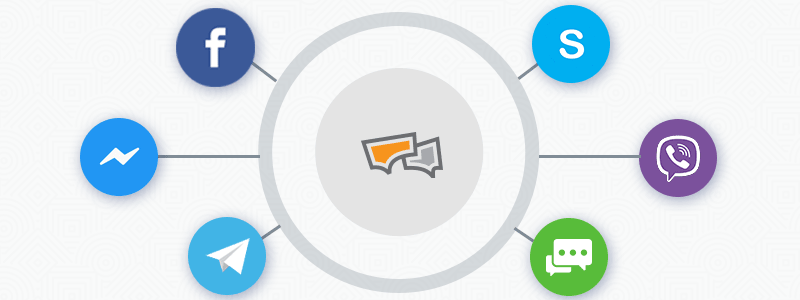
Following the omnichannel customer service trend, companies can create a seamless customer experience and gain maximum customer satisfaction.
Benefits
- High business performance with on-the-go customer service
- Providing real-time assistance via voice and video chat
- Fetch in-depth insights on customer profile
- Make availability across various channels
Streamlining customer information and messages across multiple channels so that you can provide exceptional service to your customers. The team can easily handle conversations across various customer support channels from one roof.
REVE Chat offers an omnichannel customer engagement platform to businesses to deliver consistent support across all communication channels. Sign up with REVE Chat and explore the advanced features that help to deliver excellent customer service.
2. Real-time assistance with co-browsing and video chat
Advanced technology and new marketing strategies have offered a number of ways to connect with consumers and help them to know the products or services transparently. But what if the customers are on your website browsing the services or the pricing page prior to the final purchase.
Video chat or live chat is the right way to guide the customer with his queries and help him to walk through the services and provide accurate information via real-time support. Including real-time support to the customer service trends of your company will benefit you in many ways.
Highlights of Real-time support:
- Instant resolution of customer queries and problems
- Saves plenty of time for the agent and the customer
- Maximizes chances of conversion of sales
- Simple usability for the customer
- Escalates customer engagement and satisfaction
3. Be mobile first
“Mobile is becoming not only the new digital hub but also the bridge to the physical world but also new customer service trends 2024. That’s why mobile will affect more than just your digital operations — it will transform your entire business.” – Thomas Husson, Vice President, and Principal Analyst at Forrester Research.

Mobile channel plays the main role in customer success and efficiency of your customer support team. The resolution of issues through the phone is a great indicator of customer satisfaction. It develops customer loyalty and rapport with customers.
It can be concluded that customer service via mobile phones is a benefit for your organization because of its use of emerging trends in customer service.
4. Automated self-service
Often the quality of online customer support offered determines the product image. Automation leads to maximizing the efficiency and accuracy of your customer support team, at the same time minimizes the response time and escalates customer satisfaction.
Automation can be an important customer self-service trend that can not only customer service experience but also get plenty of time to focus on significant communication with customers for elevating better support. Implementing automated customer support can help you boost the levels of customer satisfaction with your business.
Time to reconstruct customer service technology trends to stay with a good rapport in the market. According to Gartner Report, “85% of customer-brand relationships handled by customer support experts by 2024.”
5. Customer service as a part of the company culture
Good customer service is one of the key ingredients that impact business growth else it may be left behind. Effective customer service along with customer data collection is imperative to achieve growth in revenue, gain market share, etc.
A survey made by Deloitte’s Global Human Capital Trends covering more than 7,000 executives in 130 countries reports that only 28% of them “believe they understand their culture well, while only 19% believe they have the ‘right culture.”
6. Support automation with AI chatbots
One of the most anticipated service marketing strategies is the growing use of bots to manage customer support at scale without a human touch. The emergence and continuous rise of customer service bots or chatbots authorize organizations to provide a gateway for round-the-clock support via automated replies that instantly assist the customer to figure out the technical fault.
Many large businesses have and are looking forward to endorsing customer service future trends in the new year 2026 that will take it to the peak of upgraded trends. Combined with automated workflows and AI, chatbots fuel round-the-clock self-service action.
Quick and easy chatbots are a pocket-friendly solution to meet the common queries of customers.

REVE Chat offers a visual bot builder platform to build and deploy customer service bots and engage customers 24×7. You can choose inbuilt templates or design your bot as per your unique use cases. Sign up today to know more about the features that can keep your business top on customer service technology trends.
7. Personalization: an integral part of customer care trends
Everyone loves personalization. It has been adopted by organizations to entice consumers to purchase products and services with personalized offers.
Personalized customer care trends help develop loyalty with customers. Giving customers a chance to choose the way to connect with businesses undoubtedly add value to their experience. It is all about giving a wonderful personalized experience. Personalized support can do wonders for customer retention in the following ways:
- Engage with customers giving a personal touch
- Converse with customers using their name
- Learn customer interests
- Know their requirements
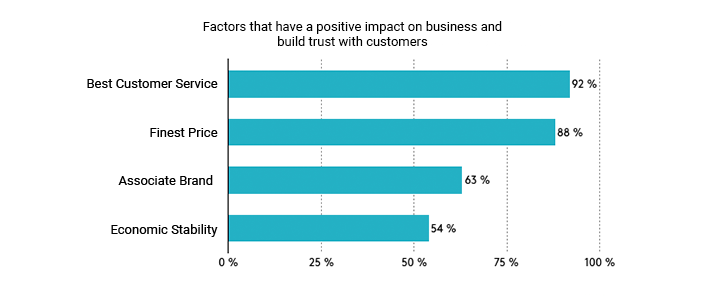
Every customer expects a business to understand his or her requirements fully and recommend product or service options. Sending proper marketing messages and considering customers as unique individuals take business one step ahead.
8. Connect via social media channels
“You can use social media to turn strangers into friends, friends into customers, and customers into salespeople.” – Seth Godin
Social media channels are the best way to connect with your customers. It is essential to give your company a face on top social platforms in today’s time and deliver prompt social media customer service. About 63% of customers expect companies to offer support via social media, and 35% of customers prefer it over other channels.”
The customer complaints and support requests are intercepted and displayed to the support team on their dashboard. The support team can then contact the customer/ client over the same platform and resolve their queries.
Advantages:
- Engage directly with your customers.
- Respond and resolving customer problems in public will improve public relations
- Impress your customers by treating them with respect

9. Machine learning to improve CX
Machine learning, and emerging customer service trends in 2026 can help organizations in improving overall customer experience. Chat applications powered by artificial intelligence are trending. Large organizations, as well as startups, are leveraging this to reduce costs and improve support for customers.
For instance, Swiggy, a food delivery network, has recently powered its live chat support with an artificial intelligence bot, which has enabled customers to automatically place their orders faster without any human interaction, also cancel orders, or provide special instructions.
Predictive analytics has especially proved to be very effective. Through this, scenarios that will result in support calls can be predicted easily. Implementing machine learning in customer service technology trends will give you a significant difference in business growth.
10. UX is a key in customer service
The success of your business is determined by the experience of your end-users. User experience matters a lot if you want your business to grow and more customers to visit your website.
As per studies 88% of online consumers hardly choose to return back to the website after a bad experience. A case study shows a well-tailored user interface could escalate your website’s conversion rate by up to 200%, while better UX design could boost conversion rates by up to 400%.
Sometimes, you can even associate user experience with customer service. As stated by the Nielsen Norman Group, a good user experience meets “the exact needs of the customer, without fuss or bother.” But, to go above and beyond with user experience means creating something that is “a joy to use,” they said.
11. Agentic AI Will Redefine Customer Service Automation
AI chatbots have already become common in customer service, but the next stage of automation is agentic AI. Unlike traditional chatbots that only answer questions or follow pre-set flows, agentic AI can understand customer intent, analyze context, take action, and complete tasks with minimal human involvement.
For example, an AI agent can help a customer check an order status, update account details, recommend the next best action, create a support ticket, route the issue to the right department, and summarize the full conversation for the human agent. This makes customer service faster, more accurate, and more scalable.
For businesses, agentic AI can reduce repetitive workloads and help support teams focus on complex or high-value conversations. For customers, it means faster resolutions without waiting in long queues.
To make the best use of agentic AI, businesses should start with simple and repetitive use cases such as FAQs, order tracking, appointment booking, refund requests, and ticket routing. Once the system becomes more accurate and reliable, it can be expanded to more advanced workflows.
12. AI Will Empower Human Agents, Not Replace Them
One of the biggest misconceptions about AI in customer service is that it will completely replace human agents. In reality, the best customer service teams will use AI to support agents, not remove them from the process.
AI can help human agents by suggesting replies, summarizing previous conversations, detecting customer sentiment, recommending knowledge base articles, and highlighting urgent issues. This reduces manual work and allows agents to focus on empathy, problem-solving, and relationship-building.
Customers still prefer human help when the issue is sensitive, emotional, complex, or urgent. That is why businesses should create a balanced model where AI handles routine queries and human agents step in when judgment, empathy, or negotiation is needed.
A good AI-human support model should include:
- Clear escalation paths from bot to human agent
- Full conversation history for agents
- AI-generated summaries to save time
- Sentiment detection to identify frustrated customers
- Agent training on how to use AI tools effectively
When used correctly, AI does not weaken the human side of customer service. It gives agents more time and context to deliver better customer experiences.
13. Proactive Customer Service Will Become the New Standard
Customers no longer want businesses to wait until something goes wrong. They expect companies to identify problems early and provide help before they need to ask for it.
This is where proactive customer service becomes important. Instead of only reacting to complaints, businesses can use customer data, behavior patterns, and automation to predict what customers may need next.
For example:
- If a customer repeatedly visits the pricing page, a live chat invitation can offer help.
- If a user struggles during onboarding, the support team can send a tutorial or offer a demo.
- If a product delivery is delayed, the customer can be notified before they contact support.
- If a customer shows signs of churn, the team can reach out with personalized assistance.
Proactive service improves customer satisfaction because it makes customers feel valued and understood. It also reduces ticket volume because many issues are solved before they become complaints.
Businesses can start by identifying the most common customer pain points and creating automated triggers around them. Live chat, chatbots, CRM data, email automation, and customer journey analytics can work together to make proactive support easier.
14. Connected Customer Data Will Power Better Support
Modern customers interact with businesses through many channels: website chat, email, social media, mobile apps, phone calls, and self-service portals. The challenge is that many businesses still keep customer data scattered across different tools.
When data is disconnected, customers have to repeat the same information again and again. Agents also waste time switching between platforms to understand the customer’s history.
Connected customer data solves this problem. It gives support teams a complete view of each customer, including previous conversations, purchase history, support tickets, preferences, feedback, and behavior across channels.
This helps businesses deliver faster and more personalized support. For example, if a customer starts a conversation on live chat and later continues through email, the agent should already know the full context. The customer should not have to explain the same issue again.
To build connected customer service, businesses should:
- Unify conversations from all channels in one inbox
- Integrate live chat, chatbot, CRM, and helpdesk tools
- Track customer journey data across touchpoints
- Make customer history visible to agents
- Use analytics to identify repeated issues and service gaps
The future of customer service will depend heavily on how well businesses connect their data and use it to create smooth customer journeys.
15. Data Privacy Will Become a Core Customer Service Differentiator
As businesses use more AI, automation, and personalization, they also collect and process more customer data. This makes data privacy a major part of customer trust.
Customers want personalized support, but they also want to know that their information is safe. If a business mishandles personal data, uses unclear AI systems, or fails to protect customer conversations, trust can be damaged quickly.
Customer service teams should work closely with security, compliance, and IT teams to make sure customer data is handled responsibly. This is especially important when using AI chatbots, AI agents, CRM systems, and third-party integrations.
Important data privacy practices include:
- Explaining how customer data is used
- Collecting only the data that is necessary
- Protecting chat and support history
- Giving customers control over their information
- Using secure integrations
- Monitoring AI outputs for accuracy and compliance
- Offering human support for sensitive issues
In 2026, businesses that combine fast service with strong privacy practices will have a major advantage. Trust will become just as important as speed.
16. Customer Service Will Shift from Cost Center to Growth Driver
Customer service is no longer just a department that solves problems. It is becoming a key driver of retention, loyalty, revenue, and brand reputation.
Every support conversation is an opportunity to understand customer needs, reduce churn, increase product adoption, and build stronger relationships. When customers receive quick and helpful support, they are more likely to stay loyal, buy again, and recommend the business to others.
This means businesses should not measure customer service only by cost reduction or ticket closure. They should also track how support contributes to business growth.
Useful customer service metrics include:
- Customer satisfaction score
- First response time
- First contact resolution
- Customer retention rate
- Customer lifetime value
- Churn reduction
- Self-service resolution rate
- Conversion from live chat conversations
- Repeat purchase rate
- Customer effort score
By connecting support performance with revenue and retention, businesses can prove the real value of customer service.
17. Continuous Agent Training Will Decide Service Quality
Technology is evolving quickly, but tools alone cannot deliver great customer service. Agents need continuous training to use new systems, understand customer expectations, and handle complex conversations.
As AI becomes part of daily support workflows, agents must learn how to work with AI recommendations, review automated replies, manage escalations, and maintain a human tone in customer interactions.
Training should cover both technical and soft skills, including:
- Product knowledge
- AI tool usage
- Empathy and emotional intelligence
- Conflict resolution
- Omnichannel communication
- Data privacy awareness
- Personalization techniques
- Handling escalations
- Writing clear and helpful responses
Well-trained agents can turn difficult conversations into positive experiences. They also help businesses get more value from customer service technology.
Read Also: SMART Customer Service Goals
How to Prepare Your Customer Service Team for These Trends
Adopting new customer service trends does not mean changing everything at once. Businesses should start with the areas that have the biggest impact on customer experience.
Here are some practical steps:
- Audit your current support channels and identify gaps.
- Use automation for repetitive questions and simple tasks.
- Add live chat or chatbot support to reduce response time.
- Connect customer data across chat, email, social media, and CRM.
- Build self-service resources for common issues.
- Use AI to support agents with suggestions and summaries.
- Create clear bot-to-human escalation paths.
- Track customer feedback and improve continuously.
- Train agents on both technology and empathy.
- Review privacy and security practices before scaling AI.
The future of customer service will belong to businesses that combine automation, personalization, human empathy, and connected data. Companies that adopt these trends early will be better prepared to deliver faster support, improve customer loyalty, and create a stronger customer experience.
Key Takeaways of Customer Service Technology Trends
Hopefully, the aforementioned customer service trends convince you. A business with a customer-centric vision definitely helps to be in the game for a long time. The tools and customer service trends discussed above can make your business highly customer success-driven and make your customer service a true differentiator factor for you.
REVE Chat is an excellent live chat platform that allows to delivery of real-time customer support and 24×7 customer engagement with visual tools and chatbots. Sign up with REVE Chat to deliver superior customer service and boost satisfaction.