



SMART Customer Service Goals – How to Set and Achieve them?
- February 26, 2026
- 21 mins read
- Listen

If you run a business, you are aware of the fact that creating happy customers is never an accident. You also understand that happy customers won’t happen unless a business is investing time and effort in improving the customer service processes. All this shows that companies that work on their service experiences are more likely to deliver great customer service, and therefore more likely to have satisfied customers as well.
However, that kind of customer service can never be delivered unless there is a clear road map and plan of action in place. Maybe that’s why teams that follow customer service goals always find it easy to achieve customer satisfaction than those that have no direction to follow.
With no clear goals, a team can fail to know its roles, what is expected of it, and how far to go to serve customers, resulting in poor service standards. On the other hand, when there are effective goals, customer service teams understand what to do and how to go about their business, resulting in improved overall performance.
So, we can see how it’s easy to ensure consistently good service and meet customer expectations if you have goals in mind. In this blog post, we will look at customer service smart goals, how to set them, and how to achieve them.
Why Does Your Business Need Customer Service Goals?
Setting clear-cut customer service development goals is quite like giving your team a map to navigate the journey. And with a map in hand, you’re always sure your team can’t divert from the path it’s meant to go. Plus, 9 out of ten customers are likely to make a repeat purchase after a positive customer service experience.
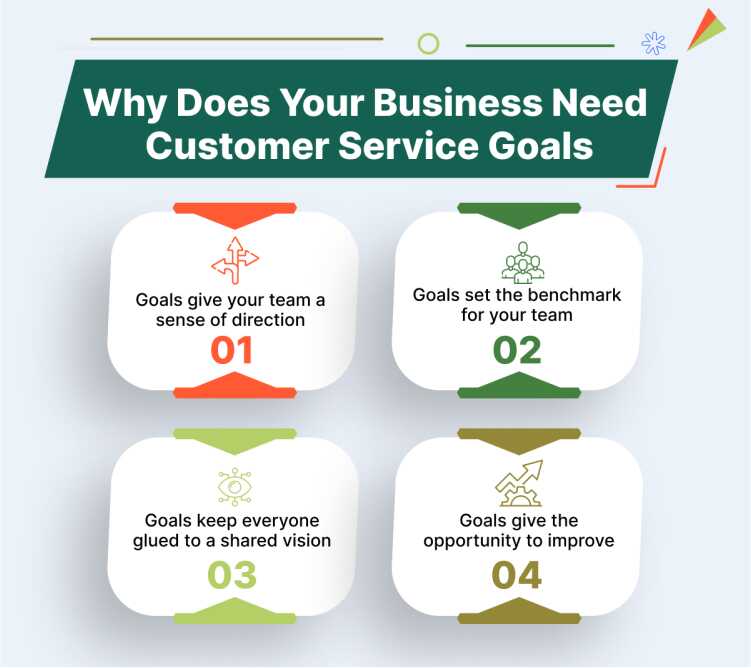
Your business needs to set customer service goals as it can serve a variety of purposes.
- Goals give your team a sense of direction – Your customer service team can feel motivated towards a target, will be aware of the route & plan to follow, and may know the boundary of the decisions for achieving satisfied customers.
- Goals set the benchmark for your team – Agents feel more committed and driven to their tasks when they have tangible parameters to check their performance against and bring the required changes in themselves.
- Goals keep everyone glued to a shared vision – A sense of teamwork and cohesion is more visible in teams that have stated goals to follow. When every member of the team is aware that how their action is responsible for the end result, it fills a sense of energy and motivation into them.
- Goals give the opportunity to improve – Customer service feels teamwork only when all the members are working towards the same cause of ensuring great service to customers. And this unity among members often gives them a reason to improve and get better at the job.
What are Customer Service SMART Goals?
Most customer service teams have goals to follow but not all of them are able to deliver the kind of service they should. Why? Maybe the goals are not realistic or their goals lack the structure to make an impact. No such problems happen with customer service SMART goals because they are –
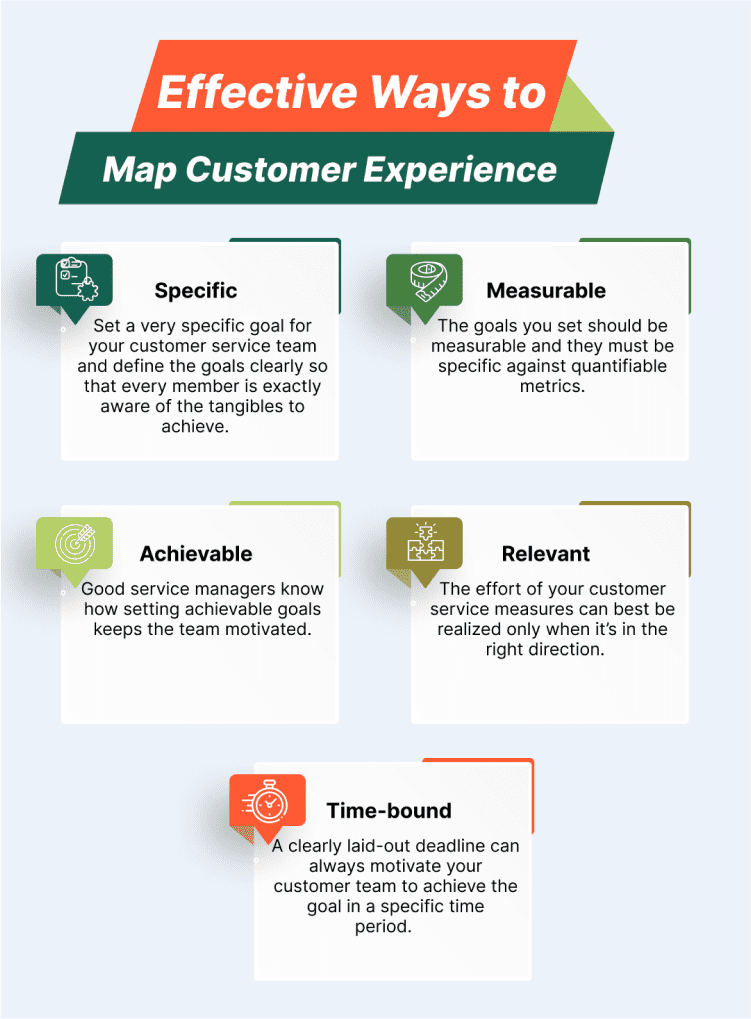
Specific
Set a very specific goal for your customer service team and define the goals clearly so that every member is exactly aware of the tangibles to achieve. Don’t let any vagueness deviate the team from the goals.
Measurable
The goals you set should be measurable and they must be specific against quantifiable metrics. When the goal is measurable you can always track your KPIs and measure the performance of the team at a particular point in time.
Achievable
Good service managers know how setting achievable goals keeps the team motivated. If the goals are high, chances are the team might fail to achieve that, resulting in a feeling of failure. However, attainable targets can work magic and keep the team inspired.
Relevant
The effort of your customer service measures can best be realized only when it’s in the right direction. This means, if the goal is not relevant to the cause of boosting customer experience, it can never add to the overall result you expect.
Time-bound
A clearly laid-out deadline can always motivate your customer team to achieve the goal in a specific time period. The more reasonable the deadline, the more upbeat and optimistic a team can feel.
Customer Service Goals and Objectives Examples
As you can see from the SMART goal strategy, customer service manager goals should be specific and they should be something your agents can relate to.
Some examples of customer service goals and objectives would feel like this –
- Let’s say a business does not have a presence across channels and it’s not able to deliver support on the channel of the customer’s choice. So it should aim to increase its reach by more channels in the next 2-3 months till it achieves a full-fledged omnichannel strategy.
- Let’s say a business does not have a social media team in place and is currently unable to respond to more than 20% of queries and also taking more time to respond. So, for it, the right customer service goal would be to have a social team in place at the earliest and respond to 90% of queries on time.
Key Customer Service Goals For Your Business
Good customer service can benefit your business in more ways than you imagine. It can not only boost retention but can also reduce acquisition costs. And when the service is good, it converts customers into brand loyalists. All this can only be achieved when you know what customer service goals to follow.
Here are some of the key customer service manager goals for your business to set and follow.
1. Deliver Omnichannel Support
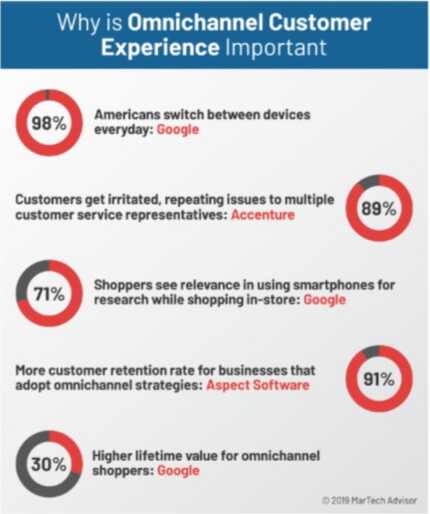
It’s true that customers today have more options for channels than ever before. They can use any channel of choice and reach the business. So they also want support on any channel they find helpful. This means businesses have to be where the customers are if they want to provide good service.
Omnichannel support can help achieve that goal easily. In this type of support, all the customer conversations across channels are streamlined to seamlessly engage with customers over their preferred channels.
With omnichannel support, every type of conversation, be it text, email, messages, or social interactions is received at one centralized place which makes responding easy and quick. With this type of approach, your business can not only break all the silos but can also ensure consistent support across touchpoints.
How to deliver omnichannel support?
- Manage all the customer conversations under a single platform with the view to speed up responses.
- Ensure a mix of automated and human support to tackle a high volume of conversations and ensure promptness with support across channels
- Focus on connecting with customers in real-time so that the wait time is reduced considerably
2. Provide Instant Responses
Customers hate waiting. The more you make them wait for responses, the more frustrated they can feel. And when customers are frustrated, they might think of leaving you as well. As a business, losing your hard-earned customers for slow response time could be nothing less than a travesty.
So, you should always prioritize fast responses with a focus on addressing their concerns at the earliest. Make sure your customers don’t have to wait for support assistance, and also ensure that they are never put on hold for a long time.
Response time is always a huge component of increasing customer satisfaction. And if your service team is resolving customer issues quickly more often, they offer great experiences more often.
Tips to provide instant responses to customers
- Your support team can use live chat software and speed up response time to customer queries.
- The use of live chat can prove very helpful in starting a proactive conversation with customers and guiding them through their journey.
- Agents can use personalized triggers to know their customer issues or can route chats automatically to the right department for quick address
3. Add Automation to Your Customer Support Strategy
It’s true that automation is not as intuitive as your agents could be, or it may not have the kind of human touch customers vouch for, but it can still add great value to your customer support strategy. And if automation were really not that effective, most companies that are trusting it would not be using it in the first place.
And two of the biggest benefits that automation can provide include –
- Ensuring 24×7 support
- Reducing customer service costs
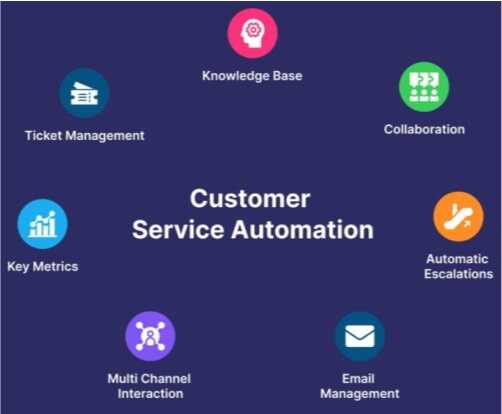
But yes, you need to be strategic in implementing automation in your customer service strategy. Rather than using it to replace human support completely, the best way is to use it to complement the existing support team and make it more productive.
Different ways to use chatbots for customer support
- You can add an AI chatbot to your website to offer quick answers to common queries
- It’d be equally helpful if you automate data collection tasks and free up the personnel for more important work
- Automation can also be set up for getting notifications regarding customer query updates
4. Implement Self-Service Tools for Your Customers
Not all customers vouch for support at the hands of agents. Some of them may also look to find things on their own, sometimes. Since the number of customers exploring self-service options is growing, your business too should prepare itself for these changed demands of customers.
So, you should consider implementing self-service tools and options to complement the human form of support and also to bridge the service gap. The best you can do is to include how-to-videos, product guide videos, forums, tutorials, and a comprehensive knowledge base.
When there are tons of self-service options available, more of your customers may like to help themselves and use those options to find help on key matters. And since your support team won’t be needed to handle such customers, it can always contribute to its productivity.
Role of self-service in improving customer service
- Such service is available round the clock and customers needn’t either rely on or wait for a support team for help
- Customers can quickly find out specific information without having to wait long as is the norm
5. Measure Customer Satisfaction Regularly
All your customer satisfaction effort would definitely be worth more if you regularly measure them. It can provide you valuable insights into what ticks with customers and what does not. And when you measure customer satisfaction regularly, you can always know the areas to work on further and optimize.
The metrics you measure can also indicate the features and aspects that are making customers happy and the others that are not adding the kind of value you expect. Based on the key insights at hand, you can always implement feedback across all touchpoints and improve the overall experience of customers with your brand.
Key customer satisfaction metrics to measure
- You can measure the Customer Satisfaction Score (CSAT) metric by asking customers to rate their satisfaction level with any aspect of the service and then score their responses.
- The Net Promoter Score (NPS) metric would be helpful in checking the likelihood of your customers referring your brand to others and then measuring the response on a scale from 1 to 10.
6. Empower and Help Your Customer Service Team Grow
Empowered agents are more likely to make customers happy. They stay forever motivated and often perform consistently well against key metrics.
After all, poor customer service can make 33% of customers consider switching companies and this is where empowered agents can save the day.
Plus, investing in your customer service team has the potential to benefit your business on three very important fronts –
- It can positively impact the bottom time
- Your customer retention will improve
- And your workplace will attract the best talent
Ways to empower your team and help them grow
- Train them on a regular basis and offer them the best available tools in the industry to do their job
- Customer service management should hold regular meetings with teams and offer them personalized feedback
- Give them more responsibility and freedom to express
- Create an environment where agents are ready to come up with creative ways to serve customers
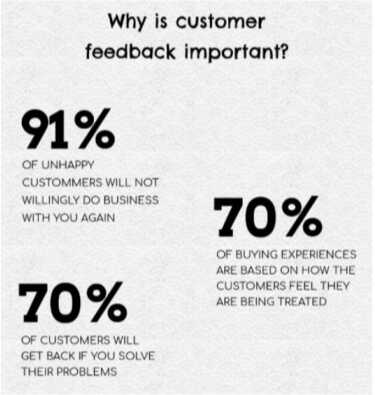
7. Collect Customer Feedback More Often
Listening more to your customers is always key to offering great experiences. The more you collect their feedback, the more you can improve the standard of service, resulting in more happy customers.
When you collect feedback on a regular basis, it shows your intent to optimize customer service and improve the experience. And if customers are happy, they often give away feedback which you can implement and improve the performance of delivery.
Feedback not only improves service but also gives customers an opportunity to voice their concerns and satisfaction.
Tips to collect customer feedback
- You can use advanced tools like live chat software, and chatbots to get instant and real-time feedback after every conversation.
- You can also create personalized follow-ups or put in place an automated response workflow for getting feedback in a smooth manner.
- Understand the specific purpose of the feedback and use both open and close-ended questions and elicit the right responses.
8. Track the Right Customer Service KPIs
Setting customer service goals is only useful when you can measure progress. That is why every goal should be connected with the right customer service KPIs. These metrics help you understand whether your team is becoming faster, more efficient, more helpful, and more customer-centric over time.
Some important customer service KPIs to track include:
| KPI | What it measures | Why it matters |
|---|---|---|
| First Response Time | How quickly your team responds to a customer for the first time | Helps reduce customer waiting time |
| Average Resolution Time | How long it takes to fully solve a customer issue | Shows how efficiently your team resolves problems |
| First Contact Resolution | Percentage of issues solved in the first interaction | Indicates support quality and agent effectiveness |
| Customer Satisfaction Score | How satisfied customers are after an interaction | Helps measure the quality of your service experience |
| Net Promoter Score | How likely customers are to recommend your brand | Shows customer loyalty and brand advocacy |
| Customer Effort Score | How easy it is for customers to get help | Helps reduce friction in the support journey |
| Ticket Volume by Channel | Number of queries from live chat, email, social media, phone, etc. | Helps you plan staffing and channel strategy |
| Cost per Contact | Average cost of handling each customer interaction | Helps improve support efficiency and ROI |
When you measure these KPIs regularly, your team can identify where customers are facing delays, which channels need improvement, and which agents may need additional training.
How to track customer service KPIs effectively
- Use a live chat, ticketing, or help desk platform to centralize customer conversations.
- Create weekly or monthly reports for response time, resolution time, CSAT, and ticket volume.
- Compare performance by channel to understand where customers receive the best or worst experience.
- Review KPI trends before changing workflows, staffing, or automation rules.
- Combine quantitative metrics with customer feedback to understand the real reason behind the numbers.
9. Reduce Cost per Customer Interaction
Another important customer service goal is to reduce the cost of handling each customer interaction without compromising the quality of support. Every customer conversation requires time, tools, and team resources. If your support process is inefficient, your service costs can increase quickly as your business grows.
Reducing cost per contact does not mean cutting corners. It means helping customers faster, using automation wisely, and allowing agents to focus on complex issues that need human attention.
For example, if your support team receives hundreds of repeated questions every month, you can use chatbots, FAQs, canned responses, and knowledge base articles to answer those questions instantly. This lowers the number of repetitive tickets and gives your agents more time to handle high-value customer conversations.
Ways to reduce customer service costs
- Automate repetitive queries with AI chatbots.
- Use live chat to handle multiple conversations at the same time.
- Build a knowledge base for common customer questions.
- Route conversations to the right department automatically.
- Use canned responses for frequently asked questions.
- Track peak support hours and schedule agents accordingly.
- Analyze unresolved tickets to find process gaps.
A good SMART goal for this could be:
“Reduce cost per customer interaction by 15% in the next six months by automating repetitive queries and improving first contact resolution.”
10. Create a Consistent Customer Experience Across All Channels
Customers may contact your business through live chat, email, WhatsApp, social media, phone, or website forms. No matter which channel they choose, they expect the same level of service, tone, accuracy, and professionalism.
This is why consistency should be a key customer service goal. If your live chat support is fast but your email support is slow, customers will notice the difference. If your social media replies are friendly but your ticket responses sound robotic, the experience can feel disconnected.
A consistent customer experience builds trust. It also helps customers feel that they are dealing with one unified brand, not separate departments working in isolation.
How to improve consistency across touchpoints
- Create a standard brand voice and support communication guide.
- Train agents on how to respond across different channels.
- Use shared customer history so agents can see previous conversations.
- Keep all customer interactions in one centralized inbox.
- Create templates for common replies, but personalize them before sending.
- Monitor CSAT and response time by channel.
- Review support conversations regularly for quality assurance.
With an omnichannel customer engagement platform like REVE Chat, businesses can manage conversations from multiple channels in one place. This helps agents respond with better context and maintain a consistent experience across the entire customer journey.
11. Improve Customer Loyalty and Retention
Customer service is not only about solving problems. It is also about building relationships that make customers want to stay with your brand. A satisfied customer may buy once, but a loyal customer keeps coming back, recommends your business to others, and becomes a long-term source of revenue.
That is why improving customer loyalty should be one of your major customer service goals. When your support team responds quickly, solves issues properly, and treats customers with empathy, customers are more likely to trust your brand.
How customer service improves loyalty
- Fast responses show customers that their time matters.
- Personalized support makes customers feel valued.
- Proactive communication prevents frustration.
- Consistent service builds trust across touchpoints.
- Effective problem resolution reduces churn.
- Follow-up messages show that your team cares even after the issue is closed.
Metrics to track customer loyalty
- Customer retention rate
- Customer churn rate
- Repeat purchase rate
- Net Promoter Score
- Customer lifetime value
- Customer reviews and testimonials
- Loyalty program participation
A good SMART goal for customer loyalty could be:
“Increase customer retention rate by 10% within the next two quarters by improving first contact resolution, sending follow-up messages, and offering proactive support to at-risk customers.”
12. Deliver Proactive Customer Service
Many businesses wait for customers to report a problem. But great customer service teams try to identify and solve problems before customers even ask for help. This is called proactive customer service.
Proactive support reduces frustration, builds trust, and shows customers that your business is attentive. For example, if there is a delivery delay, you can notify the customer before they contact your support team. If a visitor spends time on your pricing page, you can use proactive live chat to ask if they need help choosing a plan.
Examples of proactive customer service
- Sending order updates through email, SMS, or WhatsApp.
- Notifying customers about product issues or service downtime.
- Triggering a live chat message when a visitor seems stuck.
- Sharing help articles based on customer behavior.
- Following up after a support conversation to confirm the issue is resolved.
- Reminding customers about renewals, appointments, or incomplete actions.
- Using chatbots to guide users before they create a ticket.
How REVE Chat can help with proactive support
REVE Chat’s live chat, chatbot, and omnichannel messaging features can help businesses engage customers at the right moment. You can use automated triggers, AI chatbots, and WhatsApp campaigns to reach customers before small issues turn into bigger problems.
A SMART goal for proactive support could be:
“Reduce inbound support tickets by 20% in three months by adding proactive chat triggers on high-intent website pages and sending automated updates for common customer issues.”
13. Personalize Every Customer Interaction
Customers do not want to feel like ticket numbers. They expect businesses to understand their needs, preferences, and previous interactions. Personalization helps your support team deliver more relevant and human service.
Personalized customer service can be as simple as addressing customers by name, reviewing their previous chat history, or recommending the right solution based on their current problem. It can also include advanced actions like segmenting customers, sending targeted messages, and using AI-powered suggestions to guide agents.
Ways to personalize customer service
- Use customer names in conversations.
- Review previous interactions before replying.
- Segment customers based on behavior, location, purchase history, or plan type.
- Offer product recommendations based on customer needs.
- Send personalized follow-up messages after support interactions.
- Use chat routing to connect customers with the right agent.
- Provide VIP support for high-value customers.
Personalization makes customers feel understood. It also helps agents resolve issues faster because they do not need to ask customers to repeat the same information again and again.
A good SMART goal could be:
“Improve CSAT by 12% in the next quarter by using customer history, personalized chat routing, and tailored follow-up messages after every support interaction.”
14. Align Customer Service Goals with Business Goals
Customer service goals should not exist separately from your company’s overall business goals. They should directly support revenue, retention, brand reputation, and customer growth.
For example, if your business goal is to reduce churn, your customer service goal could be to improve first contact resolution and follow up with dissatisfied customers. If your business goal is to increase conversions, your support team can focus on faster live chat responses for website visitors and proactive assistance on pricing or checkout pages.
Examples of business goals and matching customer service goals
| Business goal | Matching customer service goal |
|---|---|
| Increase customer retention | Improve first contact resolution and follow-up process |
| Reduce churn | Identify unhappy customers and resolve issues faster |
| Increase sales conversions | Offer proactive live chat on pricing and checkout pages |
| Improve brand reputation | Increase CSAT and collect positive reviews |
| Lower operating costs | Automate repetitive queries with chatbots |
| Expand internationally | Offer multilingual and omnichannel support |
When customer service goals are aligned with business goals, support teams become more than problem-solvers. They become a direct contributor to growth, loyalty, and revenue.
15. Map Goals to the Customer Journey
A strong customer service strategy considers every stage of the customer journey. Customers may need different types of support before purchase, during onboarding, after purchase, and when renewing or upgrading.
By mapping customer service goals to the customer journey, you can identify where customers need the most help and set goals for each stage.
Customer journey stages and support goals
| Journey stage | Customer need | Possible customer service goal |
|---|---|---|
| Awareness | Understand your product or service | Offer instant answers through live chat or chatbot |
| Consideration | Compare options and pricing | Provide proactive support on product and pricing pages |
| Purchase | Complete the buying process smoothly | Reduce checkout-related support issues |
| Onboarding | Learn how to use the product | Share tutorials, guides, and automated onboarding messages |
| Usage | Get quick help when issues appear | Improve first response time and resolution time |
| Retention | Continue receiving value | Send follow-ups, collect feedback, and solve recurring issues |
| Advocacy | Recommend your brand to others | Improve NPS and encourage reviews or referrals |
This approach helps your team move from reactive support to journey-based customer experience management.
16. Build a Strong Customer Feedback Loop
Collecting customer feedback is important, but collecting feedback alone is not enough. You also need to analyze it, act on it, and let customers know that their feedback made a difference. This is called a customer feedback loop.
A feedback loop helps your business continuously improve products, services, and support processes. It also shows customers that their opinions are valued.
Steps to create a customer feedback loop
- Collect feedback through CSAT surveys, NPS surveys, live chat ratings, email surveys, reviews, and social media comments.
- Organize feedback by topic, urgency, sentiment, product area, or customer segment.
- Identify patterns such as repeated complaints, common feature requests, or frequent confusion points.
- Take action by improving workflows, updating help articles, training agents, or fixing product issues.
- Follow up with customers to let them know what changed based on their feedback.
- Measure results to see whether CSAT, NPS, resolution time, or ticket volume improves.
A SMART goal for this could be:
“Collect 300 customer feedback responses in the next quarter, identify the top three recurring issues, and implement at least two process improvements based on the findings.”
Learn More: Customer Service Checklist For Delivering Exceptional Support
Boost Customer Service Manager Goals with the REVE Platform
Customer service must keep pace with the changing times around and meet the requirements of customers in the way they want.
At REVE Chat, we understand how your customer service efforts can get a massive boost with AI-powered technology and tools.
In fact, you can use our AI chatbots and improve various aspects of your support. From automating the responses to offering 24×7 answers, you can achieve all with our powerful bot.
Your customer service endeavors can also leverage our top-class visual engagement tools such as video chat software and co-browsing feature to ensure real-time and relevant support to customers.
Plus, our live chat software is advanced and comes with a whole host of features helpful for customer engagement.
Conclusion
Customer expectations continue to evolve and grow and your teams too should align with that. The right strategy is to have specific goals so that the team is aware of its responsibility.
More so, there are some great engagement tools that your service team can use and make it job a lot easier. With these tools, achieving short as well as long-term goals for customer service becomes easier.
You can start free trial of top customer engagement tools and see how they can add value to your overall support effort.
Frequently Asked Questions
Customer service goals are specific targets that help support teams improve the quality, speed, consistency, and effectiveness of customer interactions. These goals may focus on response time, customer satisfaction, resolution rate, loyalty, automation, or cost efficiency.
Good customer service goals include reducing first response time, improving customer satisfaction score, increasing first contact resolution, expanding omnichannel support, reducing cost per contact, improving customer loyalty, and creating a better self-service experience.
SMART customer service goals are goals that are Specific, Measurable, Achievable, Relevant, and Time-bound. For example: “Reduce average first response time from five minutes to two minutes within the next three months.”
Customer service goals give teams a clear direction. They help managers measure performance, improve customer experience, identify training needs, reduce support costs, and build stronger customer relationships.
Businesses should track first response time, average resolution time, first contact resolution, CSAT, NPS, customer effort score, ticket volume, customer retention rate, churn rate, and cost per contact.
Automation helps businesses answer common questions faster, provide 24/7 support, reduce repetitive work, route tickets to the right agents, collect feedback, and improve response times. However, automation should support human agents, not completely replace them.
Customer service goals improve retention by helping teams respond faster, solve issues better, personalize support, follow up with customers, and prevent repeated problems. When customers feel valued and supported, they are more likely to stay loyal to the brand.