




Table of Content
Let’s face it straightaway – customers are quite smart these days and they know what they want and where to get it! You just can’t force them to buy from you, or you just can’t get them for repeat purchases if you don’t offer value. And if you are not offering value exceeding the cost, you even risk losing customers to competitors.
On top of that, you can’t rely on your own judgment either when it comes to offering value to customers. After all, customers have their own definitions, and they assign a perceived worth to a product or service compared to its cost. And this “perceived worth” can be a big determining factor in customers’ decision to do, or not do, repeat purchases with a company.
That’s why customer value holds a big significance for your business as it shows whether or not you are able to deliver the kind of experience that meets or exceeds customer expectations. And when you provide customer value, you know it not only ensures brand loyalty but boosts customer retention as well.
In this blog post, we will study customer value in detail, analyze its definition, explore its significance, and also look at the various ways that can help improve it.
What is Customer Value?
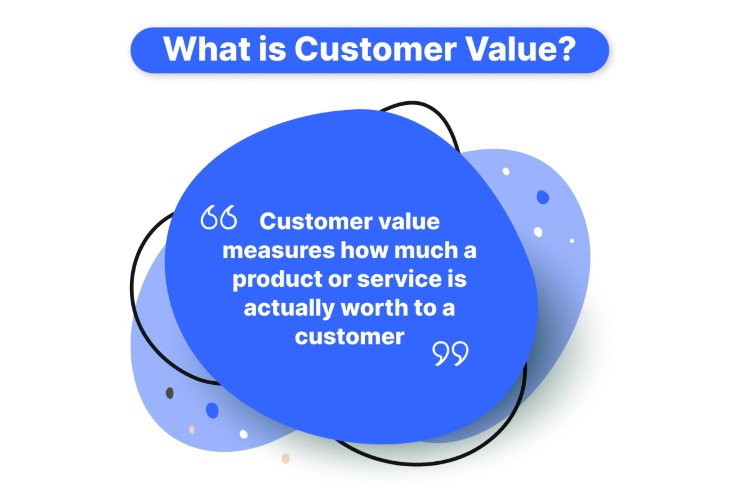
Customer value measures how much a product or service is actually worth to a customer It’s also best defined as the worth of a product or service compared to the possible alternatives available in the market. For customers, the term “value” often denotes all – the costs and the benefits associated with a purchase.
Customer value may also signify whether or not customers feel they have been provided with value for the price they paid in buying a product or availing of a service. Components of value can be many things, including price, quality, ease of use, or any other aspect that customers consider when evaluating the purchase.
If customers feel the total cost of purchase is more in comparison to the benefits they get, they can assume not getting value at all. That’s why businesses always need to understand customer value and then set prices in a way that adds to the overall customer experience.
Importance of Customer Value
Customer expectations continue to grow and the only way to meet and exceed those expectations is by offering them great experiences. In fact, 89% of businesses now compete on the basis of customer experience alone and most others try to offer value that outweighs the costs.
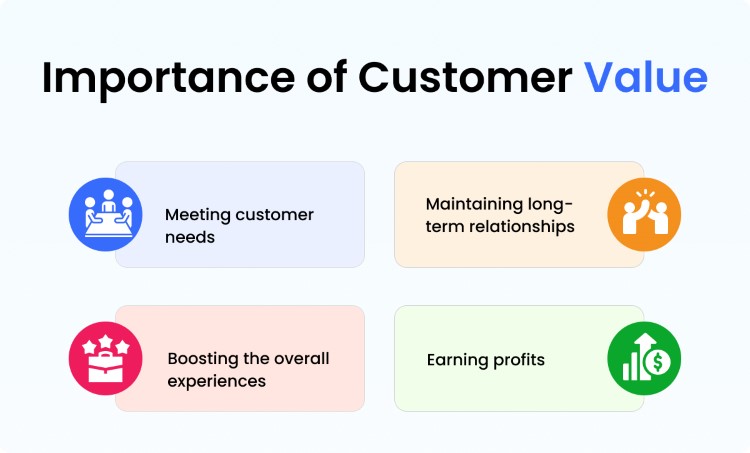
The importance of customer value is immense and it can affect various aspects of your business.
- Meeting customer needs – There is no secret to the fact that offering value can help your business meet the needs of consumer and win their confidence in your brand.
- Maintaining long-term relationships – When customers get value on a regular basis, they become loyal to a brand and also do repeat purchases, resulting in building long-term relationships with them.
- Boosting the overall experiences – The real purpose of providing value to customers is to make them feel good about your business and ensure great experiences with their journey with your brand.
- Earning profits – Your company can earn more profit when it adds value to customers and justifies the worth of every penny invested with your product or purchase.
Types of Customer Value
Customer value can take different forms as it’s the perceived benefits that customers get from a product or service. This value is often compared to the cost and categorized based on various aspects of value creation. A good understanding of these values is key for a business to meet customer needs effectively and stand out in the market.
Let’s look at the different types of customer value –
- Functional Value – This type of value is related to the core functionality of a product or service. It refers to various aspects of the product or service including its features, performance, efficiency, and reliability. This value holds big importance in meeting customer needs and solving their problems.
- Financial Value – This type of value refers to the monetary gains that customers receive from a product or service. Sometimes it can happen directly as with cost savings, but other times it may materialize indirectly over time. This type of value can come from discounts, pricing, and ROI.
- Psychological Value – This type of value is abstract which customers can get from a product. Psychological value could be anything be it satisfaction or peace of mind that often comes from buying a certain product or service. The ambit of this value extends to factors such as security and ease of worries or stress.
- Emotional Value – This type of value is derived from the deep emotional attachment customers form with a product or service. It can come from various aspects such as emotional connection with a brand, feelings, and experiences. Such value can take the shape of excitement, enjoyment, or an improved experience.
- Social Value – This type of value is derived from the perception of how a product or service enables customers to relate to others. It could come in the form of social status, or belonging.
How is Customer Value Created?
Customers can find value in your product or service only when they consider the purchase to be worthy of their money, time, and effort. And to make that happen, you should focus on offering value where you increase the benefits yet keep the cost the same. Analyzing the buying motives examples could be a great way to understand how to create value for your customer.
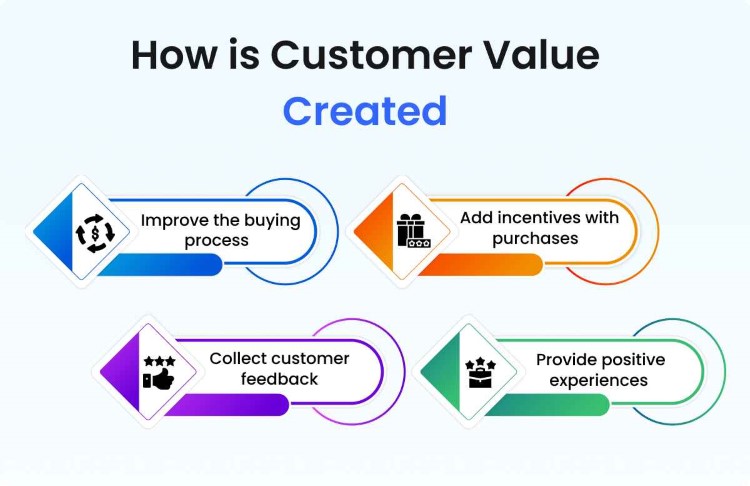
Ways are many that you can adopt and employ to create value for your customers.
- Improve the buying process – Make it easier for customers to buy your product or avail of your service. Ensure more purchasing options and also support at each of those avenues.
- Add incentives with purchases – Try to incentivize the purchase for customers by giving them the options of free shipping, quick delivery, 24X7 support, and uncomplicated return policies.
- Collect customer feedback – Feedback is the only way to improve your offerings and maximize the value of purchases. So, ask for reviews and send out surveys consistently apart from making it hassle-free for customers to reach you.
- Provide positive experiences – Giving positive experiences to customers is also one of the key aspects of value. The best part, you can boost the experience in many ways and personalized engagement is one such way.
Strategies for Creating Customer Value for Long-Term Success
Creating customer value involves some planning and consideration. It also involves the desire to offer value and ensure an improved customer experience with your product or services. More so, certain strategies need to be implemented when the focus is to create customer value for long-term success.
Let’s look at the strategies for creating customer value –
1. Focus on market research
Before creating and delivering value to customers, a business should take effective measures to understand the needs and preferences to focus on. This could be achieved through market research on your audience’s needs.
2. Exceed customer expectations
Value is truly delivered when a business exceeds customer expectations through the quality of its product or service. To achieve the quality, you need to improve the offers’ functionality, features, and reliability quotient. It’s equally important to continuously innovate based on customer’s feedback to surpass their expectations.
3. Offer tailored products, services and experiences
No matter how much quality your product or service or experience has, it can’t deliver value unless it fits into the specific preferences of your audience. That’s why you need to tailor your offers to match individual customer’s specifications.
4. Add value throughout the entire customer journey
Customer value can only be delivered when your business ensures a positive experience at every touchpoint. The key is to offer exceptional support and service experience throughout the entire customer journey. To achieve this goal, you will need a trained customer service team that is empathetic and responsive to customer needs.
5. Engage customers beyond transactions
Customers are not a one-time affair. If they are happy, they will stick with your business and make repeat purchases. Keeping this in mind, you should look to build robust, long-term relationships with them. This can only be achieved when you engage them beyond the transactions, stay in touch with them regularly, create loyalty programs, and offer them exclusive benefits.
6. Implement a solid feedback mechanism in place
Acting upon customer feedback is a major step in delivering value to them. It also shows your commitment to their cause. When you encourage them to share feedback and you act upon that, improvements happen and you easily meet customer needs.
How to Measure Customer Value?
Measuring customer value means looking at different tangibles and intangibles that your company provides via products or services. It could also be with any other aspect that adds to the overall customer experience.
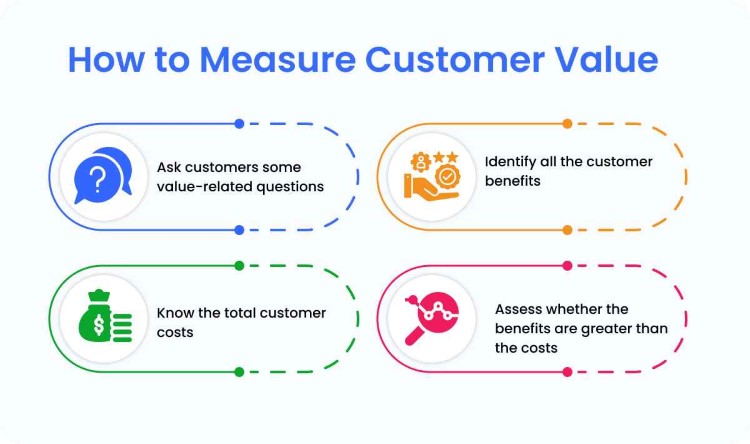
The ways to measure customer value include –
- Ask customers some value-related questions – To track and measure customer value, the first thing you need to do is get in touch with them and ask them how your business is providing value. You can either call customers directly or gather feedback via surveys.
- Identify all the customer benefits – You also need to identify the kind of benefits you’re providing to customers by looking at various aspects. Here you can consider the quality of your product, of various value propositions, your brand reputation, the kind of support provided by your team, etc.
- Know the total customer costs – Customers often pay two types of costs – tangible and intangible. And you need to know both the costs to understand the kind of value provided to them. So, you not only have to consider the actual money spent in using your products but also consider the many intangibles like the time customers invest in your product or the hassles they face in using them.
- Assess whether the benefits are greater than the costs – Finally, you have to assess whether the benefits you provided to customers are greater than the costs they paid.
Tangible and Intangible Customer Costs
Customer cost is not limited to the price someone pays for a product or service. In many cases, customers also consider the time, effort, stress, and inconvenience involved in doing business with a company. To measure customer value accurately, businesses need to understand both tangible and intangible costs.
Tangible customer costs
Tangible costs are easier to identify because they are directly connected to money or measurable effort. These may include:
- Product or service price
- Setup or onboarding fees
- Maintenance costs
- Renewal or subscription fees
- Delivery or installation charges
- Training costs
- Upgrade costs
Intangible customer costs
Intangible costs are harder to measure, but they strongly influence how customers perceive value. These may include:
- Time spent waiting for support
- Effort required to complete a purchase
- Frustration caused by a poor user experience
- Confusion during onboarding
- Emotional stress from unresolved issues
- Repeating the same problem to multiple agents
- Lack of confidence in the brand
- Difficulty learning how to use a product
For example, a software product may look affordable at first, but if customers need weeks to understand it, wait too long for support, or struggle to get answers, the overall perceived cost becomes much higher.
Businesses can increase customer value by reducing both types of costs. Lowering price is not always necessary. Sometimes, value can be improved by making the buying process easier, offering faster support, simplifying onboarding, or reducing the effort needed to get results.
Customer Value Formula
The formula for customer value can be written as:
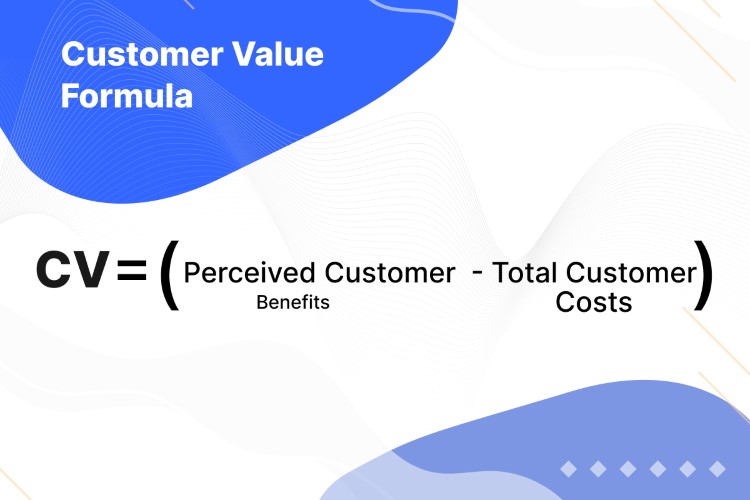
Customer Value = ( Perceived Customer Benefits – Total Customer Costs )
CV = CB – CC
As per the formula, you will need to reach the difference between the total customer benefits and total customer costs. Since some elements of the costs and benefits can be qualitative, you can assign a metric to them to see whether the benefits trump costs.
Customer Value vs Competitor Value
Customer value does not exist in isolation. A customer always compares your product or service with the next best alternative available in the market. That means your business should not only ask, “Are we providing value?” but also, “Are we providing more value than our competitors?”
A simple way to understand this is:
Your Customer Value – Your Price > Competitor Customer Value – Competitor Price
This means customers should feel that the value they receive from your business is greater than what they could get from a competing option. Even if your price is higher, customers may still choose you if your product quality, convenience, service, support, brand trust, or overall experience justifies the cost.
For example, a customer may choose a slightly more expensive live chat or chatbot platform if it offers faster support, better automation, easier setup, omnichannel communication, and a smoother experience for both customers and agents.
To improve your value against competitors, focus on questions such as:
- What do customers get from us that they cannot easily get elsewhere?
- Are we saving customers more time, effort, or money than competitors?
- Do we provide better support, faster response, or a more convenient experience?
- Are customers willing to pay more because they trust our brand or service quality?
- What part of our experience makes customers stay with us?
When your perceived benefits are stronger than your competitors’ and your costs feel justified, your customer value becomes a real competitive advantage.
Customer Value Examples
Customer value is the perceived worth of a purchase in the eyes of the buyer, so it tends to be subjective. Plus, there are many elements that can make up part of the value proposition and it varies from industry to industry.
Here are some examples of customer value –
- Customers visiting an online retail store can find value when the purchasing process is easy, quick, and smooth. All they want is to move through the site in a hassle-free way, find the products quickly, and buy them in seconds.
- In the tech industry, companies offering innovative products with user-friendly features are a good example of meeting the preferences of customers. However, offering value goes beyond that as it’s also important to provide additional features, software updates, and great customer support to make customers enjoy the experience.
- In the banking industry, offering value means ensuring easy and quick access to basic financial services to the customers and also providing excellent service to boost their experience with the brand.
- An automaker can offer value by producing top-quality vehicles and also by providing warranties, prompt after-sales service, and easy financing options to customers.
- Customers who like personalized engagement may find email or phone follow-up a value addition and this can also enhance their overall experience with the brand.
Benefits of Creating Customer Value
Creating customer value can benefit a business in more ways than it could think. It can foster a cycle of future growth and success. More importantly, when value is delivered, its impact is often both ways – a business gains as much from the decision as customers.
Let’s look at some of the key benefits of creating customer value –
- Higher customer satisfaction levels – Providing value to customers on a sustained basis often leads to higher levels of satisfaction. When customers are satisfied, it almost always results in loyalty in the form of repeat purchases and recommendations.
- Improved customer retention rates – When customers are not happy with your product or service, they might switch over to competitors. However, they will stick forever when they get value continuously, resulting in reduced churn and improved retention rates.
- Increased profit and better revenue over time – Delivering value continuously wins you a huge army of happy and loyal customers who not only make repeat purchases but also don’t mind paying premium prices. All this could result in better profit and increased revenue for your business.
- Less investment in marketing – Your marketing efforts and costs come down considerably when you have loyal customers to cater to. Such customers turn brand advocates and contribute with referrals and positive reviews, minimizing your marketing investment.
- Market differentiation and enhanced brand reputation – A business that delivers value consistently stands out in the market and gains a competitive edge. The value-based differentiation is a strong pull force for attracting and retaining customers. All this could also contribute to a strong brand reputation.
Tips to Increase Customer Value
Customers become loyal when they get value. On the other hand, they might switch over to competitors if their expectations are not met in any aspect be it support, product, or service. More importantly, a business can always make effort in the right direction and increase customer value if it wants.
There are many ways to increase customer value.
Personalize the Customer Interactions
More than 80% of consumers will purchase again if a brand provides personalized experiences. And if your support agents treat every customer in the same way, it might not help your cause ever.
You can tailor the support experience to the unique tastes and preferences of each customer and show them value. And when customers feel valued, it always ensures improved brand loyalty.
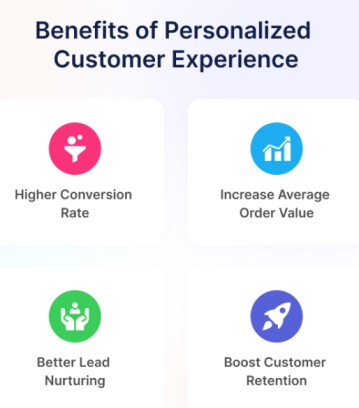
However, you need customer data to provide a personalized experience and the same data can be collected at various stages of the journey using different tools.
Thanks to the availability of AI-powered chatbots and live chat software, it’s become very easy for agents to have customer data and personalize the interactions.
Agents can also leverage past customer interaction, use their web activity and engage them in a personalized manner.
Offer Omnichannel Support Options
Not all customers are created equal, so you should not expect them all to prefer the same channel to reach your agents for help or engagement. Some of them like using live chat, some may send an email, some might like to connect over the phone and some may use social media or messaging apps.
Since you’re never sure which channel your customers might use to reach you, it might make it difficult to provide the kind of seamless and consistent support your customers expect. To avoid that, you can offer multiple touchpoints or omnichannel arrangements for servicing customers.
More importantly, you also need to establish a sync between all the channels and interactions so that your customers can get a true omnichannel experience. This kind of strategy can also help you offer targeted and contextual support more often.
Meet and Exceed Customer Needs
It’s true that companies with a customer-centric approach are some 60% more profitable than those that are not. It also proves how focusing on customers can take your business ahead rather than working on any other aspect.
And the first step towards being a customer-centric company is by identifying and then meeting customer needs. The more your business understands customers’ needs, the better service, product, and engagement it can provide.
When you are aware of what customers want, you can provide faster solutions in real time. When you know what delights customers, you can take steps and improve your product.
Whether the customer needs are related to products such as price, quality, and feature, or related to customer service values such as speed, clarity, and empathy, you can exceed that only after having a good understanding of that.
Run Loyalty Programs
Winning customer loyalty is as important as rewarding those customers for their loyalty. And that’s why most top brands run loyalty programs that not only help them reward customers but also improve the retention rate.
With a loyalty program, all you need to do is offer incentives for repeat purchases. And you can do that in many ways, either by offering discounts, using loyalty cards, or giving points on purchases.
There are many airline companies and hotel chains that run attractive loyalty programs to reward their customers based on the extent of purchase made. Some brands have a strategy to reward their customer for a specific amount spent.
The methods and means could be anything but the motivation should be the same – to reward your customers and show them that you care for their loyalty.
How Customer Value Changes Across the Customer Journey
Customer value changes at different stages of the customer journey. What customers expect before buying may not be the same as what they expect after purchase. That is why businesses need to create value at every touchpoint, not only during the sale.
1. Awareness stage
At this stage, customers are discovering their problem and exploring possible solutions. They value useful information, educational content, trust signals, reviews, and clear messaging. Your goal is to help them understand why your solution is relevant.
2. Consideration stage
Here, customers compare different brands, features, prices, and benefits. They value product clarity, comparison pages, case studies, demos, transparent pricing, and proof that your solution can solve their problem better than alternatives.
3. Purchase stage
During purchase, customers value convenience, speed, security, and simplicity. A complicated checkout process, unclear pricing, or slow response from sales can reduce perceived value.
4. Onboarding stage
After purchase, customers want to get value as quickly as possible. Easy setup, helpful tutorials, proactive support, and guided onboarding can make customers feel confident about their decision.
5. Usage stage
This is where customers judge whether your product or service truly delivers on its promise. They value reliability, performance, responsive support, regular improvements, and features that help them achieve their goals.
6. Retention and loyalty stage
Long-term customers expect continued value. They may look for better support, exclusive offers, advanced features, loyalty rewards, personalized recommendations, or strategic guidance. If their needs change and your business does not adapt, customer value may decline over time.
To create lasting customer value, businesses should map the entire journey and identify where customers experience friction, confusion, delay, or disappointment. Every improvement in the journey can increase perceived value.
Customer Value vs Customer Values
Customer value and customer values may sound similar, but they are not the same.
Customer value refers to the benefits a customer receives compared to the cost they pay. It answers the question: “Was this product or service worth it?”
Customer values refer to the beliefs, principles, or standards that matter to customers. These may include trust, honesty, privacy, sustainability, transparency, fairness, or ethical behavior.
For example, a customer may find value in a chatbot because it provides instant answers and saves time. But the same customer may also care about values such as data privacy, responsible AI use, and transparent communication.
Both are important. A business may offer strong functional value, but if it does not align with customer values, some customers may still choose a competitor. Similarly, a company may have strong values, but if its product is difficult to use or too expensive, customers may not see enough value.
The best businesses combine both. They deliver practical benefits while also standing for values that customers trust.
Customer, Consumer, and Non-Customer: Why the Difference Matters
To understand customer value clearly, businesses should know the difference between customers, consumers, and non-customers.
A customer is the person or business that buys the product or makes the purchase decision.
A consumer is the person who actually uses the product or service.
A non-customer is someone who could buy from your business but currently chooses a competitor or does not buy at all.
In many cases, the customer and consumer are the same person. For example, someone who buys and uses a live chat solution for their small business is both the customer and the consumer.
But in B2B, they can be different. A manager may purchase customer support software, while support agents use it every day. In this case, the manager may value pricing, reporting, and ROI, while the agents may value ease of use, automation, and faster workflows.
This difference matters because value must be created for all important stakeholders. If the buyer sees value but the users struggle, adoption may drop. If users love the product but decision-makers do not see ROI, renewal may become difficult.
To create stronger customer value, businesses should ask:
- Who makes the buying decision?
- Who uses the product daily?
- What does each group consider valuable?
- Why do non-customers choose competitors?
- What barriers stop potential customers from choosing us?
Understanding these groups helps businesses design better products, improve messaging, and create value that supports both adoption and retention.
Onboarding and Customer Success as Customer Value Drivers
Customer value does not end after the purchase. In many cases, the real value begins after customers start using the product or service. This is why onboarding and customer success play a major role in increasing customer value.
A strong onboarding process helps customers understand how to use your product, set up key features, and achieve their first success quickly. If customers feel confused after purchase, their perceived value can drop even if the product itself is powerful.
To create value through onboarding, businesses can:
- Provide step-by-step setup guidance
- Share product tutorials and help articles
- Offer live chat or chatbot support during setup
- Send helpful onboarding emails
- Assign customer success managers for high-value accounts
- Track whether customers are using important features
- Proactively help customers before they face problems
Customer success goes one step further. Instead of waiting for customers to ask for help, customer success teams identify customer goals and help them achieve better outcomes over time.
For example, a business using a customer engagement platform may want to reduce response time, automate FAQs, improve lead generation, or increase customer satisfaction. A customer success approach helps them use the right features to reach those goals.
When customers achieve measurable outcomes, they are more likely to stay, renew, upgrade, and recommend your business to others.
What Destroys Customer Value?
Just as businesses can create customer value, they can also destroy it. Value is reduced whenever customers feel that the effort, cost, or frustration of dealing with a business is greater than the benefit they receive.
Common customer value destroyers include:
- Slow response times
- Poor customer support
- Complicated buying processes
- Hidden fees or unclear pricing
- Difficult onboarding
- Repeating the same issue to multiple agents
- Lack of personalization
- Product bugs or unreliable service
- Long waiting times
- Poor communication
- Unhelpful self-service resources
- Not acting on customer feedback
For example, customers may like your product but still leave if they cannot get help when they need it. Similarly, a customer may be interested in buying but abandon the process if pricing is unclear or the checkout experience is difficult.
To avoid destroying customer value, businesses should regularly review the customer journey and remove unnecessary friction. Every delayed response, confusing step, or unresolved issue increases the customer’s perceived cost.
The easier, faster, and more helpful your experience is, the more value customers will see in your business.
Leverage the REVE Platform and Boost Customer Value
Customers have lofty expectations and businesses must come good on them if they want to enjoy great brand loyalty. However, you just can’t meet customer expectations unless you offer value.
We, at REVE Chat, understand the role of engagement tools in meeting and exceeding customer expectations.
Your business can use our AI-powered chatbot, automate various tasks and ensure value to customers at every stage of their journey.
Developing the bot via our platform is simple and it involves a drag-and-drop method, so you can do that without much technical knowledge as well.
Apart from the chatbot, we have some other equally powerful visual engagement tools such as video chat software and co-browsing software that can ensure value addition in different ways.
Plus, you can also use our top-class live chat software and improve the response time for customers.
Final Thoughts
Customer tastes are always evolving and your business must keep pace with that to win their trust and loyalty in the long run. To do that, your business will need world-class tools at its disposal.
With REVE Chat, start free trial of our engagement tools and see the difference in various aspects of your sales, marketing, and support.
Using these tools, you can offer customer value easily and turn buyers into brand ambassadors.
Build AI-powered support with Wize AI
Connect business knowledge, automate support conversations, and improve response quality without managing a complex AI stack.
Explore Wize AI Agent Rate the article

Rasheek M. Rayat
Customer Success Manager
Rasheek M. Rayat is a dedicated Customer Success Manager at REVE Chat, where he leverages his expertise to empower businesses with innovative live chat and chatbot solutions. Passionate about enhancing customer experiences, he combines strategic insight with a customer-centric approach to drive satisfaction and growth.
View all articles