





Table of Content
What drives customers to make a purchase? What is their biggest buying motivation?
Well, each buyer has a unique motive. For each one of them, it could be a rational or emotional decision. Sometimes, it’s a combination of both, or of other elements.
But one thing is sure when it comes to buying decisions, customers are surely not as savvy as they might like to believe. Neither do they always make rational choices nor choose what they should. They make mistakes even if they plan and strategize long before purchasing something. Consumers often oscillate between being impulsive to staying unsure.
In most cases, they don’t know why they buy something or prefer one brand over another. But the question is, what could be the reason that influences customers when they make decisions? Emotions drive customers whatever or whenever they buy, most of the time, but there are other factors at play as well.
That’s why understanding what motivates or influences their decisions is key to success as it could help all areas of your business. And once you know what drives customers, your team can improve upon various aspects easily be it marketing, sales pitches, customer support responses, and so on.
In this blog, we will explore buying motivation in detail, understand the motives of buyers, and learn the differences between emotional and rational motivation.
Before moving further, let’s get started with the definition first…
What is Buying Motivation?
Buying motivation is simply the influence that gives the impulse to buy or purchase goods or services. It may be defined as a drive or urge or the inner state that prompts a person towards the action of buying.
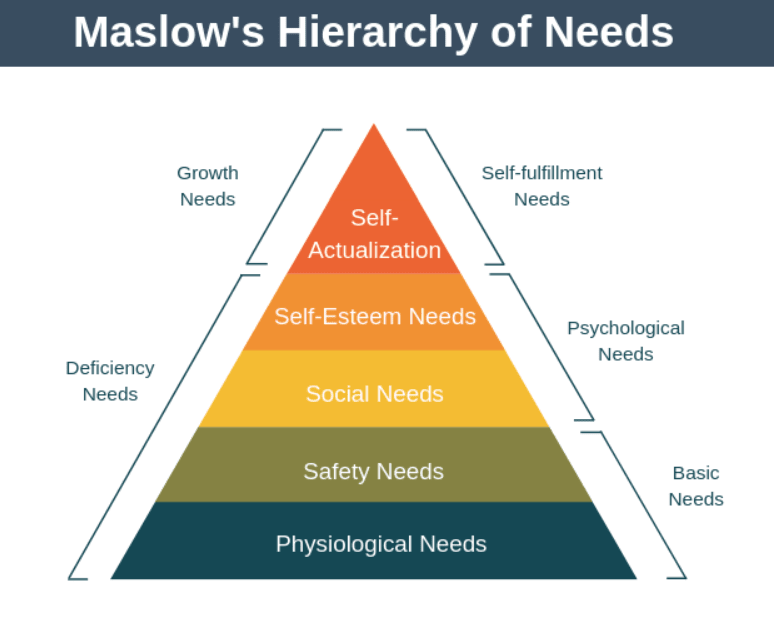
When a customer has a buying motivation, he/she is driven by a hunger for satisfaction, so they act in a proper direction and take action. For a business, it’s always important to understand customer needs better to serve them well and boost sales.
Based on different customer types, a buying motivation could be of various types, be it physical, psychological, sociological, emotional, rational, conscious, dormant, acquired, inherent, primary, and selective.
Types of Buying Motives
Understanding buying motives is essential to knowing the reasons that drive consumers to make purchase decisions. They are products of various factors such as rational, emotional, or psychological. These factors may sometimes overlap and intersect based on the unique needs and preferences of the target audience.
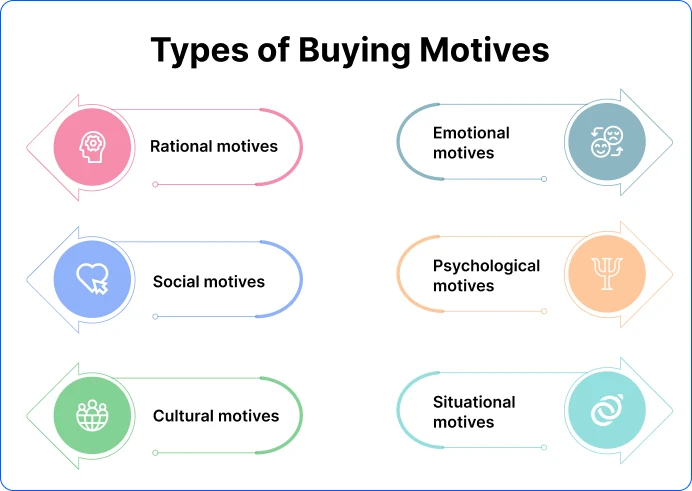
Let’s look at different types of buying motives –
- Rational motives – These motives are based on logical considerations, or driven by logic. Consumers influenced by rational motives prioritize logical aspects such as features, functionality, price, quality, price, and utility.
- Emotional motives – These motives are based on emotions, feelings, and desires. Consumers who are influenced by emotional motives consider factors such as comfort, pleasure, and excitement.
- Social motives – Social motives are driven by factors such as status, recognition, and acceptance. Consumers who are influenced by social motives may buy things to adhere to social norms or show affiliation with a particular group of people.
- Psychological motives – These motives are based on various psychological needs consumers may experience such as security and convenience. Consumers driven by these motives may buy products or services that deliver reliability, ease of use, and safety.
- Cultural motives – Consumers who are influenced by cultural motives are driven by factors such as beliefs or traditions. Most purchases in this category are based on cultural preferences associated with products or services.
- Situational motives – These motives are driven by specific occasions. Consumers influenced by situational motives may purchase due to special events, seasonable factors, or immediate needs.
Six Universal Buying Motives
While every customer is different, most buying motives can be grouped into six broad categories. Understanding these categories helps sales, marketing, and customer support teams match the right message with the right customer need.
1. Profit or Gain
Some customers buy because they want to gain something measurable. For individuals, this could mean saving money, improving productivity, learning a new skill, or getting better value from a purchase. For businesses, it may mean increasing revenue, reducing operational costs, improving efficiency, or generating more leads.
To appeal to this motive, focus your message on outcomes. Show how your product helps customers get more value, save resources, or achieve a better return on investment.
Example:
A business may choose a live chat solution because it helps the sales team respond faster to website visitors and convert more leads.
2. Fear of Loss
Fear of loss is one of the strongest buying motives. Customers may buy because they want to avoid risk, prevent mistakes, protect what they already have, or reduce uncertainty.
This motive is especially common in industries where trust, security, uptime, and reliability matter. Customers want assurance that they are making a safe decision.
Example:
A company may invest in a customer support platform because it fears losing customers due to delayed responses or poor service experiences.
3. Comfort and Pleasure
Some buying decisions are driven by the desire for comfort, ease, enjoyment, or satisfaction. Customers want products or services that make their lives smoother and more enjoyable.
This motive is not limited to consumer products. B2B buyers also value comfort when a solution reduces workload, simplifies processes, or creates a better experience for employees and customers.
Example:
A customer may choose a chatbot because it gives instant answers without making users wait in a long support queue.
4. Avoidance of Pain
Customers often buy because they want to remove an existing frustration. This pain could be slow service, repetitive work, poor communication, high costs, low productivity, or a bad customer experience.
To target this motive, identify the customer’s current problem and position your product as the easiest path to relief.
Example:
If a business is struggling with too many repetitive support tickets, an AI chatbot can reduce manual workload and help agents focus on complex queries.
5. Love and Affection
This motive is connected to relationships, loyalty, belonging, and care. Customers may buy because they want to support others, feel appreciated, strengthen relationships, or choose a brand that reflects their values.
For businesses, this often appears as a desire to build stronger relationships with customers, employees, or communities.
Example:
A company may invest in personalized customer communication because it wants customers to feel valued and understood.
6. Pride and Prestige
Many customers are motivated by recognition, status, achievement, and self-improvement. They want to feel confident about their decision and may prefer products that make them appear successful, advanced, or different from others.
In B2B buying, this can show up as the desire to use modern tools, stay ahead of competitors, improve brand image, or be seen as an industry leader.
Example:
A growing company may adopt AI-powered customer engagement tools to position itself as innovative and customer-first.
Emotional vs Rational Buying Motivations
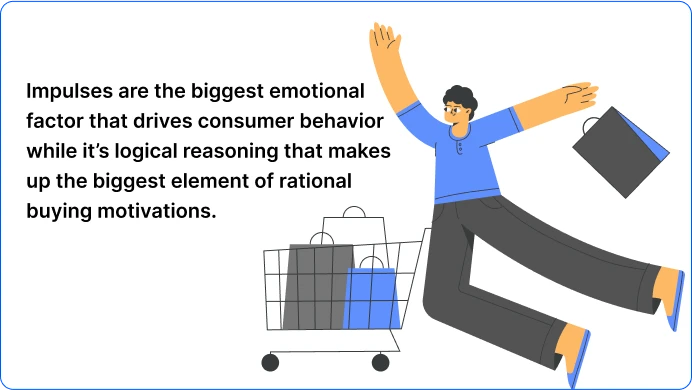
Buying motivations are often shaped by different factors. While impulses are the biggest emotional factor that drives consumer behavior, it’s logical reasoning that makes up the biggest element of rational buying motivations.
Let’s discuss some of the key differences between emotional vs rational buying motivations –
Emotional Buying Motivations
Emotional motivations often lead buyers to make purchasing decisions based on feelings. These motivations are deeply rooted in desires and psychological needs. In various industries, emotional motivations have a big role in shaping consumer behavior and driving sales. Marketers often target these motivations through ads and aim to connect consumers on an emotional level.
Key Elements of Emotional Buying Motivations:
- Emotional buying motivations are aroused by specific triggers that evoke feelings of desire, joy, fear, or excitement.
- Emotional buying motivations arise from basic psychological needs, such as the need for belonging and self-esteem
- Buyers may develop a strong brand affinity and loyalty that stems from emotional aspects and trust.
- Past experiences and memories with the brand product or service may sometimes form the basis for emotional buying motivations.
Rational Buying Motivations
Logical reasoning drives rational buying motivations. Practical considerations associated with a purchase are also key factors involved in rational buying motivations. Such buying motivations are based on deliberate thought processes and gaining maximum value. Rational buyers are not swayed by emotions and they rather prioritize facts and evidence when evaluating options.
Key Elements of Rational Buying Motivations:
- Rational buyers often evaluate the costs and benefits of a purchase before making a decision.
- Such buying motivations are based on fulfilling specific needs or serving practical purposes.
- Rational buying motivations involve making informed decisions based on facts rather than emotions.
- Rational consumers focus on products with quality, reliability, and durability.
Pain vs Pleasure: A Simple Way to Understand Buyer Motivation
Most buying decisions are influenced by two broad forces: the desire to gain something positive or the desire to avoid something negative.
A pleasure-driven buyer is focused on growth, improvement, convenience, achievement, recognition, or opportunity. They are thinking about what they can gain by making the purchase.
A pain-driven buyer is focused on solving a problem, reducing risk, avoiding loss, removing frustration, or fixing something that is not working. They are thinking about what could go wrong if they do not act.
Both motivations can exist at the same time. For example, a business may buy a live chat solution because it wants to increase conversions. That is a pleasure motive. But it may also buy because it is losing potential customers due to slow response times. That is a pain motive.
The key is to understand which motivation is stronger for the buyer at that moment.
How to Message to Pain-Driven Buyers
For pain-driven buyers, your message should focus on:
- Reducing risk
- Solving urgent problems
- Saving time
- Preventing customer churn
- Removing operational bottlenecks
- Improving reliability and control
Example message:
“Stop losing potential customers because of delayed responses. With live chat and AI-powered automation, your team can respond instantly and resolve queries faster.”
How to Message to Pleasure-Driven Buyers
For pleasure-driven buyers, your message should focus on:
- Growth
- Better customer experience
- Higher productivity
- Competitive advantage
- Innovation
- Long-term success
Example message:
“Turn every website conversation into an opportunity to engage, support, and convert more customers with a smarter customer communication platform.”
6Cs of Customer Motivation
Customers want value and a great experience when they play to buy something. Your business therefore should always focus on motivating them to take action as this is the only way to drive sales. It’s also equally important to be aware of customer delight, buying motivators, tastes, and preferences that can contribute in influencing their decisions.
Customers want value and a great experience when they play to buy something. Your business therefore should always focus on motivating them to take action as this is the only way to drive sales. It’s also equally important to be aware of customer delight, buying motivators, tastes, and preferences that can contribute towards influencing their decisions.
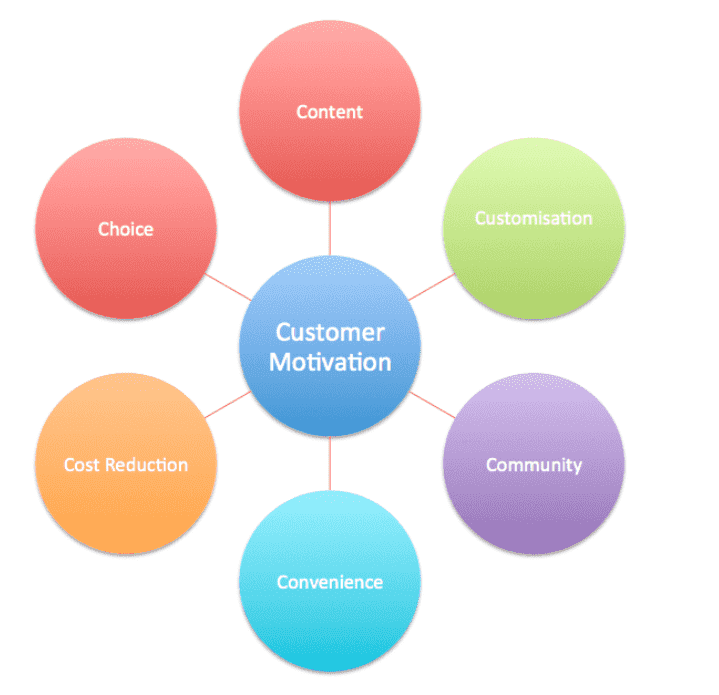
For businesses in the online world, the 6Cs of customer buying motivation include;
Content
Content can work as a motivator if it’s presented in a way to detail product information neatly and if it helps customers understand the business better at each step of the way.
Customization
Personalizing the content or products to suit specific individuals or groups can work as a great customer motivator and may also positively affect sales.
Choice
Giving customers choices at every stage of the way, whether related to products or payment methods, could work as a buying motivation.
Convenience
If customers feel a sense of convenience with your brand whether, for support or availability, this could work as a buying motivation for them.
Cost
A product that costs neither too low nor too high or a company that offers competitive prices, could well motivate the buying decision
Community
Being present across social channels and forums to answer questions or clear doubts can give customers a sense of community and may influence their purchase decision.
Benefits of Understanding Customer Buying Motivation
Understanding customer motivators and realizing what drives them is always a big challenge for businesses across industry verticals. Nonetheless, this is a challenge worth accepting because it helps put resources in a better way and target the right customer persona motivations. And when you know customer service psychology, this could always make all the difference to the bottom line.
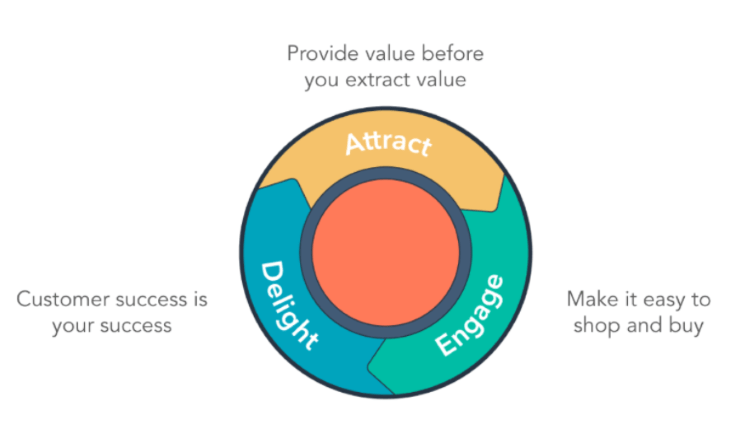
Being aware of customer buying motivation can positively impact different aspects of the business.
- Solid brand – Businesses that are able to gauge customer buying motivation well can target people in the right way and deliver value proposition at every stage of the way, therefore creating a strong brand.
- More loyalty – Customers may be fickle in nature but they often stick with companies that understand and serve their persona motivations based on the exact motivations, therefore staying loyal to them.
- Better conversions – You can expect a better conversion rate or more sales only if you understand buying motives of consumer behavior inside out and target them with the right offers at the key juncture of their journey with your brand.
- Improved customer service – Agents can engage customers in a superior manner, answer their questions confidently and enhance the experience easily if they are aware of the drives and motivations.
How to Identify Customer Buying Motivation
Understanding buying motivation is not about guessing what customers want. It is about asking the right questions, listening carefully, and studying customer behavior across different touchpoints.
Here are some practical ways to identify what motivates your buyers.
1. Ask Open-Ended Questions
Open-ended questions encourage customers to explain their needs in their own words. This helps you understand whether they are motivated by price, convenience, trust, speed, status, security, or another factor.
Useful questions include:
- What problem are you trying to solve right now?
- What made you start looking for a solution?
- What would an ideal outcome look like for you?
- What happens if you do not solve this problem soon?
- What matters most when choosing a product like this?
- What concerns do you have before making a decision?
The answers will reveal whether the customer is driven by pain, pleasure, logic, emotion, urgency, or long-term value.
2. Listen for Repeated Words and Concerns
Customers often reveal their buying motives indirectly. A buyer who repeatedly mentions “cost,” “budget,” or “ROI” may be motivated by economic value. A buyer who talks about “risk,” “security,” or “reliability” may be motivated by fear of loss. A buyer who mentions “growth,” “scale,” or “customer experience” may be motivated by achievement and improvement.
Your sales and support teams should document these patterns so marketing messages can be aligned with real customer language.
3. Analyze Customer Behavior
Customer behavior often reveals motivation more clearly than direct answers. Look at what customers click, compare, download, ask, abandon, or revisit.
For example:
- Visitors who spend time on pricing pages may be evaluating cost and value.
- Visitors who read case studies may be looking for trust and proof.
- Visitors who compare features may be driven by rational evaluation.
- Visitors who ask about setup time may be concerned about convenience.
- Visitors who ask about data security may be motivated by risk reduction.
Behavioral insights help you personalize messaging and guide customers toward a confident decision.
4. Use Surveys and Feedback
Surveys, interviews, and feedback forms can help you understand why customers chose your brand, why they hesitated, or why they left.
Ask questions such as:
- What was the main reason you chose our product?
- What nearly stopped you from buying?
- Which feature mattered most to you?
- What alternative solutions did you consider?
- What problem were you hoping to solve?
- What could have made your decision easier?
The responses can reveal hidden buying motives and help improve your marketing, sales, onboarding, and customer support.
5. Segment Customers by Motivation
Not all customers buy for the same reason. Segmenting your audience by motivation helps you create more relevant messages.
For example:
- Price-sensitive buyers need value, discounts, and ROI proof.
- Risk-conscious buyers need security, guarantees, testimonials, and trust signals.
- Convenience-focused buyers need simplicity, speed, and easy setup.
- Growth-focused buyers need performance, scalability, and success stories.
- Emotion-driven buyers need stories, community, identity, and brand connection.
When you know the dominant motive of each segment, you can create more persuasive campaigns and customer experiences.
Top 10 Buying Motivations that Drive Sales
Customers are always a mixed bag of both rationality and impulse. And businesses that target one and ignore the other find it hard to win loyal customers. You should not make this mistake and rather focus on first understanding customer pain points or what motivates customers and then strategizing the marketing, sales, and support accordingly.
You could drive sales and boost experience when you knew the top customer buying motivation.
- The Need of Your Product
- The Desire to Stand Out From the Crowd
- A Feeling to Belong to the World
- The Constant Wish of Self-improvement
- Achieve a Goal in Life
- Aiming for a Positive Future
- Make the Life Easier
- Save Time and Money
- A Sense of Freedom
- Security by Familiarity
Let’s discuss each of these in detail –
1. The Need of Your Product
Most customers often buy a product when they need it, not necessarily when they just want it.
So, as a business, your priority should always be on identifying the target group and then marketing the product to them so that sales can be boosted. Once you know what is consumer behavior, you can always take steps to better serve their needs.
Your aim is to convince customers that your product or service is the solution to their problem.
Similarly, you also need to present the product or service in a way that shows customers the value of owning it.
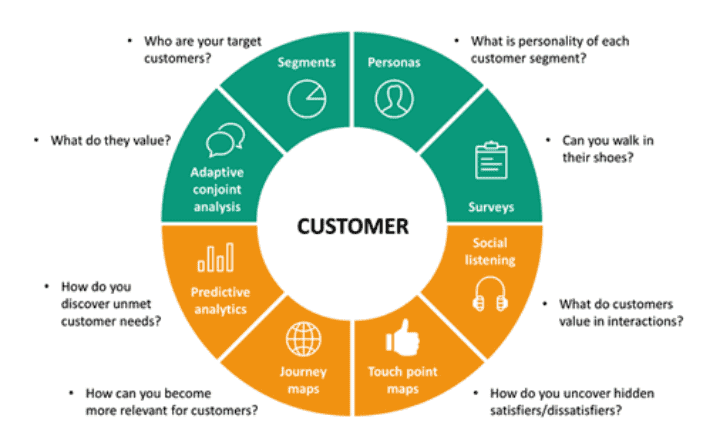
Tips to create need of your product:
- Make customers see the benefits of your product rather than focussing too much on the feature as this will increase their level of urge for the product.
- Do the research to gauge the urgency level of the customer or try to understand the dissatisfaction level before presenting the product in front of them at the right time.
2. The Desire to Stand Out From the Crowd
A lot of customers have the desire to feel unique and special in one way or the other. So much so, they can buy anything if it helps them stand out from the crowd.
Some of their purchases are purely driven by the urge to look different from the rest. That’s why they often buy random things even if they do not need them.
This also explains why people buy fancy cars, expensive watches, or avail premium subscriptions to services as this makes them somewhat special.
Considering this kind of motivation, you need to make sure your product somehow satiates different types of customers and their craving of specialness.
Irrespective of the industry you belong to, the product you sell has to create some difference to customers and also give them the edge they so richly crave.
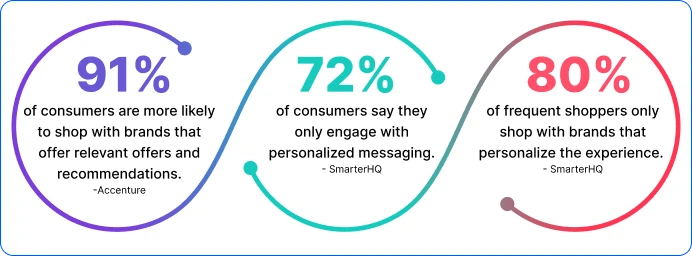
How to target customer persona motivations to feel special?
- Personalization – You or your product needs to offer some sort of personalization to win customers over and ensure they see the desired value in it.
- Exclusiveness – If your product or service is able to drive home the point of exclusiveness to customers, it will definitely sell like a hot cake.
3. A Feeling to Belong to the World
Humans are social animals. They are always driven by a strong sense of community. For that reason, we often want to own things others have or plan to avail services purely because friends or neighbors did.
The feeling to belong to the world means customers don’t want to miss out on something that others are having. In the same way, people can buy any product that helps them feel like they are part of the community at large.
This also explains the rationale behind the en-masse purchase of items like TV, smartphone, refrigerator, vacations, etc.

How to make customers feel belonging to the world?
- Present your product in a way that gives the assumption that’s it’s owned by everyone around.
- Even if your product or service is not unique or path-breaking, you can still make it appear as if owning it gives a sense of community.
4. The Constant Wish of Self-improvement
A lot of customers are influenced by the wish to constantly improve their lives in one way or the other.
They search for products that make lives better. From acquiring new skills to getting awesome experiences, they are ready to pin hope on anything that ensures some sort of improvement.
For that reason, many businesses promote their products in a way that hints to make life better in any little way it could.
Your product too needs to take a leaf out of the ‘self-improvement’ drivel if it wants to tap into this customer motivation either for individuals or businesses.
And if you could meet customer perception of improvement, this might positively impact the sales.
5. Achieve a Goal in Life
Whether an individual or business, everyone often strives to achieve a goal and reach a milestone in life to feel a sense of accomplishment.
The desire to progress to the next level or cross a barrier has always been a huge motivator for people.
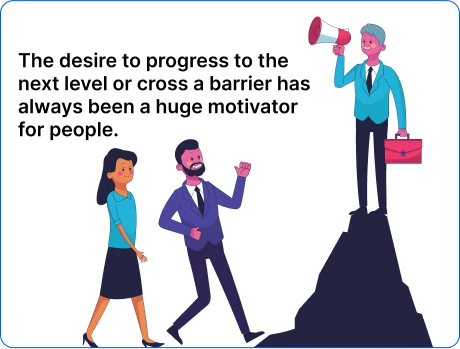
So, it’s only natural for humans to look for a product or service that helps them meet a goal and feel like having achieved something in life.
Goals are among the powerful buying motives of consumer behavior that can always work as an incentive for most, so you need to target this if you want to sell your product.
Tips to target customers aiming to achieve a goal:
- Make sure you highlight the product feature or benefits in a way that assure customers of good results if they buy it.
- You also need to present the product in a way that gives customers the confidence to achieve their goals easily.
6. Aiming for a Positive Future
Brands that open the window to a positive future often connect customers at a personal level and perform well in the market.
And when it comes to a positive future, it not necessarily means offering some high-tech products, but it may also be ensuring some hope through your own product.
Whatever product or service you have, it has to give a hint of being a contributing factor towards a brighter future for the world or customers.
If your product or service could pain a positive future, customers would definitely go for it.
Ways to depict a positive future for customers?
- Make it known to the world if you think the product is capable of impacting the future for customers in any way.
- And if your product does not have innovative features, then focus on something other, whether your mission or value, that is oriented to making the future better for customers.
7. Make the Life Easier
Customers want their lives to become progressively easier.
They often invest in products or services to get better or to see an improvement in their life.
Some of their purchasing decisions are driven by the wish to make things better or easier than before.
Quite like individuals, business entities too are influenced by this desire to go for a product that helps them make the processes better.
As a result, you need to be aware of buying persona motivations and align the products or services in a way that impacts customers at a deep level.
Tips to target customers who aim to make life easier:
- Show customers the USP of your product that can impact lives in a big way and make things easier.
- Do a bit of research and target businesses that can benefit from your features and add value to their processes.
8. Save Time and Money
No matter how rational customers are, they find it hard to avoid the lure of products that provide visible value.
For that reason, they often search for products or services that help them do the same job in less time and with less money compared to what is available in the market.
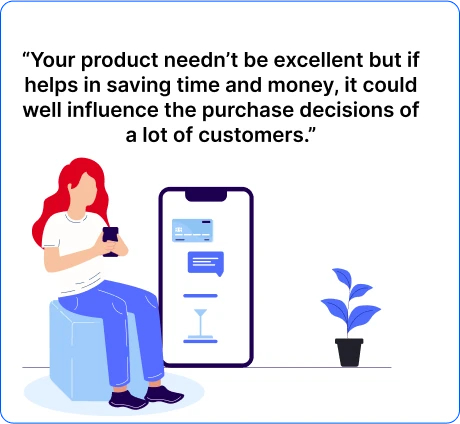
Your product needn’t be excellent but if helps in saving time and money, it could well influence the purchase decisions of a lot of customers.
And if you’re able to positively impact customer motivation, it can definitely push the sales upwards.
9. A Sense of Freedom
A lot of customers feel trapped by the harsh reality of the present. They think something is missing that prevents them from taking a leap to the next level.
People also feel tied to the same old conventions and rules with nothing new to achieve or do, and this also adds to their boredom.
This explains why people buy tour packages to give themselves a sense of freedom and be away from what is bothering them.
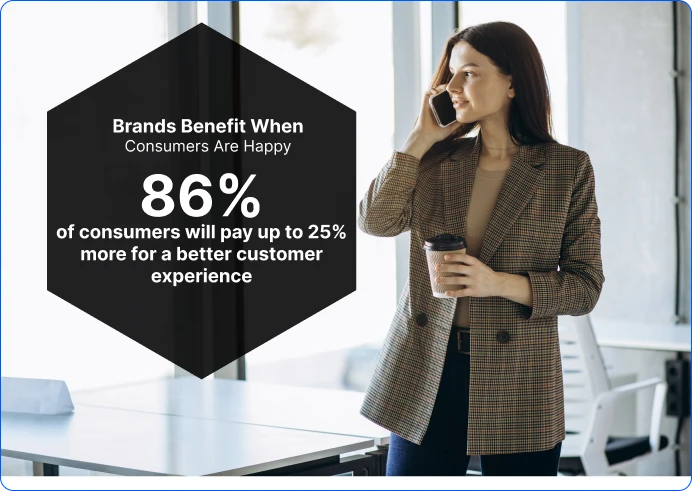
Even if you’re not in the tour industry or even if your product is not revolutionary in any way, it can still achieve customer happiness by targeting the desire of feeling a sense of freedom.
Freedom could be anything, be it the ability to achieve something, or do something not possible earlier, or to do things in a better way, etc.
10. Security by Familiarity
It’s natural for customers to look to align with brands that give them a sense of security.
More than the product or service itself, they want to associate with a company that provides a type of security, or that looks to add value and not just to make money.
For that reason, companies that have favorable customer policies, be it return policies, refund rules, data security features, etc. enjoy more trust in the market compared to the rest.
So, you need to target customers’ persona motivations of seeking security so that they can find you trustworthy and feel like joining with you.
Buying Motivation Across the Buyer Journey
Buying motivation changes as customers move from awareness to decision. A customer may begin with a problem, compare different options logically, and finally choose the brand that feels most trustworthy.
Understanding this journey helps businesses deliver the right message at the right stage.
| Buyer Journey Stage | Customer Mindset | Common Buying Motivation | Best Content or Message |
|---|---|---|---|
| Awareness | “I have a problem or need.” | Pain, curiosity, need recognition | Educational blog posts, problem-focused content, checklists |
| Consideration | “What are my options?” | Value, trust, convenience, comparison | Product guides, comparison pages, webinars, case studies |
| Decision | “Which solution should I choose?” | Risk reduction, ROI, confidence | Testimonials, demos, free trials, pricing clarity, FAQs |
| Purchase | “Is this easy and safe?” | Convenience, security, urgency | Smooth checkout, easy onboarding, clear policies, live support |
| Post-purchase | “Did I make the right choice?” | Satisfaction, support, loyalty | Onboarding emails, proactive support, tutorials, feedback requests |
A strong customer journey does not only push customers to buy. It helps them feel confident before, during, and after the purchase.
Social Proof, Reviews, and User-Generated Content as Buying Motivators
Modern buyers rarely depend only on brand messages. They also look at what other people say. Reviews, ratings, testimonials, case studies, influencer recommendations, and user-generated content can strongly influence buying decisions because they reduce uncertainty.
When customers see real people using and recommending a product, they feel more confident. Social proof works because it answers an important question in the buyer’s mind: “Can I trust this?”
Businesses can use social proof in several ways:
- Add customer testimonials to landing pages.
- Show ratings and reviews near product or pricing sections.
- Use case studies to prove measurable results.
- Highlight customer success stories in email campaigns.
- Encourage users to share photos, videos, or experiences.
- Display logos of well-known clients where relevant.
- Use real conversations and feedback to support product claims.
For example, if a company says its chatbot improves customer response time, that claim becomes stronger when supported by a customer story, review, or case study showing the result.
Scarcity, Urgency, and FOMO in Buying Motivation
Scarcity and urgency can motivate customers to act faster. When people believe an offer is limited, a product is running out, or a deal will expire soon, they may feel a stronger need to make a decision.
This is closely connected to FOMO, or fear of missing out. Customers do not want to lose a good opportunity, especially when they already see value in the product.
Common urgency and scarcity tactics include:
- Limited-time discounts
- Countdown timers
- Low-stock alerts
- Early-bird offers
- Seasonal campaigns
- Exclusive access
- Limited seats for webinars or events
- Bonus features for early sign-ups
However, scarcity should be used honestly. Fake urgency can damage trust. If customers discover that a “limited-time offer” is always available, they may lose confidence in the brand.
The best approach is to combine urgency with real value. Give customers a genuine reason to act now, but do not pressure them with misleading claims.
Common Challenges in Understanding Buying Motives
Identifying customer buying motivation is not always simple. Customers may not clearly express why they want to buy, and sometimes they may not fully understand their own reasons.
Here are some common challenges businesses face.
1. Customers May Have Multiple Motives
A buyer may choose a product for both rational and emotional reasons. For example, someone may buy software because it saves time, but also because it makes them feel more productive and professional.
Businesses should avoid assuming that only one motive drives the decision. Instead, marketing and sales messages should address both logical benefits and emotional outcomes.
2. Motives Can Be Hidden or Subconscious
Customers do not always say the real reason behind a purchase. A buyer may say they want a product because of its features, but the deeper motive may be status, trust, comfort, or fear of falling behind competitors.
This is why businesses need to combine direct feedback with behavioral data, customer interviews, and sales insights.
3. Motives Can Change Over Time
Buying motives are not fixed. A customer who once cared mostly about price may later care more about quality, support, or scalability. Economic conditions, personal priorities, technology trends, and market competition can all change what buyers value.
Businesses should regularly review customer feedback, sales conversations, and behavior patterns to keep their messaging relevant.
4. Cultural Differences Can Affect Buying Motives
Customers from different cultures may respond to different motivations. Some audiences may value individual achievement and self-expression, while others may prioritize family, community, trust, or long-term relationships.
For global businesses, understanding cultural context is essential. The same message may not work equally well in every market.
5. Customers May Say One Thing and Do Another
Sometimes customers claim that price is their main concern but still choose a more expensive product because it feels safer or more trustworthy. This gap between stated preference and actual behavior is common.
To understand true buying motivation, businesses should compare what customers say with what they actually do.
Uncover Customer Persona Motivations and Improve their Experience with Your Brand
Emotion drives purchase. It motivates people to buy things. So your business should always strive to uncover customer motivations and tap into those. The focus should always be on understanding what causes buying motivation for customers to purchase something as then you can present your products at the right time and show the value it brings.
In addition, your brand value can grow manifold if you become aware of what influences customers, and you also deliver something that ensures great experiences. The idea is to know your customers well, be aware of their emotions at different stages of the journey and then target them at the right time so that sales can get a well-deserved boost.
Build AI-powered support with Wize AI
Connect business knowledge, automate support conversations, and improve response quality without managing a complex AI stack.
Explore Wize AI Agent Rate the article

Ehsanur Rahman
Head of Customer Communication
Ehsanur Rahman, the Head of Customer Communication at REVE Chat is dedicated to implementing advanced solutions that boost customer interactions and satisfaction. Ehsanur's passion for technology and customer service drives his commitment to delivering exceptional experiences.
View all articles