



7 Best Live Chat Software For Sales and Support In 2026
- February 23, 2026
- 12 mins read
- Listen

Choosing the right live chat tool is like finding a needle in a haystack. There are too many tools to choose from, and confusion is guaranteed. Everyone is making their claim to fame, saying that their solution is the best.
But the reality of choosing a live chat solution is simpler. Most businesses don’t fail at live chat because of missing features. They fail because they pick a tool that doesn’t fit how their team actually works.
This guide is here to fix all that confusion and help you make a decision regarding a tool. Instead of treating live chat like a checklist, I will focus on what genuinely makes a live chat tool good, where most teams go wrong when choosing one, and which tools make sense for different types of businesses.
Why live chat still matters (and why many teams get it wrong)
Live chat isn’t new. What’s changed is how customers expect to use it.
Today, visitors don’t want another floating widget asking “How can we help?” What they want is:
- Quick answers without asking a bunch of questions,
- Continuity across channels (web, WhatsApp, social), and
- Conversations that don’t restart every time they switch devices or channels.
When live chat works well, it feels like an integral part of the system. Conversations flow naturally, agents don’t scramble, and customers get what they need without friction. When it doesn’t, it becomes noisy, intrusive, or worse, ignored.
While a long list of features for live chat helps, what makes the difference is how the tool fits into a company’s ecosystem.
How I evaluated these tools?
Rather than ranking tools by who has the longest feature page, I looked at a simple premise:
“Would this tool make a real team faster, calmer, and more effective day after day?”
To answer that, the tools were evaluated with a few practical questions:
- Agent experience: How efficiently can agents manage conversations, track context, and collaborate with teammates?
- Flexibility & scalability: Can the tool adapt as the business grows and workflows become more complex?
- Context & continuity: Are conversations connected across channels, so customers don’t have to repeat themselves?
- Business impact: Does the tool help reduce support load, improve response times, or increase conversions?
- Ease of setup & integration: How quickly can a team start using the platform and integrate it with existing tools (CRM, ecommerce, analytics)?
- Automation & smart assistance: Optional AI features, triggers, or macros that support agents without replacing them.
These criteria focus on real-world usage and agent productivity rather than superficial features. Together, they capture both day-to-day efficiency and long-term business value.
A quick look: popular live chat tools and where they fit
| Rank | Tool | What it’s known for | Where it fits best | Why teams choose it |
|---|---|---|---|---|
| 1 | REVE Chat | Omnichannel live chat with ecommerce depth | All Support + Sales teams | Unified inbox, proactive chat, strong analytics, built for conversion-focused teams |
| 2 | LiveChat | Mature, reliable live chat | High-volume support | Stability, detailed reporting, large integration ecosystem |
| 3 | HubSpot Live Chat | CRM-connected chat | Marketing & inbound sales teams | Seamless CRM workflows, free entry point |
| 4 | Tidio | Simple chat + bots | Small businesses & startups | Fast setup, friendly UI, affordable pricing |
| 5 | Zendesk Chat | Chat inside a ticketing system | Enterprise support teams | SLA-driven workflows, deep ticketing integration |
| 6 | Drift | Conversational sales platform | B2B sales & revenue teams | Lead qualification, meeting booking, ABM routing |
| 7 | Tawk.to | Free basic live chat | Very small teams & hobby projects | Zero cost, minimal setup |
7 Best Live Chat Tools For Your Business
1. REVE Chat: An omnichannel live chat platform built for modern support and sales
REVE Chat is built for businesses that treat live chat as a core growth channel, not just a support widget. While many platforms focus mainly on messaging, ticketing, or CRM, REVE Chat is designed around how customers actually move between browsing, comparing, asking questions, and buying, often across multiple channels.
What sets REVE Chat apart is the real-time context it provides to agents. Instead of handling conversations in isolation, agents can see where a visitor is on the site, what they are viewing, what’s in their cart, and how the conversation started. This turns live chat into a proactive, personalized experience that helps guide customers toward confident decisions.
On top of that, REVE Chat delivers strong collaboration through co-browsing, audio and video calls, team chat, and whisper mode, enabling agents and supervisors to resolve complex issues faster in real time. AI Copilot further enhances this with instant translations, smart summaries, and sentiment detection, making conversations smoother, faster, and more effective for both teams and customers.
All of this makes REVE Chat one of the best solutions for your business when it comes to a modern live chat software.
Why choose REVE Chat
True omnichannel inbox for all platforms
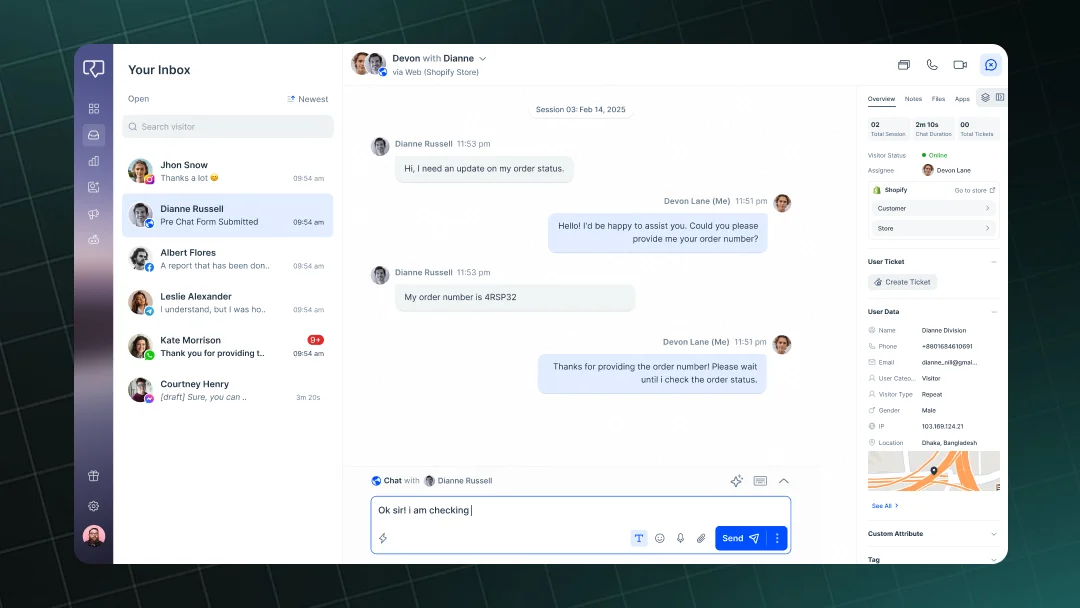
Connect with all of your channels (Web, WhatsApp, etc.), check messages, and respond to them through the omnichannel single inbox
Advanced AI capabilities with Copilot
Translate conversations in real-time, check chat summaries, detect sentiment, and much more with AI Copilot.
Ecommerce context like cart visibility and buyer intent signals
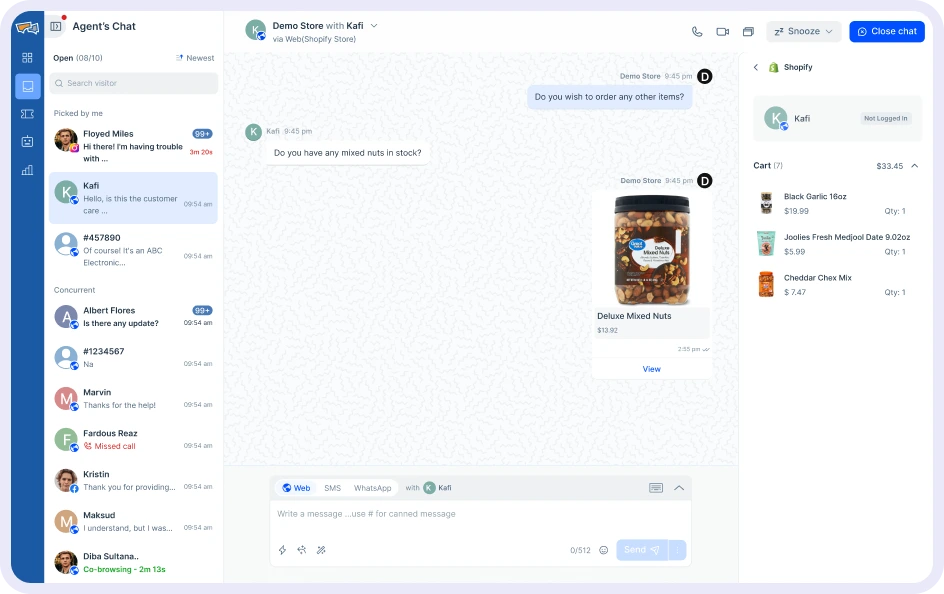
Integrate with platforms such as Shopify and WooCommerce to get a full visibility of a customers cart, allowing agents to suggest products or provide an easy to complete checkout link.
Co-browsing and audio/video calls for faster issue resolution

Communicate with customers via audio or video to resolve issues seamlessly. If problems get too complicated, use strong collaborative tools such as Cobrowsing to solve complex issues easily.
Instant messaging capabilities for businesses
Make use of instant messaging capabilities such as persistent chat history, media sharing, message sync, and more for your customers
Fully customizable chat widget
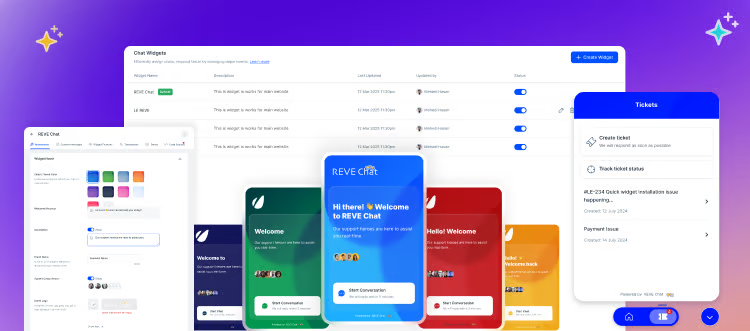
Configure and design your live chat to fit your brand colors, using a sleek widget for a great impression before a chat starts or during conversations.
Analytics that connect conversations to outcomes, not just volume
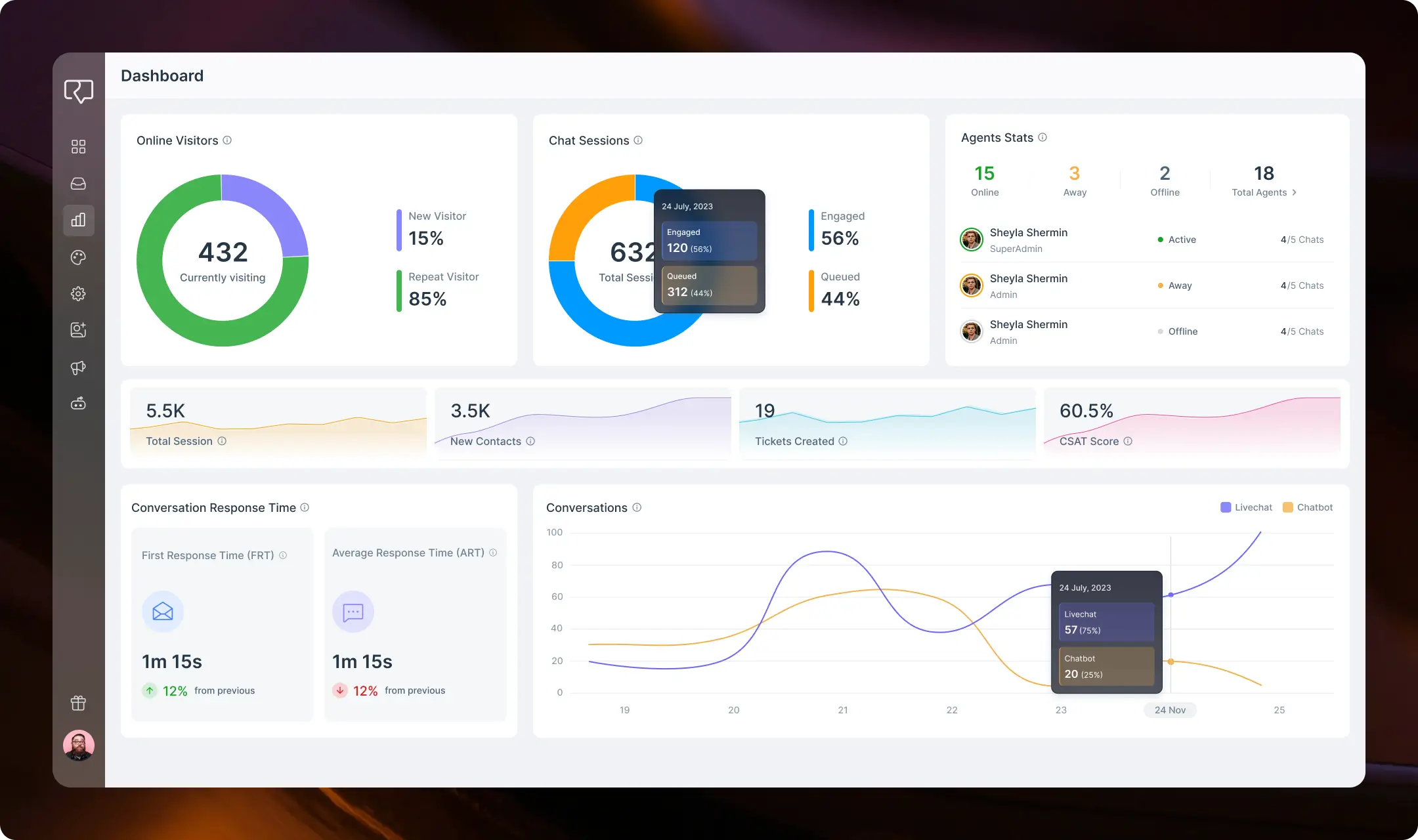
Get in-depth analytics starting from agent performances to department-wise data tracking for your business to evaluate, optimize, and excel.
Pros
- A true omnichannel inbox for sales and support
- AI Copilot for AI-assisted translations, summaries, etc
- Collaborative tools such as Cobrowsing for Complex Issues
- Store integrations and catalogs for better Ecommerce flows
- Comprehensive analytics for business analysis and performance tracking
- Free plan for teams to try
Cons
- Mobile app can be better
- Learning curve for new agents can be slightly noticeable at first
Pricing
REVE Chat offers a free forever plan to get started with to see how it benefits your business, with a 14-day free trial with all advanced features. They also offer paid packages starting from $14.99 for advanced capabilities, including addons.
Learn More: Best Ecommerce Live Chat Software
2. LiveChat: Teams that prioritize analytics and traditional customer support
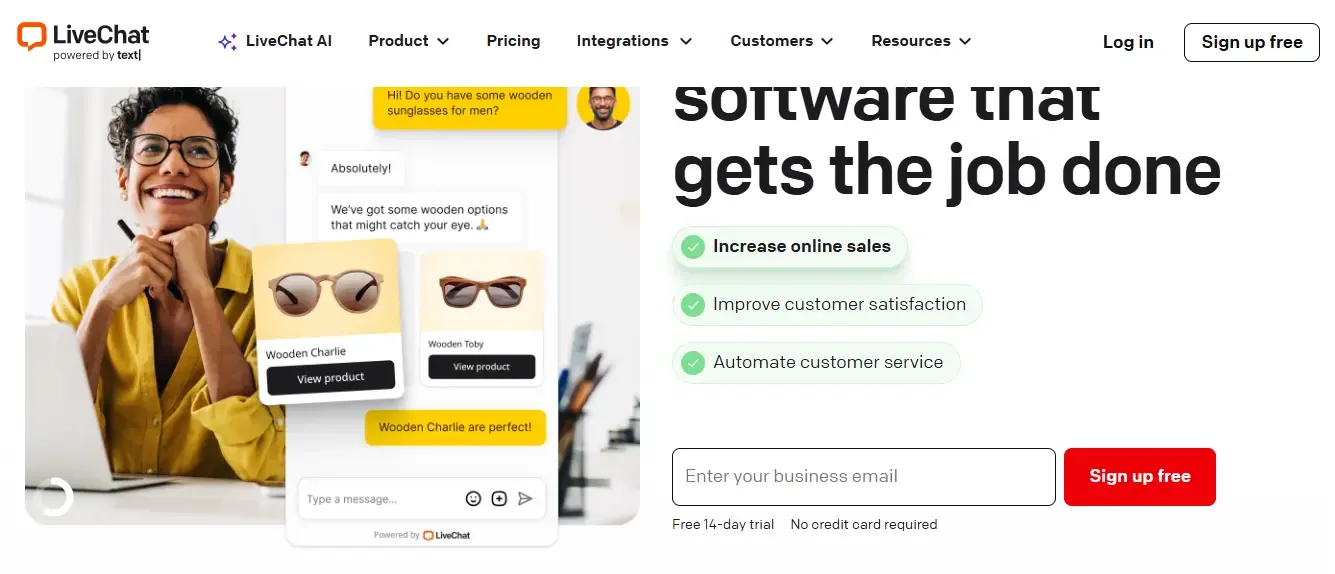
LiveChat is one of the most established players in the live chat space, built primarily for real-time customer engagement and structured support operations. The platform has evolved from a simple chat widget into a broader messaging and helpdesk solution, making it appealing to businesses that handle large volumes of customer inquiries across multiple channels.
It is particularly strong in reporting, agent productivity tracking, and maintaining professional customer service workflows. While it excels as a reliable, scalable support tool, it leans more toward traditional customer service rather than being deeply optimized for ecommerce-driven sales conversations or collaborative troubleshooting in real time.
Why Choose LiveChat
- Multichannel inbox including chat, email, and social messaging
- Customizable chat widget and branding controls
- Built-in help desk ticketing
- Advanced agent performance analytics
- Large app marketplace with hundreds of integrations
Pros
- Clean and intuitive agent interface
- Very strong analytics and reporting
- Reliable performance for high chat volumes
- Mature product with consistent updates
Cons
- Focused on traditional chat support as opposed to modern live chat needs
- Collaboration tools are a little weak
- Setup can take time for new teams
- Pricing can get expensive as teams scale
Pricing
LiveChat offers paid plans starting from $19/month per agent.
3. HubSpot Live Chat: For teams looking for just lead capture via live chat
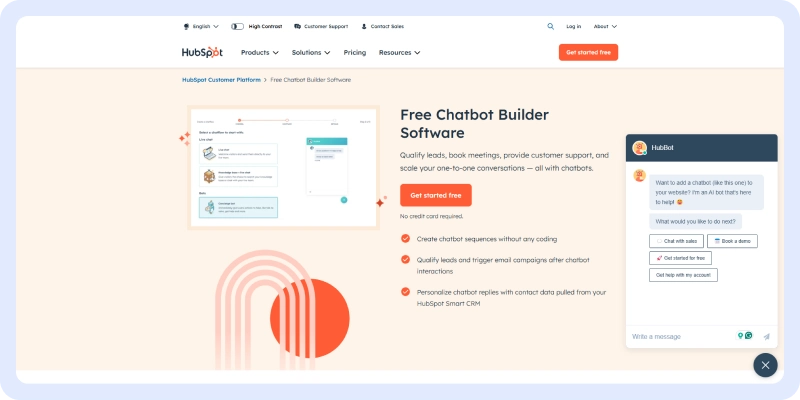
HubSpot’s live chat is not a standalone product but part of its broader CRM, marketing, and sales ecosystem. This means its strength lies less in real-time customer support and more in how seamlessly chat data flows into lead tracking, contact records, and automated marketing campaigns. Businesses using HubSpot often see chat as a way to capture leads rather than resolve customer issues in-depth.
Because of this positioning, HubSpot’s chat works best when businesses want conversations to feed directly into their sales pipeline. It is excellent for small teams getting started with digital engagement but lacks many of the deeper collaboration, real-time troubleshooting, and ecommerce-specific tools found in dedicated live chat platforms.
Why Choose HubSpot
- Native integration with HubSpot CRM
- Automated chat routing to sales reps
- Contact timelines for each visitor
- Centralized inbox within HubSpot
Pros
- Excellent for lead tracking and nurturing
- Free entry-level option
- Seamless connection between chat and marketing tools
- Easy to use for small teams
Cons
- Not built primarily as a live chat powerhouse
- Lacks deep real-time support and collaboration tools
- Limited ecommerce context compared to specialized chat tools
- Advanced features require higher-tier HubSpot plans
Pricing
Hubspot offers a free plan with paid plans starting from $20/month per agent.
4. Tidio – For small ecommerce stores needing a live chat solution with basic automation
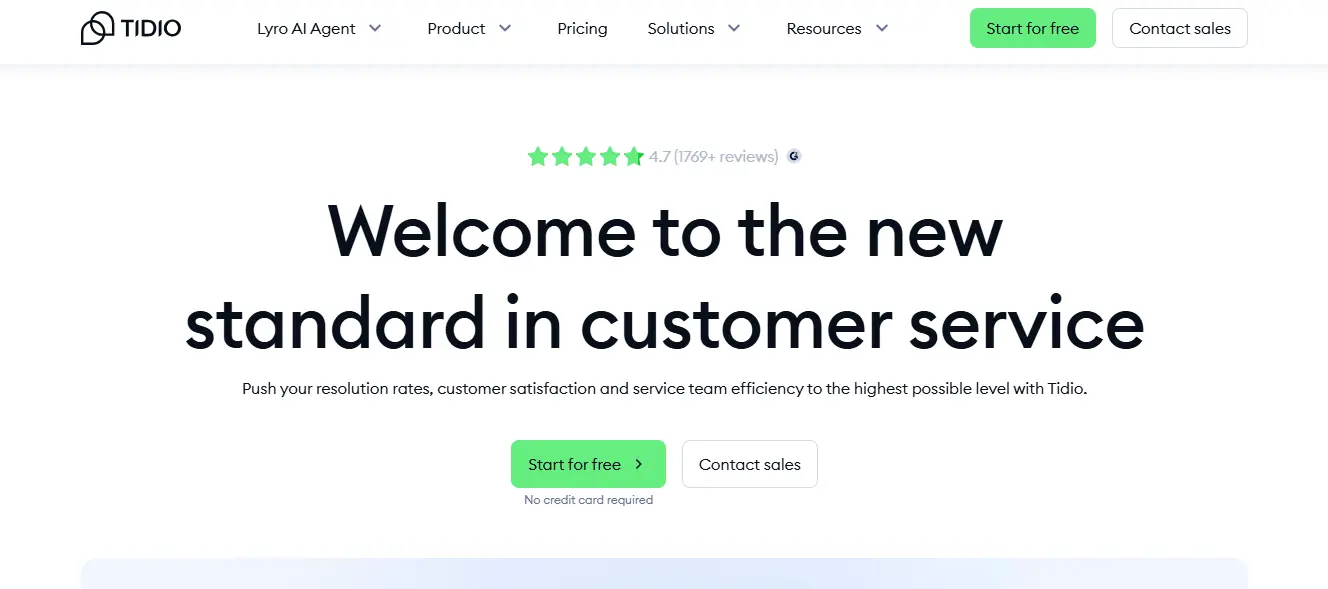
Tidio is designed with small and growing ecommerce brands in mind. It blends live chat with AI-powered chatbots, making it attractive to merchants who want automation without complicated setups. The platform is easy to deploy, visually simple, and built around quick wins such as abandoned cart messages, automated replies, and basic conversational AI.
While Tidio performs well for smaller teams, it is not built for complex support environments or high-scale operations. Larger businesses may find their analytics, collaboration tools, and workflow depth somewhat limiting compared to more advanced platforms. However, for startups and SMBs, it offers a strong balance between simplicity and functionality.
Why Choose Tidio
- AI Copilot for Agent Assistance
- Automated workflows for abandoned carts and FAQs
- Store Integration with Shopify and WooCommerce
- Shared team inbox
Pros
- Good balance of chat and automation
- Built for small ecommerce businesses
- Shared inbox for channels
- Beginner-friendly interface
Cons
- Analytics are not very deep
- Collaboration tools are limited
- Becomes expensive at scale
- Not ideal for larger support teams
Pricing
Tidio offers a free plan with paid plans starting from $29/month per 100 Conversations.
5. Zendesk – Enterprise Businesses with Complex Support Needs
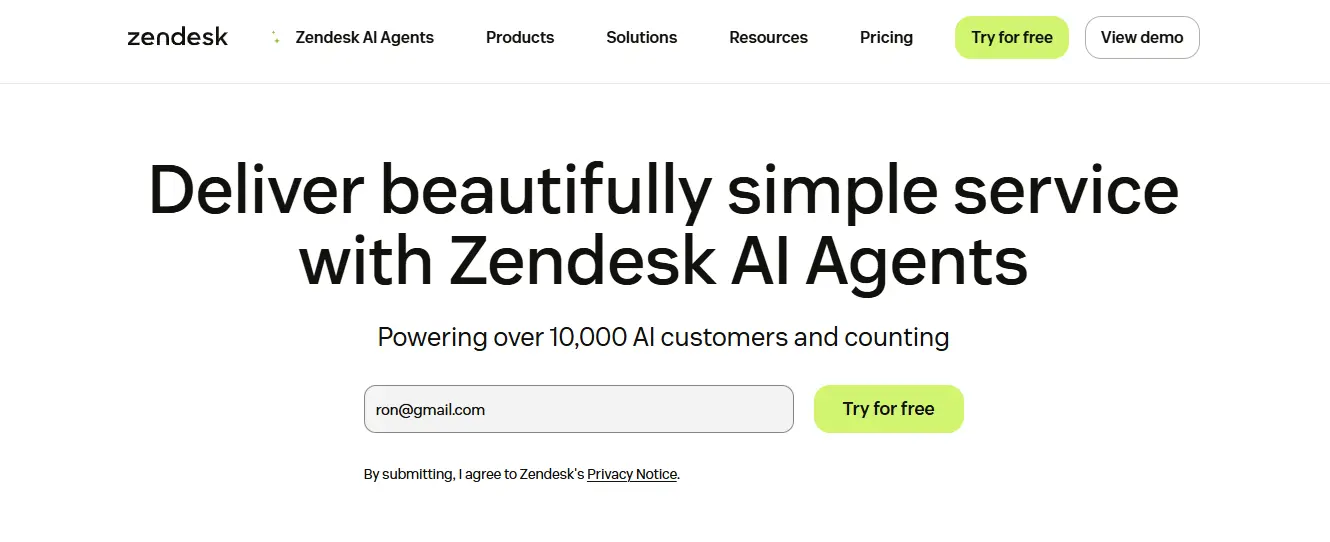
Zendesk is positioned as something more than a live chat tool. It is a full-scale customer experience platform built around ticketing, automation, AI, and workforce management. For large organizations, Zendesk provides powerful routing, reporting, and compliance features that make it suitable for enterprise-grade support operations.
However, this power also makes Zendesk feel heavy for businesses that primarily want fast, conversational live chat. Many brands find the platform too complex for real-time sales conversations or quick troubleshooting. Zendesk shines in structured support environments but is less agile for spontaneous, high-speed customer engagement.
Key features
- Unified ticketing system
- Omnichannel messaging across multiple platforms
- AI-powered automation and routing
- Workforce management tools
- Detailed reporting and compliance controls
Pros
- Extremely powerful for large support teams
- Strong security and governance features
- Highly customizable workflows
- Reliable for enterprise use
Cons
- More complex than typical live chat tools
- Can feel heavy for most brands
- Requires training for new agents
- Very costly with add-ons and packages
Pricing
Zendesk offers paid plans starting from $25/month per agent.
6. Drift – B2B sales teams needing a lead qualification and booking tool rather than customer support

Drift is positioned as a conversational marketing and sales platform rather than a traditional live chat tool. Its core mission is to help businesses convert website visitors into qualified leads through intelligent chatbots, scheduling, and personalized messaging. It is especially popular among B2B companies that rely on account-based marketing and lead nurturing.
Unlike customer support-focused tools, Drift prioritizes pipeline growth over problem resolution. This makes it less suitable for high-volume support teams but extremely effective for sales-driven organizations that want chat to act as a revenue engine.
Key features
- Account-based marketing targeting
- Sales playbooks inside chat
- Integration with CRM systems
- Meeting booking through chat
Pros
- Very strong for B2B sales teams
- Excellent automation for lead routing
- Smart personalization features
- Good analytics for marketing teams
Cons
- Not built for high-volume customer support
- Overkill for small or medium-sized businesses
- Enterprise pricing model
- Less focus on real-time problem solving
Pricing
Drift provides custom pricing for businesses with no visible pricing for general paid plans.
7. tawk.to – Startups and very small businesses that need basic, no-cost live chat.
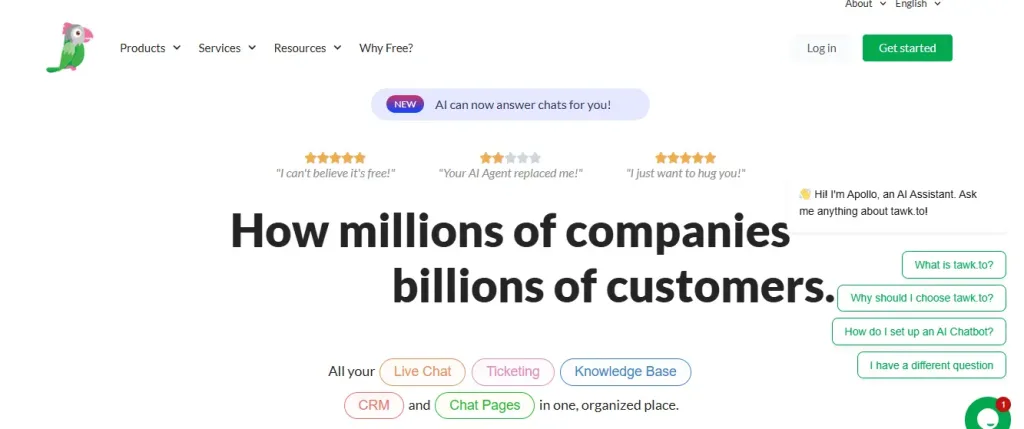
tawk.to stands out in the market because it is completely free, offering unlimited agents and chats without subscription fees. This makes it a go-to choice for startups, freelancers, and very small businesses that want basic live chat functionality without financial commitment. The platform is simple, lightweight, and easy to install.
However, because it is free, tawk.to lacks many of the advanced ecommerce, AI, and collaboration features found in premium platforms. It works well for basic communication but falls short for businesses that want chat to actively drive conversions, provide deep insights, or enable complex support workflows.
Key features
- Free live chat with unlimited agents
- Customizable chat widget
- Visitor monitoring and tracking
- Basic reporting
- Optional paid AI features
Pros
- Zero cost for core features
- Easy to install and use
- Good for very small teams
- Reliable for basic live chat needs
Cons
- Lacks advanced features
- Collaboration tools are minimal
- Analytics are fairly basic
- Branding options are limited
Pricing
Tawk.to is free with paid add-ons for advanced features.
How to choose without overthinking it
If you’re stuck between tools, ask yourself three questions:
- Where do conversations actually happen today? (web only vs. messaging apps)
- Who uses chat more: support or sales?
- Will this still work when volume doubles?
The right tool is the one that fits how your team already works, not the one with the longest roadmap.
Learn More: Best Live Chat Software for Small Businesses
Final thoughts
Live chat software shouldn’t feel like the infrastructure you fight against. It should quietly support conversations, not dictate them.
If your business relies on fast, contextual communication, especially across channels, choosing the right live chat tool early saves months of rework later.
If you want a single place to start, try a tool that gives you room to grow without locking you into rigid workflows. For many ecommerce and mid-market teams, that’s where REVE Chat fits naturally.
Sign up for our revolutionary live chat to experience how we can help your business grow.