





Table of Content
Tired of losing customers to slow and clunky support? Digital customer service fixes that fast. It uses smart tools like AI chatbots, live chat, and CRM platforms to solve issues like long wait times and high support costs.
You’ll deliver instant, personalized help on channels your customers love, such as websites, apps, or social media. Whether you’re a small business swamped by inquiries or a big team needing efficiency, this guide shows you how to save time, cut costs, and keep customers happy.
Ready to transform your support and win customer love in 2026? Let’s dive in to explore the best strategies and tools.
What is Digital Customer Service?
Digital customer service is how brands use awesome tech such as AI chatbots, live chat, or CRM tools to solve your problems fast and make you feel valued.
Think of a situation where you’re ordering from Amazon and getting instant help via their chatbot for a return. It’s quick, personalized support on platforms you love, like websites, apps, or social media.
Digital Customer Service Channels You Should Offer
Digital customer service works best when customers can reach you through the channels they already use. Some customers want instant answers through live chat. Others prefer email, WhatsApp, social media, or self-service because they do not want to wait for an agent.
The goal is not to be everywhere at once. The goal is to choose the right channels, connect them in one place, and make every interaction feel smooth, fast, and personal.
Here are the most important digital customer service channels to consider.
1. Live Chat
Live chat is one of the fastest ways to help customers on your website or app. It allows visitors to ask questions while they are browsing, comparing products, filling out forms, or facing checkout problems.
For businesses, live chat is also efficient because agents can often handle multiple conversations at the same time. This helps reduce queues, improve first response time, and support more customers without increasing headcount.
Live chat is especially useful for ecommerce, SaaS, banking, insurance, telecom, travel, and service-based businesses where customers often need quick clarification before making a decision.
2. AI Chatbots
AI chatbots help businesses provide instant support 24/7. They can answer common questions, collect customer information, recommend products, qualify leads, book appointments, check order status, and route complex issues to the right team.
A good chatbot should not feel like a dead end. It should understand customer intent, provide helpful answers, and hand over the conversation to a human agent when the issue needs empathy, judgment, or detailed troubleshooting.
This makes chatbots ideal for reducing repetitive tickets while keeping customers satisfied.
3. Email Support
Email is still an important digital customer service channel, especially for detailed, non-urgent, or document-heavy queries. Customers may use email for refunds, billing disputes, formal complaints, account issues, or follow-ups that require written records.
The challenge with email is speed and organization. Without a ticketing system, emails can get lost, duplicated, or delayed. That is why businesses should connect email with a shared inbox or ticketing platform so every query gets assigned, tracked, and resolved on time.
4. Social Media Support
Customers often use platforms like Facebook, Instagram, LinkedIn, and X to ask questions, report issues, or share complaints. Some will send private messages, while others may post publicly if they feel ignored.
Social media support is important because it affects both customer satisfaction and brand reputation. A slow or careless response can become visible to a larger audience, while a helpful response can build trust.
Instead of monitoring every platform manually, businesses should connect social channels to an omnichannel inbox. This helps agents reply faster and maintain context across conversations.
5. Messaging Apps
Messaging apps such as WhatsApp, Messenger, Telegram, and Viber have become popular customer service channels because they feel personal, familiar, and convenient.
Customers can ask questions, receive updates, share images, and continue conversations without staying on a website. Businesses can use messaging apps for order updates, appointment reminders, delivery notifications, support follow-ups, and personalized campaigns.
For better results, messaging apps should be connected with chatbots, live agents, and customer data. This ensures customers do not need to repeat the same information again and again.
6. Self-Service Portals and Knowledge Bases
Many customers prefer solving problems on their own before contacting support. A knowledge base, FAQ page, help center, or self-service portal gives them quick access to answers.
Self-service works well for topics like account setup, pricing, return policies, troubleshooting steps, product guides, shipping information, and billing questions.
To make self-service effective, keep articles simple, searchable, and up to date. You can also connect your knowledge base with an AI chatbot so customers get relevant answers instantly.
7. SMS and Text Messaging
SMS is useful for short, time-sensitive updates. Businesses can use it for OTPs, delivery alerts, appointment confirmations, payment reminders, outage notifications, or urgent service updates.
Since SMS is direct and mobile-first, it can improve response rates. However, it should be used carefully. Messages should be relevant, concise, and permission-based so customers do not feel spammed.
8. Voice and Video Support
Digital customer service does not always mean text-only support. Voice and video calls are still valuable when customers need detailed explanations, emotional reassurance, or guided assistance.
Video chat and co-browsing are especially helpful for complex onboarding, technical troubleshooting, financial services, healthcare, education, and high-value sales conversations. They allow agents to explain issues clearly and guide customers step by step.
Digital Customer Service vs. Traditional Customer Service
Traditional customer service usually depends on phone calls, in-person visits, or long email threads. Customers often have to wait in queues, repeat their problems to different agents, or contact support only during business hours.
Digital customer service changes that experience. It gives customers faster, more flexible ways to get help through live chat, chatbots, email, social media, messaging apps, and self-service portals.
Here is how they differ:
| Area | Traditional Customer Service | Digital Customer Service |
|---|---|---|
| Availability | Limited to office hours or call center hours | Can be available 24/7 with chatbots and self-service |
| Speed | Often slower because customers wait in phone queues | Faster through live chat, automation, and instant answers |
| Channels | Mostly phone, email, or in-person | Website, app, chat, social media, WhatsApp, email, SMS, and more |
| Customer effort | Customers may repeat information across teams | Conversation history and CRM data reduce repetition |
| Scalability | More volume usually requires more agents | Automation helps manage high volumes efficiently |
| Personalization | Depends heavily on agent memory or notes | Customer data helps personalize every interaction |
| Analytics | Harder to analyze every call or visit manually | Digital conversations can be tracked, measured, and improved |
The best approach is not always to remove traditional support completely. Many businesses still need phone or video support for complex and sensitive issues. The real goal is to combine digital and human support so customers always get the right help through the right channel.
What Are The Benefits of Digital Customer Service?
Why dive into digital customer service? This might be a question now, right? It simplifies your work, saves you money, and makes your customers love you.
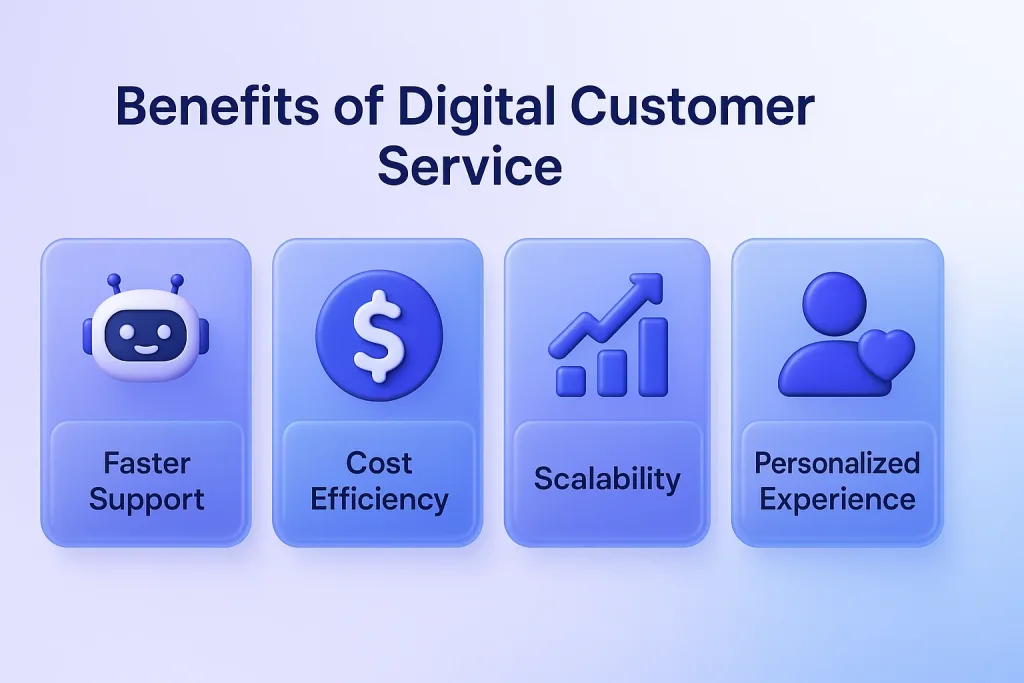
No matter your business size, these benefits transform how you connect with customers. Here’s what you gain:
Enhanced Customer Satisfaction
You want customers who feel valued every time they reach out. AI chatbots answer questions instantly, cutting wait times to zero. Learn more about what an AI chatbot is and how it works.
Live chat connects you directly, building trust on the spot. Your customers walk away happy, ready to spread the word.
Cost Efficiency
Your budget shouldn’t force you to hire more staff. Chatbots tackle repetitive tasks like order updates or FAQs, freeing your team for bigger challenges.
Automation streamlines processes, saving you hours daily. This lets you serve more customers without burning through cash. It’s smart savings for any business.
Scalability
Your business is growing, and you need tools that match your pace. Digital platforms handle spikes in customer inquiries without extra costs.
85% of leaders scale support effortlessly with these tools (Zendesk). Whether you’re a startup or a big brand, you can expand without the headaches.
Personalization
Customers want you to know their needs. Digital tools like CRMs track their preferences, tailoring every interaction.
A chatbot might suggest products based on past purchases, making it feel personal. This one-on-one vibe builds trust and keeps customers coming back. It’s like having a conversation with a friend.
Increased Retention and Loyalty
You want customers who stay loyal for years. Great digital service makes that happen by solving issues fast and personally. By making every interaction smooth, you turn one-time buyers into lifelong fans.
Challenges in Digital Customer Service and Ways to Overcome Them
Rolling out digital customer service isn’t always smooth sailing. You’ll face hurdles that can trip up even the best plans.
But don’t worry, each challenge has a fix that keeps your customers happy and your team on track.
Here’s how to tackle three big challenges in digital customer service and come out on top in 2026.
High Customer Expectations
Your customers expect lightning-fast, personalized service every time. That’s tough when queries pile up. To meet these expectations, use AI chatbots to answer FAQs instantly, like order status or product details.
Pair them with live chat for real-time human support when needed. Prioritize omnichannel tools to ensure seamless replies across platforms like email or social media.
You’ll keep customers smiling by delivering quick, tailored solutions without breaking a sweat.
Data Silos
Your customer data is scattered across systems, making it hard to personalize service. Silos prevent agents from seeing the full customer picture, leading to repetitive or frustrating interactions.
Integrate your tools with a CRM platform to centralize data like purchase history or past chats. For example, a unified dashboard lets agents access all interactions in one place.
You’ll streamline support and make every customer feel known, boosting trust and efficiency.
Agent Training
Your team might struggle with new digital tools, slowing down support. Untrained agents can’t use AI or CRM features effectively, leading to inconsistent service.
Create a training program focused on your chosen platforms, covering features like ticket routing or chatbot analytics. Offer regular workshops and hands-on practice to build confidence.
For instance, simulate customer scenarios to teach agents how to use data for personalized replies. You’ll empower your team to deliver fast, high-quality support that keeps customers coming back.
How to Build an Effective Digital Customer Service Strategy?
Want to deliver customer service that keeps people coming back? A solid digital customer service strategy is your roadmap.
It’s about understanding your customers, using the right tools, and making every interaction count. Follow these six steps to create a strategy that works for you in 2026.
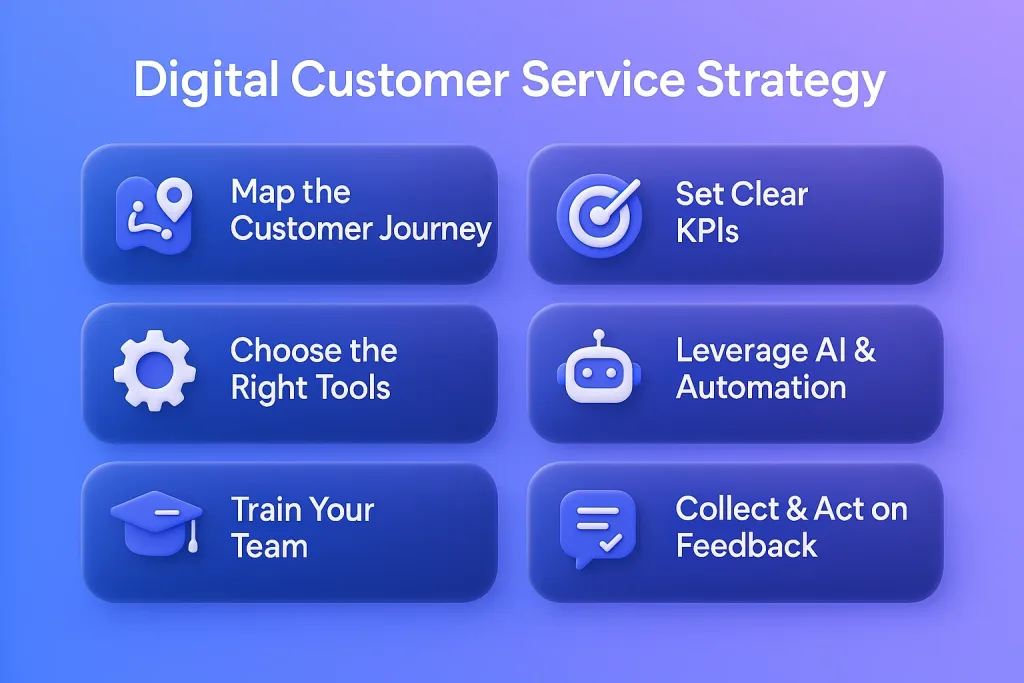
Ready to build a plan that makes your customers love you? Let me guide you to build a win-win customer service strategy for your business.
Step 1: Map the Customer Journey
You need to know where your customers get stuck. Create a customer journey map to track every step, from browsing your site to contacting support. Identify pain points like long wait times or confusing menus.
For example, if customers abandon their carts, a chatbot could offer instant help. 54% of consumers ditch brands after one bad experience (McKinsey).
Mapping their path helps you fix issues before they frustrate anyone.
Step 2: Set Clear KPIs
You can’t improve what you don’t measure. Define key performance indicators (KPIs) like Customer Satisfaction (CSAT), Net Promoter Score (NPS), or First Response Time (FRT). These show how well your service performs.
Clear KPIs keep your team focused on delivering fast, effective support that meets customer expectations.
Step 3: Choose the Right Tools
You need tools that make customer service a breeze. REVE Chat is a great pick, offering AI-powered chatbots and live chat that fit any business size.
It integrates easily with your website and platforms like WhatsApp, delivering instant, personalized responses. Your customers get quick answers, and your team saves time.
Plus, its affordable plans start at $ 50/month, including live chat and chatbot, perfect for scaling without breaking the bank (REVE Chat, 2024). Test it to ensure it matches your needs and watch your support shine.
Step 4: Leverage AI and Automation
You want to save time and handle more queries. AI chatbots answer FAQs instantly, while automation routes complex issues to your team.
For example, a chatbot can resolve order tracking questions, freeing agents for tougher tasks. By 2025, AI will handle 77% of tickets without human help (HubSpot). This means you serve more customers faster without extra effort.
Step 5: Train Your Team
Your team needs to master your tools. Train them on platforms like REVE Chat or HubSpot to handle chats and tickets smoothly.
Teach them to use AI insights, like customer history, to personalize responses. Regular training keeps everyone sharp and confident. A well-trained team ensures your customers get consistent, high-quality support every time.
Step 6: Collect and Act on Feedback
You need to know what your customers think. Use surveys or NPS forms to gather feedback after every interaction.
For example, ask how easy it was to resolve an issue. Analyze responses to spot trends and fix problems, ensuring your service keeps improving.
How Digital Customer Service Technology Works
Digital customer service is powered by a combination of channels, automation, customer data, AI, and human agents. When these parts work together, businesses can deliver faster and more consistent support across every touchpoint.
Here are the key technologies behind a strong digital customer service system.
Omnichannel Inbox
An omnichannel inbox brings customer conversations from different channels into one dashboard. Instead of switching between email, Facebook, WhatsApp, live chat, and website messages, agents can manage everything from one place.
This improves productivity and helps customers avoid repeating themselves. If a customer starts a conversation on live chat and later follows up on WhatsApp, the agent can still see the previous context.
AI-Powered Routing
Routing helps send each customer query to the right agent, department, or bot. For example, billing questions can go to the finance team, technical issues can go to support specialists, and product questions can go to sales.
AI-powered routing can make this process smarter by identifying customer intent, priority, language, sentiment, or previous history. This reduces wait time and improves first-contact resolution.
AI Chatbots and Virtual Assistants
AI chatbots handle repetitive queries and guide customers through common tasks. They can answer FAQs, collect details, suggest relevant help articles, and escalate to human agents when needed.
The best chatbots are connected to your knowledge base, CRM, and support workflows. This allows them to provide more accurate answers and complete tasks instead of only sharing generic responses.
Agent Assist
Agent assist tools help human agents during live conversations. They can suggest replies, summarize previous interactions, recommend next steps, or surface knowledge base articles based on the customer’s question.
This is useful for new agents, complex products, and high-volume teams. It reduces manual searching and helps agents reply faster with consistent information.
Knowledge Management
A knowledge base is not only for customers. It also helps agents find the right answers quickly. When product details, policies, troubleshooting steps, and FAQs are stored in one place, teams can deliver more accurate support.
AI can make knowledge management even stronger by recommending answers in real time and identifying content gaps based on repeated customer questions.
Interaction Analytics
Every customer conversation contains useful insights. Analytics tools help businesses understand common issues, customer sentiment, response time, resolution rate, agent performance, and trending topics.
These insights can be used to improve products, update help articles, train agents, and automate high-volume queries. Instead of guessing what customers need, teams can make decisions based on real conversation data.
Workflow Automation
Workflow automation reduces manual tasks in the support process. It can assign tickets, send follow-up messages, trigger alerts, update customer records, collect feedback, and close resolved conversations automatically.
This saves time for agents and creates a more consistent customer experience.
Essentials for delivering digital customer support
Want to make your customer service stand out? Digital customer service tools are your key to fast, effective, and hassle-free support.
It comes from answering questions instantly to tracking performance; these tools help you keep customers happy.
Here’s a rundown of the essential tools you need in 2026 to nail your support game.
AI Chatbots
You need to answer customer questions anytime, day or night. AI chatbots handle FAQs like “Where’s my order?” with instant, accurate responses. They use natural language processing to understand and reply like a human, learning over time to improve.
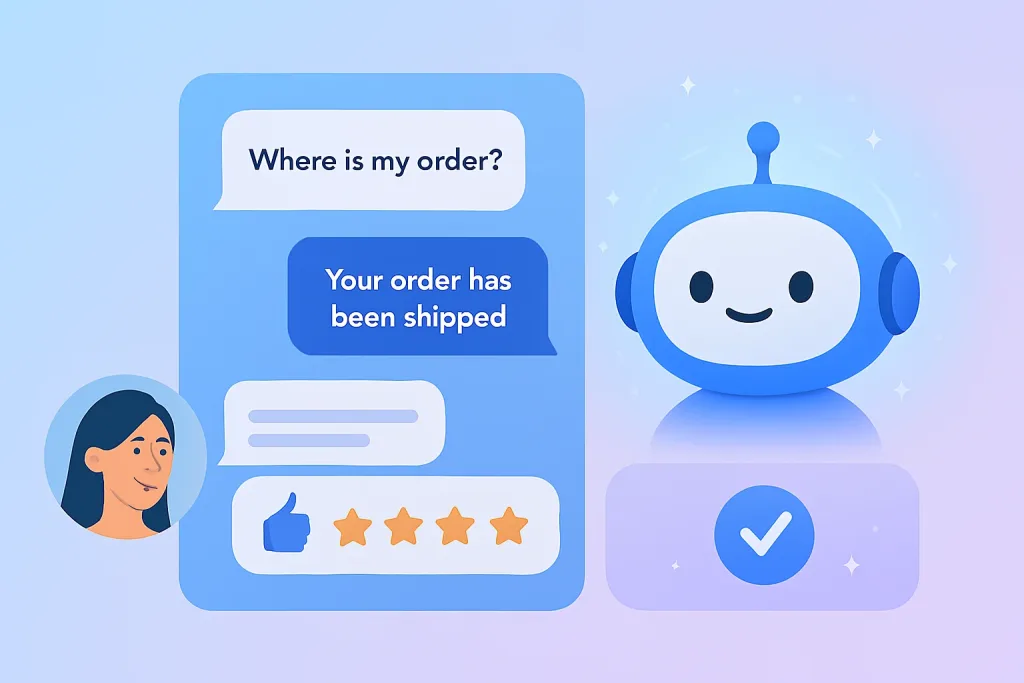
For example, REVE Chat can cut your team’s workload by 80% by automating the whole customer support solution. You save time while keeping customers satisfied with quick solutions.
Live Chat
Your customers want help right when they’re on your site. Live chat tools let you connect instantly, answering questions about products or troubleshooting issues.
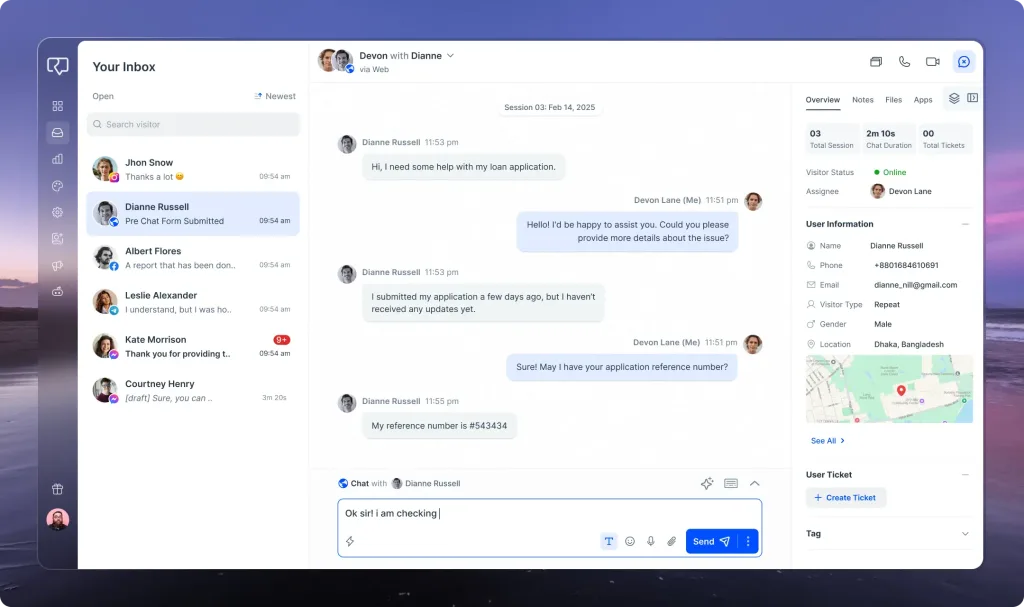
They integrate with your website or social media, making support feel personal. Research shows that visitors using live chat are 2.8 times more likely to buy.
You build trust and boost sales with real-time conversations.
Ticketing Systems
You can’t let customer inquiries get lost in the chaos. Ticketing systems organize emails, chats, and social media messages into one dashboard. They automatically prioritize urgent issues and assign them to the right team member.
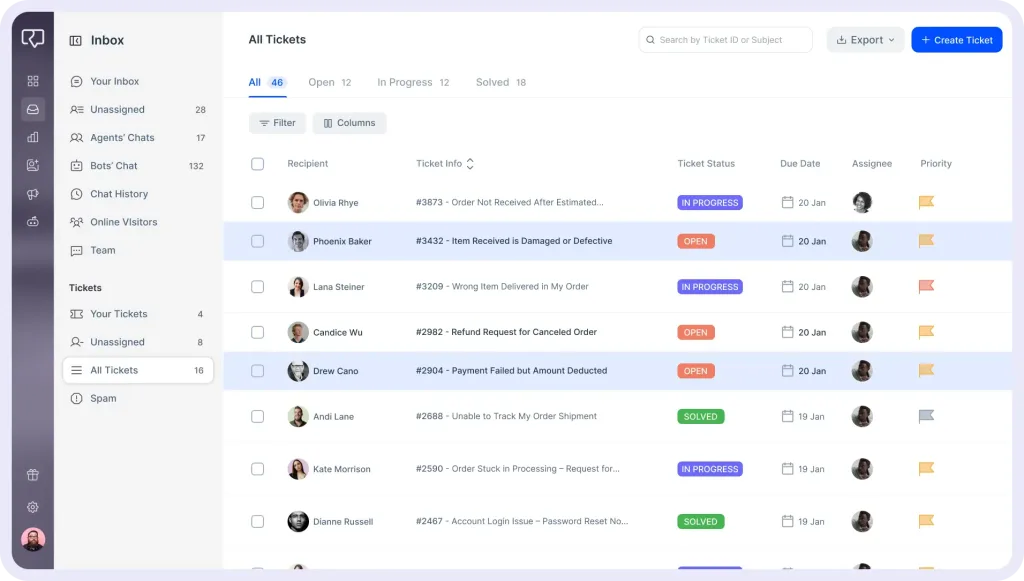
This streamlines your workflow, ensuring no ticket goes unanswered. You keep customers happy with fast, organized responses.
Knowledge Base Tools
Your customers want answers without picking up the phone. Knowledge base tools create self-service portals with guides, FAQs, and videos for common issues like account setup.
They empower customers to solve problems independently, cutting ticket volume. You save resources while giving customers what they want.
Analytics Tools
Have you ever realized that you need to know how your service is performing? Analytics tools track metrics like response time and customer satisfaction (CSAT).
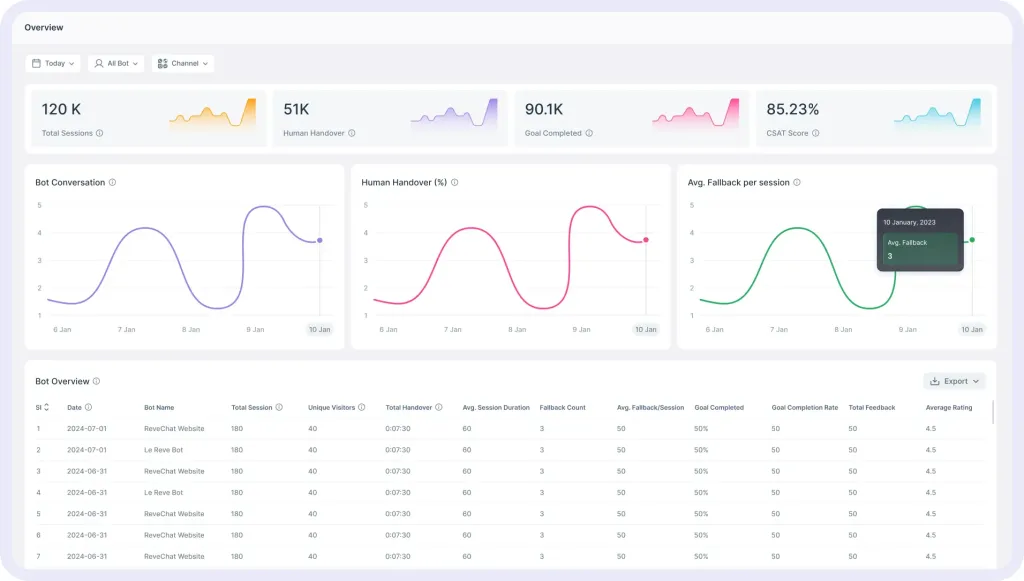
They show you what’s working and where you need to improve, like spotting frequent complaints.
For example, you can see if slow replies hurt your scores. You make data-driven choices to keep customers smiling.
Collaboration Tools
Your team needs to work together like a well-oiled machine. Collaboration tools, like shared inboxes, audio, video, and co-browsing features, let agents add notes, tag teammates, or escalate issues seamlessly.
Audio and video calls enable real-time problem-solving, while co-browsing guides customers through complex tasks on their screens. These tools sync with chat and ticketing systems for smooth handoffs. You deliver consistent, personalized answers, ensuring a unified experience every time.
Digital Customer Service Examples From Different Industries
Want to see digital customer service in action? These examples show how top companies use smart tools to solve your problems fast and keep you smiling.
It comes from healthcare to banking and ecommerce, you’ll learn how to apply these strategies to your business.
Here’s how four brands nail it in 2026.
Canadian Hearing Solutions: Using AI-Powered Chatbot and Live Chat

You need support that’s accessible and fast, especially for specialized services. Canadian Hearing Solutions uses REVE Chat’s AI chatbot and live chat to handle tasks like booking hearing tests, arranging ASL classes, or addressing device replacements.
The chatbot answers product inquiries instantly, while live chat connects you to experts for counseling or crisis support.
You get quick, tailored help, whether it’s scheduling a hearing assessment or requesting an urgent interpreter.
Commercial Bank of Kuwait
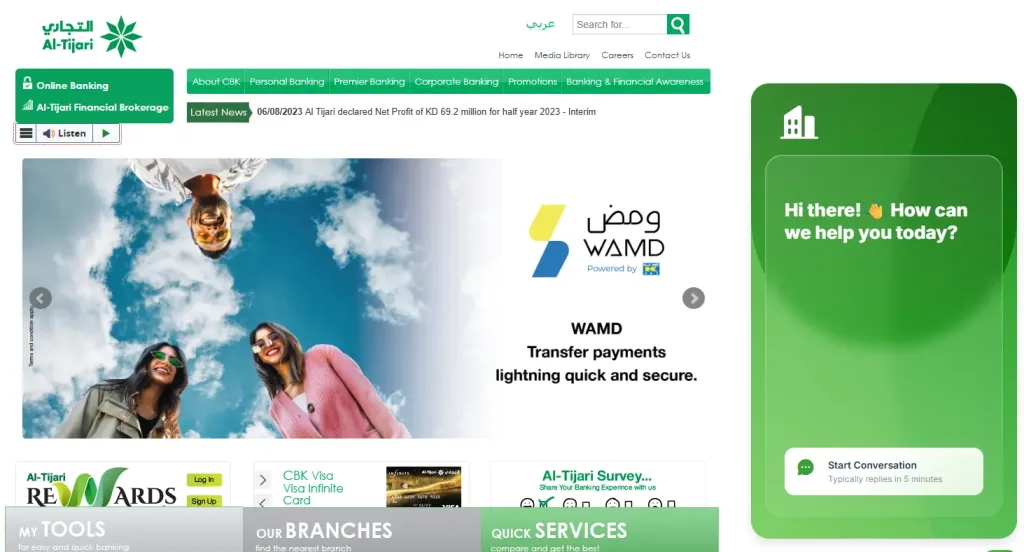
Your banking questions deserve instant answers. The Commercial Bank of Kuwait uses REVE Chat’s live chat to tackle issues like card problems, loan eligibility, or password resets.
For example, if your prepaid MasterCard isn’t working, the bot guides you through verification steps or escalates to an agent.
It handles 85% of support queries autonomously, boosting satisfaction. You can check credit card balances or get branch info without waiting, making banking smoother and stress-free.
E-commerce: Le Reve

You want a shopping experience that’s quick and hassle-free. Le Reve uses REVE Chat’s AI chatbot and live chat to streamline support, letting you track orders, process returns, or get product answers instantly.
The chatbot’s NLP understands your questions, while live chat connects you to agents for personalized help, like sizing advice. You resolve issues without delays, ensuring a seamless shopping journey, whether checking deliveries or returning items.
How to Choose the Right Digital Customer Service Software
The right digital customer service software should help your team respond faster, reduce repetitive work, and create a better customer experience across all channels.
Before choosing a platform, use this checklist.
1. Omnichannel Support
Look for software that supports the channels your customers actually use, such as live chat, email, WhatsApp, Facebook, Instagram, mobile app, and website messaging.
A strong platform should bring these conversations into one inbox so agents do not need to jump between multiple tools.
2. AI and Automation
Choose a platform with AI chatbots, automated routing, workflow automation, and agent assist features. These capabilities help reduce manual work and speed up resolution.
Automation should be flexible enough to handle FAQs, lead qualification, appointment booking, ticket creation, and handover to human agents.
3. CRM and Third-Party Integrations
Your customer service platform should integrate with your CRM, ecommerce platform, help desk, payment system, and other business tools.
This gives agents a complete view of customer history, past purchases, previous conversations, and open tickets. As a result, customers get more personalized support.
4. Reporting and Analytics
Good software should show clear metrics such as first response time, average resolution time, customer satisfaction, chatbot performance, ticket volume, agent workload, and channel performance.
These reports help you identify bottlenecks and improve your support strategy over time.
5. Scalability
Your support needs will grow as your business grows. Choose a platform that can handle more agents, more conversations, more channels, and more automation without slowing your team down.
Scalability is especially important for ecommerce peaks, seasonal campaigns, product launches, and fast-growing businesses.
6. Ease of Use
A tool may have many features, but it will not help if your team finds it difficult to use. Look for a clean interface, easy setup, simple chatbot builder, helpful dashboards, and minimal training requirements.
The faster your team can adopt the platform, the faster you can improve customer service.
7. Security and Compliance
Digital customer service often involves personal information, order details, payment-related questions, and sensitive customer data. Your software should support secure data handling, user permissions, audit logs, and privacy-friendly workflows.
For industries like banking, insurance, healthcare, education, and government, security and compliance should be a priority from the beginning.
8. Human Handoff
Automation is useful, but customers should always have a clear path to a human agent when needed. Choose software that allows smooth bot-to-agent handover with full conversation history.
This keeps the experience helpful instead of frustrating.
9. Multilingual Support
If your business serves customers in different regions, multilingual support is essential. AI chatbots and live chat tools should help customers communicate in their preferred language.
This improves accessibility, customer satisfaction, and global support coverage.
10. Total Cost of Ownership
Do not look only at the monthly subscription price. Consider setup time, training, integrations, add-ons, chatbot usage, agent seats, and future scaling costs.
The best platform is the one that gives you the right balance of features, usability, and long-term value.
Common Digital Customer Service Mistakes to Avoid
Even with the right tools, digital customer service can fail if the strategy is weak. Here are some common mistakes businesses should avoid.
Adding Too Many Channels Without a Plan
Being available on every channel sounds good, but it can overwhelm your team if conversations are not managed properly. Start with the channels your customers use most, then expand gradually.
Making Automation Too Robotic
Chatbots should make service faster, not colder. Avoid long scripted flows that trap customers. Keep responses natural, helpful, and easy to escalate to a human agent.
Ignoring Self-Service Content
A chatbot is only as good as the information behind it. If your help articles are outdated or unclear, customers will still need to contact support. Keep your knowledge base fresh and easy to search.
Not Connecting Customer Data
When systems are disconnected, agents cannot see the full customer journey. This leads to repeated questions and slower resolution. Connect your support platform with CRM and other business tools.
Focusing Only on Response Time
Fast replies are important, but they are not enough. You should also measure resolution quality, customer satisfaction, first-contact resolution, and repeat contact rate.
Forgetting Agent Training
Digital tools work best when agents know how to use them confidently. Train your team on workflows, chatbot handover, customer tone, escalation rules, and analytics.
Key Metrics to Measure Digital Customer Service Success
To improve digital customer service, you need to track the right metrics. These KPIs show whether your support is fast, helpful, and scalable.
First Response Time
This measures how quickly your team responds to a customer’s first message. A shorter first response time creates a better first impression.
Average Resolution Time
This shows how long it takes to fully solve a customer issue. If resolution time is high, you may need better routing, stronger knowledge base content, or more agent training.
First Contact Resolution
First contact resolution measures how often issues are solved in the first interaction. A high rate means customers are getting complete answers without repeated follow-ups.
Customer Satisfaction Score
CSAT helps you understand how customers feel after a support interaction. You can collect it through short post-chat or post-ticket surveys.
Ticket Volume by Channel
This shows where customers are contacting you most. It helps you decide which channels need more agents, automation, or self-service content.
Chatbot Containment Rate
This measures how many conversations your chatbot resolves without human help. A healthy containment rate means automation is reducing workload while still helping customers.
Escalation Rate
This shows how often chatbot or frontline conversations need to move to another agent or department. A high escalation rate may mean your bot flows, routing rules, or help content need improvement.
Customer Effort Score
Customer effort score measures how easy it was for customers to get help. Lower effort usually leads to higher satisfaction and loyalty.
Agent Productivity
Track how many conversations agents handle, how quickly they resolve them, and how satisfied customers are after each interaction. This helps managers balance speed with quality.
Top Digital Customer Service Platforms for Your Business
Looking to streamline your customer support? The right digital customer service platforms make it easy to connect with customers, automate tasks, and boost satisfaction.
These tools handle everything from chatbots to analytics, saving you time and keeping your customers happy. Here’s a look at six top platforms you can use in 2026 to transform your support game.
REVE Chat
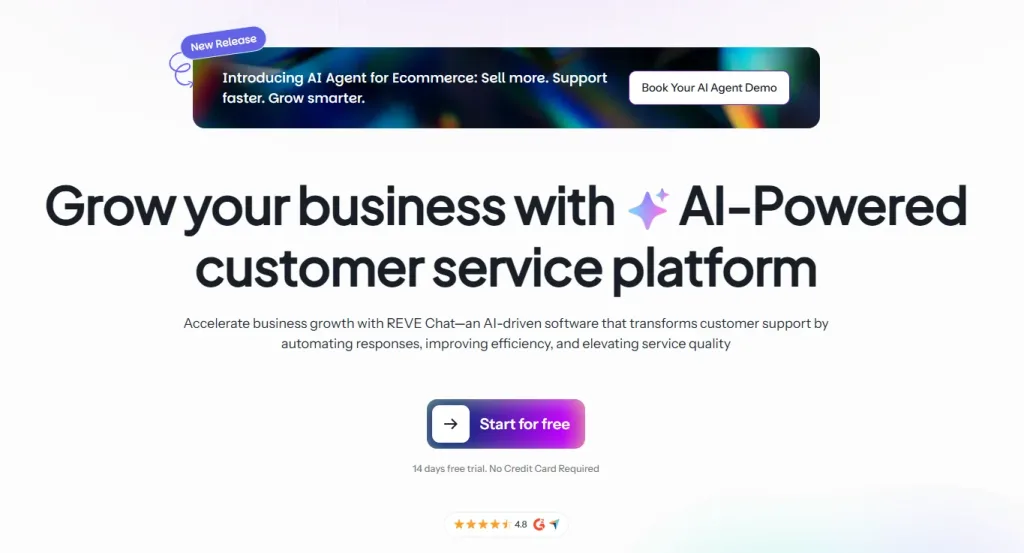
You want a platform that’s affordable and easy to use. REVE Chat offers AI-powered chatbots and live chat to answer customer queries instantly, like product questions or booking requests.
It integrates with your website and platforms like WhatsApp, ensuring seamless communication. You get a cost-effective solution starting at 50/month (live chat + chatbot), perfect for small businesses or growing brands.
Here are its key features:
- AI-Powered Chatbots: Automate repetitive queries with human-like responses, learning from FAQs to reduce agent workload. Saves you hours daily.
- Brain AI: Uses a custom LLM for precise, complex query resolution. Boosts satisfaction with faster, smarter replies.
- Visual Flow Builder: Enables non-tech teams to design bots via drag-and-drop. Simplifies setup for tailored support flows.
- Omnichannel Support: Unifies web, mobile, WhatsApp, and social media interactions. Ensures consistent 24/7 customer engagement.
- Sentiment Analysis: Detects emotions like frustration during chats. Adjusts responses to improve NPS and customer trust.
- Visitor Analytics: Tracks real-time behavior like clicks and page visits. Optimizes support and marketing for higher conversions.
Zendesk

Your support needs a versatile, all-in-one solution. Zendesk provides live chat, ticketing, and self-service portals to manage inquiries across email, phone, and social media.
It’s automation routes tickets to the right agent, saving time and reducing errors. You can customize dashboards to track metrics like response time, keeping your service sharp and customer-focused.
HubSpot Service Hub
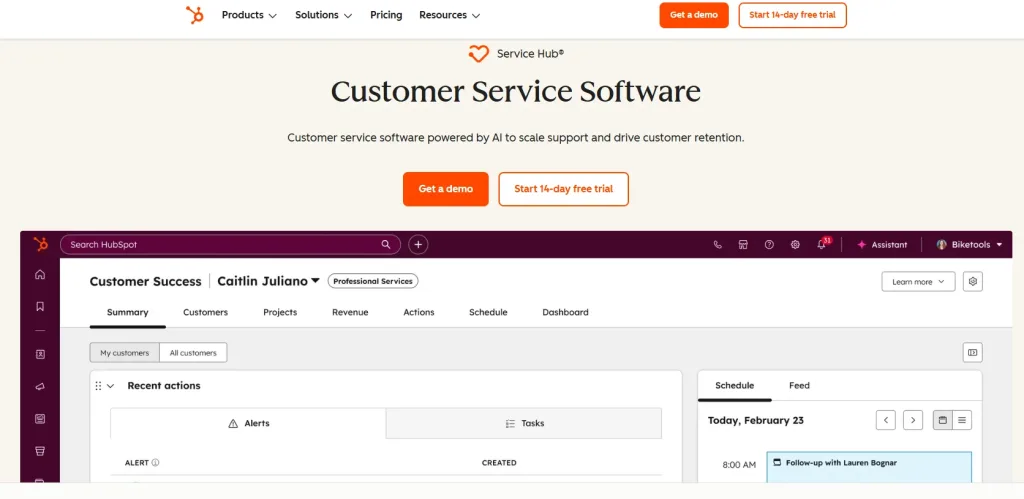
You need a platform that ties support to your CRM. HubSpot Service Hub integrates with its CRM to give agents a full view of customer history, personalizing every interaction.
It offers ticketing, live chat, and a knowledge base to empower self-service. You can automate responses and track metrics like CSAT, making it ideal for startups or businesses already using HubSpot.
Salesforce Service Cloud
You want robust CRM integration for enterprise-level support. Salesforce Service Cloud uses AI-driven Einstein Bots to handle routine queries like balance checks, while agents tackle complex issues.
Its omnichannel routing ensures inquiries reach the right team across email, chat, or phone. You get a 360-degree customer view, boosting efficiency for large teams.
Freshdesk
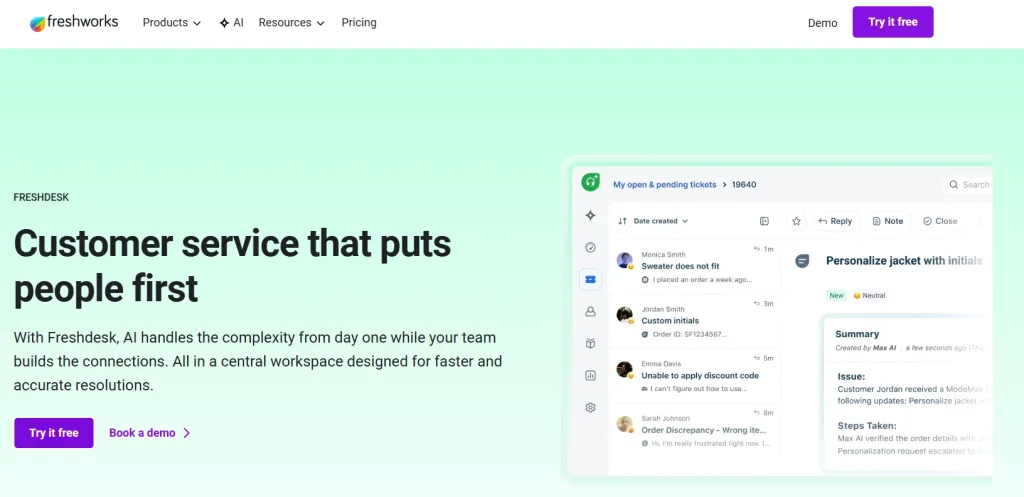
Your business needs a user-friendly, budget-friendly option. Freshdesk offers omnichannel support, managing inquiries from email, chat, and social media in one dashboard.
Its AI-driven ticketing and knowledge base let customers resolve issues independently, reducing ticket volume. You can streamline workflows and keep costs low, starting at $15/month for paid plans.
Genesys Cloud CX

You’re after seamless omnichannel support. Genesys Cloud CX manages interactions across email, chat, phone, and social, with AI chatbots handling routine queries. Its self-service options, like knowledge bases, empower customers to find answers fast.
Reporting tools track metrics like resolution rates, helping you optimize service. You create a consistent experience across all touchpoints, ideal for businesses of any size.
Future Trends in Digital Customer Service
Want to stay ahead in customer service? The future of digital customer service is evolving fast, driven by cutting-edge tech that makes support smarter and more personal.
In 2026, these trends will redefine how you connect with customers. Here’s a look at four game-changing trends to watch and how they’ll transform your support strategy.
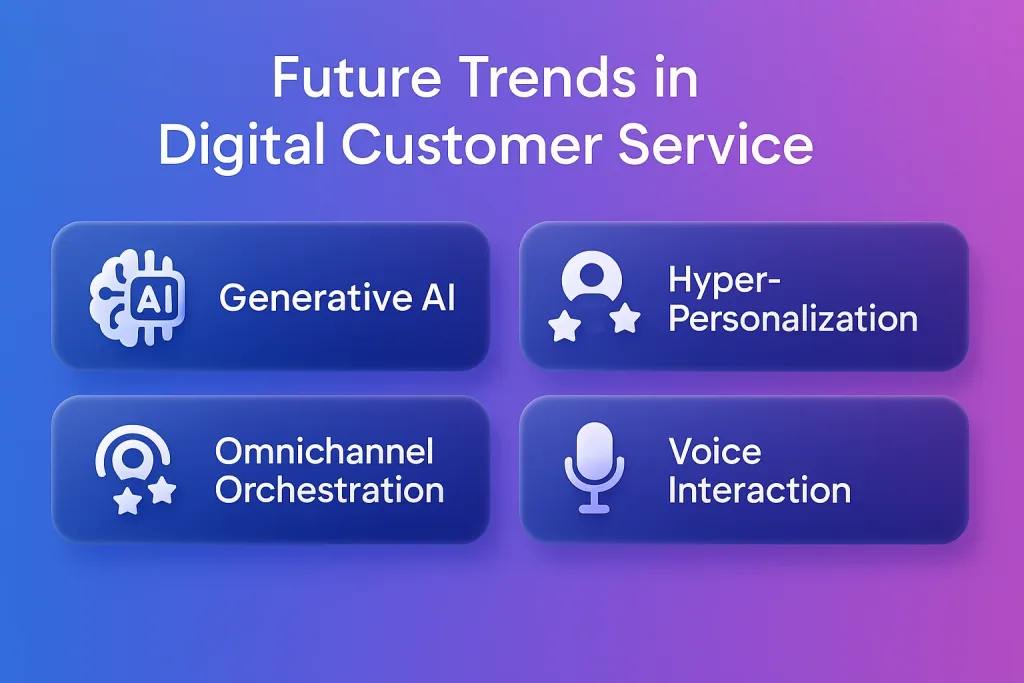
Generative AI
You need tools that think and respond like humans. Generative AI creates human-like responses for queries, from product questions to troubleshooting. It summarizes chats, suggests replies, and automates up to 95% of interactions, saving time.
This lets your agents focus on complex issues, boosting efficiency. You’ll deliver faster, more accurate support while keeping costs low and customers happy.
Hyper-Personalization
Your customers crave experiences tailored just for them. Hyper-personalization uses AI to analyze real-time data like browsing habits or past purchases to offer custom recommendations or solutions.
You’ll build loyalty by making every interaction feel unique, ensuring customers feel valued without overwhelming your team.
Omnichannel Orchestration
You want customers to move seamlessly across channels without repeating themselves. Omnichannel orchestration integrates email, chat, social media, and phone into one unified system.
AI tracks interactions, ensuring continuity whether a customer starts on WhatsApp or switches to a call. You’ll create a smooth, consistent experience that keeps customers coming back.
Voice Mode Integration
Your customers love the ease of voice interactions. Voice mode integration, using AI-powered voice assistants, handles queries via phone or smart devices with natural, real-time responses.
It analyzes tone and intent to adapt replies, improving satisfaction. You’ll offer convenient, empathetic support that feels personal, even at scale.
Conclusion
You’ve got the tools to transform your customer service. Digital customer service saves you time, cuts costs, and builds loyalty. From AI chatbots helping Canadian Hearing Solutions to Amazon’s self-service portals, you’ve seen real-world wins.
You learned to map customer journeys, set KPIs, and tackle challenges like data silos. Trends like generative AI keep you ahead in 2026. Do you know 95% of customers stay loyal to brands with great service?
Why not start now? Try a platform like REVE Chat with its 14-day free trial to test AI chatbots and live chat.
Sign up or book a demo to see how it fits your business. Take one step today to make your customers love you. What’s your next move?
Frequently Asked Questions
You can make digital interactions feel personal by using AI chatbots with natural language processing to mimic human conversation. Train agents to step in for complex queries, adding empathy.
Absolutely, you can start with affordable tools like free plans or low-cost platforms offering chatbots and live chat.
Focus on high-impact features like self-service portals to reduce costs. You’ll deliver great service without breaking the bank.
Social media lets you meet customers where they are, like on Twitter or Instagram. Use integrated chat tools to respond to queries instantly. You’ll build trust and engagement by addressing concerns directly on these platforms.
You can use AI chatbots that support multiple languages to assist diverse customers. Offer live chat with multilingual agents for complex issues.
This ensures you connect with customers globally, boosting satisfaction.
You can try free trials or demos, like REVE Chat’s 14-day trial, to test features like chatbots or analytics.
Evaluate ease of use and customer response. This helps you choose tools that fit your business perfectly.
Build AI-powered support with Wize AI
Connect business knowledge, automate support conversations, and improve response quality without managing a complex AI stack.
Explore Wize AI Agent Rate the article

Mamunur Rouf
Head of Growth
Mamunur Rouf is the Head of Growth at REVE Chat. With extensive experience in product management and marketing analysis, he focuses on creating innovative communication tools to enhance customer engagement and meet the needs of businesses worldwide.
View all articles