


Customer Satisfaction Rating – A Complete Guide
- October 31, 2022
- 11 mins read
- Listen
Customers always expect good experiences when they interact with a brand. And since there are various touchpoints in the customer journey, it’s not always easy for businesses to provide a smooth experience.
And when the experience is not good, it often leads to dissatisfaction. And when customers are not satisfied, it always has a negative impact on the bottom line.
So, as a business, you need to ensure not only great experiences but also use a customer satisfaction rating to measure the level of satisfaction. This rating is key to knowing whether the customer is happy with your product or service.
And when you measure customer satisfaction, you get a good idea of how your support team is doing and how customers are valuing their time with your brand.
This blog will discuss the customer satisfaction rating scale, its type, utility, and how to use it to add value to the customer journey.
What is the Customer Satisfaction Rating Scale?
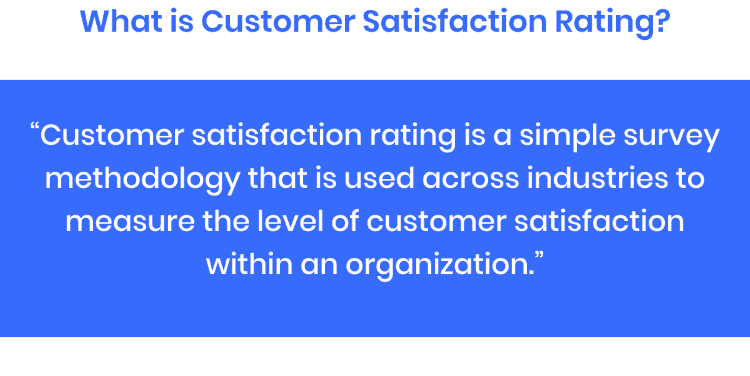
Customer satisfaction rating is a simple survey methodology that is used across industries to measure the level of customer satisfaction within an organization. The rating involves asking questions about the customer’s experience and then putting them on a scale ranging from 1-3 or 1-5 or 1-10, depending on the type of business or its needs.
The real value of a customer satisfaction rating scale lies in gaining an indication of the kind of success (or lack thereof) of a business’s customer relations management effort. The ratings or scale is a good tool to understand how customers feel about a business and whether or not they will recommend it to friends or colleagues.
Importance of Rating Customer Satisfaction for Your Business
Achieving customer satisfaction is always a big priority for businesses big and small alike. And since satisfaction is directly linked to experience, it becomes important to measure how customers feel about your business. After all, more than 7 out of ten customers rate experience as a big factor in their loyalty to a brand. This is where having a scale to rate customer experience matters a lot.
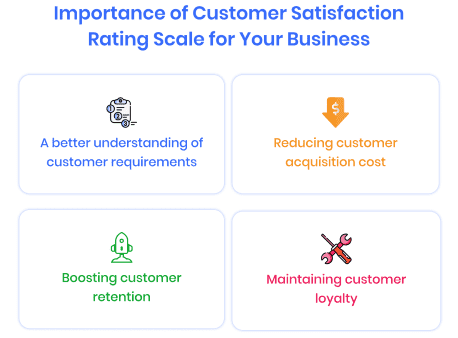
Having a rating scale to measure customer satisfaction can prove very important for businesses in many ways.
- A better understanding of customer requirements – Collecting ratings from customers is always a helpful way to know where your business stands in terms of delivering what customers expect and then understanding their requirements better. The customer wants to get answers to some questions immediately. Make sure you’re answering their questions fast.
- Reducing customer acquisition cost – Having an idea of the level of customer satisfaction prepares a business to identify the areas of improvement which eventually helps reduce the acquisition cost.
- Boosting customer retention – A business that knows whether or not its customers are happy is always in a better position to employ various measures and therefore boost the retention level.
- Maintaining customer loyalty – Maintaining customer loyalty is easy for an enterprise that uses regular online surveys and is thus aware of the extent of customer satisfaction.
Types of Customer Satisfaction Survey Rating Scale
Rating scales play a key role in measuring customer satisfaction on the web. They can be used with questionnaires to elicit responses and understand whether customers are happy with the products or services. And then steps can be taken to improve customer satisfaction. The good thing, there is no fixed type when it comes to the rating scale as it can be customized to meet unique needs.
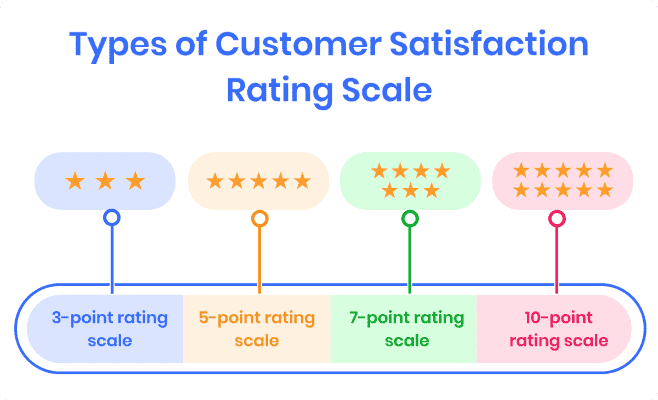
There are four types of rating scales used in the industry to measure customer satisfaction –
- 3-point rating scale – This scale fits the bill perfectly when a business needs to run a simple survey that not only looks good but also improves the response rates.
- 5-point rating scale – This scale is easily the most popular across industries as it looks and feels reliable, and also suits the needs well for measuring satisfaction for new products or services.
- 7-point rating scale – Marketers also like this scale for measuring satisfaction with new launches and gathering more data than a 5-point scale can deliver.
- 10-point rating scale – This scale is generally preferred by marketers when there is the need to collect granular data and measure satisfaction in accurate terms.
Key Metrics for Measuring Customer Satisfaction Rating
Designing a survey is a good first step toward measuring satisfaction and then taking steps to exceed customer expectations. And when it comes to measuring customer satisfaction, there are different types of metrics to choose from. And based on the specific business need, you can choose the metric that best reflects the level of satisfaction your customers feel with your brand.
Some of the key metrics to measure customer satisfaction rating are –
1. Customer Satisfaction Score (CSAT)
CSAT is the most commonly used measurement for customer satisfaction. It measures how happy or unhappy customers are with your products, services, or support.
With the customer satisfaction score, a business can ask customers to rate their satisfaction on a linear scale. After that, the sum of all scores is divided by the number of respondents which eventually gives the CSAT score.
Measuring CSAT is like taking well-calculated steps to gain data-driven insights about customers. This means you measure this metric to understand your customers well which could prove handy in knowing factors affecting customer satisfaction with your brand.
The questions you use with the survey will gather point-in-time feedback from different touchpoints and fetch the kind of expectations customers have for your brand.
The purpose of measuring customer satisfaction score is also to recognize the pain points of customers and then address them timely, and effectively.
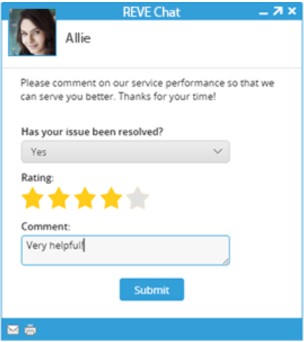
How is CSAT measured?
- It’s measured on a linear scale that ranges from 1 to 10 and often appears at the end of a satisfaction survey where customers are asked to rate their experience with the service or product or support.
- The scores or results, which are expressed as a percentage point, are then averaged out to reach a Composite Score where 100% denotes total satisfaction while 0% shows total dissatisfaction.
2. Customer Effort Score (CES)
Customer Effort Score, or CES, is a customer experience metric that is developed to help organizations measure the level of effort their customers need to make for resolving an issue or using a product. It basically measures customer effort in interacting with your brand in general, or with any aspect of the business in particular.
The value of CES lies in understanding the effort your customers have to make to get their problems solved. So, you can measure this score and then take steps to reduce the friction that ultimately ensures improved experiences for your customers.
When you measure the CES, you are aware of the issues that need to solve and so you can always take proactive steps. This score also informs you about the areas to improve as then you can speed up resolution.
Your business can also use the customer effort score survey to ensure customers don’t have to make a lot of effort in buying from you or enjoying your services or reaching your support team. All this will help you deliver an improved user experience.
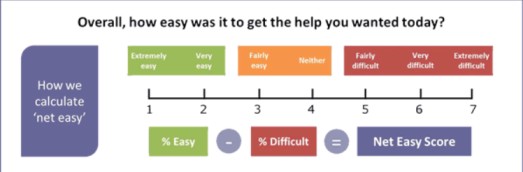
How is CES measured?
- Customer effort score is measured on a 7-level answer scale with a simple question that asks “To what extent do you ( the customer) agree with the given statement” and then rate their answer.
- The CES score is then calculated by getting the average of all responses.
- CES = (Total sum of responses) ÷ (Number of responses)
3 – Net Promoter Score (NPS)
Net Promoter Score (NPS) is a popular customer loyalty and satisfaction metric. It’s used to measure the level at which customers are likely to recommend a product or service to others.
NPS is a key measurement that businesses use in their customer experience programs. After all, its sole purpose is to measure and then improve the loyalty of customers to a company. The scores are measured with a single-question survey with a number ranging from -100 to +100.
The real utility of measuring the net promoter score is to know how well customers perceive a business, or how much enthusiasm they feel when it comes to recommending it to others.
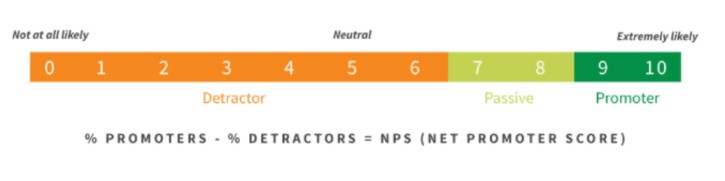
How is NPS measured?
- NPS is calculated on the basis of using the scores to a key question “How likely are you to recommend this business to someone else?”
- The respondents are then grouped into three broad categories, 1) promoters 2) passives and 3) detractors.
- The net promoter score is arrived at by subtracting the percentage of detractors from the percentage of Promoters.
Steps to Measure Customer Satisfaction
Customer success should always be a top priority for your business. And this success can never come unless you regularly measure customer satisfaction. After all, 73% of customers share positive experiences with six or more people. Since there are various tools and rating scales available, measuring the happiness level of your customers is never a problem.
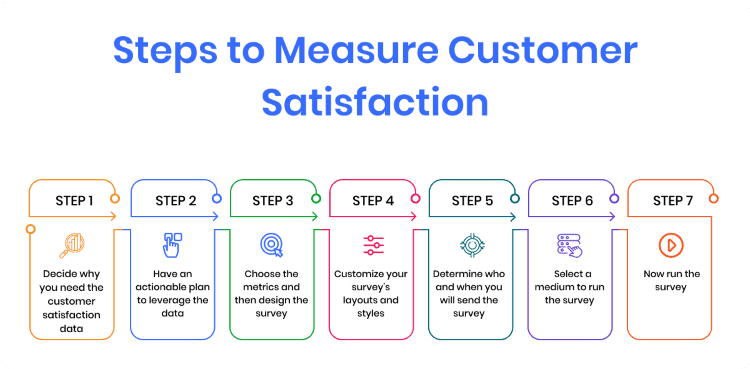
The steps to measure customer satisfaction are –
STEP 1 – Decide why you need the customer satisfaction data
Before measuring customer satisfaction, it’s important to know the target – why you need the data, what purpose will be served, how you plan to use it, and so on. Once you have a well-defined target in mind, you can better use the survey and data and ensure relevant changes to make customers happy with your business.
STEP 2 – Have an actionable plan to leverage the data
Getting customer loyalty or happiness data won’t make much of a difference if you don’t intend to support it with an actionable plan. And if your team is ready to take action based on the data, or if you’re ready to implement the changes based on the customer feedback, then you can definitely improve customer experience with your brand.
STEP 3 – Choose the metrics and then design the survey
The most vital aspect in gathering customer satisfaction data is to determine the types of metrics to be used and then implement them to design the survey. Depending on the business type, you can choose from the CSAT, CES, and NPS and then use either of them to run a survey and collect customer insights.
STEP 4 – Customize your survey’s layouts and styles
Depending on your specific requirements, you can play around with the layouts and styles of the surveys; you can even personalize the questions for more impact. You can choose whether to send shorter email surveys or longer ones based on the kind of data and information you intend to collect.
STEP 5 – Determine who and when you will send the survey
Timing is everything when it comes to utilizing the value of customer satisfaction surveys. And if you’re not sending it timely to the right audience, all the effort in collecting the data could prove futile. Make sure you have a solid strategy behind initiating the survey’s trigger.
STEP 6- Select a medium to run the survey
Email, in-app, or on-site are some of the most widely used mediums to send the survey. Each of these methods has its own advantages and you can decide the one that suits your needs the best.
STEP 7 – Now run the survey
Finally, you have all that is needed to run the customer satisfaction survey, So, get started now!
Leverage Your Customer Satisfaction Rating Scale with the REVE Platform
Customer Satisfaction is always one of the biggest challenges and priorities for businesses across industry verticals. Some achieve it easily while most struggle with it.
We, at REVE Chat, realize the importance of delivering amazing experiences to customers at each step of the journey and then making them happy with your brand.
However, you may need some tools to not only deliver amazing experiences but also to measure the level of customer satisfaction.
Our top-quality customer engagement tools such as an AI-powered chatbot can help you achieve all in terms of customer satisfaction.
In fact, you can find our tool quite helpful for running customer satisfaction surveys as you can use the rating scale with them and reach a wider audience.
Apart from the chatbot, you can also use our live chat software, video chat, and co-browsing tool for your survey and gain valuable customer data in a quick time.
Tie Your Rating Scale with REVE and Achieve Your Customer Satisfaction Goals
Making customers happy must always be a top goal of your business. And when customers are happy, you know you have delivered them the kind of experience they crave.
However, it’s equally important to get the data and insights so that you can work on the areas that impact customer satisfaction.
With the REVE platform, you can start a free trial of top engagement tools and make your customers happy.