




Table of Content
The digital age has elevated customer expectations for relevant, contextual, and convenient experiences to unprecedented heights. Customer experience (CX) is becoming a key decision-making factor.
However, with automation, many times, businesses lose the humanized touch when they scale. Hence, personalization is most important when it comes to customer experience. Also, as we know, ‘one size fits all’, you have to offer a personalized customer experience to retain them.
Customers expect a personalized experience when they deal with a business, and as per the Epsilon report, 80% of customers are more likely to make a purchase when businesses provide a customized experience.
Creating personalized customer experience examples is no longer a “nice to have” – it is mandatory in the competitive marketplace.
Prior to that dive into how having a well-designed customer experience strategy drives engagement and builds relationships.
What is Personalized Customer Experience?
Personalized customer experience essentially means that you know or remember who you are interacting with. It refers to a marketing technique that helps to tailor your communication with each customer, either during direct interactions or individualized messaging.
Customized experience is all about understanding customer journeys and designing services or
products to meet customers’ individual requirements. Personalized support not only benefits the customers, but if done right, it differentiates you from your competitors.
Types of Personalized Customer Experiences
Personalization can take different forms depending on the customer’s needs, journey stage, and interaction channel. Some businesses personalize marketing messages, while others adapt product recommendations, support conversations, or the complete customer journey.
Here are the most common types of personalized customer experiences.
Personalized Product Recommendations
Businesses can recommend products, services, plans, or content based on a customer’s browsing activity, purchase history, preferences, and previous interactions.
For example, an ecommerce store may recommend accessories related to a recently viewed product. A SaaS company may suggest a feature or subscription plan based on how frequently a customer uses the platform.
Effective recommendations reduce the time customers spend searching and help them make more confident decisions.
Personalized Marketing Communication
Personalized marketing adapts emails, advertisements, notifications, offers, and campaigns to the interests or behavior of individual customers.
Instead of sending the same promotion to everyone, a business may create different messages for first-time visitors, repeat buyers, inactive customers, or customers who abandoned a purchase.
The goal is not simply to add the customer’s name. The message, timing, channel, and offer should reflect what is relevant to that person.
Personalized Customer Service
Personalized customer service uses information from previous purchases, support requests, conversations, and channel preferences to provide more relevant assistance.
For example, a support agent should be able to see which product the customer uses and whether the customer has previously reported the same issue. This prevents customers from repeating information and enables the agent to provide a faster solution.
Personalized Digital Journeys
A personalized digital journey changes according to the customer’s behavior or lifecycle stage. This may include customized website content, onboarding steps, in-app guidance, self-service recommendations, or proactive support.
A returning customer, for instance, may see information related to a previous purchase, while a first-time visitor may receive introductory guidance.
Real-Time Personalization
Real-time personalization adapts the experience while the customer is interacting with the business.
A company may trigger a relevant chat invitation when a visitor remains on a pricing page, recommend help content based on the visitor’s current activity, or route a support conversation according to the customer’s intent and urgency.
This form of personalization is especially useful when customers need immediate guidance.
Personalized vs Hyper-Personalized Customer Experience
Personalized and hyper-personalized customer experiences have the same objective: making each interaction more relevant. The difference lies in the amount of data used and how quickly the experience adapts.
Basic personalization usually uses known information such as:
- The customer’s name
- Location
- Customer segment
- Purchase history
- Preferred communication channel
Hyper-personalization combines this information with real-time behavior, conversation context, predictive insights, and customer intent.
For example, sending a customer a birthday discount is personalization. Identifying that the customer is currently comparing two products and offering a recommendation based on budget, previous purchases, and current browsing behavior is hyper-personalization.
Hyper-personalization can create more relevant experiences, but it must be handled carefully. Businesses should only use accurate, necessary, and permission-based customer data. Personalization should feel helpful rather than intrusive.
Key benefits of personalized customer experience
Customers remember highly positive and frictionless interactions with businesses, and they will continue to seek that experience the next time they think of making a purchase. They gravitate toward the brands that recognize them as individuals at every step of their journey.
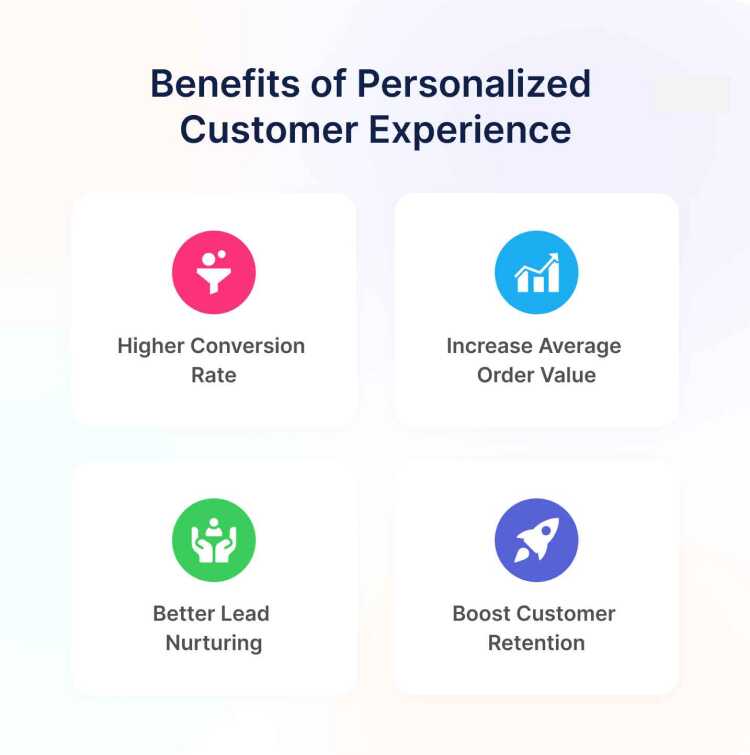
Below are the reasons why positive customer experience is so important for businesses and different ways to provide customers with an experience that will turn them into your most loyal ambassadors.
- Boost customer retention – A lack of personalization, on the other hand, was frustrating to over 70% of respondents, highlighting the importance of a customized experience. It increases the number of repeat customers, revenue, and customer lifetime value (CLV).
- Higher conversion rate – Personalized interaction with customers delights and convinces them to spend more. They are more likely to buy more expensive items when they get a customized experience.
- Drives customer loyalty – When businesses imbibe the culture of keeping the customer first from the initial stages of the client journey, they raise their expectations and increase customer loyalty.
- Increase average order value (AOV) – A Personalized shopping experience drives impulse purchases. 49% of customers bought items they did not intend to buy due to a personalized recommendation from the brand they were doing business with.
What Do You Need to Personalize the Customer Experience?
A personalized customer experience depends on more than a marketing campaign or automation tool. Businesses need connected customer information, clear objectives, suitable technology, and consistent processes.
A Unified View of the Customer
Customer information is often distributed across CRM platforms, support systems, ecommerce tools, social channels, email platforms, and spreadsheets.
When these systems remain disconnected, employees and automated systems receive an incomplete picture of the customer. A unified customer profile should bring together relevant information such as:
- Contact details
- Purchase and subscription history
- Previous support conversations
- Website or product activity
- Communication preferences
- Customer feedback
- Journey stage
This enables the business to maintain context as the customer moves between channels.
Reliable Customer Data
Personalization is only useful when the underlying information is correct. Incorrect, duplicated, outdated, or incomplete customer data can result in irrelevant recommendations and frustrating communication.
Businesses should regularly review how data is collected, stored, updated, and shared between systems.
Customer Journey Mapping
Before introducing personalization, identify the most important moments in the customer journey.
These may include:
- First website visit
- Product comparison
- Checkout
- Onboarding
- Customer support
- Subscription renewal
- Upselling
- Post-purchase follow-up
Journey mapping helps businesses determine where personalization can remove friction or help customers make a decision.
Connected Customer Engagement Technology
The right technology should allow teams to maintain conversation context, automate repetitive interactions, route customers correctly, and communicate across their preferred channels.
Depending on the business, this may include a CRM, customer engagement platform, knowledge base, live chat, AI Agent, customer data platform, analytics system, or marketing automation solution.
The goal is not to add more disconnected tools. It is to create a connected system in which customer information can be used consistently.
Clear Personalization Rules
Businesses should define when, where, and why an experience will be personalized.
For every personalization rule, ask:
- What customer need are we addressing?
- Which data is required?
- Has the customer permitted us to use that data?
- Which action should be triggered?
- How will we measure whether it helped?
Clear rules prevent personalization from becoming random or unnecessarily intrusive.
How AI Improves Personalized Customer Experience
AI helps businesses analyze customer context and deliver relevant experiences at a scale that would be difficult to manage manually.
However, effective AI personalization goes beyond automatically inserting names into messages. It should help the business understand what the customer is trying to achieve and determine the most appropriate next step.
Understand Customer Intent
Customers do not always explain their needs in a structured way. A single message may include several requests, preferences, restrictions, and concerns.
An AI Agent can analyze the full conversation to identify the customer’s intent and respond according to the situation. For example, an ecommerce customer may ask for a product within a particular budget, request delivery information, and inquire about an installment option in the same message.
Understanding the complete context allows the business to provide a more useful response.
Use Conversation and Customer Context
AI can combine the current conversation with permitted customer information such as previous interactions, purchase history, account status, or product usage.
This helps avoid repetitive questions and enables more relevant recommendations. The customer receives continuity rather than being treated as a new contact during every interaction.
Deliver Real-Time Recommendations
AI can recommend products, content, support actions, or next steps while the interaction is taking place.
A customer browsing a pricing page may receive guidance on the most suitable plan. A customer reporting a technical issue may receive instructions relevant to the specific product they use.
Support Human Agents
AI can also improve personalization during human-assisted conversations. It can summarize previous interactions, retrieve relevant knowledge, suggest responses, and highlight important customer details.
This gives agents more time to listen, apply judgment, and communicate with empathy.
Maintain Personalization Across Channels
When customer conversations are connected within an omnichannel platform, AI can help maintain context across website chat, social messaging, and other support channels.
Customers can move between channels without restarting the entire conversation.
REVE Chat, for example, combines customer conversations and engagement tools within one platform. Its Wize AI Agent can understand customer requests, use connected knowledge, automate relevant actions, and transfer conversations to human agents when personal assistance is needed.
AI should not remove the human element from customer experience. It should make relevant information easier to access so that automated and human interactions become faster, more contextual, and more helpful.
10 Ways to Create a Nifty Personalized Customer Experience Examples
Highly personalized customer experiences, when offered to customers, enable businesses not only to differentiate themselves but also to gain a sustainable competitive advantage.
As customers look for customized support, the following practical ways will provide a framework that will allow your business to deliver a hyper-personalized customer experience.
Following the different ways based on your business needs will help to personalize your customer communication and deliver an excellent experience.
1. Segment your Target Audience
Not just segmentation, micro-segmentation is in trend.
Customer segmentation is the best way to collect insight into the market landscape. Customer segmentation is all about grouping customers into segments based on shared qualities.
There are a number of different ways to segment customers. How you segment really depends on your business and your objectives. Here are some common ways you might segment your customers.
- Demographic – Split your customers into demographic groups like gender, language, or occupation.
- Geographic – Use information such as region, country, and state to segment customers to send targeted messaging to them.
- Behavior – Leverage your customers’ behavior and product usage data to segment customers, such as purchase frequency, login sessions per month, etc.
- Customer journey – Knowing where the customer is in the journey enables you to engage them in more appropriate ways.
Let’s say you have a customer base with a wide range of ages. By grouping customers into clusters, you can make certain assumptions about what they value most from their customer service experience and what approach is most likely to resonate with them.
Key ways segmentation helps in delivering a personalized customer experience:
- Enables to tailor customer communication – Your customer engagement model should rely on segments in order to communicate with customers in a way that resonates with them more.
- Focus on the right customers – Segmentation helps to gain critical insight into their customers. By using data to segment customers, you can understand which customers are at risk, what stage in the customer lifecycle they are.
- Allows to scale your customer support – You can design a model to support each group in the appropriate way by segmenting your customers and building customer profiles.
2. Plan an Omnichannel Customer Experience Strategy
Customers expect personalized and consistent experiences across multiple channels as they use them to reach out to your business. And if they don’t get a consistent experience, they get annoyed and might revert to other brands.
Customers with omnichannel customer engagement strategies on an average 89% of their customers.
Businesses should shift to omnichannel to ensure consistent communication across all the channels, such as website, social media, phone, in-app, stores, etc.
In broader terms, it means the social support over Facebook Messenger should be equally convincing with your quality of website support, and result in customer happiness.
How to deliver a personalized customer experience by going omnichannel?
- Streamline all the customer conversations under one platform and provide a cohesive experience.
- Identify the most preferred channels and be 24×7 active across those channels to reduce average response time.
- Make use of tools like live chat, chatbots, and visual tools to gain faster details of the issue and deliver first contact resolution.
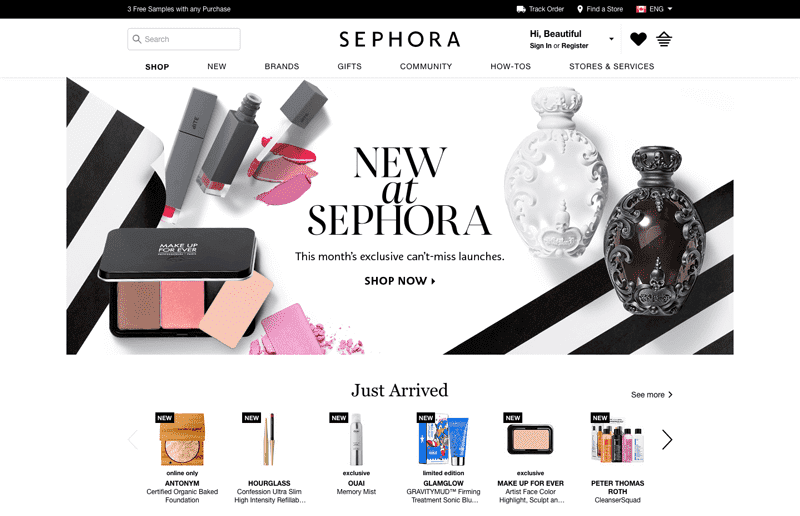
Sephora is well known for the brilliance behind its omnichannel customer experience. They are known for the Beauty Insider Rewards program. Customers can tap into the Beauty Bag on their phone or desktop.
Their application of an omnichannel marketing strategy has nurtured 11 million members, who spend 15 times more money on Sephora.com than the average user.
3. Automate your Customer Experience
Customers today anticipate a top-notch service around an average product. There is an increasing demand for assistance with a click of a button.
An automated system can play a crucial role in selling the experience of buying a product from a particular brand.
Leveraging chatbots helps to generate 35-40% response rates, and this number can go up as high as 80-90% with more engaged audiences.
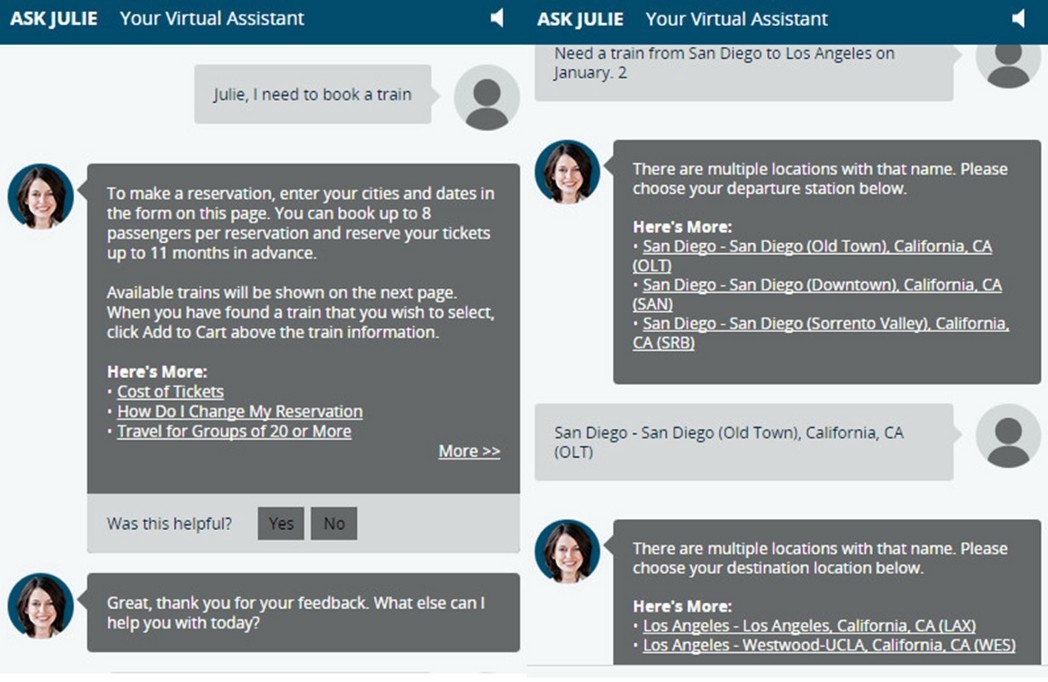
Ask Julie by Amtrak, a passenger railroad service, is one of the finest examples of chatbot implementation for delivering a customized experience. Created to make booking reservations, finding information, and planning a vacation easier, Julie knows everything on Amtrak.com without agents’ involvement.
Key ways chatbots help to deliver a hyper-personalized customer experience:
- Smoother customer journey – Many CX tools really come down to improving the interaction at the various touchpoints across the customer journey. Chatbots can significantly ease the purchase process.
- Real-time personalization – The Bot has the ability to personalize customer experience in real-time. All the information the customer provides within the context of the conversation, the bot can leverage instantly, which goes beyond addressing the user by name.
- Less friction, more convenience – Chatbots enable customers to get answers to basic queries instantly by routing conversations to the right agents/departments for resolution. Thus, bots can be handy for automation in customer service as they are able to eliminate back-and-forth communication, which is the common cause of frustration.
- 24×7 availability – Deploying a bot on a website or a messaging app helps businesses to provide support 24/7. Bots identify the type and urgency of the issue, direct the ticket to the right agent, and push it to the top of the queue based on the level of urgency.
4. Deliver Contextual Support
Businesses are aware of how important it is to enhance customer experience to maximize their revenue and customer retention rates.
Every customer has a different issue; some are queries regarding products, while others might be service requests. The key to success is to provide contextual support with the flow of relevant information and timely service.
The power of customer context is such that 86% of customers are willing to pay more for a personalized customer experience.
The most important reason why contextual support is to deliver faster and accurate responses. And it can be achieved by using digital customer engagement tools to deliver a customized experience.
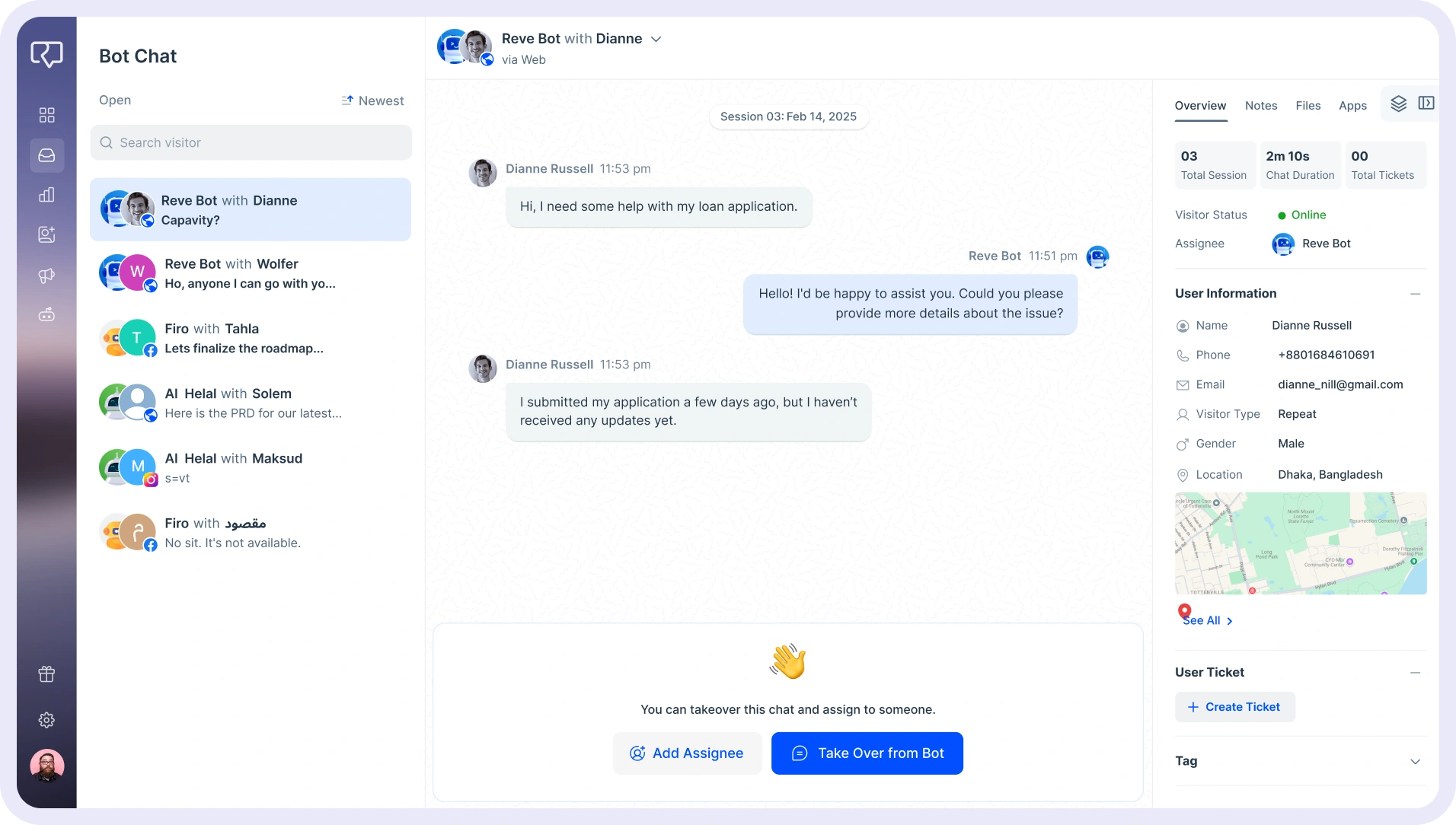
Live chat
Live chat is the most preferred channel over other communication channels such as phone and email. It instantly connects with your customers and assists them in real time. You can trigger proactive chat messages to guide customers in their buying journey and improve their experience.
Co-browsing
Co-browsing solution allows you to collaborate with customers and provide them with help in real time. You can guide them to complete a complex form fill-out or application process. It helps to improve first contact resolution by providing effective solutions.
Video chat
Video chat allows us to identify the issue faster and deliver effective solutions, which reduces the number of touchpoints and increases customer satisfaction. Having direct personalized conversations develops trust in customers and delivers a delightful experience.
5. Develop a Self-Service Experience
Customers expect hyper-personalized experiences, even when they choose self-service. The more context your company has about previous voice and digital interactions, the better experiences you can provide.
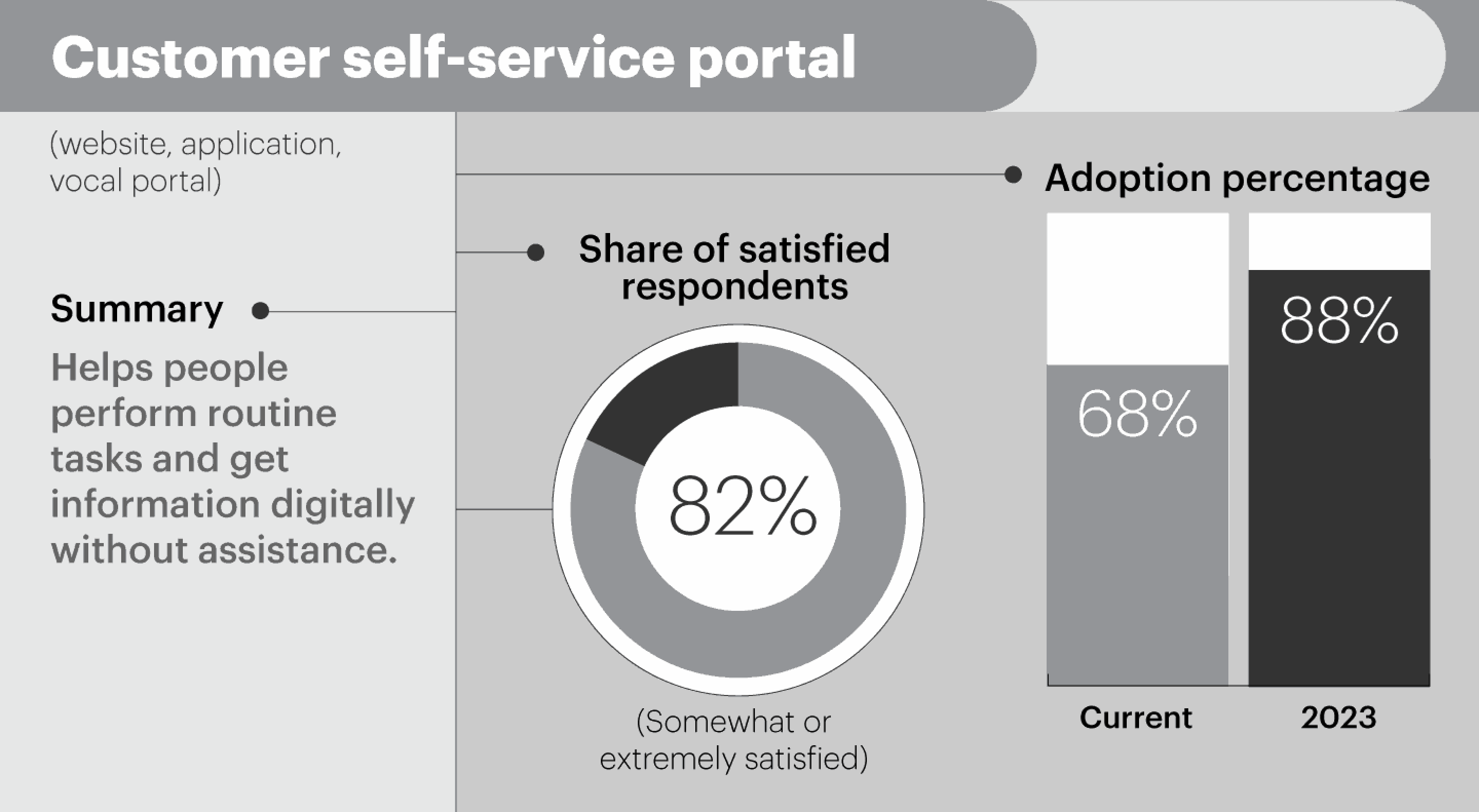
A self-service portal conveys information with step-by-step guides, FAQ pages, how-to videos, diagrams, and a knowledge base. You can also include tips, hints, and other agile practices to help customers understand better
Key benefits of self-service portals that deliver a hyper-personalized customer experience:
- Leverages customized Information – Self-service portals help clients to solve their issues effectively by using their past data and suggesting accurate tools.
- Increases customer positive response – When customers get access to easy resolution of issues, necessary tools, and expert guidance, they are strengthened by it. And this experience yields a strong brand reputation by giving the customers the best personalized services.
- Personalize customer experience – Address each customer by name. Keep a record of their products or past services and display relevant topics of expertise. Also, use customer data to create content that addresses common issues.
6. Listen to Customer Feedback
Customer feedback is crucial for the growth of all businesses. It provides valuable insights into what is working well about your products or services and what should be done to make the experience better.
You, as a business, need to understand the importance of customer feedback and acquire it by asking for it at the right time. You can acquire feedback just after the end of the live chat conversation, after a successful checkout, or after the resolution of a support ticket.
How can listening to customer feedback personalize customer interaction?
Analyzing feedback involves identifying customer pain points and needs so that businesses can focus on improving those areas.
- Categorize all feedback into categories – The feedback may include product delivery speed, after-sales services, customer service approach, etc. Once categorized, you can divide further those that deserve immediate attention.
- Identify the type of feedback – Customer feedback comes with negative and positive comments. The positive ones bring in concrete ideas on what can be extremely effective in building customer loyalty. On the other hand, the negative ones provide insights into improvement areas.
- Consolidate results and plan your next action – Finally, amalgamate all the results to make a plan of action as to how you intend to respond to each of the issues raised. Make a feasible and effective plan that would address all the problems your clients think your business is having, while keeping the good services still functioning.
Note: You need to train your customer support team to ask for feedback at the right time via the right channels and by tailoring feedback questionnaires.
7. Allow Customers to be a Part of the Personalization Process
Customers become loyal because they are emotionally attached and they remember the personalized experience they received. A business that optimizes for a customized interaction outperforms competitors by 85% in sales growth.
By combining an interactive process with your personalization strategy, you can help create an unforgettable customer experience. In case some customers don’t have a profile, a business can provide a superior personalized customer experience by using interactive tools.
An excellent example of such a feature is a virtual ‘Try It On’ feature by Maybelline, which allows people to virtually try on makeup products before making a purchase.
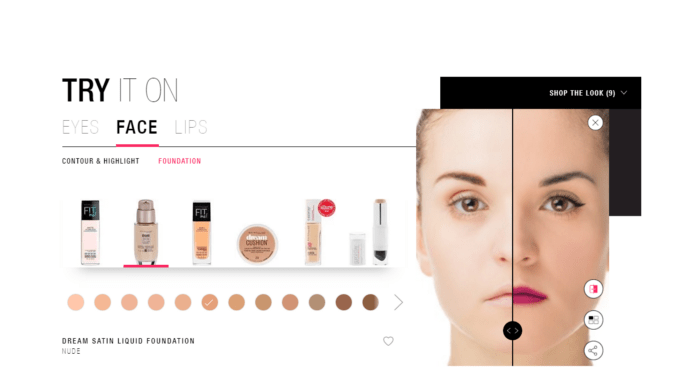
How can involving customers create a personalized customer experience example?
- Understand customer journeys – Use this checklist of questions to understand typical customer journeys to help determine what customers are looking for.
- Implement the right technology – Deploy digital technologies like virtual reality (VR), video chat, and predictive analytics tools to deliver a personalized customer experience.
- Measure success – Identify the right metrics to determine the effectiveness of implementing a digital customer engagement strategy.
8. Personalize Every Communication
A personalized customer communication strategy has a direct impact on the customer delight index. 80% of customers are more likely to purchase a product or service from a brand that provides customized experiences.
Personalization is all about understanding your customer behavior and tailoring your messaging to align with them perfectly.
By using the right technology, you can collect customer data and turn it into actionable insights to personalize your customer interactions and provide unique messaging to every client regardless of their preference of channels.
Here are some ways to personalize your interactions to meet the delight of customers
- Maintain the tone according to the customer’s personality. Some prefer short and direct communications, and some like longer conversations and sharing opinions.
- Actively listen to your customers and empower them. Asking your customers about their preferences both personalizes the experience and builds their confidence in your brand.
- Thoroughly understanding your customers’ backgrounds by having authentic conversations helps to personalize every relationship.
- Recommend products and services to your customers based on their purchase history. Personalized cart recommendations influence 92% of shoppers online.
- Express gestures by sending follow-up messages to customers after each purchase or service interaction to thank them and offer further assistance if required.
9. Empower Employees to Create Personalized Customer Experience Example
Empowering employees to deliver a personalized customer experience is something that every business should practice.
What it means is that you are giving them the authority to make independent decisions to impress your customers. It also requires your employees to be well-trained to identify and act on opportunities to deliver excellent service and make customers happy.
Giving employees ownership will result in boosting motivation, customer service, and morale, but also to improvements in quality, productivity, and quick decision-making.
Ritz-Carlton Hotels is the best example that gave its employees the authority to spend up to $2,000 per day to delight their guests with their service.
How does an empowering team help to deliver a personalized customer experience?
- Authority for decision making – The employees hold complete authority to handle customers’ queries independently. It is their responsibility to amaze them by meeting and exceeding customer expectations.
- Perform as a team – Empowering your team allows them to perform together to make a move to deliver superior customer service that surpasses the customer delight index. Make sure your team is supported by a customer service checklist template for maintaining consistency in delivery.
- Employee feedback – The feedback from employees is directly aligned with the company’s objective. The mission of the company and the opinion of your team are linked, which makes them valuable.
Best practices to create a personalized customer experience example:
- You can structure and incentivize your team so that your employees can work independently to resolve customer queries, keeping themselves on their feet.
- Empower your customer service reps by measuring the feedback collected and total resolved queries that were assigned to deliver great customer service success.
10. Personalize your Email Communication
Emails with a personalized email subject tend to have 50% higher open rates, whereas the average email open rate is around 20.81%.
Personalizing the email content is just as important as segmenting email lists. Tailoring the perfect subject line is the first step to a successful email marketing strategy.
Personalized emails stand out in the inbox, where several companies try to communicate with the audience. The customer experience also enhances the personalization of emails because it makes sure that the right piece of content is sent to the consumer at the right time.
Best practices to personalize your emails and deliver a customized experience:
- Segment your email list – You can segment your email list based on different factors. Demographics, user purchase history, the time a user opens an email, and other factors are all useful data points.
- Use the right tools – They help you manage customer experience by automating your email marketing. In this way, you’ll boost customer responsiveness as well as improve engagement with your brand.
- Maintain a consistent style – Having a consistent voice throughout your communication with customers will help them perceive a clear brand image.
- Use polite language – Respectful and polite communication builds customer trust in your business. They’ll feel secure and continue working with you.
How to Build a Customer Experience Personalization Strategy
A personalization strategy should begin with a specific customer problem rather than a collection of tools. The following process can help businesses introduce personalization gradually.
1. Review the Current Customer Journey
Identify how customers currently discover, evaluate, purchase, use, and seek support for your products or services.
Look for moments where customers experience delays, receive irrelevant communication, repeat information, or abandon the journey.
2. Choose High-Impact Touchpoints
Do not attempt to personalize every interaction at once. Begin with touchpoints where relevance can produce a meaningful improvement.
Possible starting points include:
- Product recommendations
- Website conversations
- Cart abandonment
- Customer onboarding
- Support routing
- Renewal reminders
- Post-purchase communication
3. Identify the Data You Need
Determine which information is genuinely required to improve each selected interaction.
For example, personalizing technical support may require the customer’s product, subscription level, and previous support history. It may not require unrelated personal information.
Collect only the data that serves a clear purpose.
4. Connect Customer Information
Integrate the relevant CRM, support, ecommerce, communication, and analytics systems so that teams can access a consistent customer view.
This step is critical for preventing contradictory or repetitive experiences across channels.
5. Create Personalization Rules and Workflows
Define the customer condition, trigger, action, and expected outcome.
For example:
- Condition: A returning customer visits the pricing page.
- Trigger: The customer spends more than a defined period comparing plans.
- Action: Offer contextual assistance through live chat.
- Expected outcome: Help the customer choose a suitable plan.
6. Combine Automation With Human Support
Automation should manage predictable and repetitive interactions. Human agents should remain available for sensitive, complex, high-value, or emotionally charged conversations.
Create clear handover rules so the customer can move from automated assistance to a human agent without losing context.
7. Test the Experience
Test personalized journeys with a limited audience before applying them to every customer.
Check whether the experience is accurate, timely, easy to understand, and genuinely useful.
8. Measure and Improve
Monitor customer behavior and business results. Compare personalized and non-personalized experiences where appropriate.
Use the findings to improve rules, data sources, messages, recommendations, and workflows.
Common Challenges in Customer Experience Personalization
Personalization can improve engagement and loyalty, but poor implementation can produce the opposite result. Businesses should prepare for the following challenges.
Fragmented Customer Data
Customer information may be stored across multiple platforms that do not communicate with one another.
As a result, the marketing team, sales team, support agents, and automated systems may each see a different version of the customer.
Integrating essential systems and maintaining a unified customer profile can reduce this fragmentation.
Customer Privacy and Consent
Customers are more likely to accept personalization when they understand what information is being collected and how it benefits them.
Businesses should:
- Clearly explain how customer information is used
- Obtain consent where required
- Allow customers to manage communication preferences
- Collect only necessary information
- Protect customer data from unauthorized access
- Follow applicable data protection requirements
Transparency is part of the customer experience. Personalization that feels hidden or invasive can quickly damage trust.
Inaccurate Personalization
Incorrect data or poorly designed rules can generate irrelevant recommendations.
For example, continuing to promote a product that the customer has already purchased shows that the business is not using its data effectively.
Businesses should regularly review recommendation quality, customer profiles, triggers, and automated responses.
Inconsistent Experiences Across Channels
A customer may receive a personalized experience on the website but a completely generic response through email or social media.
To prevent this, customer information and interaction history should be accessible across the channels used by the business.
Over-Personalization
Not every interaction needs to reference everything the business knows about the customer.
Using too much personal information can make the experience uncomfortable. Personalization should remain proportionate to the situation and provide a clear benefit.
Lack of Team Alignment
Marketing, sales, support, and product teams may define personalization differently.
A shared strategy should establish:
- Which customer data can be used
- Which experiences will be personalized
- Who owns each workflow
- When human review is required
- How results will be measured
Scaling Without Losing the Human Touch
Automation makes personalization scalable, but excessive automation can make conversations feel rigid.
Businesses should give customers a simple path to human assistance and allow agents enough flexibility to respond according to the situation.
How to Measure Personalized Customer Experience
The success of personalization should be measured by whether it makes the customer journey easier and improves meaningful business outcomes.
The right metrics depend on the touchpoint and objective.
Customer Engagement Rate
Track whether customers interact with personalized messages, recommendations, or support prompts.
Relevant measurements may include click-through rates, chat engagement, content interaction, feature adoption, or response rates.
Conversion Rate
Compare how often customers complete a desired action after receiving a personalized experience.
This may include completing a purchase, booking a demonstration, registering for an account, or upgrading a subscription.
Recommendation Acceptance Rate
Measure how often customers select a recommended product, service, plan, article, or next action.
A low acceptance rate may indicate that recommendations are not sufficiently relevant.
Average Order Value
Personalized recommendations may help customers discover relevant complementary products or more suitable packages.
Monitor whether average order value changes after introducing these recommendations.
Customer Retention Rate
Track whether customers who receive personalized onboarding, support, or communication are more likely to remain with the business.
Retention is particularly important for subscription-based businesses.
Customer Lifetime Value
Customer lifetime value helps determine whether personalization is contributing to longer and more valuable relationships.
It should be evaluated over time rather than used as an immediate campaign metric.
Customer Satisfaction
Use post-interaction surveys, customer satisfaction scores, feedback, and conversation analysis to understand whether customers find the personalized experience helpful.
First-Contact Resolution
For customer service personalization, measure whether better context helps teams resolve issues during the first interaction.
Improved first-contact resolution can reduce customer effort and repeated conversations.
Customer Effort
Personalization should reduce the amount of work customers must perform.
Monitor whether customers need fewer steps, repeat less information, receive faster answers, or complete journeys more easily.
Businesses should avoid measuring personalization through engagement alone. A message can generate clicks without improving the overall customer experience. Combine interaction metrics with satisfaction, retention, revenue, and customer effort.
Personalized Customer Experience Examples Across Industries
Ecommerce
An ecommerce business can use browsing history, previous purchases, budget, and product preferences to recommend suitable products.
It can also provide proactive assistance when a customer spends time comparing items or experiences difficulty during checkout.
SaaS
A SaaS company can personalize onboarding according to the customer’s role, industry, subscription plan, and intended use case.
It can also recommend features based on product activity and provide support content related to the customer’s current workflow.
Banking and Financial Services
A financial institution can personalize service by recognizing the customer’s account type, preferred channel, previous requests, and current journey.
For sensitive interactions, personalization should focus on convenience and clarity while maintaining strict security and privacy controls.
Telecommunications
A telecom provider may recommend plans according to usage patterns, notify customers before they exceed limits, or offer self-service options relevant to their account.
Support interactions can also be routed according to the customer’s service, location, and issue type.
Travel and Hospitality
Travel businesses can personalize destination recommendations, room preferences, reminders, and post-booking support.
Previous bookings and stated preferences can help provide useful suggestions without requiring customers to start from the beginning every time.
Customer Support
A customer support team can use previous conversations, product details, account information, and customer sentiment to provide contextual assistance.
AI Agents can handle routine requests, while complex or sensitive cases can be transferred to human agents with the conversation history preserved.
Hyper Personalized Customer Experience Goes a Long Way
Digital transformation has paved the way for businesses to go that extra mile to make every customer experience personalized in every possible way. Customers quickly transform into buyers, which makes the customer experience (CX) the only competitive differentiator among brands.
Brands are continually adopting different strategies to keep customers engaged. When executed correctly, personalized customer experience can be one of the most excellent ways of gaining higher returns while delighting customers.
Frequently Asked Questions
A personalized customer experience is an interaction adapted to an individual customer’s needs, preferences, behavior, history, or current context. It may include relevant recommendations, customized communication, contextual support, or a journey that changes according to the customer.
Personalization helps customers find relevant information, make decisions faster, and receive support with less effort. For businesses, it can improve customer satisfaction, engagement, conversion, retention, and loyalty.
Businesses may use permitted information such as purchase history, browsing behavior, product usage, previous conversations, customer feedback, location, communication preferences, and journey stage. Only necessary and responsibly collected data should be used.
An agent viewing a customer’s previous support history and providing instructions for the exact product the customer uses is an example of personalized service. It saves the customer from repeating information and helps the agent provide a more relevant solution.
AI can analyze customer behavior, conversation context, previous interactions, and connected business information. It can then recommend products, retrieve relevant answers, adapt responses, automate actions, or help human agents provide contextual support.
No. Segmentation groups customers according to shared characteristics. Personalization adapts an experience to a particular customer. Segmentation can support personalization, but it does not always create an individual experience.
Personalization usually uses known customer details or predefined segments. Hyper-personalization combines multiple data sources, real-time behavior, customer intent, and predictive insights to adapt an experience more precisely.
Yes. Personalization can damage trust when it uses incorrect information, becomes intrusive, lacks transparency, or makes assumptions about the customer. Businesses should prioritize accuracy, consent, relevance, and customer control.
A small business can begin by remembering customer preferences, segmenting communications, maintaining conversation history, offering support through preferred channels, and personalizing follow-up messages. It is better to improve a few important interactions before introducing complex personalization.
Common metrics include conversion rate, engagement rate, retention, customer lifetime value, customer satisfaction, first-contact resolution, average order value, recommendation acceptance, and customer effort.
Build AI-powered support with Wize AI
Connect business knowledge, automate support conversations, and improve response quality without managing a complex AI stack.
Explore Wize AI Agent Rate the article

Ehsanur Rahman
Head of Customer Communication
Ehsanur Rahman, the Head of Customer Communication at REVE Chat is dedicated to implementing advanced solutions that boost customer interactions and satisfaction. Ehsanur's passion for technology and customer service drives his commitment to delivering exceptional experiences.
View all articles