


Customer Engagement Models: Types, Examples, How to Build One & Best Practices
- February 22, 2026
- 19 mins read
- Listen

The customer engagement model is a method where the customer engages with both the product and the business. When a customer engages with the business, they get help and support when they need it.
An engaged customer is one who becomes emotionally connected to a brand. Once this connection is made, the customer will be loyal to that brand and its products or services.
If a business is not engaged with its customers and delivering on their needs, then there is room for new competitors to get into the market.
In this article, I will demonstrate the best practices for the customer engagement model and effective ways to increase customer engagement.
What is a Customer Engagement Model?
A customer engagement model is a process that you use to approach your ongoing relationship with your customers. This process, known as customer success, is the difference between running a business and operating a business. It’s where the volume of work is less important than the value that you deliver to your customers.
Simply put, every business needs to have a way to engage with its customers online. But what are the best practices for the customer engagement model and how exactly do you do it?
Customers will voluntarily opt-in to update their contact information on a website or mobile app through the use of registration or a newsletter signup form. By filling out this form and submitting it, they are giving you permission to engage with them via email.
However, if you don’t have a plan for how you’re going to use this information, then it’s just not going to be worth much to your business for engaging and managing customer retention over time.
Why Are Customer Engagement Models Important?
When we talk about customer engagement activities, there are many components that we could be talking about. Many businesses will have a different definition of what they need to be doing from an engagement perspective.
However, some core fundamental components should be included in most engagement models.
Guided: It focuses on the information available at each point in the experience and is used often when a business has limited resources and engagements are interactive, like one-on-one conversations with a salesperson.
Serial: Its focus is on creating a series of engagements that lead toward a goal. Salespeople will funnel prospective customers through a series of engagements that lead to an agreement to engage with the business.
Linear: Used when businesses want to create a relationship with customers over time, similar to creating feelings of loyalty and trust between the customer and business. These strategies are often used by financial institutions.
7 Effective Models to Increase Customer Engagement
A customer success engagement model is an essential part of a business relationship with its customers. It protects companies from the performance “whiplash” that can occur in a relationship that is based solely on one-sided communication.
Customer engagement models help businesses react as quickly as possible to customers and make it easier for businesses to make the right decisions when it comes to keeping customers happy and engaged. Let’s take a look at some of the customer engagement model examples.
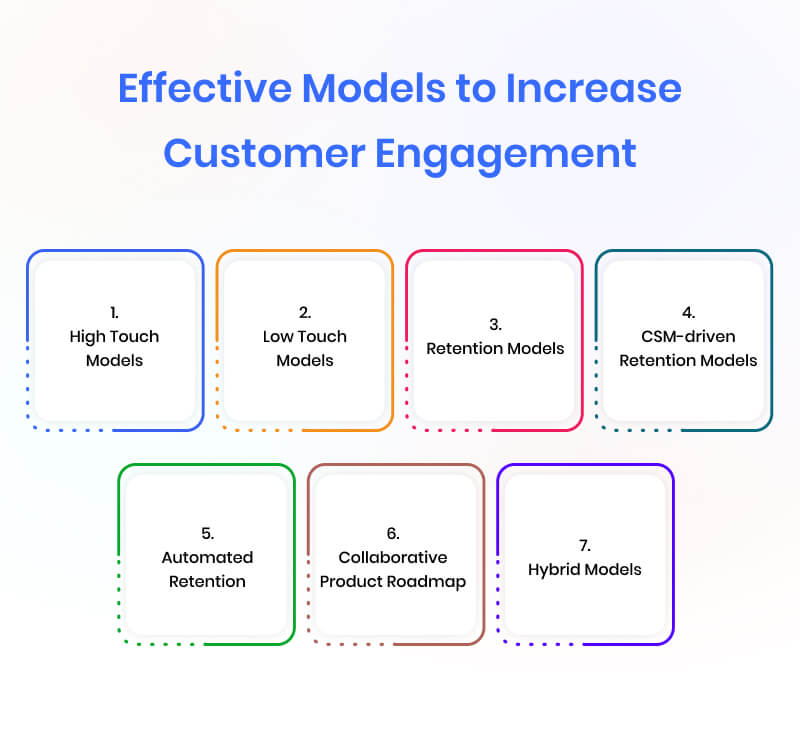
- High Touch Models
- Low Touch Models
- Retention Models
- CSM-driven Retention Models
- Automated Retention
- Collaborative Product Roadmap
- Hybrid Models
1. High Touch Models
Customer engagement refers to the frequency and quality of contact between a brand and a customer. High-touch models tend to make the most sense for relatively high-cost products, given that high-touch models are much costlier to support than low-touch models.
For example, luxury automobiles can be serviced exclusively through a high-touch model – when you go to the dealership to have your car serviced, you are likely to get face-to-face service from a live chat representative.
A high-touch model is designed to provide the best customer service possible and to assure customers that their concerns are being addressed in a timely manner.
When properly executed, a high-touch model can result in a loyal customer base, higher product sales, and superior financial results for the company implementing it.
2. Low-Touch Models
The idea behind low-touch models is that companies pay for the leads and customers they want to reach. Developing a low-touch engagement model gives you control over how the messaging is delivered, how much it costs, and who gets it.
Here are some low-touch customer engagement model examples:
- Standalone media buy with a flexible digital ad solution
- Email and/or direct mail piece using your own data
- Primary and secondary research to identify key customer characteristics
- Upfront targeting to maximize conversions that are reflective of your customer profile
- Customized product or service value proposition based on customer needs, including a demo of the product or service and easy ways to access it.
The low-touch model can be used to help you develop a specific customer profile that you then tailor your marketing strategy and messaging around.
3. Retention Models
A key to successful customer retention is understanding the lifecycle of a customer and building your retention strategy in alignment with that lifecycle.
For example, when you get a new customer, you might be focused on providing them with great service at the point of sale. But then you need to focus on keeping them engaged by offering products that are of interest to them.
But what makes retention so important? And why are subscription businesses so reliant on strong retention?
Here’s why:
- An extremely high percentage of subscribers have churned in the past, and if you can nip that churn in the bud, you’ll be positioned for growth.
- Subscribers who don’t churn are also vital to growth because they provide you with a dependable cash flow.
- Strong retention is a great competitive advantage. If you’re having a lot of success, competitors will try to copy your business model. The good news is that they can’t copy your subscriber base.
4. CSM-driven Retention Models
A retention strategy is what you do when your new subscribers are not engaged enough with your product or churn. The way in which you engage with customers will depend on the nature of the product, the type of customer, and the cost of the contract.
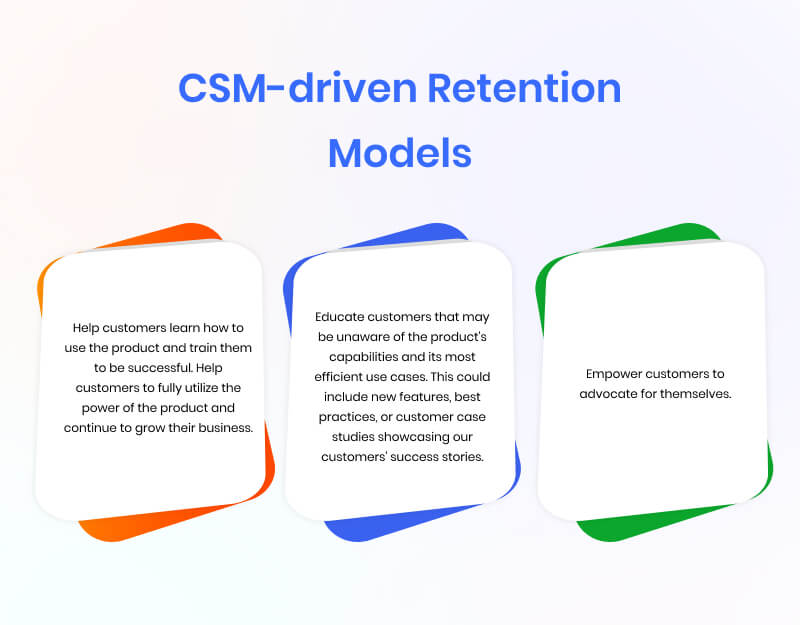
CSM-driven retention model and how it works in practice. We think that customer success managers have three main jobs:
- Help customers learn how to use the product and train them to be successful. Help customers to fully utilize the power of the product and continue to grow their business.
- Educate customers that may be unaware of the product’s capabilities and its most efficient use cases. This could include new features, best practices, or customer case studies showcasing our customers’ success stories.
- Empower customers to advocate for themselves.
So, what does it mean to “drive retention”? It means that customer success managers are partnering with every team within their organization (product, marketing, sales) to ensure that there is a coordinated effort to drive retention across the board.
5. Automated Retention
Over the past decade, we’ve seen the rise of automated retention programs. These include traditional email marketing, push notifications, and automated text messaging. While many of these programs are great for customer acquisition, they can also be effective at driving retention.
From the business standpoint, one effective way to think about automated retention is that it’s a hassle-free customer loyalty program. This can be appealing to merchants who don’t want to deal with building and maintaining a rewards program — especially since it doesn’t require much effort to set up and operate.
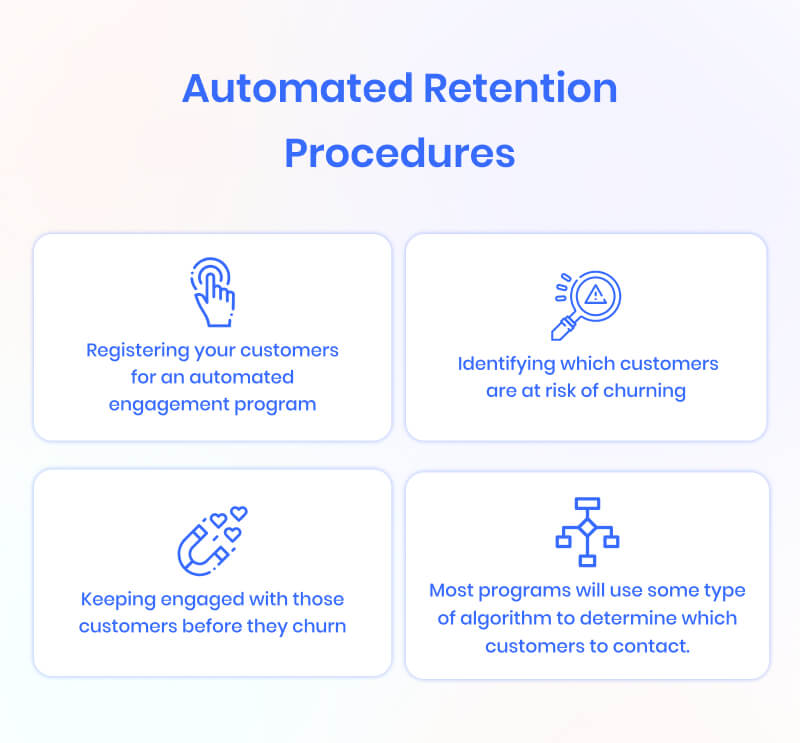
Most types of automated engagement operate in a similar fashion:
- Registering your customers for an automated engagement program
- Identifying which customers are at risk of churning
- Keeping engaged with those customers before they churn
- Most programs will use some type of algorithm to determine which customers to contact.
6. Collaborative Product Roadmap
A product roadmap is one of the most important tools for a company to communicate its vision and product strategy. When shared publicly and with transparency, the roadmap serves as a great way to communicate the status of a product and how they plan to move forward.
With a collaborative product roadmap, users can easily provide feedback and ideas on what they would love to see in the next release of your app. Reddit uses a similar method to manage community engagement, allowing users to easily submit and discuss ideas and topics that they’d like to see on the site.
7. Hybrid Models
The concept of hybrid roadmapping is mixing the agile methodology with the waterfall approach. For example, if you are building a complex piece of software and you have multiple teams involved, each team can have its own product roadmap. Each team will be using agile methodologies replete with large and small releases, stories, epics, etc.
The team will take these stories that they’ve developed and they’ll map out what their small releases are going to be for the coming release and the next release. That’s how they plan their work.
Then there’s going to be another team, typically marketing or product management, working on their own product roadmap, but they’re planning in terms of quarter one, quarter two, quarter three, and quarter four.
How to Choose the Right Customer Engagement Model
There is no single customer engagement model that works for every business. The right approach depends on your customers, product complexity, relationship value, support requirements, and the level of assistance customers need throughout their journey.
A high-touch model may be appropriate when customers require consultation, onboarding, training, or ongoing account management. Enterprise software, financial services, and other complex products often require this level of interaction.
A low-touch model works better when customers can complete most activities independently. Businesses can use self-service resources, automated messages, knowledge bases, chatbots, and digital onboarding to support a large customer base efficiently.
A hybrid engagement model combines both approaches. Routine interactions can be handled through self-service and automation, while complex, sensitive, or high-value conversations are escalated to human teams.
When choosing an engagement model, consider:
- Customer value: Higher-value relationships may justify more personalized human engagement.
- Product complexity: Products that require onboarding or consultation generally need more assisted interactions.
- Customer preferences: Some customers prefer self-service, while others want direct assistance.
- Lifecycle stage: A new customer may need more guidance than an experienced customer.
- Engagement volume: Businesses handling thousands of conversations need automation to maintain responsiveness.
- Issue complexity: Routine questions can be automated, while complicated cases may require an experienced agent.
- Cost to serve: The level of human involvement should remain sustainable as the business grows.
Many businesses ultimately benefit from a hybrid approach because it combines the scalability of automation with human assistance at moments where personal interaction provides greater value.
How to Build an Effective Customer Engagement Model
An effective customer engagement model should define not only how you communicate with customers but also when, where, why, and through whom each interaction takes place.
1. Define Your Engagement Goals
Start by determining what you want customer engagement to achieve.
Depending on your business, the goal might be to increase conversions, improve onboarding, reduce customer churn, increase repeat purchases, improve customer satisfaction, or strengthen customer loyalty.
Clear objectives make it easier to select engagement channels and measure performance.
2. Understand and Segment Your Customers
Customers have different expectations, behaviors, and levels of engagement.
Segmenting customers according to factors such as lifecycle stage, purchase history, product usage, behavior, needs, or account value allows you to provide a more relevant experience.
For example, a new customer might receive onboarding assistance, while an inactive customer could receive proactive re-engagement communication.
3. Map the Customer Journey
Identify the major stages customers move through when interacting with your business.
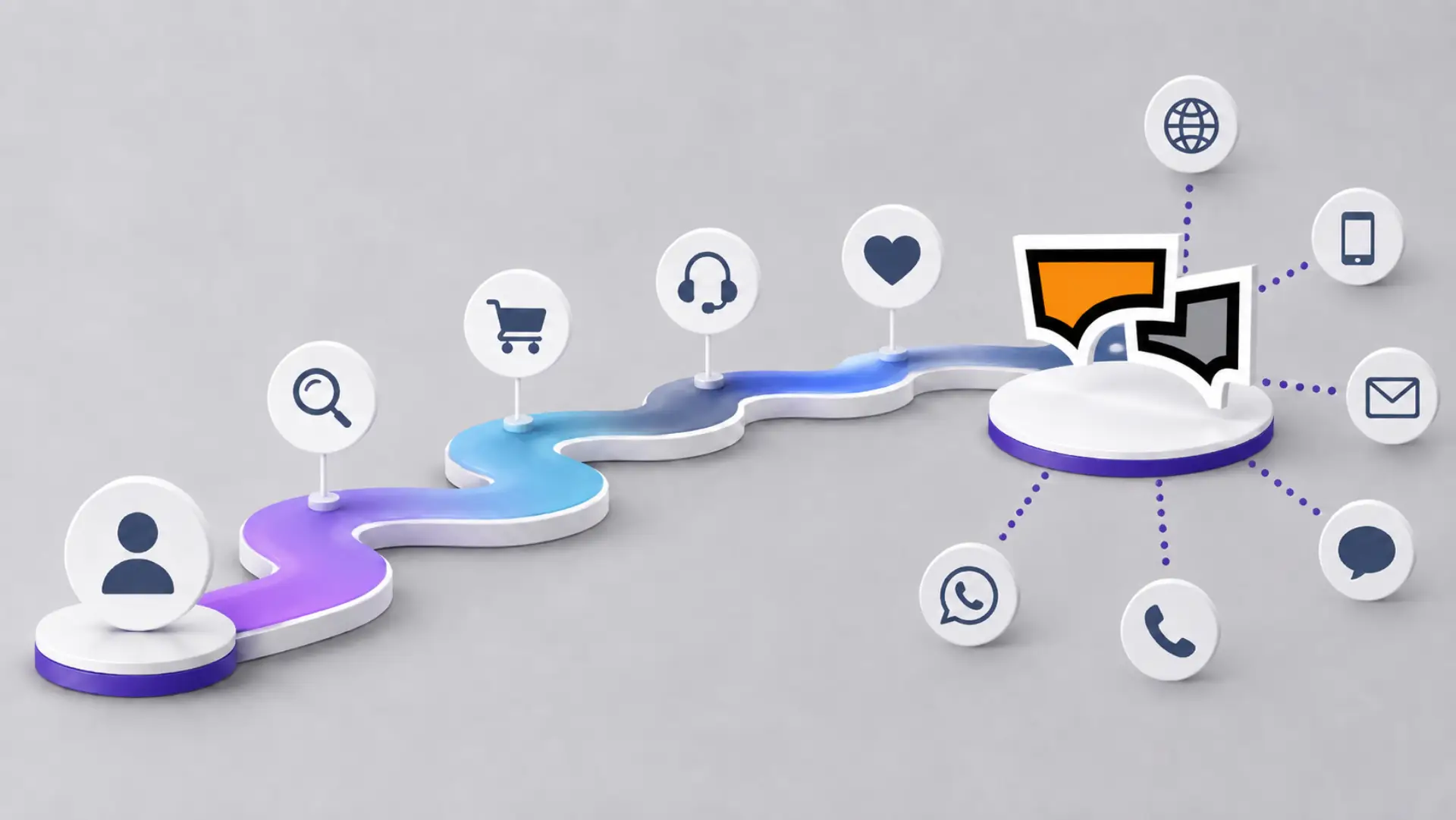
A typical journey may include:
Awareness → Consideration → Purchase → Onboarding → Adoption → Support → Retention → Advocacy
Then identify the questions, challenges, and expectations customers are likely to have at each stage.
This allows your business to engage customers proactively rather than waiting for them to request assistance.
4. Identify Important Engagement Touchpoints
Next, determine where meaningful customer interactions happen.
Common touchpoints include your website, live chat, mobile app, email, WhatsApp, social media, phone conversations, support tickets, knowledge base, and in-product communication.
The objective is not to use every available channel. Instead, businesses should choose the channels customers actually prefer and ensure the experience remains connected between them.
5. Decide What to Automate and What Needs Human Support
Automation works especially well for repetitive, predictable interactions such as answering common questions, sharing order updates, qualifying inquiries, providing basic product information, or routing conversations.
Human agents are more valuable when conversations require empathy, negotiation, judgment, troubleshooting, or complex decision-making.
A strong engagement model establishes clear rules for moving customers between automated and human-assisted experiences without forcing them to repeat information.
6. Personalize Interactions Using Customer Context
Customer engagement becomes more effective when conversations reflect what the business already knows about the customer.
Purchase history, previous conversations, browsing behavior, account information, preferences, and lifecycle stage can help businesses provide more relevant recommendations and assistance.
Instead of delivering the same message to every customer, businesses can adapt communication according to customer intent and context.
7. Measure, Learn, and Improve
A customer engagement model should continue evolving.
Monitor engagement metrics, analyze conversation data, collect customer feedback, and identify points where customers experience friction.
The information can then be used to adjust automation, improve messaging, redesign workflows, and provide better human support.
Customer Engagement Across the Customer Lifecycle
Customer engagement should not begin only when a customer contacts support. It should continue throughout the relationship with the business.
1. Awareness and Consideration
At this stage, customers are researching their options.
Businesses can increase engagement by providing educational content, product recommendations, interactive experiences, conversational support, and quick answers to pre-purchase questions.
The objective is to reduce uncertainty and help customers make informed decisions.
2. Purchase and Conversion
Customers approaching a purchase may need immediate answers about pricing, features, delivery, availability, or implementation.
Real-time conversations, proactive assistance, and personalized recommendations can prevent customers from abandoning their journey because they cannot find the information they need.
3. Onboarding and Adoption
The relationship continues after conversion.
Guided onboarding, automated instructions, knowledge resources, and proactive check-ins can help customers reach value more quickly and understand how to use the product or service effectively.
4. Support and Relationship Building
Customers will eventually need assistance.
Their previous interactions should provide context so that support teams do not treat every conversation as a completely new relationship.
Fast access to relevant information and seamless transitions between channels can make service interactions less frustrating.
5. Retention and Re-engagement
Changes in activity can indicate that a customer is becoming less engaged.
Businesses can use these signals to trigger educational messages, proactive assistance, personalized offers, or conversations designed to understand the customer’s changing needs.
6. Loyalty and Advocacy
Highly engaged customers can eventually become advocates.
Businesses can maintain these relationships through loyalty programs, exclusive experiences, referral opportunities, communities, feedback programs, early product access, and personalized communication.
The goal of the engagement model is therefore not simply to generate more interactions. It is to create increasingly valuable interactions as the customer relationship develops.
How to Measure the Success of a Customer Engagement Model
Customer engagement cannot be evaluated with a single metric. Businesses should combine behavioral, service, relationship, and business metrics to understand whether their engagement model is working.
1. Engagement Metrics
These indicate whether customers are actively interacting with your business.
Examples include:
- Message response rate
- Website engagement
- Chat engagement rate
- Email click-through rate
- Product or feature usage
- Campaign response rate
- Repeat visits
2. Customer Service Metrics
These help evaluate the quality and efficiency of customer interactions.
Important metrics include:
- First response time
- Average resolution time
- First-contact resolution
- Customer Satisfaction Score (CSAT)
- Customer Effort Score (CES)
3. Relationship Metrics
Relationship metrics show whether engagement is helping strengthen long-term customer relationships.
These can include:
- Net Promoter Score (NPS)
- Customer retention rate
- Churn rate
- Repeat purchase rate
- Referral rate
4. Business Outcome Metrics
Ultimately, engagement should contribute to meaningful business outcomes.
Depending on the organization, these may include:
- Conversion rate
- Customer lifetime value
- Expansion or upsell revenue
- Revenue per customer
- Renewal rate
- Cost to serve
The metrics you prioritize should reflect the objective of your customer engagement model. If your primary goal is retention, churn and renewal rates may matter more than website clicks. If your objective is customer service efficiency, resolution time, customer effort, and satisfaction may deserve greater attention.
The Role of Omnichannel Engagement and Personalization
Modern customers can interact with a business through many different channels. They might begin a conversation on a website, continue through WhatsApp, open a support ticket, and later speak with an agent.
An effective customer engagement model connects these interactions instead of treating them as isolated conversations.
With an omnichannel approach, customer history and context can move with the customer across channels. Agents can understand previous interactions, while automated systems can respond based on information already collected.
Personalization makes these interactions even more relevant.
Businesses can use customer behavior, conversation history, preferences, purchases, and lifecycle information to determine:
- Which message should be delivered
- Which channel should be used
- When the interaction should occur
- Whether automation or human assistance is more appropriate
- Which product, solution, or information is most relevant
This moves engagement away from generic communication and toward contextual conversations based on what the customer is trying to accomplish.
How AI Is Changing Customer Engagement Models
AI has expanded customer engagement beyond simple automated responses.
Modern AI-powered engagement systems can understand customer intent, use business knowledge, retrieve relevant information, automate routine actions, personalize conversations, and determine when human assistance is required.
Businesses can use AI across several parts of the engagement model.
24/7 conversational assistance: AI agents and chatbots can respond to common customer questions without requiring customers to wait for an available agent.
Intent-based routing: AI can identify why a customer is contacting the business and direct the conversation toward the appropriate workflow or team.
Knowledge-driven answers: AI can use approved business information and knowledge sources to deliver more relevant responses.
Proactive engagement: Customer behavior can be used to identify situations where assistance may be useful before the customer explicitly requests it.
Agent assistance: AI copilots can help human agents find information, understand conversation context, summarize interactions, and respond more efficiently.
Personalized conversations: Previous interactions and customer context can help tailor responses and recommendations.
The most effective approach does not necessarily replace human engagement. Instead, AI handles interactions that can be automated efficiently while allowing human agents to focus on situations requiring empathy, expertise, judgment, or complex problem-solving.
Common Customer Engagement Model Mistakes to Avoid
Even a well-designed engagement model can fail if execution creates additional friction for customers.
1. Treating Every Customer the Same
Different customers have different needs, values, preferences, and levels of experience. A single engagement approach rarely works equally well for everyone.
Use segmentation and customer context to determine the appropriate level and type of engagement.
2. Automating Everything
Automation can improve availability and efficiency, but not every conversation should be automated.
Create clear escalation paths so customers can reach human assistance when conversations become complex or sensitive.
3. Using Disconnected Channels
If chat, email, social messaging, and support teams operate independently, customers may need to repeat the same information several times.
Connecting channels and conversation history creates a more consistent experience.
4. Engaging Without Customer Context
Generic communication can quickly become irrelevant.
Use behavioral signals, previous interactions, preferences, and lifecycle information to make engagement more contextual.
5. Focusing Only on Acquisition
Customer engagement does not end after the first conversion.
Onboarding, adoption, service, retention, loyalty, and advocacy should all form part of the engagement model.
6. Measuring Activity Instead of Outcomes
A large number of conversations does not automatically indicate strong engagement.
Combine interaction metrics with satisfaction, retention, conversion, customer lifetime value, and other business outcomes.
7. Collecting Feedback Without Acting on It
Surveys and feedback programs only become valuable when businesses use the insights to improve their customer experience.
Close the feedback loop by identifying recurring problems, making improvements, and communicating relevant changes to customers.
What Are the Best Practices for the Customer Engagement Model?
The customer success engagement model is a way in which your customers will interact with your brand and product.
You want your customers to be engaged, providing less stress and more efficient handling of issues and concerns. In today’s era of customer centricity and digital transformation, organizations have a unique opportunity to adopt new practices to improve the customer experience.
However, they need to know what they are and how to apply them. How can companies keep up with these best practices? Key trends in customer engagement using technology to watch include:
- Customers want to do business with those who understand their needs and are agile enough to provide relevant products and services at the right time.
- Customer engagement has shifted from a sales-centric paradigm to one driven by a deeper understanding of the customer’s needs and business value. Big data is shifting customer engagement from a “sales only” role to a “sales/service” role.
- Business leaders who embrace these changes and develop strategies that put the customer first will be at the forefront of their industries.
- You have to know what you want to get out of this model before you can proceed. Having a process in place will make it much easier to move toward the goals you set.
- Reduce the number of steps people need to take in order to solve their problems.
- When you are using a customer engagement model, people will most likely be annoyed by something. Reducing the number of steps they need to take will make them less frustrated while they are trying to get their issue solved.
Deploy an AI Chatbot to Increase Customer Engagement
AI chatbots have assumed a pivotal role in increasing customer engagement. By using AI chatbots, businesses can provide customers with a convenient platform that allows them to interact with brands/companies at their convenience and avail themselves of all the services/information provided by the company.
So, how can AI and chatbots be deployed to increase customer engagement?
- A chatbot could help answer common customer queries that a customer care personnel may not be able to answer. A chatbot deployment will be able to answer questions beyond the scope of a person’s knowledge or know-how.
- Chatbots will provide a more consistent experience for customers as they will be able to answer questions similarly and in the same tone no matter who the customer is talking with.
- Chatbots can provide an automated response when a customer needs to be transferred to another department in an organization thus saving valuable time in answering repetitive questions and increasing efficiency.
Integrate REVE Chat and increase your customer engagement. Sign up now and enjoy 14 days free trial. No credit card required.
Frequently Asked Questions
A customer engagement strategy defines the broader goals and principles for building customer relationships. A customer engagement model translates that strategy into an operating approach by defining how customers will interact with the business, what level of assistance they receive, which channels are used, and where automation and human engagement fit.
Common approaches include high-touch, low-touch, automated, customer-success-led, retention-focused, and hybrid engagement models. Businesses may use different models for different customer segments instead of relying on a single approach.
A hybrid customer engagement model combines automated or self-service engagement with human-assisted interactions. Routine conversations can be automated, while complex or high-value situations are transferred to human teams.
Measure both customer behavior and business outcomes. Useful indicators include engagement rate, customer satisfaction, customer effort, response and resolution time, retention, churn, conversion, customer lifetime value, renewals, and repeat purchases.
Businesses should review the model regularly and whenever customer behavior, products, channels, technology, or business objectives change significantly. Customer feedback and engagement data should guide ongoing improvements.