





Table of Content
Chatbots were a great first step for automation, but their limits appear quickly. They can answer questions, yet they rarely understand real intent, can’t take action inside your system, and often deliver a stiff, robotic experience that customers no longer enjoy.
That’s why so many businesses are moving toward AI agents. They can pull data, update accounts, trigger tasks, and handle real actions that chatbots were never built for. The whole experience feels smoother, more helpful, and much closer to talking to a real person.
So, looking for the best AI agentic platform?
In this blog, I will talk about the 8 best AI agent platforms in 2026 with their key features, pros, cons, and pricing.
What Is an AI Agent Platform?
An AI agent platform is software that helps create and manage agents that can work on their own. These agents follow set goals, make decisions, and use tools to complete tasks.
It connects with different apps, data, and systems, so work can move from start to finish with less manual effort. It is used to handle multi-step tasks in business and keep processes running smoothly.
What to Look for in An AI Agent Platform
Choosing the right platform matters because it shapes how well the agents you have deployed perform and how smoothly they fit into your daily work. The goal is simple: find a setup that keeps your agents reliable, safe, and easy to manage.
So, what you need to look for in the best agentic AI platforms is the following:
1. Agent Builder
Choose a platform that lets you create agents through simple instructions or flows instead of heavy coding. A visual builder helps you define an agent’s purpose, connect it to your internal systems/information, and adjust its behavior without the technical stress.
2. Reasoning Engine
A capable reasoning engine helps agents think through information, spot patterns, and make decisions with clarity. This keeps the agent steady when handling tasks that involve analysis or judgment.
3. Action System
Agents should have the ability to actually do tasks, not just talk with customers. The platform should support store connections, calling APIs, updating records, sending messages, and interacting with internal tools without friction.
4. Learning Capabilities
Agents improve when they can learn from new data and feedback. Look for a platform that allows AI agents to adapt their performance instead of staying static.
5. Orchestration for Multiple Agents
Many business workflows need more than one agent. The platform should coordinate several agents working together, passing context cleanly so workflows don’t break or repeat steps.
6. Governance and Guardrails
You need full control over how agents operate. Features like approval paths, policy checks, and clear limits protect your systems from mistakes or risky actions.
7. Security and Access Control
Security must be built in from the start. The platform should support role-based access, data protection, and clear oversight of what each agent can see and do. This keeps your information safe and your operations dependable.
How I Evaluated AI Agent Platforms
AI agents can look impressive on paper, but real performance only shows up when they’re put to work. I checked some criteria to judge how well each platform handled practical tasks and daily use.
So, let’s explore how I evaluated the best agentic AI platforms:
1. Easy to Set Up
The setup speed was checked first. Some platforms allowed quick agent creation with simple steps, while others required more technical familiarity. Clear instructions and smooth onboarding earned higher ratings.
2. Real-World Usability
Each tool was tested on business tasks to see how steady and accurate it stayed. Platforms that handled unexpected inputs or long workflows without breaking scored better.
3. Automation Quality
The focus here was on how well an agent could carry out multi-step actions. Tools that pulled data from one place, processed it, and completed the next task cleanly were rated higher.
4. Intelligence and Adaptability
Adaptability was assessed by watching how well agents adjusted to new instructions. Holding context, improving responses, and learning from repeated use were key strengths.
5. Integrations and Ecosystem
Connections to apps like email, ecommerce stores, CRMs, messaging tools, and workflow systems were reviewed. Platforms with direct integrations and simple API access earned stronger marks.
6. Interface and User Experience
A clear dashboard made daily work easier. Response speed, readable logs, and smooth navigation played an important role in scoring this part.
7. Pricing Transparency and Value
Pricing was reviewed to understand what features were included and what required upgrades. The goal was to see how well cost matched performance across different needs.
8. Scalability and Stability
The final check was how well each platform handled bigger workloads. Tools that ran steady across multiple tasks and supported team or enterprise use were rated higher.
Learn More: AI Agents vs AI Assistants: A Detailed Comparison
Top 8 AI Agent Platforms Your Team Should Be Using
Here are the best agentic AI platforms available right now, based on real features and use cases:
| Tool Name | Best For | Pricing | Key Features |
|---|---|---|---|
| REVE Chat | Conversations Support and sales AI agents | Free plan; Paid from $14.99 | Built for businesses that want AI agents capable of managing support and sales conversations while seamlessly handing off to human teams. |
| Salesforce Agentforce | Enterprise CRM agents | From $2 per conversation | Pre-made agents, real-time CRM access, Einstein AI, Flow Builder, lead and case routing, audit and compliance tools |
| Microsoft Copilot Studio | Companies using Microsoft 365 tools | $21–$30/user/month | Connects to Teams, Outlook, SharePoint, web-use agents, custom MCP servers, no-code workflows, enterprise security |
| Zapier Agents | No-code automation across many apps | Free plan; Paid from $19.99/month | Connects to 7,000+ apps, easy setup, triggers, multi-step tasks, templates, run and error tracking |
| Relevance AI | Building AI teams for operations work | Free plan; Paid from $19/month | Visual builder, multi-agent teamwork, API calls, code execution, long-term memory, activity logs |
| Dust | Quick answers from internal company info | Free plan; Paid from $29/user/month | Connects to Notion, Google Drive, Slack, GitHub, permission controls, multiple AI models, usage tracking |
| Voiceflow | Designing and testing conversational agents | Paid from $50/month | Visual flow builder, web/voice/SMS publishing, API blocks, testing tools, team collaboration, analytics |
| LangGraph | Developers building advanced agent workflows | Paid from $39/month | Graph-based design, supports many AI models, strong memory control, branching logic, human approval steps |
REVE Chat
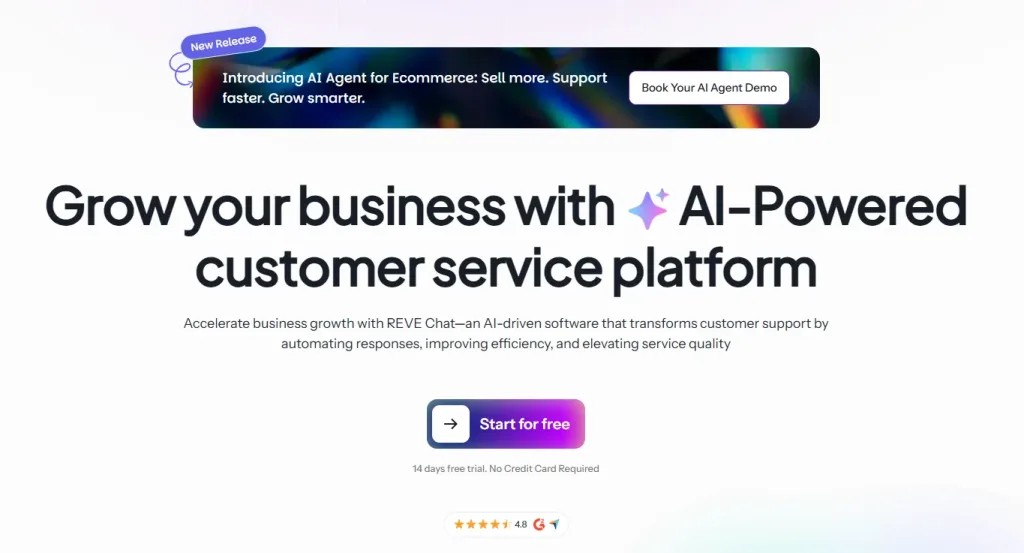
REVE Chat is an AI-powered customer communication platform built for businesses that need round-the-clock support. It brings live chat, chatbots, and agentic workflows into one system. The setup is simple and does not require coding skills.
REVE Chat’s AI Agent goes beyond customer support and question answering. It answers complex queries with multiple intents, guide users, and supports multiple channels such as websites, apps, WhatsApp, Facebook, and more.
The key feature of REVE Chat’s AI agent is its ability to take action. By connecting with Ecommerce stores, internal systems, CRMs, and such, AI Agents can execute workflows, recommend products, capture leads, and update information based on customer needs.
REVE Chat is one of the better AI agentic platforms because it combines automation, easy setup, and multi-channel support in one place for business excellence.
Key Features
- Conversational AI Agents: Human-like agents that understand intent and maintain context throughout conversations.
- Action-Oriented Automation: AI agents execute real business actions instead of only responding to queries.
- Smart Intent Detection: Automatically identify customer intent, sentiment, and conversation goals.
- Context Awareness: Retain conversational and business context to deliver accurate, personalized interactions.
- Tool & System Integrations: Connect with ecommerce platforms, CRMs, APIs, webhooks, documents, and knowledge bases to retrieve or update information.
- Agent Workflow Builder: Design AI agent workflows using a simple visual flow builder.
- Single & Multi-Agent Systems: Deploy individual agents or orchestrated multi-agent workflows for complex operations.
- Multilingual Intelligence: Communicate naturally across multiple languages using LLM capabilities.
- Omnichannel Deployment: Deploy AI agents across websites, apps, messaging platforms, and social channels.
- Usage-based Analytics: Track AI agent conversations and usage to analyze where to improve the agent
Pros
- Easy to set up and deploy AI agents without coding knowledge.
- Manage conversations across multiple channels from one unified dashboard.
- AI agents can answer customer questions and execute actions such as updates, bookings, and transactions.
- Co-browsing allows support teams to assist customers directly in real time.
- Built-in analytics help track team performance and customer interaction trends.
- Pricing is accessible for small and mid-size businesses.
Cons
- Advanced AI agent capabilities are available only in higher-tier plans.
- Initial setup of complex workflows or multi-agent systems may require detailed planning and configuration.
Pricing
- Paid Plan: For AI Agents, the pricing starts at $14.99/month, with 50 AI conversation resolutions in a month.
- A 14-day free trial is available to browse all the AI Agent capabilities
2. Salesforce Agentforce
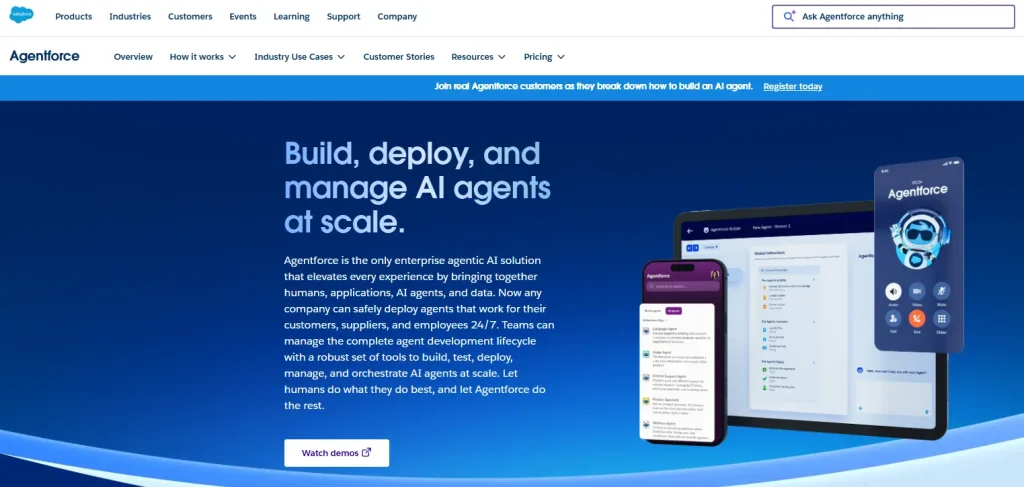
Agentforce sits inside the Salesforce platform and gives sales, service, marketing, and commerce teams AI agents with direct access to CRM data. There is no syncing or importing needed.
Agents work with customer histories, deal records, and case data as it exists in the system. The Einstein AI layer helps agents understand customer intent, and Flow Builder lets teams connect agents to existing Salesforce automations without starting over.
Key Features
- Pre-built agents for sales, service, marketing, and commerce
- Real-time access to all Salesforce CRM data
- Einstein AI for context-aware responses
- Flow Builder integration with existing automations
- Omni-channel routing for leads and cases
- Built-in governance and audit trail
Pros
- No data setup required since agents already live inside Salesforce
- Pre-built agents cut deployment time significantly
- Compliance and audit features included from day one
Cons
- Only works if you already have a Salesforce subscription
- Costs add up fast for smaller teams
Pricing
- Starts at $2 per conversation as an add-on to an existing Salesforce plan.
3. Microsoft Copilot Studio
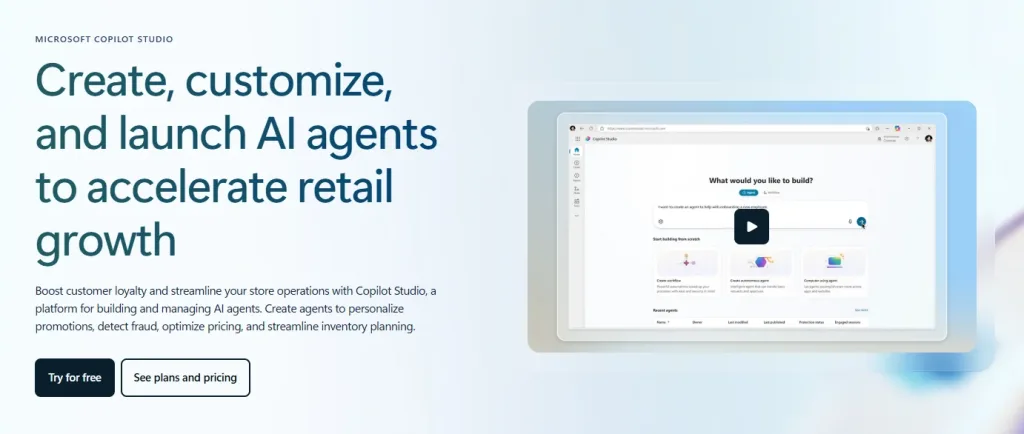
Copilot Studio is Microsoft’s agent builder that connects directly to Teams, Outlook, SharePoint, Dynamics 365, and the rest of the Microsoft 365 stack. Agents can read and write data across these apps without any custom API work.
The 2026 update brought computer-use agents that interact with web applications visually and custom MCP servers for connecting outside tools. For companies already on Microsoft infrastructure, this is one of the best agentic AI platforms to consider because very little extra setup is needed.
Key Features
- Native connections to Teams, Outlook, SharePoint, and Dynamics 365
- Computer-use agents for interacting with web apps visually
- Custom MCP servers for external tool integration
- Power Platform support for no-code workflow building
- Role-based access controls for agent management
- Enterprise security and compliance built in
Pros
- Works out of the box for Microsoft-first organizations
- Computer-use agents extend access to almost any web tool
- Enterprise compliance is included, not added on
Cons
- Agents are mostly limited to the Microsoft ecosystem
- Pricing went up in April 2026
- Power Platform knowledge required for complex builds
Pricing
- Copilot licenses range from $21 to $30 per user per month.
4. Zapier Agents
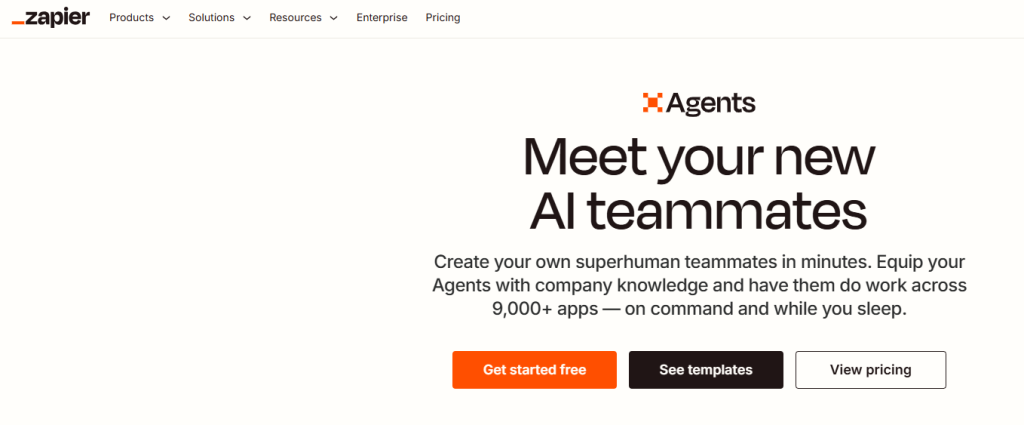
Zapier Agents lets you build AI agents that run across more than 7,000 apps including Gmail, Slack, HubSpot, Google Sheets, and Notion without any code.
You set a trigger, describe what the agent should do, connect the apps, and it runs on its own. It is a natural fit for operations and marketing teams that want automation running fast without waiting on a developer.
Key Features
- Connects to 7,000+ apps
- Natural language agent setup
- Event-based and scheduled triggers
- Multi-step workflow support
- Pre-built agent templates for common tasks
- Run monitoring and error tracking dashboard
Pros
- Zero coding required
- Works with an enormous range of tools
- Familiar to anyone already using Zapier
Cons
- Not well suited for complex logic-heavy workflows
- Task-based pricing can get expensive at scale
Pricing
- Free plan available.
- Paid plans start at $19.99 per month.
5. Relevance AI
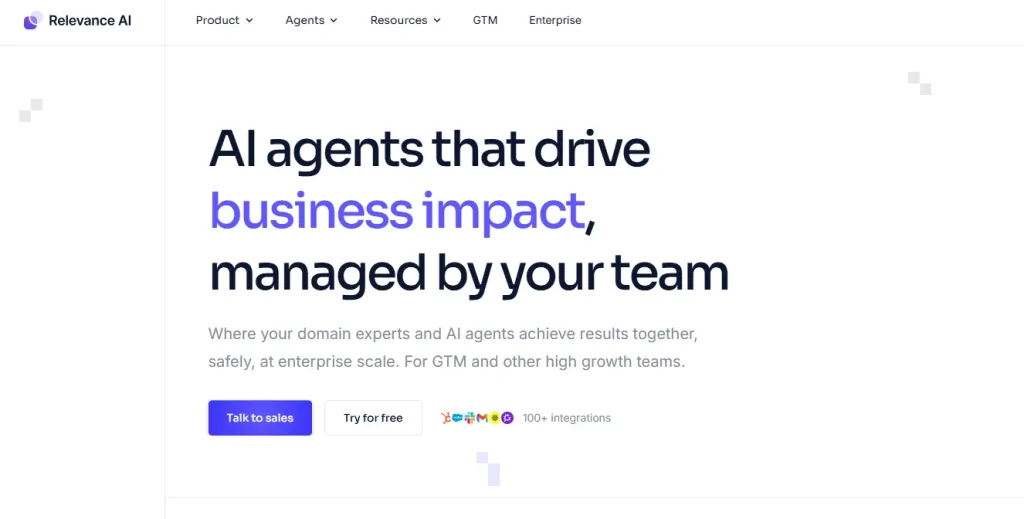
Relevance AI lets you build a team of AI agents, each with a defined role, and set them to work on operational tasks together. A visual builder makes it accessible for non-technical users, while developers can go deeper with custom configurations.
Agents can search the web, run code, call APIs, and write documents. For teams in operations, marketing, or sales handling large volumes of repetitive work, this is one of the best agentic AI platforms for building a structured AI workforce without starting from scratch.
Key Features
- Visual no-code and low-code agent builder
- Multi-agent teams for collaborative task handling
- Tool library including web search, code execution, and API calls
- Long-term agent memory across sessions
- Custom agent roles and goals
- Audit logs for tracking agent activity
Pros
- Accessible to non-technical users through the visual builder
- Multi-agent setup handles tasks a single bot cannot manage
- Works across operations, marketing, and sales workflows
Cons
- Advanced multi-agent builds have a learning curve
- Pricing rises at higher usage levels
Pricing
- Free plan available.
- Paid plans start at $19 per month.
6. Dust
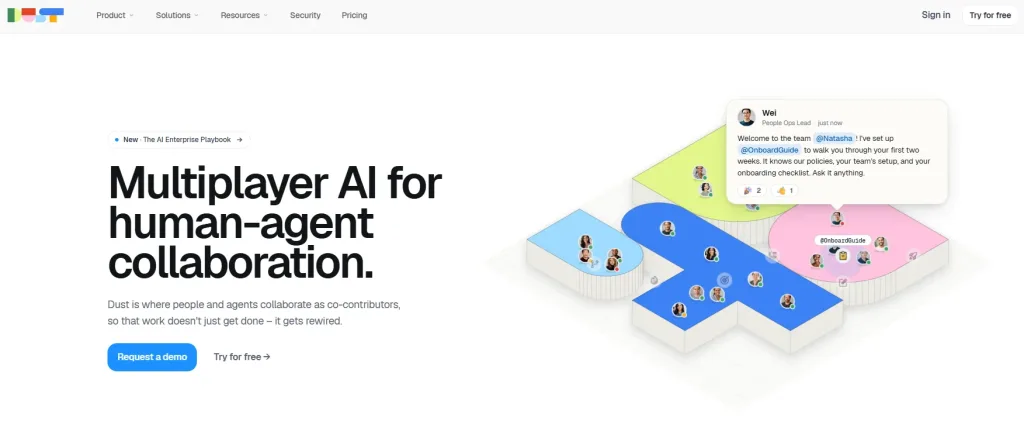
Dust connects AI agents to your internal tools like Notion, Confluence, Google Drive, Slack, and GitHub so employees can get accurate answers from company knowledge without searching through everything manually.
It is built for internal productivity rather than customer-facing support. HR, legal, product, and engineering teams use it to cut down time spent on repetitive information requests.
Key Features
- Integrates with Notion, Confluence, Google Drive, Slack, and GitHub
- Agents built on top of internal documents and data
- Granular permission controls per agent
- Multi-model support including GPT-4 and Claude
- Workspace organization by team or function
- Usage analytics for tracking agent activity
Pros
- Very effective for internal knowledge access
- Admin controls give clear visibility over data access
- Simple interface for non-technical employees
Cons
- Not designed for external or customer-facing workflows
- Basic reporting on lower plans
Pricing
- Free plan for small teams.
- Paid plans start at $29 per user per month.
7. Voiceflow
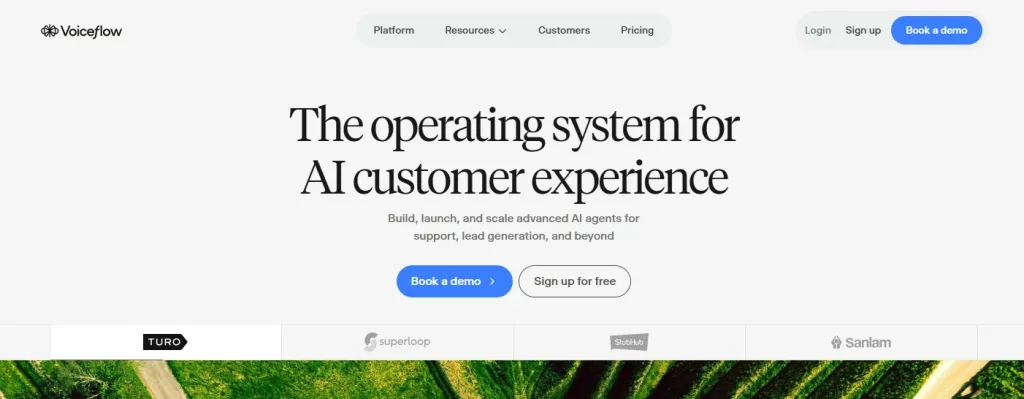
Voiceflow gives product teams and CX designers a visual canvas to build, test, and publish conversational AI agents across web chat, voice, and messaging channels.
You can map out the full conversation flow, connect to APIs and knowledge bases, and test before going live. It is the go-to choice for teams that want to design agent experiences carefully before putting them in front of customers.
Key Features
- Visual conversation flow builder
- Multi-channel publishing including web, voice, and SMS
- Knowledge base and API integration blocks
- Prototype testing environment
- Team collaboration tools
- Analytics on conversation paths and drop-off points
Pros
- Intuitive visual design makes agent building accessible
- Good for teams collaborating on conversation design
- Prototyping reduces production errors
Cons
- More of a design tool than a full production automation platform
- Advanced backend logic needs technical knowledge
Pricing
- Paid plans start at $50 per month.
8. LangGraph
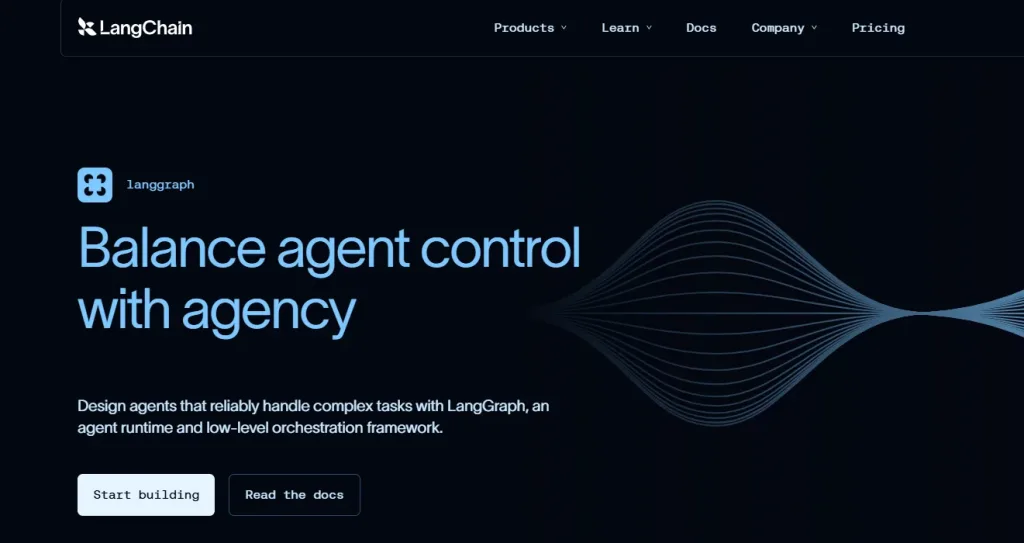
LangGraph is a developer framework for building agents as graph-based workflows where each node controls a specific action or decision. It gives engineering teams precise control over memory, branching logic, and error handling.
This tool works with OpenAI, Anthropic, Mistral, and other providers, and includes human-in-the-loop support for workflows that need approval steps. For teams building production-grade systems, it sits among the best agentic AI platforms on the technical end of the spectrum.
Key Features
- Graph-based agent architecture for precise workflow control
- Compatible with multiple LLM providers
- Built-in short and long-term memory management
- Conditional branching and loop handling
- Human-in-the-loop support for approval steps
- LangSmith integration for tracing and debugging
Pros
- Full control over every part of agent logic
- No vendor lock-in across LLM providers
- Active open-source community and documentation
Cons
- Requires strong coding and architecture knowledge
- No visual builder for non-technical users
Pricing
- Paid plans start at $39 per month.
Benefits of Using AI Agent Platforms
The benefits of using the best agentic AI platforms are the following:
- Higher efficiency: AI agents handle routine work like data entry, scheduling, and simple research, giving teams space to focus on tasks that need real thinking.
- Lower costs: Automating repetitive jobs reduces extra labour and cuts down on avoidable spending.
- Available at all hours: These agents work nonstop, replying to customers, updating systems, and handling tasks even when the office is closed.
- Smarter decisions: They review large amounts of information and share clear insights that help teams make better choices.
- Better customer support: Fast replies and consistent service help build trust and keep customers happy.
- Fewer mistakes: Agents follow steady logic, reducing errors that often happen with manual work.
- Easy to grow: As the workload rises, AI agents can take on extra tasks without slowing down or needing extra staff.
- Works well with other tools: They connect with apps, emails, and internal systems, allowing them to take direct actions across your workflow.
Use Cases of AI Agent Platforms
AI agent platforms help teams handle everyday work that usually takes time. They connect with business tools, follow steps, and complete tasks without someone watching over them. Because of this, many companies now use these platforms across support, sales, operations, and internal teams.
Sales and Support
AI Agents help sales teams score leads, update CRM data, send follow-ups, and spot deals that are stuck. For support teams, agents can send messages based on user actions and conversationally handle any questions and queries that customers ask.
eCommerce
Stores use solutions like REVE Chat to recommend products, track orders, manage returns, and personalize offers. These tools also help reduce cart abandonment by sending timely nudges and answering last-minute questions.
Telecom
AI agent platforms help telecom teams resolve SIM issues, troubleshoot network complaints, and manage billing questions. Telecom providers also use agents to monitor service outages and keep customers updated in real time.
Education
Platforms like Voiceflow and Relevance AI use Voice Agents to help educators answer student FAQs, guide admissions, and share course updates. Schools also use them to support blended learning by giving students quick access to resources anytime.
Finance and Insurance
Teams use agents to check claims, verify documents, and flag risky transactions. These automation workflows also help reduce compliance errors by keeping workflows consistent and auditable.
Banking
Banks rely on AI agents to handle account questions, loan updates, and KYC checks. They also use AI to detect unusual activity early and notify customers right away.
Learn More: What Is Agentic Commerce
AI Agents: Is It Hype or the Future?
AI agents are getting a lot of attention, but the truth lies somewhere between hype and real future value. Many experts warn that a large share of current agent projects won’t reach their goals.
For example, Gartner expects over 40% of AI agent projects to be dropped by 2027 due to high costs and unclear value. By 2028, agents may handle about 15% daily work decisions, and roughly a third of business software could include built-in agent features for everyday tasks across many teams, too.
While this shows the technology is progressing, it also shows that many current deployments are still early or experimental. Present-day agents excel at structured, domain-specific tasks, workflow automation, and data handling, but they are not yet ready to replace human judgment or lead broad strategic work on their own.
The practical path forward for most organizations combines solid, targeted use cases with careful planning and ongoing human oversight, rather than chasing fully autonomous digital workers overnight.
Learn More: Future of AI Agents: Trends & Predictions for Businesses
End Note
Finally, agentic AI is quickly changing how teams work by helping them get real tasks done, not just produce replies. Different platforms offer different strengths, whether it’s for operations, sales, or developer workflows.
For customer conversations, REVE Chat is a reliable choice. It brings AI agents, live chat, and automation into one place so support and sales teams can respond faster and work with less effort. Its AI agent can take action, handle everyday questions, and hand over tricky cases to humans when needed.
If your main goal is stronger customer communication, REVE Chat is built for that, so you can consider it one of the best AI agent platforms.
Frequently Asked Questions
An AI agent platform helps you create and manage smart agents that can perform tasks on their own. These agents can handle customer questions, update records, run workflows, send emails, and complete multi-step actions without needing constant supervision.
In most cases, yes. Regular chatbots only reply to messages, while AI agents can actually take action. They can use tools, work with your data, follow instructions step by step, and help complete real tasks rather than just talking about them.
The best choice depends on the tools your team already uses and the kind of work you want to automate. For customer support, REVE Chat is a strong option. Companies using Microsoft 365 usually get the most value from Microsoft Copilot Studio. Salesforce teams work best with Salesforce AgentForce and Google Workspace users prefer Google Agentspace. Developers lean toward CrewAI, small teams like Lindy, and operations-focused teams often choose Vybe.
Not always. Many popular platforms come with simple, no-code builders that anyone can use. Tools like REVE Chat, Copilot Studio, Lindy, and Vybe are beginner friendly. Developer-focused platforms such as CrewAI do require coding skills, especially if you want full customization.
Costs vary depending on the platform and the level of usage. Some offer free plans, such as REVE Chat, CrewAI, and Lindy. Others start at affordable monthly rates. Larger enterprise tools like Microsoft Copilot Studio and Salesforce Agentforce may charge per user or per conversation. Platforms such as Google Agentspace and Vybe usually provide custom pricing based on company needs.
Build AI-powered support with Wize AI
Connect business knowledge, automate support conversations, and improve response quality without managing a complex AI stack.
Explore Wize AI Agent Rate the article

Mohaimin Talha
Lead Product Manager
Mohaimin Talha is a seasoned Product Manager, known for his ability to combine creativity with analytical thinking. His strategic vision and customer-centric approach make him a key driver of product success and business growth.
View all articles