





Table of Content
Businesses are not just adapting; they’re undergoing a profound transformation in this era. Organizations are reshaping their operations and enhancing customer experiences to stay ahead of the competition.
In this digital transformation, it’s not just about adopting the latest gadgets or upgrading software. It’s a holistic revolution that transcends traditional boundaries to redefine how businesses operate, connect with their audience, and ultimately, thrive in the fast-paced digital age.
In this article, we’ll explore the real-world examples of digital transformation that transcend industries to showcase how forward-thinking companies are not merely embracing change. But they’re leading the charge toward a future where technology is not just a tool but a strategic ally.
What is Digital Transformation?
Digital transformation is defined as the integration of digital technology into all different areas of a business, fundamentally revamping the way you operate and deliver value to the customers. It refers to a radical rethinking of how an organization uses technology, people, and processes to fundamentally change business performance.
The digital transformation of businesses widely differs based on the organization’s specific challenges and demands; however, there are a few constants that all businesses should consider as they start on it. The reimagining of business in the digital age is digital transformation.
As it is a wider concept several factors drive your degree of digitization. It includes the following:
- Technology – It influences businesses with significant benefits on the operations, as well as certain complexity levels of its integration.
- Demand – Customers are the ones who demand and they now expect a shopping experience that is seamless and intuitive.
- Behavior – Consumers directly impact behavior, who have expectations while shopping when it comes to your integrated technology.
Digitization vs. Digitalization vs. Digital Transformation
Although these terms are often used interchangeably, they describe different levels of digital change.
Digitization is the process of converting analog information into digital form. Scanning paper documents and storing them electronically is a simple example.
Digitalization involves using digital technologies to improve an existing process. A business might replace manual appointment scheduling with an online booking system or automate repetitive customer service tasks.
Digital transformation goes much further. It involves rethinking how a business operates, serves customers, makes decisions, and creates value using digital technologies.
For example, moving a paper customer record into a CRM system is digitization. Automating follow-up messages from that CRM is digitalization. Connecting the CRM with customer support, ecommerce, analytics, AI, and other systems to create a unified customer journey is digital transformation.
The distinction matters because successful transformation is rarely achieved by introducing one new tool. Businesses need to connect technology with processes, people, data, and measurable business objectives.
Key Elements of Digital Transformation
The word “Digital” is driven by the rapid adoption of technology and “Transformation” refers to how an organization is built to change, innovate, and reinvent over the traditional methods. However, there are important elements that help businesses to create successful digital transformation strategy examples.
Here are the key attributes creating good digital transformation examples
- Plan a digital business strategy – It is vital to outline an effective digital transformation strategy that defines the end goals of your business.
- Proper customer engagement – Your business should engage with customers by understanding their needs and aligning service to their requirements.
- Define the process – A process plays a very important role in creating successful digital transformation examples.
- Implement the right tools & technology – It is essential to adopt the right tools and technology based on your business needs to deliver an excellent customer experience.
- Make data-driven decisions – Using data and analytics provides actionable insights that help in evidence-based decision-making.
Key Technologies Driving Digital Transformation
Digital transformation does not depend on a single technology. Different organizations combine technologies based on the customer problems, operational bottlenecks, and business opportunities they want to address.
Here are some of the most important technologies driving digital transformation today.
1. Artificial Intelligence and Automation
AI helps businesses analyze information, automate decisions, personalize interactions, and handle repetitive tasks at scale.
Customer-facing AI agents, for example, can answer questions, retrieve information from business knowledge sources, assist customers through processes, and transfer complex conversations to human employees.
Behind the scenes, AI can also support forecasting, fraud detection, predictive maintenance, document processing, quality control, and operational decision-making.
The greatest value comes when AI becomes part of an existing workflow rather than operating as an isolated tool.
2. Cloud Computing
Cloud technology allows businesses to access computing resources, applications, and data without relying entirely on traditional on-premises infrastructure.
It can make it easier to scale services, support distributed teams, deploy applications faster, and connect systems across different business functions.
For many organizations, cloud migration also creates a foundation for subsequent initiatives involving AI, analytics, automation, and digital customer experiences.
3. Data and Advanced Analytics
Data is one of the foundations of digital transformation.
When customer, operational, financial, and product data remain trapped in separate systems, organizations struggle to understand what is happening across the business.
Connected data and analytics can help teams:
- Identify customer behavior patterns
- Forecast demand
- Detect operational bottlenecks
- Personalize customer experiences
- Measure business performance
- Make faster evidence-based decisions
The objective is not simply to collect more data but to make useful information available to the people and systems that need it.
4. Internet of Things (IoT)
IoT technologies connect physical objects such as machines, vehicles, appliances, sensors, and equipment to digital systems.
Manufacturers can use connected equipment to monitor production and predict maintenance requirements. Logistics companies can track vehicles and shipments. Retailers can connect physical and digital experiences, while healthcare providers can use connected devices to support remote monitoring.
IoT demonstrates how digital transformation can extend beyond websites and software into physical operations.
5. APIs and System Integration
A business may use CRM, ERP, ecommerce, payment, customer service, analytics, marketing, and many other systems.
Digital transformation becomes difficult when these systems operate independently.
APIs and integrations allow information and actions to move between systems. This helps businesses create connected workflows instead of forcing customers and employees to repeatedly enter the same information or switch between disconnected tools.
For customer experience, this could mean allowing a support system to access order information, customer history, subscription data, or delivery status without requiring an agent to search several applications.
6. Conversational and Omnichannel Technologies
Customers increasingly interact with businesses through websites, apps, messaging channels, social media, voice, and other digital touchpoints.
Conversational AI, live chat, messaging, voice automation, and omnichannel engagement platforms help businesses connect these interactions.
Rather than treating every channel as a separate conversation, businesses can maintain context and create a more consistent customer journey.
The real transformation comes not from simply adding more channels, but from connecting customer conversations with data, automation, and human assistance.
How Does Digital Transformation Impact Businesses?
The benefits of digital transformation include increasing conversions, enhancing customer engagement, and gaining a competitive edge. However, there are key areas where digital transformation has a significant impact as follows:
1. Increased Revenue
One of the key aspects of adopting digital transformation technologies is to change the sales process. Leveraging digital technology can be more easily accessed by a wider market and reached by businesses of all sizes and from various fields.
2. Unified Customer Data
Streamlining the customer experience is an important common goal for the digital transformation business model. When all available data is collected and centralized, it becomes easier for customer support agents to solve customer requests timely and efficient.
3. Optimized Workflow
Successful digital transformation is all about efficiency and connectedness. For businesses taking the digital transformation strategy further, the areas of improvement include increased collaboration among employees of different levels and improved performance management.
4. Improved Customer Experience
Customers are the most important stakeholders of any organization. Digital transformation (DT) helps businesses provide an excellent customer experience and serve them better. DT helps to facilitate through connecting the customer data across the organization in one source.
5. Decreased Operating Costs
Companies are constantly searching to improve the efficiency of their processes. With the digital transformation business model, the operating costs are decreased by reducing time in the execution of processes, eliminating partial tasks, and incorporating new functionalities.
Digital Transformation Examples at a Glance
| Company / Example | Industry | Main Transformation Area |
|---|---|---|
| Commercial Bank of Kuwait | Banking | Digital customer assistance and video engagement |
| Domino's | Food & Beverage | Conversational ordering and digital customer experience |
| Nike | Retail | Ecommerce, data and direct customer relationships |
| Sephora | Beauty / Ecommerce | Omnichannel customer experience |
| Audi | Automotive | Digitally enabled retail experience |
| VMware | Technology | Digital customer self-service |
| Coursera | Education | Digital learning and personalized education |
| Marriott | Hospitality | Mobile-first guest experience |
| Siemens | Manufacturing | IoT, analytics and smart manufacturing |
| Tesla | Automotive / Energy | Connected digital products and energy ecosystem |
| Netflix | Entertainment | Data-driven personalization |
| Zillow | Real Estate | AI-powered property information |
Editor’s recommendation: replace the generic “Virtual Collaboration,” “Healthcare VR,” and “Small Business” entries with clearly documented company examples over time. This will make the article more consistent with the search intent behind “digital transformation examples.”
15 Best Digital Transformation Examples and Key Takeaways
Successful digital transformation takes businesses to a new level of growth. If you don’t have any digital transformation ideas in place, then have a look at some of the best examples of digital technology & learn how they keep their competitiveness in the global market.
Many companies have set good examples of digital technology by embracing the latest technology to achieve their business goals. Check out how companies have approached the process with digital transformation ideas and how they achieved the desired results.
1. BFSI – Commercial Bank of Kuwait (CBK) Use of Video Chat
Digital transformation is totally changing the entire game for banking, financial services, and insurance (BFSI) sectors. They are greatly relying on video collaboration for businesses to build long-term face-to-face relationships.
Commercial Bank of Kuwait (CBK) is a good business transformation example.
The bank implemented REVE Chat’s face-to-face video chat solution. Their main goal was to increase user engagement through online banking operations and deliver an advanced digital banking experience.
The bank has marked an increase in online engagement and reduced the number of touchpoints to resolve the issues.
Key takeaways
- For communicating the technical concepts and complex form fill-up, combining video chat and co-browsing can deliver effective solutions.
- You can develop friendly communication with customers that positively impacts customer relationships and deliver faster responses in real-time.
2. Virtual Collaboration – Use Co-browsing to Improve CX
Using the advanced co-browsing solution enables agents to avoid the tedious back-and-forth questions that are required when the agent is trying to figure out what the customer is actually looking at. Is it the wrong link? The wrong tab? Is it the wrong website altogether?
Here are the latest trends developing in the co-browsing domain.
- Co-browsing for mobile apps – According to CNBC, 72.6% of smartphone owners will use their devices to access the internet by 2025. Co-browsing technology is being adopted by new markets where mobile apps offer real-time customer support.
- Visual customer assistance – When a customer needs assistance, co-browsing allows the agent to see what is visible within the customer’s browser. However, visual support goes a step further by allowing the agent to see the customer’s physical environment via their smartphone.
- Enhance interactions with AI – In case a customer reports billing issues, AI bots can interact and collect basic information & needs and then refer to the live agent. With co-browsing, the agent can view the customer’s bill within the browser and guide them to the billing page.
- Cobrowsing for field services – Using the solution mitigates the training gaps of novice technicians, allowing remote experts to walk them through complex repairs.
- Cobrowse in between customers – Customer-driven community is useful for CSP subscribers who need help with technical issues. Adding co-browsing technology to these forums would boost engagement and provide more assistance to customers.
3. Food & Beverage – Domino’s Chatbot Implementation
Artificial Intelligence (AI) enabled chatbots are helping companies reach high levels of food safety, improve traceability, and reduce costs across the various stages of food processing. Leveraging the benefits of digital transformation, the Food and Beverage industry can grow to its maximum prospects.
Domino’s Pizza is one of the world’s leading pizza takeaway brands that has set a great digital transformation example. Its goal was to deliver hot and freshly made pizzas directly to consumers.
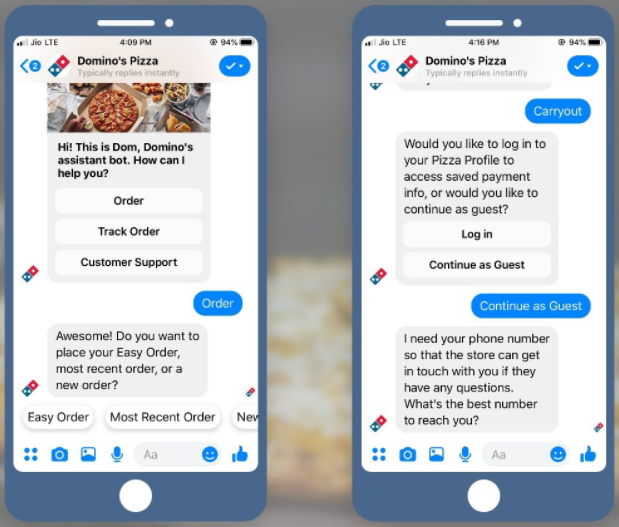
They adopted artificial intelligence and chatbot technology and leveraged the anywhere, anytime nature of Facebook Messenger and a conversational interface. Users who already have a Domino’s Pizza account can use Facebook Messenger to reorder a previously ordered pizza or jump straight into ordering their regular choice. The users also get timely updates on how their pizza is coming along and track it, from preparation to delivery.
Key takeaways
- Businesses can invest in conversational AI as it offers a whole new category of capabilities that business leaders need to consider when they serve their customers.
- Using a bot as a part of your customer experience strategy will increase user satisfaction by providing 24×7 assistance.
REVE Chat offers a powerful suite of customer support tools that can help your business deliver amazing experiences to users. Sign up to get the kind of support software that often transforms the way you service customers.
4. Retail – Nike’s eCommerce Strategy
Digital transformation in the retail industry means disruption, new services, and improved functioning of the existing system using technology. Retailers will have to look beyond marginal enhancements and redefine processes to create a connected customer engagement strategy using technology.
As the customer journey is evolving, retailers have to adapt and evolve as well. Digital transformation in retail helps streamline processes, reduce costs, and improve productivity across the transactional cycle.
Nike is one of the best digital transformation examples.
The global brand of athletic shoes & clothing felt they were starting to be sluggish. It just did a digital transformation of the company’s mindset, supply chain, and brand and was able to better connect with its customer base.

The company focused on more powerful data analytics, updated its e-commerce strategy, and created stronger digital marketing campaigns. The effective use of digital consumer data helped Nike to open concept stores, create more membership opportunities and improve the customer experience both online & apps.
With powerful data analytics and a more direct customer focus, there was a dramatic transformation of the company. It has resulted in a quicker product development cycle, faster response, the creation of new trends, and a stock price that has grown from $52 to almost $88 in just two years.
Key takeaways
- Rely on the insights gained by analytics to make informed decisions and deliver a better customer experience.
- Don’t be reluctant to adopt digital technology for your retail business as it ramps up sales conversion.
5. Healthcare – Use of Virtual Reality (VR) for Patient Care
Digital technologies are transforming the landscape of the healthcare industry to ensure sustainable growth and deliver amazing patient care.
Implementing digital transformation strategy examples will create interconnected processes and systems for staff and enable them to perform the processes with greater accuracy and efficiency. The positive impact of digital transformation ideas on the industry is they offer a plethora of benefits to staff and patients.
From the clinic to medical rooms, virtual reality is exploding and is expected to continue to grow in the coming years. Research by GlobeNewsWire says “The market for Virtual Reality in Healthcare will reach $7 billion by 2026.”
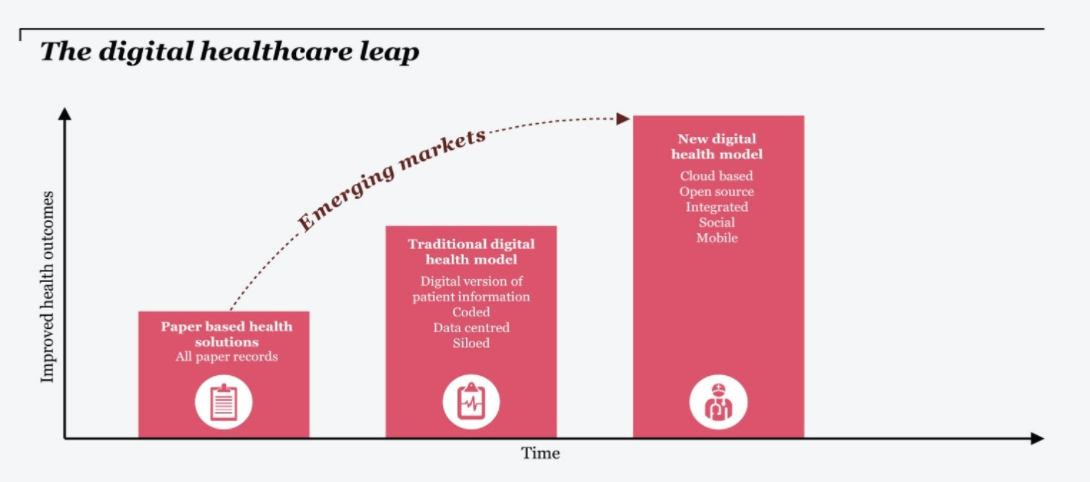
For example, one of the patients was getting chemotherapy every week for around 6 years to treat cancer. She used to spend 4.5 hours during the chemo session reading books, chatting, or watching TV. Virtual Reality simulated a beach-like environment where she could feel like she was sitting on the beach.
How Does Virtual Reality (VR) help the healthcare sector?
- Pain reduction – Healthcare institutions can adopt VR technology for pain reduction therapies.
- VR simulations to understand problems – VR simulations help to understand how someone suffering from a deadly disease feels and experiences.
- Pacing up recovery in physical therapy – VR training exercises with machine learning to customize each exercise to the patient’s therapeutic requirements and speed up recovery in physical therapy.
6. E-commerce – Sephora’s Omnichannel Strategy
In this digital world, omnichannel marketing caters to the new wave of personalized experience-seeking consumers.
Gone are the days when mass messaging was king. The omnichannel engagement is no longer just a buzzword. It has surpassed the trend phase and stationed itself as a key strategy necessary to implement in the new era of digital transformation.
Sephora, a French multinational chain of personal care and beauty stores delivers a seamless omnichannel experience.
The digital transformation example of this cosmetic giant that has seamlessly linked its online and in-store offerings is its cross-platform channel initiative, Happening at Sephora, which displays all the events, launches, and activities at the physical stores onto its digital channel.
Correspondingly, their in-store experience offers digital tools that draw the customers back to the digital channel.
Key takeaways
- Introduce the best omnichannel solutions with several innovative approaches to capture data in the stores and use it for personalization online just like Sephora.
- The beauty retailer has also partnered with Google to broadcast its video content on the Google Home Hub in-store to help users explore further with voice and visual assistance.
- Provide your shoppers a 3D live experience. Uploading an image on the Sephora Virtual Artist app gives a 3D experience of experimenting with your looks by virtually trying Sephora’s range of makeup products.
7. Small business – Using Technology & Data to Transform
For small businesses, the cost is an intimidating factor in adopting new technology.
42% of SMBs consider digital transformation a core component of their organizational strategy.
Many SMBs have already implemented some level of digital transformation because of the benefits of using the right technologies. It helps to improve efficiency, lower costs, increase productivity, improve customer experience, and ultimately, boost profits.
Here are a few highlighted elements that really stand out.
- Digital speed – Companies can operate faster, from reviewing strategies to allocating resources. For example, they reallocate talent and capital four times more quickly than their peers.
- Ready to reinvent – Leading businesses are investing as much in upgrading the core of their business as they are in innovation, often by harnessing digital technology.
- Data-driven decisions – Data is providing the fuel to power better and faster decisions. High-performing companies are three times more likely than others to say their data and analytics initiatives have contributed.
- Follow the customers – Being “customer-centric” is well-established. Top companies that sustain a comprehensive focus on the customer can generate economic gains ranging from 20 to 50% of the cost base.
8. Automobile – AUDI’s Innovative Showroom
Audi is an amazing business transformation example. The digitization of the automotive industry has the potential to generate significant value for both industry and society. Digital transformation can create value for the automotive industry by breaking the mold of the entire automotive value chain as it creates greater efficiencies and cost savings.
AUDI has entered the digital world with its new services and become the most successful digital transformation example.
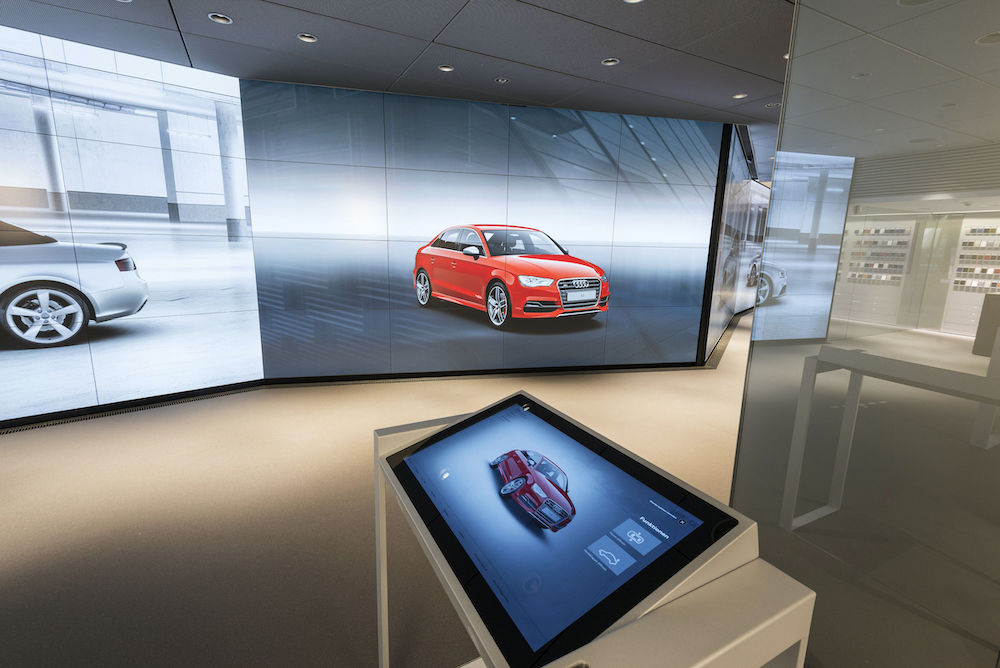
The company introduced an innovative showroom concept under the name Audi City. It gets users acquainted with the entire catalog of the brand’s car models in micro-showrooms in city centers, where traditional showrooms with many exhibited cars could not exist.
- These spaces allow customers to discover and buy cars while wandering around the city center stores, making the experience enjoyable and accessible.
- Audi City is a place where discussion forums and exhibitions take place in the evenings, which further improves the positioning of the brand.
- In stores, advanced car configuration is possible using interactive screens on which the car is visible in full size.
- You can take a look inside the car or even observe its movement and hear the real sound of the engine using a tablet.
The AUDI City Solutions increased sales by 60% compared to traditional showrooms.
9. Self-service Portal – Convenience for Businesses & Customers
The digital age has brought so much more flexibility when it comes to finding the right medium for serving customers in different ways.
Not only is self-service foundational for serving modern customer needs, but it is also key to decreasing cost-to-serve. Additionally, times of crisis expedite the need for digital and self-service capabilities to quickly meet the shifting needs of customers.
VMware, the industry leader in cloud infrastructure and IT solutions empowers its customers with self-service portals.
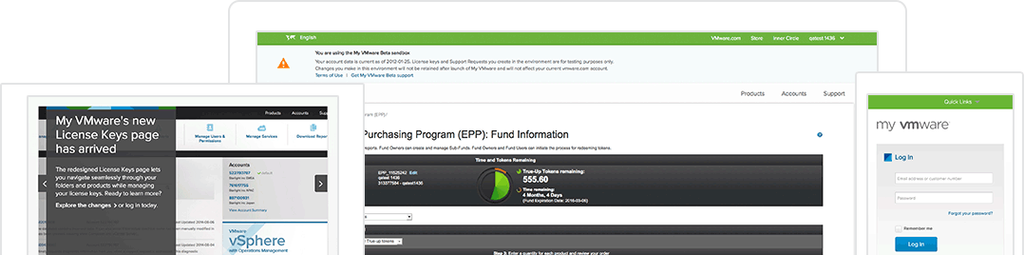
The new MyVMware is an integrated, account-based portal that allows customers to manage product license keys and support. The users can search for information quickly, access self-service downloads and evaluations, and enter multiple sites through a single account.
The launch of the new portal has led to a decrease in the number of support calls and an increase in satisfaction scores, due to enhanced usability and efficiency.
Key takeaways
- Businesses need to have a self-serve hierarchy in place that uses FAQs, articles, and chatbots to convey the exact content that would assist the right solutions to the customer query.
- The user profiles that leverage customers’ purchase histories, can go a long way toward personalizing self-service for your customers.
10. Education – EdTech Revolution: Coursera’s Online Learning Evolution

The education sector is experiencing a digital renaissance with platforms like Coursera leading the charge. Coursera’s online learning platform disrupts traditional education models to offer a diverse range of courses accessible globally. Through personalized learning paths, real-time assessments, and collaborative online forums, Coursera exemplifies how digital transformation can democratize education.
EdTech Innovations:
- Personalized learning paths catering to diverse educational needs.
- Real-time assessments and feedback for continuous improvement.
- Global accessibility and collaboration through online forums.
11. Hospitality – Marriott’s Seamless Guest Experience

In the hospitality sector, Marriott International is a great example of digital business transformation to elevate guest experiences. Through the Marriott Bonvoy app, guests can seamlessly book rooms, check in remotely, and even use their smartphones as room keys. The integration of digital technologies not only enhances convenience but also allows Marriott to personalize services based on guest preferences.
Digital Hospitality Highlights:
- Mobile app for booking, check-in, and keyless room entry.
- Personalized services are driven by guest preferences and behaviors.
- Integration of IoT devices to enhance in-room experiences.
12. Manufacturing – Siemens’ Smart Factories

Siemens embraces Industry 4.0 principles to revolutionize manufacturing with its concept of smart factories. By integrating IoT, data analytics, and automation, Siemens creates interconnected manufacturing ecosystems. Smart factories optimize production processes reduce downtime through predictive maintenance, and enhance overall operational efficiency.
Smart Manufacturing Strategies:
- IoT integration for real-time monitoring and control.
- Predictive maintenance to minimize downtime and increase equipment lifespan.
- Data analytics for continuous process optimization.
13. Energy – Tesla’s Sustainable Energy Ecosystem

Tesla exemplifies digital transformation through its sustainable energy ecosystem. From electric vehicles to solar energy, Tesla integrates technology to create a holistic, clean energy experience. The Tesla Powerwall, for instance, enables homeowners to store and use solar energy, reducing reliance on traditional grids.
Sustainable Energy Integration:
- Electric vehicles as a clean transportation solution.
- Solar energy solutions for homes and businesses.
- Energy storage through products like the Tesla Powerwall.
14. Entertainment – Netflix’s Data-Driven Content Recommendations

In the entertainment industry, Netflix leverages digital transformation to redefine how content is consumed. Through sophisticated algorithms and data analytics, Netflix provides personalized content recommendations to users. The streaming giant continuously analyzes viewing patterns, preferences, and user feedback to curate a personalized content library for each subscriber.
Data-Driven Entertainment Tactics:
- Algorithmic content recommendations based on user behavior.
- Continuous data analysis to adapt and refine content offerings.
- Personalized user interfaces for an enhanced viewing experience.
15. Real Estate – Zillow’s AI-Powered Property Insights

Zillow, a real estate platform, employs digital transformation to revolutionize the property market. Through the use of artificial intelligence, Zillow provides accurate home value estimates, predicts market trends, and offers personalized property recommendations. The platform’s AI algorithms analyze a myriad of data points to deliver valuable insights to both buyers and sellers.
AI in Real Estate Strategies:
- Accurate property valuation through AI algorithms.
- Market trend predictions for informed decision-making.
- Personalized property recommendations based on user preferences.
What Successful Digital Transformation Examples Have in Common
The technologies used by Nike, Domino’s, Sephora, Siemens, Netflix, and other digitally transformed organizations differ significantly. Yet successful transformations tend to share several characteristics.
1. They Start With a Business Problem
Successful transformation does not begin with the question, “Which new technology should we buy?”
It begins with questions such as:
- Where are customers experiencing unnecessary friction?
- Which processes are consuming too much employee time?
- Where are we losing revenue or customers?
- Which decisions are being made without sufficient information?
- Which part of our business model needs to change?
Technology should then be selected based on its ability to solve those problems.
2. They Focus on the Entire Customer Journey
A new website, chatbot, mobile application, or CRM system can improve one customer touchpoint. Digital transformation considers what happens across the entire journey.
For example, an ecommerce customer may move from social media to a product page, ask a question through chat, complete a purchase, receive delivery updates, and contact support afterward.
A digitally mature organization connects those interactions instead of treating them as unrelated events.
3. They Connect Data and Systems
Disconnected systems create disconnected experiences.
When sales, marketing, ecommerce, customer service, billing, and other departments operate with separate customer information, employees may lack the context required to serve customers effectively.
Successful transformation therefore requires an integration strategy alongside the customer-facing technology.
4. They Combine Automation With Human Expertise
Automation is most effective when businesses clearly determine which interactions should be automated and where human expertise creates greater value.
Routine questions, information retrieval, status updates, and repetitive workflows can often be automated. Complex negotiations, sensitive problems, high-value sales discussions, or unusual cases may require human involvement.
A strong digital experience makes that transition seamless.
5. They Prepare Employees for Change
Technology cannot transform an organization when employees do not understand, trust, or consistently use it.
Employees need appropriate communication, training, leadership support, responsibilities, and performance expectations.
This makes change management an important part of digital transformation rather than something businesses should consider only after implementation.
6. They Measure Business Outcomes
Launching an application or deploying AI does not automatically indicate success.
Organizations need to connect digital initiatives with measurable outcomes such as revenue, conversion, customer satisfaction, cost reduction, productivity, response time, adoption, retention, or process completion rates.
That helps businesses determine whether transformation is actually creating value.
7. They Keep Transforming
Digital transformation is not a project with a permanent finish line.
Customer behavior changes. Technologies evolve. Competitors introduce new experiences. Business models change.
Successful organizations therefore build the ability to continually test, learn, optimize, and adapt rather than treating transformation as a one-time technology upgrade.
Why Do Digital Transformation Initiatives Fail?
Digital transformation creates significant opportunities, but simply investing in technology does not guarantee successful results.
Here are some common reasons transformation initiatives struggle.
1. Technology Comes Before Strategy
Buying an AI platform, CRM, analytics tool, or automation system without defining the underlying business problem can result in expensive technology with limited impact.
Businesses should establish the desired outcome first and select technology second.
2. Customer and Employee Needs Are Ignored
A technically advanced solution may still fail if customers find it difficult to use or employees see no reason to adopt it.
Successful transformation requires understanding both customer journeys and employee workflows.
3. Data Remains Fragmented
Adding new digital applications without connecting existing systems can create even more information silos.
A strong data and integration strategy should therefore accompany new customer-facing applications.
4. Employees Are Not Prepared for Change
Digital transformation often changes responsibilities, processes, and ways of working.
Without proper communication, training, leadership support, and clear ownership, adoption can remain low even when the technology itself works correctly.
5. Businesses Try to Transform Everything at Once
Large transformation programs become difficult to manage when the scope is unclear.
Businesses can often reduce risk by starting with a high-impact use case, proving its value, learning from the implementation, and expanding from there.
6. There Are No Clear Success Metrics
If an organization measures only whether technology was deployed, it becomes difficult to determine whether the transformation created meaningful business value.
Every initiative should have measurable objectives from the beginning.
How to Start Your Digital Transformation Journey
Digital transformation does not require an organization to replace every existing process or system at once.
A more practical approach is to move from business problem to measurable outcome step by step.
Step 1: Define the Problem
Identify a specific customer or operational issue.
For example:
- Customers wait too long for support.
- Employees spend hours answering repetitive questions.
- Customer information is distributed across several platforms.
- Ecommerce visitors abandon purchases because they cannot get immediate help.
- Manual processes slow down service delivery.
The more clearly the problem is defined, the easier it becomes to measure improvement.
Step 2: Map the Current Journey
Understand how customers and employees currently complete the process.
Identify unnecessary steps, delays, handoffs, repeated data entry, disconnected channels, and other areas of friction.
This prevents businesses from simply digitizing an inefficient process.
Step 3: Set Measurable Objectives
Determine what should improve.
An objective might include:
- Reducing customer response time
- Increasing self-service resolution
- Improving conversion rates
- Reducing operating costs
- Increasing employee productivity
- Improving customer satisfaction
- Shortening processing time
Create a baseline before implementation whenever possible so that improvements can be compared accurately.
Step 4: Identify the Technology and Data Required
Once the business requirement is clear, determine which capabilities are needed.
These might include AI, automation, cloud services, analytics, CRM, customer engagement platforms, APIs, IoT, or workflow automation.
Also identify which existing systems need to provide or receive information.
Step 5: Prepare Your People
Determine which teams will be affected and how their work will change.
Provide employees with appropriate training, communication, documentation, and leadership support. Employees should understand not only how to use the new technology but why the change is being made.
Step 6: Start With a Focused Implementation
Instead of attempting enterprise-wide transformation immediately, identify a use case where improvement can be measured.
For example, a company might begin by automating common support questions before expanding AI into sales, onboarding, account management, and internal workflows.
Step 7: Measure, Learn, and Expand
Compare results against the original baseline.
Identify what worked, what customers and employees struggled with, and where the process can be improved.
Successful use cases can then provide a foundation for broader transformation.
How to Measure Digital Transformation Success
Digital transformation should ultimately produce measurable business improvements.
The appropriate metrics depend on the objective of the transformation.
1. Customer Experience Metrics
Businesses focused on customer experience can monitor:
- Customer Satisfaction Score (CSAT)
- Net Promoter Score (NPS)
- Customer Effort Score (CES)
- First response time
- Resolution time
- First contact resolution
- Customer retention
- Self-service resolution rate
2. Sales and Revenue Metrics
For revenue-focused transformation, useful metrics include:
- Conversion rate
- Lead-to-customer conversion
- Average order value
- Digital revenue
- Customer lifetime value
- Cart abandonment rate
- Revenue generated through new digital channels
3. Operational Metrics
Organizations transforming internal operations may measure:
- Process completion time
- Cost per transaction
- Employee productivity
- Number of manual steps eliminated
- Automation rate
- Error rate
- System downtime
- Time to market
4. Adoption Metrics
Technology delivers little value when employees or customers do not use it.
Businesses should therefore track:
- Active users
- Feature adoption
- Digital channel adoption
- Employee usage
- Self-service adoption
- Automation usage
- Training completion
The most useful measurement framework combines technology adoption with business outcomes. A high adoption rate is encouraging, but the more important question is whether that adoption improves customer experience, efficiency, revenue, or another strategic objective.
Conclusion
Digital transformation is not a mere upgrade; it’s a revolution, an intricate dance of data, algorithms, and human ingenuity. It’s about more than just embracing technology; it’s about leveraging its power to craft unparalleled customer journeys, streamline processes, and, ultimately, redefine success in the digital era.
As industries continue to script their digital narratives, one thing is certain: the melody of transformation will persist, echoing through boardrooms, storefronts, and server rooms alike. The digital transformation examples presented here are but a prelude to the limitless possibilities that await those daring enough to embrace the symphony of innovation.
And when it comes to tools, your first priority should always be on something that transforms the customer experience. Sign up with REVE Chat and find some of the best support software on the market and change the face of your business.
Frequently Asked Questions
A digital transformation example is a situation where an organization uses digital technology to significantly change how it operates, serves customers, or creates value.
Examples include Domino’s enabling conversational digital ordering, Sephora connecting physical and digital shopping experiences, Netflix using data to personalize content discovery, and Siemens using connected technologies to improve manufacturing operations.
Digital transformation commonly affects customer experience, business processes, employee workflows, data and analytics, technology infrastructure, products and services, and business models.
The exact priorities vary depending on the organization’s objectives.
Digitization converts analog information into digital information. Digital transformation goes further by redesigning processes, experiences, operations, or business models using connected digital technologies.
Scanning a document is digitization. Redesigning an entire customer onboarding journey using digital identity, automation, connected systems, and real-time customer assistance is digital transformation.
Common technologies include artificial intelligence, automation, cloud computing, data analytics, APIs, IoT, CRM platforms, conversational AI, omnichannel communication, workflow automation, and other connected digital systems.
Technology selection should depend on the problem the organization is trying to solve rather than technology trends alone.
Digital transformation can help organizations improve customer experiences, automate repetitive processes, use data more effectively, reduce operational friction, respond faster to market changes, and develop new ways of delivering value.
It also helps businesses adapt as customer expectations and technology continue to evolve.
Digital transformation should be measured through business outcomes.
Depending on the initiative, organizations can track customer satisfaction, conversion, retention, revenue, process cost, productivity, response time, resolution time, automation rate, digital adoption, and other relevant KPIs.
No. Small and medium-sized businesses can also transform digitally.
A smaller organization might begin with a focused initiative such as automating customer inquiries, centralizing customer information, introducing digital payments, improving ecommerce operations, or connecting sales and customer service systems.
The scale may differ, but the underlying principle remains the same: use technology to meaningfully improve how the business operates or delivers value.
Technology is only one part of the challenge. Organizations also need the right strategy, processes, data, integrations, employee adoption, leadership support, and measurement framework.
A technically successful implementation can still produce poor business results when these elements are missing.
Build AI-powered support with Wize AI
Connect business knowledge, automate support conversations, and improve response quality without managing a complex AI stack.
Explore Wize AI Agent Rate the article

Rasheek M. Rayat
Customer Success Manager
Rasheek M. Rayat is a dedicated Customer Success Manager at REVE Chat, where he leverages his expertise to empower businesses with innovative live chat and chatbot solutions. Passionate about enhancing customer experiences, he combines strategic insight with a customer-centric approach to drive satisfaction and growth.
View all articles