


Omnichannel Benefits for Businesses and Customers
- January 25, 2026
- 20 mins read
- Listen

Omnichannel strategy is no longer a blueprint for big businesses or for the billion-euro brands to follow. The omnichannel benefits have so much impact that customers around the globe expect an “Amazon-like” experience when shopping — even from smaller companies.
Businesses can’t just settle by creating a website and offering superior customer service; today’s businesses have to be exceptional just to remain ahead in the competition.
Modern customers expect a seamless omnichannel journey, 24×7 customer service, and personalized communication.
Companies that fail to deliver on these expectations have to bear the risk of losing their customers over their competitors.
Undoubtedly, a well defined omnichannel strategy benefits both businesses and customers. In this article we will discuss the benefits of omnichannel acts as a differentiator in an era of stiff competition.
Omnichannel vs Multichannel: What’s the Difference?
Omnichannel and multichannel are often used together, but they are not the same.
A multichannel strategy means your business is available on multiple channels such as website chat, email, WhatsApp, Facebook Messenger, Instagram, phone, or in-store support. Customers can contact you through different platforms, but those channels often work separately.
An omnichannel strategy connects those channels into one unified experience.
For example, a customer may ask a product question on Instagram, continue the conversation on your website, and later contact support through WhatsApp. In a multichannel setup, the customer may need to explain the same issue again on each channel. In an omnichannel setup, the business can view the customer’s conversation history, previous interactions, and context from one place.
That is the key difference.
Multichannel focuses on being present across many channels. Omnichannel focuses on connecting those channels so the customer journey feels seamless.
This matters because customers do not think in terms of channels. They simply want fast, consistent, and helpful support wherever they choose to contact your business.
How an Omnichannel Experience Works in Real Life
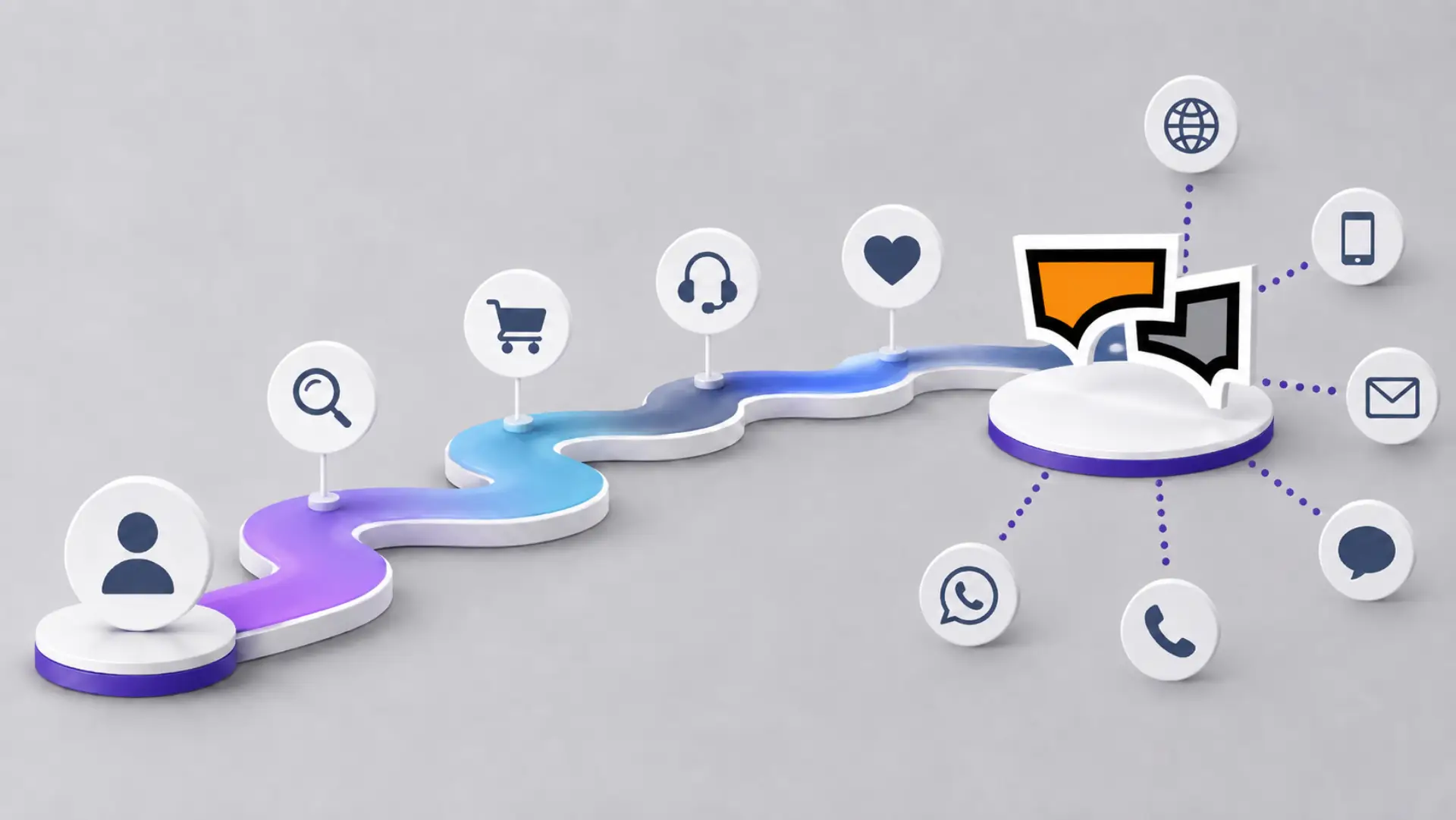
An omnichannel experience connects the entire customer journey instead of treating every interaction as a separate conversation.
Let’s take an ecommerce example.
A customer first sees a product on Instagram and clicks through to your website. They browse the product page but still have a question about size, availability, or delivery time. Instead of leaving the page, they start a live chat conversation.
Later, the same customer may return through WhatsApp to ask about the order status. With an omnichannel customer engagement platform, your team can see the previous website conversation, the product the customer asked about, and the current order-related query from one inbox.
The customer does not need to repeat everything.
The support agent can continue the conversation naturally, provide the right answer faster, and guide the customer toward the next step. If the issue needs more attention, it can be turned into a ticket, assigned to the right team, or escalated to a human agent.
This is where omnichannel becomes powerful. It does not only connect communication channels. It connects customer context, support history, buying intent, and business workflows.
Benefits of Omnichannel Marketing
The purchase trend of today’s customers is no longer a straight line. It may spark by a social media post and end up on a tablet or in a brick-and-mortar store.
Omnichannel is the latest marketing buzzword that represents a great shift in the way businesses manage customer interactions in response to a changing business environment.
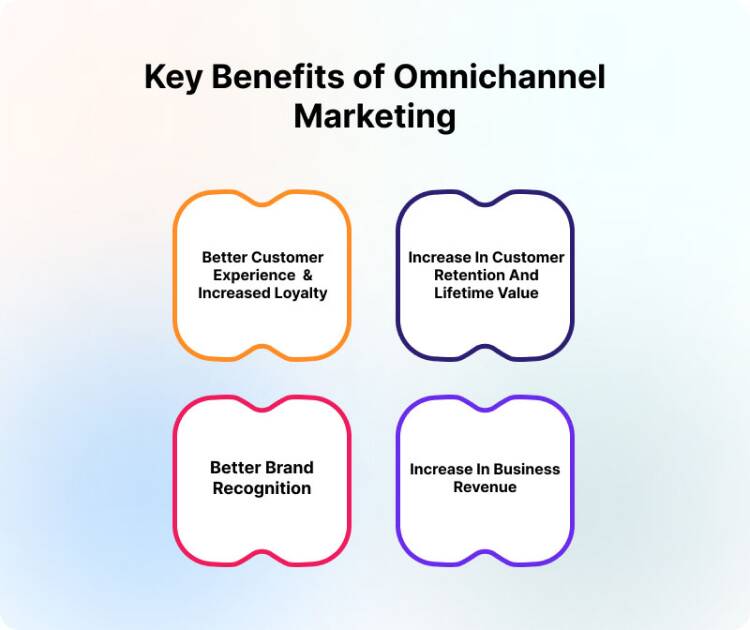
The main objective of omnichannel marketing is to meaningfully engage customers irrespective of device or channel and create a cohesive experience. The benefits of omnichannel marketing is to provide customers an unified brand experience.
#1. Better Customer Experience & Increased Loyalty
Omni channel marketing focuses on consistent marketing experience across multiple touch points and platforms for your customers. Customers can reach out to the brand through advertising, radio, commercials, social media, website etc.
With the benefits of omnichannel marketing, businesses have the opportunity to customize messages for target audiences. Offering a high level of personalization leads to excellent customer experiences, higher conversions, and improved customer loyalty.
#2. Increase in Customer Retention and Lifetime Value
The customers who are able get the benefits of omnichannel marketing have a 30% higher lifetime value than others.
When you offer real-time assistance to customers, they will be more inclined to purchase from you rather than the competitor where they cannot get the same personalized service.
Keeping customers coming back increases the overall customer lifetime value. Businesses that have empowered their support agents to serve online shoppers are witnessing a 10x increase in conversion rate and a 50% increase in average order value.
#3. Better Brand Recognition
Having an omnichannel marketing strategy means that your customers should receive a consistent and seamless experience across all channels every time they encounter your brand.
For example, if your customers receive a personalized experience on their mobile device, the same should be translated to their desktop as well.
Well designed omnichannel marketing strategies lead to increased awareness from your target market. If your brand is marketed first, customers are at least familiar with your brand name and products or services. This can help give you a significant advantage over the competition.
#4. Increase in Business Revenue
One of the significant benefits of omnichannel marketing is increased RoI (Return on Investment). Actually, it is one of the most important measurements in any marketing endeavor.
By following right segmentation and personalization, an omnichannel marketing strategy can be highly successful. Thus, improved customer engagement will lead to more conversions and higher business revenue.
Benefits of Omnichannel Customer Service
Omni channel customer service is when businesses provide a cohesive, integrated customer experience, no matter how a customer reaches out to you. It allows a seamless transition between channels and has the same experience.
Companies that delivered strong omnichannel customer service retained 89% of their customers.
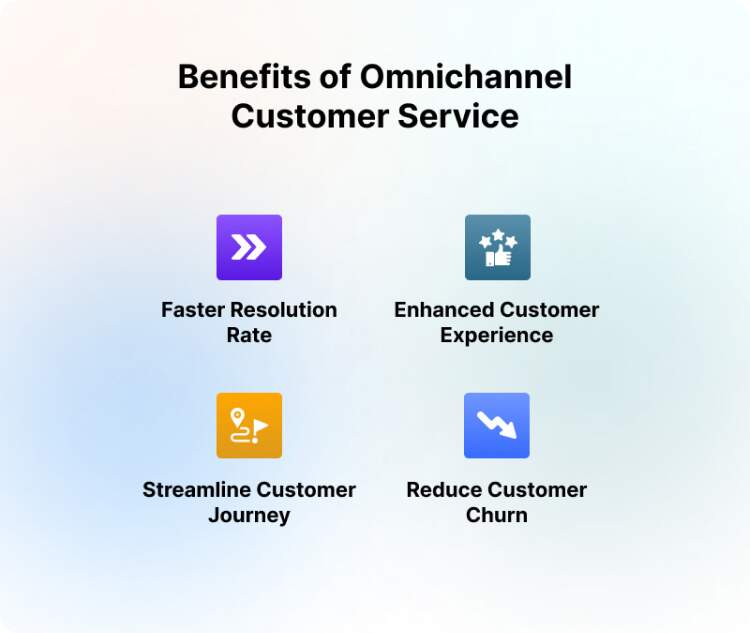
Implementing an omnichannel customer service strategy helps businesses in better understanding the customer lifecycle, their conversation history. Further it helps in delivering personalized support by integrating the traditional with digital channels.
#5. Faster Resolution Rate
Businesses that adopt omnichannel customer communication strategy witness a higher customer satisfaction by providing excellent customer service. It empowers agents to meet the expectations and align services as per their needs
The benefits of omnichannel customer service allows businesses to handle customer concerns faster by using visual engagement tools and strategies that improves the resolution rate as well as customer retention.
#6. Enhanced Customer Experience
From a customer’s standpoint, every interaction with your business should be part of a singular experience. It means it should not be siloed or repetitive as it happens with multi channel customer support.
Having a seamless journey across all channels, both online and offline is the key to providing a consistent omnichannel experience. When brands engage across all online and offline customer service channels and deliver consistent support, there is a boost in customer experience.
#7. Streamline Customer Journey for Better Insights
Learning customer behavior and their mindset is vital to deliver excellent customer service. When you align your service according to the customer’s needs and expectations, you deliver better service.
It’s also important to understand omnichannel vs multichannel concepts as then you will have a better knowledge of the customer journey.
The benefits of omnichannel strategy is that you can gain valuable customer insights that further help businesses to easily understand their lifecycle better with conversation history and deliver personalized real time support.
#8. Reduce Customer Churn
Customer churn is one of the common challenges reported by most of the businesses. By investing in an omnichannel customer service strategy, you can engage your customers in real time and overcome it.
The benefits of omnichannel customer service is that you can fulfill your customer expectations of instant response. When they are entertained across their preferred channels in real time, there is a significant reduction in the customer churn rate.
Benefits of Omnichannel Retail/Ecommerce
Leveraging an omnichannel retail strategy improves the customer experience and provides more channels for customer purchase––whether it is on mobile, web, or brick and mortar stores. The availability of multiple purchasing channels leads to an increase in sales and traffic.
In fact, omnichannel customers spend 15 to 30% more than single or multi-channel customers. The benefits Omnichannel solution allows retailers to achieve more availability, drive sales and traffic, and integrate digital touchpoints.
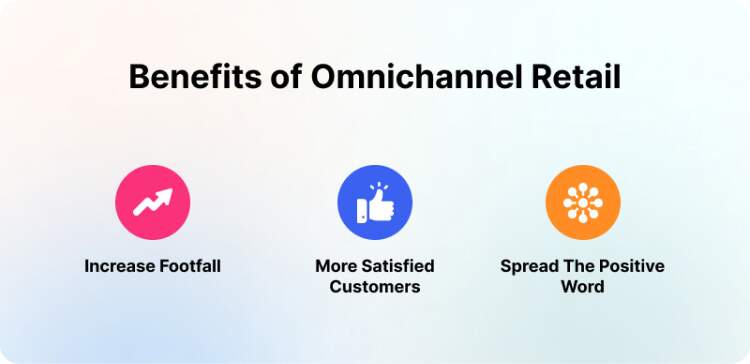
Omnichannel retail strategy allows consumers to start and complete purchases on different channels. It also creates a better retail journey for customers, because retailers can build a relationship with their customer-base and are able to engage with them on a personal, immediate level through a variety of purchasing channels.
#9. Increase Footfall
Managing a brand’s online presence is a big concern for many retailers, which makes it harder than ever to compete effectively – especially if you are a SMB and fail to invest on promotions, placements or people.
REVE Chat, the omnichannel customer management software is great for retailers that focus on expanding the online presence without committing significant budget and resources to it by making sure you have the right information available digitally and in real-time.
#10. More Satisfied Customers
Omnichannel benefits in delivering great experiences that help to engage potential customers. About 64% of customers expect to receive real-time customer support, regardless of the channel.
Monitoring a variety of channels is a daunting challenge, but with the benefits of omnichannel for retail, you have the opportunity to engage customers promptly by providing relevant answers. Customers prefer returning to companies that focus towards offering good customer service.
#11. Spread the Positive Word
Businesses spend a lot of money on advertising, but nothing can beat word of mouth benefits that can drive business. According to Nielsen, 92% of consumers believe recommendations from friends and family over all forms of advertising.
So why not use social media to help make the most of this opportunity?
You can engage with customers across a range of popular platforms, engaging customers and driving sales and even rewarding customers for promoting your brand.
How Omnichannel Benefits Customers
If I think from a customer standpoint, I would desire to have complete control of my buying decisions. Nevertheless, all customers think the same.
Customers want to purchase products at their convenience, on their own terms, and through a method that suits them best. The success of your business goes beyond just how excellent your customer service department is to how well you keep track and make use of your customer’s purchasing journey.
Today, consumers use diverse channels to interact with your brand. According to Gladly’s Customer Expectations Report, 73% of consumers get frustrated when they have to explain their issues over and over again.
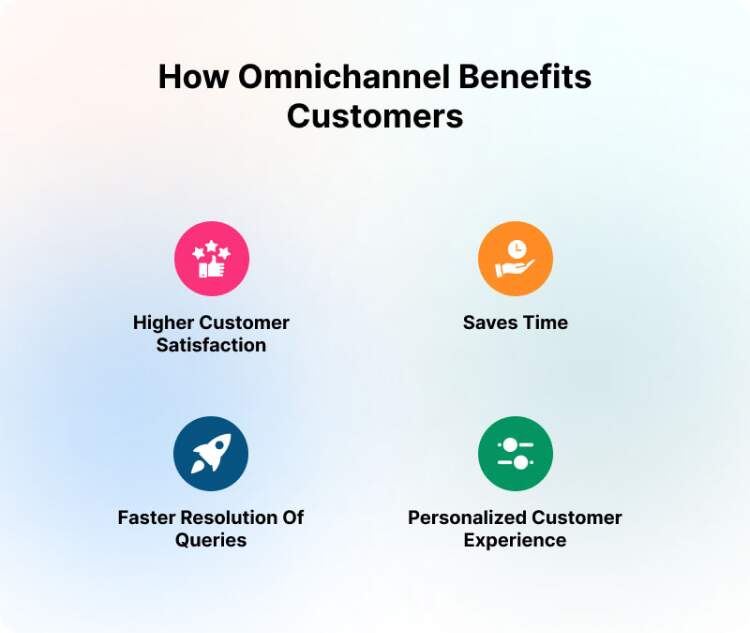
As such, there is a need for an omnichannel service strategy that includes personalization. It is because the benefits of omnichannel support a multichannel sales approach to give customers an integrated, holistic shopping experience.
#12. Higher Customer Satisfaction
Brands that have put in place an effective strategy have better customer satisfaction and retention than those with less effective strategies.
63% of customers fall in love with brands because of great service. It is because effective omnichannel strategies make customers’ purchasing journeys easier by clearing any hurdles they face while interacting with your brand.
The benefits of omnichannel strategy is that it allows customers to reach out to business via any channel such as WhatsApp, Viber, Facebook, Website etc. Businesses being available at all the customer journey touchpoints and addressing their concerns instantly increases customer satisfaction.
Businesses also deploy AI chatbots and digital engagement tools like co-browsing, video chat to engage customers better and provide effective solutions in the first contact by collaborating together. All these impacts the CSAT scores.
#13. Saves Time
Time is a major concern when it comes to service. Omnichannel benefits in delivering effective solutions in the first contact by using visual tools that helps in the accurate identification of the issue.
Customers are happy when they do not have to reach out to the brand for the same issue again and again. On the other hand, it also improves the team productivity as they close the resolution of the support ticket in the first contact.
#14. Faster Resolution of Queries
The benefits of omnichannel strategy is that when customers report their queries, businesses are ready to offer quick solutions. As a part of the strategy, they firstly identify the most preferred channels of their target audience.
They implement live chat, chatbots and digital tools to offer 24×7 assistance. The tools help to identify the root cause of the issue and offer faster answers that improves the key customer service KPIs i.e. Average Resolution Time (ART), First Contact Resolution (FCR), Response Time etc.
#15. Personalized Customer Experience
It is how well you have integrated your omnichannel strategy will determine how efficient it will be. All your channels should work harmoniously so that they steer your customers in one direction.
By using centralization and data integration, you can personalize your service that suits every customer’s specific needs. Omnichannel benefits not only to your customers but also your support team. For instance, it saves the bandwidth of the support team by enabling quick response rates and promoting self-service.
How to Build an Omnichannel Strategy
An effective omnichannel strategy starts with understanding how customers actually interact with your business. It is not about adding every possible channel at once. It is about connecting the right channels in a way that improves the customer journey.
1. Identify Your Most Important Customer Touchpoints
Start by mapping where customers currently interact with your brand. This may include your website, mobile app, live chat, WhatsApp, Facebook Messenger, Instagram, email, phone support, physical stores, or social media comments.
Look at which channels customers use most often before purchase, during purchase, and after purchase. This will help you understand where communication gaps are happening.
2. Map the Customer Journey
Once you know the key touchpoints, map the journey from awareness to purchase and support.
For example, a customer may discover your product through social media, visit your website for more information, ask a question through live chat, receive a follow-up through WhatsApp, and later contact support about delivery.
When you map this journey, you can identify where customers are dropping off, repeating information, waiting too long, or switching channels without proper support.
3. Centralize Customer Conversations
To deliver a true omnichannel experience, customer conversations should not remain scattered across different tools. Your team needs a central inbox where messages from live chat, social media, messaging apps, and other channels can be managed together.
This helps agents respond faster, understand customer history, and avoid duplicate or disconnected replies.
4. Connect Customer Data
Omnichannel success depends on context. If your support team cannot see the customer’s previous interactions, order details, product interest, or ticket history, the experience will still feel fragmented.
Connect your communication channels with important business systems such as CRM, ecommerce platforms, helpdesk, ticketing tools, knowledge base, and customer databases.
5. Keep Messaging Consistent Across Channels
Customers should receive the same quality of support and brand experience whether they contact you through your website, WhatsApp, Messenger, Instagram, or email.
This does not mean every message should sound robotic or identical. It means your tone, information, policies, pricing, offers, and support process should remain consistent.
6. Use Automation for Repetitive Queries
Many customer questions are repetitive. Customers often ask about pricing, product availability, delivery time, refund policies, order status, business hours, and basic troubleshooting.
Automation can help answer these questions instantly while your human team focuses on complex or high-value conversations.
7. Measure, Improve, and Optimize
Omnichannel strategy is not a one-time setup. Track customer behavior, response times, resolution rates, satisfaction scores, and conversion rates across channels.
Use these insights to improve workflows, update your knowledge base, train agents, optimize automation, and remove friction from the customer journey.
Omnichannel Use Cases Across Industries
Omnichannel engagement is useful across industries because customers now expect connected experiences everywhere.
Ecommerce and Retail
In ecommerce and retail, omnichannel helps businesses connect product discovery, customer support, order updates, and post-purchase service. A customer may discover a product on Instagram, ask a question on live chat, complete the purchase on the website, and later request delivery updates through WhatsApp.
With an omnichannel setup, the business can manage the full journey from one place.
Banking and Finance
Banks and financial service providers can use omnichannel support to connect mobile app queries, website chat, branch assistance, email, and phone support. This helps customers continue important conversations without repeating personal details or restarting the process every time they switch channels.
Telecom
Telecom customers often contact support for billing, package changes, technical issues, SIM services, and service interruptions. Omnichannel support helps telecom companies manage high conversation volume while giving agents access to customer history across channels.
Education
Educational institutions and EdTech companies can use omnichannel communication to manage admission inquiries, course questions, payment reminders, student support, and parent communication. Prospective students can ask questions through social media, website chat, or messaging apps while the institution keeps the full conversation connected.
Travel and Hospitality
Travel companies, hotels, and airlines can use omnichannel support to manage booking questions, itinerary changes, cancellation requests, check-in support, and real-time updates. This helps customers receive quick assistance before, during, and after their trip.
Key Metrics to Measure Omnichannel Success
To understand whether your omnichannel strategy is working, you need to measure both customer experience and business performance.
Important omnichannel metrics include:
First Response Time
This shows how quickly your team responds when a customer starts a conversation. A shorter response time usually improves customer satisfaction and reduces drop-offs.
Average Resolution Time
This measures how long it takes to fully resolve a customer issue. Omnichannel support can reduce resolution time because agents have access to conversation history and customer context.
First Contact Resolution
This shows how many issues are solved in the first interaction without requiring the customer to follow up again. A higher first contact resolution rate means customers are getting faster and more complete support.
Customer Satisfaction Score
CSAT helps you understand how customers feel after interacting with your business. It is one of the most important indicators of support quality.
Customer Retention Rate
A strong omnichannel experience can help customers stay loyal because they receive consistent support across their preferred channels.
Conversion Rate
For sales and ecommerce teams, omnichannel engagement can improve conversion rates by helping customers get answers at the right moment in their buying journey.
Channel Performance
Track which channels generate the most conversations, sales, support requests, and satisfied customers. This helps you decide where to invest more time, automation, and resources.
Common Omnichannel Challenges and How to Solve Them
Omnichannel can deliver strong business results, but many companies struggle to implement it properly. Here are some common challenges and how to solve them.
Disconnected Customer Data
One of the biggest challenges is scattered customer information. If your website chat, WhatsApp, email, CRM, and helpdesk do not share data, your team will not have a complete view of the customer.
The solution is to use a centralized platform that brings customer conversations and history together.
Inconsistent Messaging
Customers may receive different answers from different teams or channels. This creates confusion and weakens trust.
To solve this, businesses should maintain a shared knowledge base, standard support guidelines, and consistent brand communication across all channels.
Too Many Channels to Manage
Being available everywhere can become difficult if your team has to switch between multiple dashboards.
A unified inbox helps teams manage conversations from different channels in one place, reducing missed messages and improving productivity.
Slow Response Times
Customers expect quick support, especially on real-time channels like live chat, WhatsApp, and Messenger.
Automation, chat routing, canned responses, AI assistance, and proper team assignment can help reduce wait times.
Lack of Personalization
If your team cannot see customer history, every conversation feels generic.
By connecting customer data, previous conversations, order details, and support history, businesses can deliver more relevant and personalized responses.
Measuring the Wrong Metrics
Some businesses only measure channel activity, such as message volume or number of tickets closed. But omnichannel success should also be measured by customer satisfaction, resolution speed, retention, and revenue impact.
How AI Agents Improve Omnichannel Customer Engagement
AI is changing the way businesses manage omnichannel communication. Traditional omnichannel support connects channels, but AI agents can help businesses understand customer intent, answer questions, and take action faster.
An AI agent can work across channels such as website chat, WhatsApp, Messenger, Instagram, and other messaging platforms. It can use business data, FAQs, product information, order details, and knowledge base content to provide more accurate responses.
For example, if a customer asks about product availability, the AI agent can check the available information and respond instantly. If a customer asks about an order, the AI agent can guide them with the right next step. If the query is complex, it can hand over the conversation to a human agent with the full context.
This improves both customer experience and team efficiency.
Customers get faster answers without waiting for basic support. Agents get more time to focus on complex issues. Businesses can provide consistent service across channels without increasing support workload at the same rate.
AI agents are especially useful for high-volume support environments where customers ask repetitive questions across multiple channels every day.
How to Choose the Right Omnichannel Platform
The right omnichannel platform should help your business manage conversations, customer data, automation, and reporting from one place.
When choosing a platform, look for these capabilities:
Unified Inbox
A unified inbox allows your team to manage customer conversations from multiple channels in one dashboard. This reduces missed messages and helps agents work more efficiently.
Channel Coverage
Make sure the platform supports the channels your customers use most. This may include live chat, WhatsApp, Facebook Messenger, Instagram, email, mobile app messaging, and other social or messaging platforms.
Customer Conversation History
Your team should be able to view previous conversations and customer context. This helps agents avoid asking customers to repeat the same information.
Automation and AI Support
Look for automation features that can answer common questions, route conversations, qualify leads, create tickets, or trigger workflows. AI agents can further improve this by understanding intent and helping customers complete tasks faster.
CRM and Ecommerce Integrations
An omnichannel platform should connect with your existing business tools, such as CRM, ecommerce platforms, ticketing systems, knowledge bases, and customer databases.
Reporting and Analytics
You should be able to track response time, resolution time, channel performance, agent productivity, customer satisfaction, and conversation trends.
Scalability
Choose a platform that can support your business as your conversation volume grows. The platform should work for your current needs but also support more channels, users, automation, and integrations in the future.
Final Thoughts
A customer’s lasting impression of your brand is often determined by the level of service you provide. Without deploying an omnichannel service strategy, your customers’ buying experience will likely suffer, and ultimately your business will, too.
The omnichannel benefits for both customers and businesses are highly significant. Hence, the benefits of omnichannel strategy can not only help your business to grow but also improve in terms of customer loyalty and lifetime value.
Frequently Asked Questions
The main benefit of omnichannel is that it creates a connected customer experience across different channels. Customers can move between website chat, social media, messaging apps, email, or in-store support without losing context.
Yes, omnichannel is usually better because it connects all channels into one seamless journey. Multichannel means a business is available on many channels, but those channels may still work separately.
Examples include starting a conversation on live chat and continuing it on WhatsApp, browsing a product online and picking it up in-store, or contacting support through Messenger while the agent can still see previous website chat history.
Businesses usually need a unified inbox, live chat, messaging channel integrations, CRM integration, ticketing, automation, reporting, and sometimes AI agents or chatbots to manage repetitive queries.
Omnichannel improves customer service by giving agents access to customer history, previous conversations, and channel context. This helps customers receive faster, more accurate, and more personalized support.