





Table of Content
What makes a bank a customer’s forever home? It’s not just great rates or shiny apps, it’s retention. Banking is a crowded race.
Fintechs, online platforms, and local credit unions are stealing the spotlight, and 15% of customers leave their banks each year. That’s a pricey problem. Holding onto customers is paramount as acquiring new ones can cost up to 25 times more, according to the Harvard Business Review.
Plus, loyal customers fuel growth. A mere 5% retention increase can drive profits up by 25-125%. In this blog, we’ll explore fresh, actionable strategies to spark loyalty and maximize lifetime value. Ready to make your bank irresistible?
Let’s jump in.
Why Customer Retention Matters for Banks?
Why should banks care about holding onto customers? It’s simple: retention drives success. In a world where customers can switch banks with a tap on their phone, keeping them loyal is both a financial win and a competitive edge.
Here’s why it’s a big deal.
- First, retention saves money. Acquiring a new customer can cost 5-7 times more than keeping an existing one. Marketing, promotions, and onboarding add up fast. But loyal customers? They’re already sold on your brand, cutting those costs to a fraction.
- Next, retention boosts profits. Banks with strong retention see 14% higher customer lifetime value according to Boston Consulting Group. Loyal customers don’t just stick around; they open new accounts, take out loans, and invest more over time.
- Then there’s advocacy. Happy, long-term customers become your best marketers. They refer friends and family, driving new business without extra spending.
Top 17 Customer Retention Strategies for Banks in 2026
How do banks keep customers from slipping away? It’s all about smart, practical steps that build trust and deliver value. Customers expect more than basic banking. They want experiences that feel personal and effortless.
With fintech and digital platforms raising the bar, these strategies stand out. They focus on connection, convenience, and care.
Let’s dive into the top 10 ways to lock in loyalty, with tips to get started.
1. Personalize Experiences with AI and Data Analytics
Customers want to feel special, not like another account number. AI and data analytics make this happen. By digging into spending habits or life events, banks can offer tailored solutions.
For example, if someone’s eyeing a car loan, AI can suggest the best terms instantly.
Start by analyzing transaction data. Then, use AI tools to recommend products, like savings plans for new parents.
Personalization makes customers feel understood, reducing the urge to switch. Tools like chatbots can step in here, answering questions based on past interactions.
This keeps support relevant and fast. Just ensure data use respects privacy, and transparency builds trust.
2. Deliver Seamless Omnichannel Experiences

Nobody likes starting over when switching from app to branch. Omnichannel banking creates one smooth journey. Customers can check their balance online, then visit a teller, without repeating themselves.
Link all customer data across platforms. This way, a phone call picks up where the website left off.
Customers love this flow; it feels effortless. Tools like live chat help bridge gaps. If someone’s stuck on a mobile form, chat can guide them in real time.
Pair it with ticketing systems to track issues across channels. This ensures nothing gets lost, and customers feel cared for, no matter how they connect.
3. Enhance Digital Banking Usability
Clunky apps are a dealbreaker. Digital banking is king, so make it smooth and simple. Slow load times or confusing menus push customers away. Focus on speed, clear design, and easy access.
Test your platforms often. Use analytics to find where users drop off, like a tricky transfer page. Fix these fast. A ticketing system can log issues and route them to tech teams for quick resolution.
Adding live chat to apps also helps users get instant answers while navigating. This cuts frustration and keeps customers coming back.
4. Gather and Act on Customer Feedback
Feedback shows what’s working and what’s not.
Ask for it after transactions or through in-app prompts. Then, act on it fast. Customers notice when banks listen, and it builds loyalty.
Send short surveys after key moments, like opening an account. Ask about ease and satisfaction. Chatbots can make this simple, popping up with quick questions during a session.
Use ticketing systems to track complaints and ensure they’re fixed. For example, if users flag a fee issue, address it promptly. This loop gathers, analyzes, and resolves. It shows customers you care, keeping them around longer.
5. Offer Competitive Rates and Incentives
Price is a big driver.
Customers compare rates and fees across banks. Stay competitive to keep them. Offer attractive loan terms, low fees, or rewards like cash-back.
Check rival rates regularly. Adjust yours to match or beat them. Incentives, like bonus points for direct deposits, encourage stickiness.
Live chat can explain these offers clearly, helping customers see the value. While rates matter, pair them with great service. Price alone isn’t enough. This combo makes your bank the obvious choice.
6. Build a Customer-Centric Service Culture
Great service wins hearts.
Build a culture where every team member puts customers first. Train staff to listen and solve problems with care.
This turns routine interactions into trust-building moments.
Run regular training sessions.
Practice handling tough queries, like disputed charges. Tools like ticketing systems ensure issues reach the right team fast.
Chatbots can handle questions, freeing agents for deeper conversations. This creates a team that’s responsive and empathetic. Customers feel valued, and they stay loyal.
7. Provide Financial Education
Knowledge builds confidence.
Offer resources on budgeting, investing, or loans. It shows your bank cares about more than just profits.
Share blogs, webinars, or calculators. Host sessions on saving for college. Chatbots can guide users through the basics, answering questions instantly.
This empowers customers, making them less likely to switch. It also opens doors to new products, as informed users explore more options with a bank they trust.
8. Leverage Health and Wellness Engagement
Money and health connect. Offer wellness programs to show you care about customers’ lives. Platforms like health apps can track goals and tie them to rewards, like better insurance rates.
Integrate wellness challenges into your app.
Reward users for hitting fitness goals with account perks. Live chat can answer questions about these programs, making them easy to join.
This broader approach builds emotional ties. It keeps customers engaged beyond transactions.
9. Foster Community Involvement
Banks shine when they give back. Support local events, charities, or financial literacy programs. It creates a sense of belonging.
Sponsor community fairs or green projects.
Share these efforts via apps or social media. Chatbots can invite customers to events, boosting participation.
This strengthens ties, as customers feel proud to bank with a community player.
10. Manage Online Reviews and Reputation
Reviews shape how people see your bank.
Monitor platforms like Google or Yelp. Respond to every review, good or bad, with care.
Thank happy customers. Address complaints quickly.
Ticketing systems track follow-ups, ensuring no issue lingers. Live chat can gather details after a review, turning critics into supporters. This shows you listen, building trust that keeps customers loyal.
These strategies create a roadmap to retention.
Mix and match them to fit your bank’s style. Next, we’ll explore real-world case studies that show these ideas in action.
11. Make Customer Onboarding Smooth from Day One
Customer retention does not begin after months of banking activity. It starts the moment a customer opens an account, downloads the mobile app, applies for a loan, or signs up for a new financial product.
A confusing onboarding process can quickly create doubt. If customers struggle to verify their identity, activate their card, set up online banking, or understand account benefits, they may become inactive before the relationship has a chance to grow.
Banks should make onboarding clear, guided, and proactive. Add progress indicators, send helpful reminders, and provide instant support when customers get stuck. For example, if a customer abandons a loan application or does not complete account setup, an AI chatbot or live chat agent can step in with a helpful message such as, “Need help finishing your application?”
To improve onboarding, banks can:
- Guide customers through account setup step by step
- Use chatbots to answer onboarding questions instantly
- Send reminders for incomplete applications or pending documents
- Offer help with mobile app setup, card activation, and security settings
- Track onboarding drop-off points and fix friction quickly
A smooth onboarding experience makes customers feel confident from the beginning. That confidence becomes the foundation for long-term loyalty.
12. Identify At-Risk Customers Before They Leave
Most customers do not leave a bank overnight. Churn often begins with small signals: fewer app logins, reduced account activity, declining balances, missed payments, unresolved complaints, or lower engagement with bank communications.
Banks that monitor these signals can act before the customer relationship breaks. Instead of waiting until someone closes an account, banks can use data analytics to identify customers who may be dissatisfied, financially stressed, or disengaged.
For example, if a long-time customer suddenly stops using their primary account, the bank can trigger a proactive check-in. If a borrower misses a payment, the bank can offer support options instead of only sending reminders. If a customer repeatedly contacts support about the same issue, the case can be escalated before frustration grows.
Useful churn indicators include:
- Declining deposits or account balances
- Reduced digital banking activity
- Abandoned applications
- Repeated complaints or unresolved support tickets
- Missed or late payments
- Lower response to emails, SMS, or app notifications
- Product inactivity after signup
The goal is not just to collect data. The goal is to turn data into timely action. With the right alerts, workflows, and customer support tools, banks can intervene early, solve problems faster, and prevent avoidable churn.
13. Use Proactive Communication Across Preferred Channels
Customers do not want to hear from their bank only when something goes wrong. They expect timely, relevant, and helpful communication throughout their journey.
Proactive communication keeps customers informed and reduces uncertainty. This can include payment reminders, fraud alerts, application updates, account benefit reminders, renewal notices, savings tips, or personalized product suggestions.
The key is to communicate through the channels customers actually prefer. Some customers may respond best to mobile app notifications, while others prefer SMS, email, WhatsApp, live chat, or phone calls.
Examples of proactive communication include:
- Sending a reminder before a loan payment is due
- Notifying customers when a card is shipped or activated
- Alerting users about unusual account activity
- Following up after a support ticket is resolved
- Helping customers complete abandoned applications
- Sharing relevant financial tips based on life stage or product use
Proactive communication builds trust because it shows that the bank is paying attention. When messages are timely and useful, customers feel supported rather than sold to.
14. Offer Flexible Payment and Hardship Support
Financial stress can happen to anyone. A customer may lose income, face unexpected expenses, or need temporary relief during a difficult period. How a bank responds in these moments can strongly influence whether the customer stays loyal.
Rigid policies can push struggling customers away. Flexible options, on the other hand, show empathy and help preserve the relationship.
Banks can support customers through:
- Temporary payment reductions
- Loan deferment options
- Flexible repayment dates
- Payment restructuring
- Grace-period communication
- Personalized support for financially vulnerable customers
- Easy access to hardship assistance through chat or self-service portals
Payment flexibility is not only a collections strategy. It is a retention strategy. When customers feel that their bank supports them during difficult times, they are more likely to remain loyal after they recover.
Banks should make these options easy to understand and easy to request. AI chatbots, live chat, and automated workflows can help customers find the right support quickly without waiting in long call queues.
15. Strengthen Relationships with Dedicated Advisory Support
Digital banking is essential, but human relationships still matter. Many customers want more than transactions. They want guidance, reassurance, and a sense that their bank understands their financial goals.
Relationship managers and dedicated advisors can play a powerful role in customer retention, especially for high-value customers, business customers, loan customers, and customers with complex financial needs.
Banks can improve relationship management by:
- Scheduling regular check-ins with key customers
- Offering financial planning conversations
- Providing personalized product recommendations
- Assigning dedicated support for business or premium customers
- Following up after major life events, such as buying a home or starting a business
- Using CRM data to understand each customer’s history and needs
This approach turns the bank from a service provider into a trusted financial partner. Customers who feel guided and understood have fewer reasons to switch.
16. Build Retention Through Compliance, Security, and Transparency
Trust is one of the strongest retention drivers in banking. Customers need to believe that their money, data, and personal information are safe. They also need to understand fees, terms, interest rates, privacy policies, and product conditions clearly.
A lack of transparency can damage trust quickly. Hidden fees, confusing loan terms, unclear disclosures, or inconsistent communication can make customers feel misled.
Banks can build trust by:
- Explaining fees and charges in simple language
- Making loan terms easy to understand
- Communicating policy changes clearly
- Using secure authentication and fraud prevention tools
- Protecting customer data across every digital channel
- Training teams on compliant customer communication
- Keeping digital support conversations secure and auditable
Compliance should not be treated only as a regulatory requirement. It should also be treated as part of the customer experience. When customers feel protected and informed, they are more likely to stay.
17. Expand Community Engagement with Practical Local Programs
Community involvement becomes more powerful when it is specific, visible, and consistent. Banks should not only support the community; they should also show customers how that support creates real impact.
Instead of making broad claims like “we care about the community,” banks can highlight actual stories, events, and customer participation.
Examples include:
- Customer appreciation lunches or local gatherings
- Financial literacy workshops for students, families, and small businesses
- Local business spotlight campaigns
- Senior customer clubs with special benefits
- Charity partnerships and volunteer programs
- Social media stories showing community impact
- Seasonal events tied to schools, sports, or local causes
Community engagement builds emotional loyalty. Customers are more likely to stay with a bank that feels connected to their daily lives, local businesses, and shared values.
For community banks, this can be a major advantage over larger national institutions. Local presence, personal relationships, and visible community support can become strong reasons for customers to stay.
Case Study: Commercial Bank of Kuwait Boosts Loyalty with Efficient Support
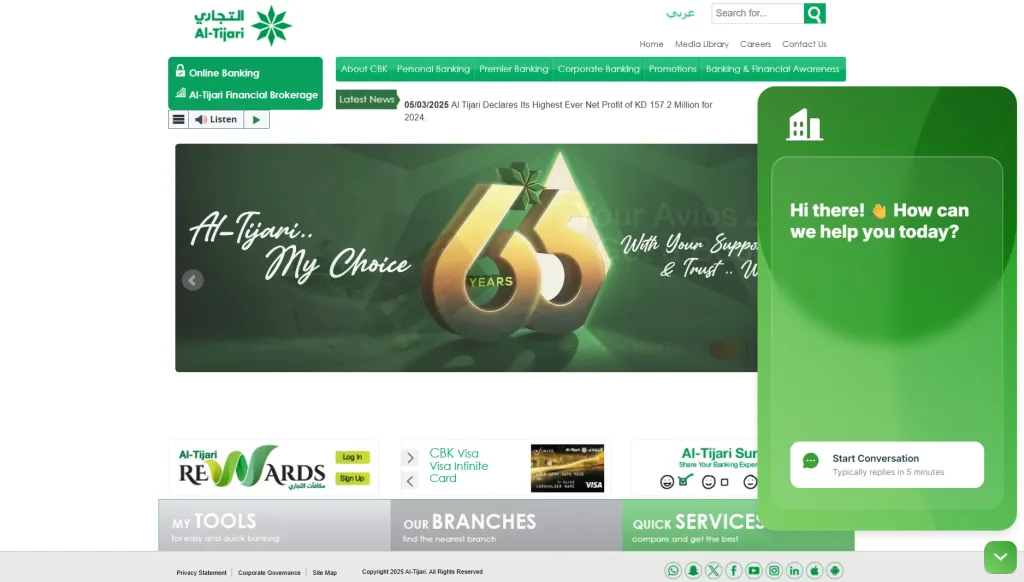
The Commercial Bank of Kuwait (CBK) serves a wide range of customers across the Middle East, offering everything from daily banking to complex financial services.
With competition from fintechs and digital banks heating up, CBK focused on reducing churn by improving customer support.
Facing frequent, diverse queries, CBK needed fast, reliable solutions to keep customers loyal.
By adopting smart tools, they turned routine interactions into retention wins.
Challenges
CBK dealt with several obstacles:
- Varied Customer Queries: Customers asked about card issues, loan eligibility, credit card balances, branch locations, or login recovery.
- Verification Delays: Sensitive requests, like balance checks, require quick identity confirmation without slowing responses.
- Risk of Churn: Slow or inconsistent support could push customers to competitors offering smoother experiences.
These issues demanded a streamlined system to handle diverse needs while keeping interactions personal.
Solution
CBK integrated REVE Chat’s tools, Live Chat, Forms, Canned Responses, Chat Tags, and Notes into their support process:
- Live Chat: Enabled instant customer assistance on CBK’s website and app.
- Forms: Collected key details upfront, like account or verification info, to speed up resolutions.
- Canned Responses: Offers quick, consistent replies for common questions, like card setup steps.
- Chat Tags: Sorted chats by topic (e.g., “loan inquiry”) for efficient routing.
- Notes: Tracked details for seamless handoffs on escalated cases.
This setup ensured fast, organized, and customer-focused support.
Results
CBK’s new approach delivered clear outcomes:
- Quick Resolutions: Response times dropped to under a minute for most queries.
- Higher Satisfaction: Customers gave better feedback, needing fewer escalations.
- Lower Churn Risk: Fast support reduces the chance of customers leaving.
- More Engagement: Satisfied customers explored additional products, like loans.
For instance, LiveChat and Canned Responses resolved prepaid MasterCard issues in one session, while Forms and Notes streamlined loan inquiries.
Benefits
CBK’s use of these tools directly supported retention:
- Card Issues: Live Chat guided customers through MasterCard fixes, with Notes tracking follow-ups.
- Card Delivery Updates: Forms verified identities fast, allowing agents to share timelines via Chat Tags.
- Loan and Credit Queries: Forms gathered eligibility data; Notes ensured smooth escalations.
- Branch and Service Info: Live Chat shared locator links using Canned Responses.
- Login Recovery: Forms and Live Chat fixed username/password issues quickly.
These improvements made support feel effortless, encouraging customers to stay.
CBK’s story proves that great support drives retention. By using Live Chat, Forms, Canned Responses, Chat Tags, and Notes, CBK handled diverse queries with speed and care, building trust and loyalty.
For banks aiming to keep customers in 2026, CBK’s example shows that efficient, thoughtful service can make all the difference.
Want to achieve similar results? Book a demo with REVE Chat to see how these tools can strengthen your customer connections.
Smart tools turn everyday interactions into reasons to stay loyal.
How to Measure Customer Retention in Banking
A customer retention strategy is only effective if banks can measure its impact. Tracking the right metrics helps banks understand what is working, where customers are struggling, and which actions reduce churn.
Important customer retention metrics for banks include:
Customer Retention Rate
This shows the percentage of customers who stay with the bank over a specific period. A higher retention rate means more customers are continuing their relationship.
Customer Churn Rate
This measures how many customers leave during a given period. Banks should track churn by product, segment, branch, and digital channel to identify patterns.
Customer Lifetime Value
Customer lifetime value shows the total revenue a bank can expect from a customer over the full relationship. Retention strategies should aim to increase this value through loyalty, cross-selling, and deeper engagement.
Digital Engagement Rate
This includes mobile app logins, online banking activity, chatbot usage, and self-service interactions. Declining engagement can be an early warning sign of churn.
Onboarding Completion Rate
This measures how many customers complete account setup, app activation, identity verification, or application steps. Low completion rates may indicate friction in the onboarding journey.
First Response Time and Resolution Time
Fast responses and quick resolutions are critical for customer satisfaction. Banks should track how long customers wait for support and how quickly issues are solved.
Complaint Volume and Repeat Issues
A rise in complaints or repeated support requests can signal deeper service problems. Banks should track complaint trends and resolve root causes, not just individual tickets.
Net Promoter Score and Customer Satisfaction Score
NPS and CSAT help banks understand customer sentiment. These scores can reveal whether customers are likely to recommend the bank or consider switching.
By monitoring these metrics regularly, banks can make retention a measurable business priority rather than a general customer service goal.
What to Look for in AI and Customer Support Tools for Bank Retention
Technology plays a major role in modern customer retention, but not every tool is suitable for banking. Banks need customer engagement platforms that are secure, flexible, and capable of handling complex financial conversations.
When choosing AI chatbots, live chat, or customer support tools, banks should look for:
Contextual Understanding
The system should understand customer intent, conversation history, and previous interactions. Customers should not have to repeat the same information every time they switch channels.
Secure Integration with Banking Systems
The platform should connect safely with existing banking systems, CRM tools, ticketing platforms, and customer databases. This allows agents and AI systems to provide accurate, relevant support.
Omnichannel Support
Customers may start a conversation on the website, continue through mobile chat, and follow up by email or phone. A strong platform keeps the experience connected across every channel.
Automation with Human Handoff
AI can handle routine questions, but complex issues should move smoothly to human agents. The handoff should include conversation history so the customer does not have to start over.
Compliance-Friendly Workflows
Banking conversations often involve sensitive data. The platform should support secure communication, access control, audit trails, and compliant workflows.
Personalization Capabilities
The tool should help banks send relevant messages, recommend useful services, and respond based on customer behavior or needs.
Reporting and Analytics
Banks should be able to track response times, resolution rates, customer satisfaction, common issues, and retention-related signals.
The right customer engagement platform helps banks reduce friction, improve support quality, and create stronger customer relationships at scale.
Conclusion
Customer retention stands as the true foundation for any bank aiming to lead the pack. In a market where a quick app download can lure customers away, loyalty demands real commitment, clever planning, and genuine care.
The strategies we’ve covered, from AI personalization to community outreach, lay the groundwork for relationships that endure. They foster trust, deliver real value, and turn your bank into a must-have partner.
Putting it into practice starts with the right support. Features like live chat, chatbots, and ticketing systems weave seamlessly into these approaches, enhancing personalization, omnichannel flow, and feedback handling.
Take REVE Chat’s offerings, they enable banks to engage customers right away, provide on-the-spot answers, and manage concerns without delay.
This approach makes sure every interaction counts, transforming routine moments into reasons to stay.
Curious about the results? Give REVE Chat’s live chat, chatbot, or ticketing system a go, and experience how it revitalizes your retention efforts. Begin now, and see your customers commit for the future.
Check out REVE Chat to enhance your customer ties. Book a demo and feel the change firsthand.
Frequently Asked Questions
Customer retention in banking refers to the efforts banks make to keep existing customers engaged and loyal over time.
It involves creating positive experiences, offering value, and addressing needs so customers don’t switch to competitors.
Banks often lose customers due to poor experiences, like slow digital services or lack of personalization, especially with fintech options available.
Competition is fierce, and customers switch if they find better rates, easier apps, or faster support elsewhere.
Personalization uses your data like spending patterns or life events to tailor services, such as suggesting a savings plan that fits your goals. It makes you feel valued, not just another user.
Technology, like AI chatbots or seamless apps, makes banking convenient and responsive. For instance, tools that remember your preferences across channels cut frustration and build trust.
Yes, incentives such as cash-back or loyalty points encourage repeat business and make customers feel appreciated. They work best when tied to everyday habits, like bonus rates for consistent deposits.
A big mistake is ignoring feedback or focusing only on new customers, leaving existing ones feeling neglected. Another is inconsistent service across channels, like a great app but poor in-branch help.
Build AI-powered support with Wize AI
Connect business knowledge, automate support conversations, and improve response quality without managing a complex AI stack.
Explore Wize AI Agent Rate the article

M. Rezaul Hasan
CEO
M Rezaul Hassan is the CEO of both REVE Systems and REVE Chat, where he leads the charge in delivering innovative communication and customer engagement solutions. Under his leadership, REVE Systems has become a global player in Telecommunication and IP communications, while REVE Chat has emerged as a leader in AI-powered customer service and sales conversion tools. With a focus on industries such as telecommunications, banking, and customer service, Hassan is known for driving digital transformation and business growth. Outside of his corporate leadership, he is passionate about meditation, traveling, and photography.
View all articles