




Table of Content
Customers expect personalized experiences at each stage of the journey with a brand. They feel happy when the experience provided to them comes with a touch of personalization. However, serving customers effectively and meeting their needs successfully is easier said than done. Most businesses spend a big budget on marketing but face unqualified traffic and leads. To avoid this kind of situation, it’s important to focus on who to target.
This is where customer profiles help – they are designed to help businesses understand their ideal customers. These profiles prove vital in marketing, sales, and offering support to the right customers. Using a customer profile, your company can craft messages and spend the marketing budget in a way that reaches the right audience and meets their needs.
In this blog, we will explore and understand everything about a customer profile, and know its definition, benefits, and steps to create an ideal profile for your business.
But first, let’s get started with understanding what exactly a customer profile is…
What is a Customer Profile?
A customer profile is a document or detailed description of an ideal or typical customer. It also serves as a strategic guide to understanding the customers better and creating personalized experiences for them.
Such profiles carry information about customer interests, demographic data, buying patterns, pain points, etc., which prove helpful in how customers engage with your brands or products.
A customer profile is also an ideal representation of the traits, characteristics, motivations, and behaviors of a particular group of target audiences. That’s why they are key to not only understanding but also catering to the needs and preferences of customers.
What is Customer Profiling?
Customer profiling is the process of creating customer profiles. Companies use this process to create detailed descriptions of their ideal target audience. It involves collecting and analyzing data to understand the preferences and needs of different customer segments. The main purpose of customer profiling is to create a clear picture of the types of individuals that are likely to purchase from a company.
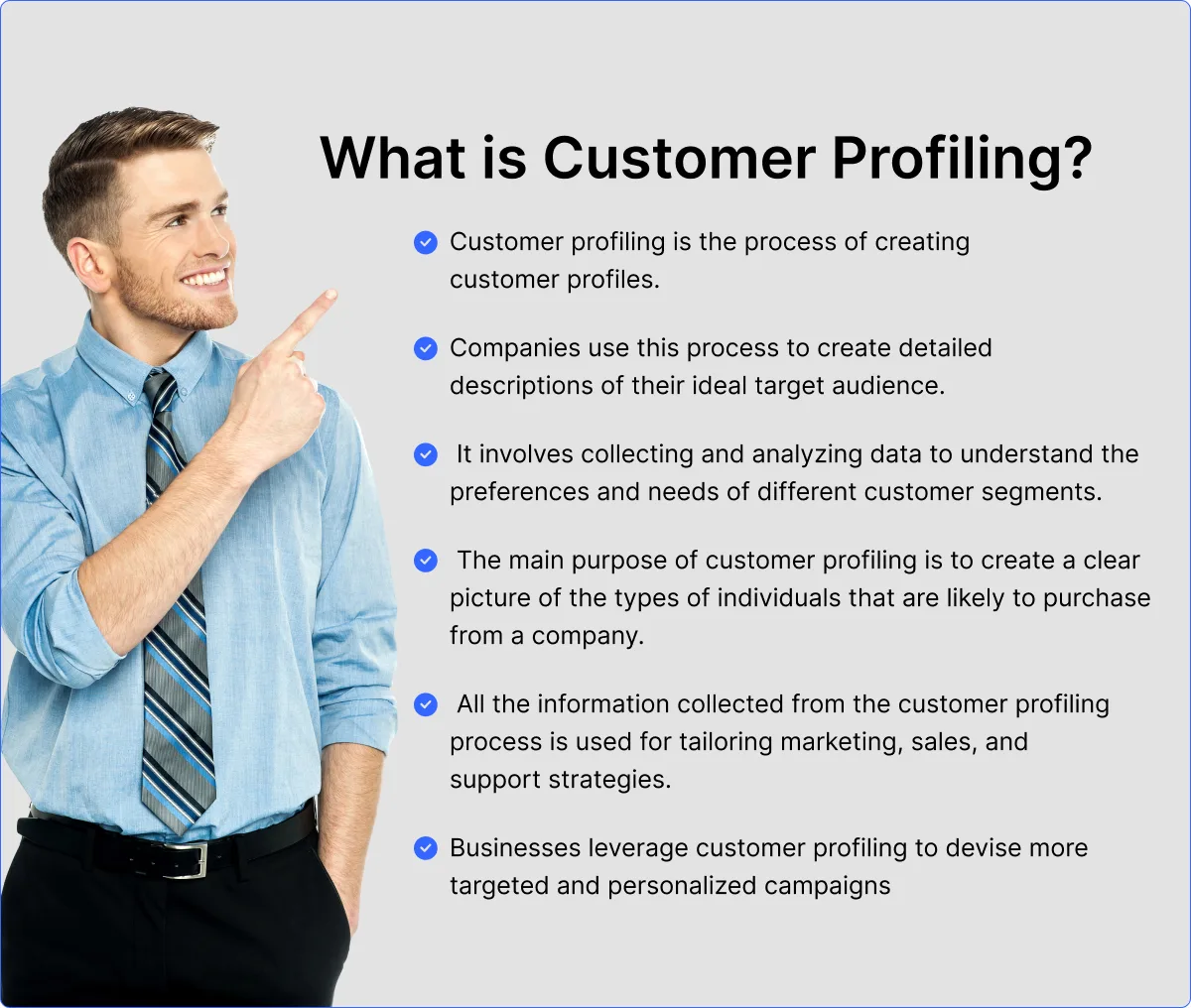
All the information collected from the customer profiling process is used for tailoring marketing, sales, and support strategies. This is how a business is able to effectively engage with the target audience. Businesses leverage customer profiling to devise more targeted and personalized campaigns, enhance customer satisfaction, and ultimately drive customer loyalty and retention. In a nutshell, this process is key to staying responsive to the ever-changing needs of the target audience…
What Is a Unified Customer Profile?
A unified customer profile is a single, complete view of a customer created by combining data from multiple channels and systems. Instead of keeping customer information scattered across live chat, CRM, email, social media, website analytics, and support tools, a unified profile brings everything together in one place.
This helps teams understand the full customer journey. For example, your marketing team may know which campaign brought a lead to your website, your sales team may know what product the lead is interested in, and your support team may know what questions the customer asked during a live chat conversation. When all this data is connected, your business can create a more accurate and useful customer profile.
A unified customer profile helps businesses:
- Reduce duplicate or incomplete customer records
- Give sales and support teams better customer context
- Personalize marketing campaigns more accurately
- Identify high-value customer segments
- Improve customer experience across every touchpoint
- Make faster and more data-driven decisions
For businesses using customer engagement tools, a unified profile is especially valuable. Live chat, chatbot, video chat, co-browsing, CRM, and analytics data can help teams understand customer behavior in real time and deliver more relevant support.
B2B vs B2C Customer Profiles
There are two distinct types of customer profiles – B2B (business-to-business) and B2C (business-to-consumer) customer profiles. Understanding the differences between both types of customer profiles is key to reaching and engaging with the respective target audiences.
- B2B customer profiles – These profiles represent the various types of businesses that engage with your products or services. Detailed knowledge of B2B customer profiles is vital to ensuring effective marketing and business development strategies. Such profiles map the various aspects of a business, including its target audience, location, size, and industry. The main focus of B2B customer profiles is mostly on businesses but sometimes also on the decision-makers at the top.
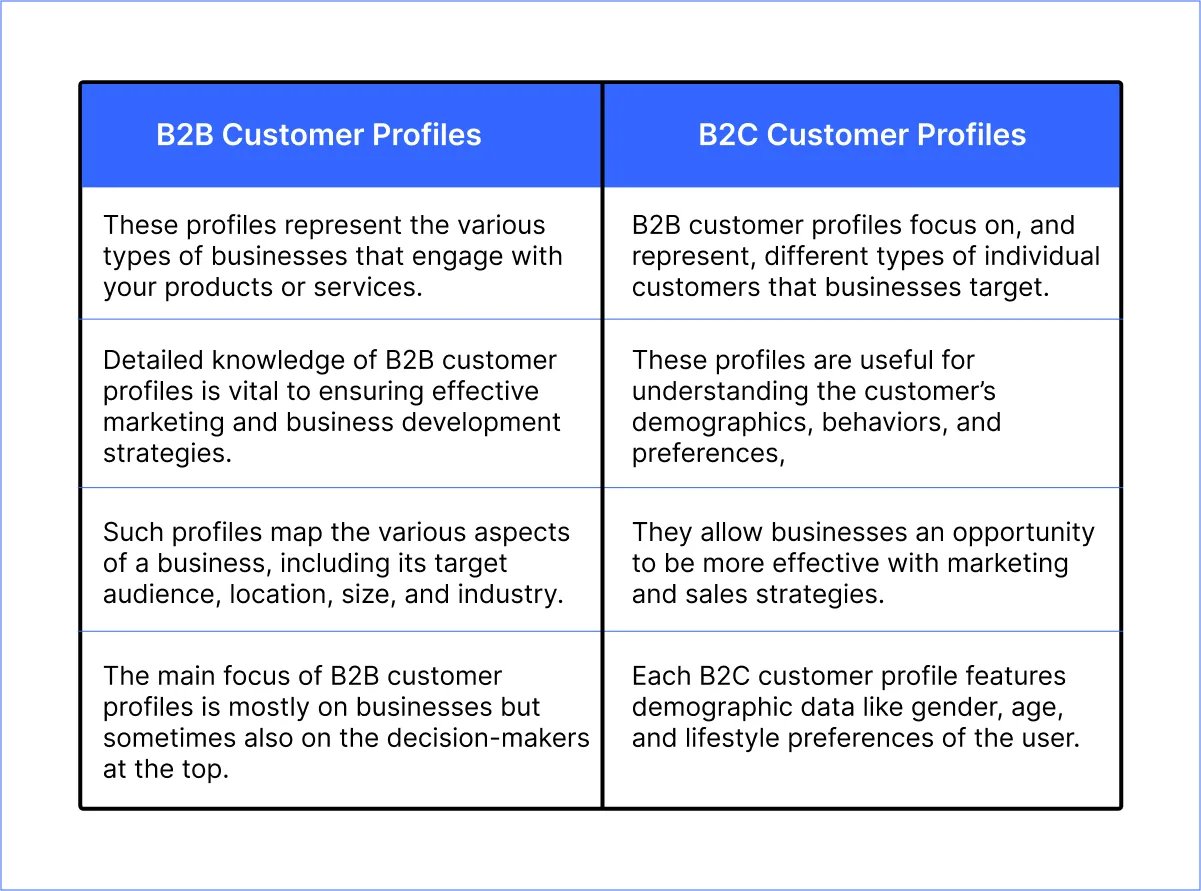
- B2C customer profiles – B2C customer profiles focus on, and represent, different types of individual customers that businesses target. These profiles are useful for understanding the customer’s demographics, behaviors, and preferences, therefore allowing businesses an opportunity to be more effective with marketing and sales strategies. Each B2C customer profile features demographic data like gender, age, and lifestyle preferences of the user.
Different Types of Customer Profiles
Businesses can create different types of customer profiles based on specific objectives and criteria. Industry-specific customer profiles can also be created to better create marketing messages and enhance the value of experiences for customers.
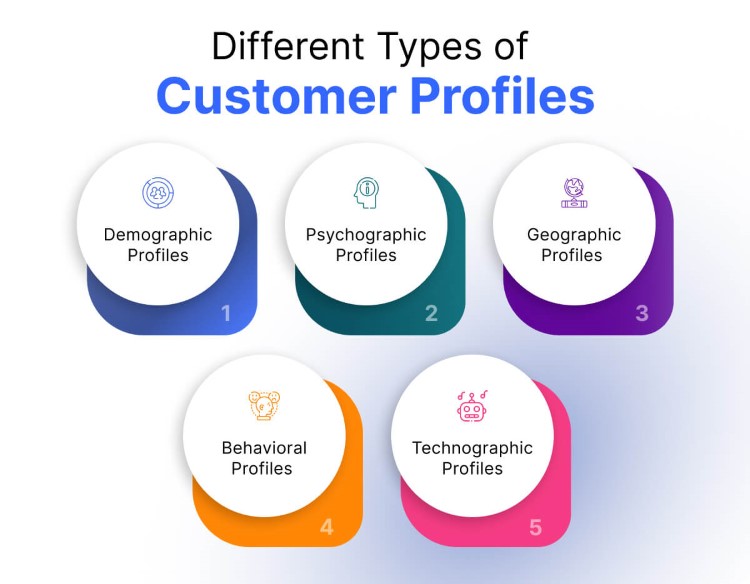
The different types of customer profiles include –
- Demographic Profiles – These profiles are created to understand the basic background of the customers. Some of the key characteristics used in these profiles include age, gender, occupation, education, and marital status.
- Psychographic Profiles – This type of profile gives deep insights into customers’ preferences, behaviors, and buying habits. They focus on the hobbies, interests, motivations, values, and attitudes of the customer.
- Geographic Profiles – This type of profile is created to understand customers based on their geographic location such as the country, region, and city. Based on geographic information, a business can understand the factors that affect customer behavior in specific locations.
- Behavioral Profiles – The purpose of creating behavioral profiles is to understand customers’ past engagement and purchasing behavior with the business. The information thus collected can be used to identify patterns and trends related to customer behavior.
- Technographic Profiles – This type of customer profile is created to better understand customers’ technological habits and preferences. The key information collected includes the devices customers use, the social media platforms they hang out on most often, and the communication channel they prefer the most.
Difference Between a Customer Profile and a Buyer Persona
In the industry, many people use the terms “customer profile” and “buyer persona” interchangeably, assuming that both are the same. They, however, are not the same as each has distinct meanings and serves different purposes for a business’ marketing and sales efforts.
A customer profile offers a general view of the target audience while a buyer persona provides a more in-depth representation of individual customers within the target audience. While customer profiles tell us more about broader strategies, buyer personas convey more information about personalized tactics.
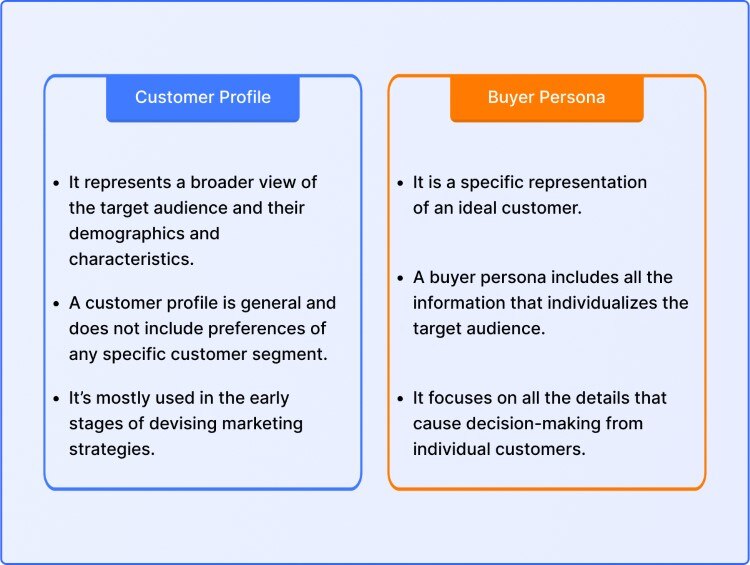
Let’s look at some of the key differences between a customer profile and a buyer persona –
1. Scope
- Customer Profile – It represents a broader view of the target audience and their demographics and characteristics. General information such as age, gender, and location is generally part of a customer profile.
- Buyer Persona – It is a specific representation of an ideal customer and the information it uses goes beyond demographics. A buyer persona gives a deeper knowledge of individual customers that make up the target audience.
2. Level of personalization
- Customer Profile – A customer profile is general and does not include preferences of any specific customer segment.
- Buyer Persona – A buyer persona will be personalized and include all the information that individualizes the target audience.
3. Purpose
- Customer Profile – The purpose of creating a customer profile is a get a broad understanding of the target audience and it’s mostly used in the early stages of devising marketing strategies.
- Buyer Persona – The purpose of creating a buyer persona is to get help at a granular level so that a business is able to create personalized messaging and campaigns.
4. Focus
- Customer Profile – A customer profile focuses on the general motivations and behaviors of customers and may not dig deeper into the details and factors influencing purchase decisions.
- Buyer Persona – A customer persona focuses on all the details that cause decision-making from individual customers.
Key Components of a Customer Profile
A strong customer profile should include more than basic details such as age, gender, or location. To make the profile useful for marketing, sales, product, and customer support teams, it should combine different types of customer data in one place.
Here are the key components every customer profile should include:
1. Demographic Data
Demographic data explains who your customers are. It may include age, gender, income level, education, occupation, marital status, and location. This information helps businesses understand the general characteristics of their target audience.
2. Firmographic Data
For B2B companies, firmographic data is very important. It includes details such as company size, industry, annual revenue, location, business model, and number of employees. This data helps sales and marketing teams identify the right accounts to target.
3. Psychographic Data
Psychographic data explains why customers make decisions. It includes interests, values, lifestyle, opinions, motivations, goals, and challenges. This information helps businesses create messages that connect with customer emotions and expectations.
4. Behavioral Data
Behavioral data shows how customers interact with your business. It may include purchase history, website visits, product usage, preferred channels, content engagement, email clicks, and support conversations. This data is useful for identifying buying intent and personalizing communication.
5. Pain Points and Needs
A customer profile should clearly mention the problems customers want to solve. When you understand their pain points, you can position your product, service, or support experience as the right solution.
6. Communication Preferences
Not every customer wants to communicate in the same way. Some prefer live chat, while others may prefer email, phone, social media, WhatsApp, or chatbot support. Knowing preferred channels helps businesses engage customers at the right time and in the right place.
7. Customer Journey and Interaction History
A complete customer profile should include how customers discover, evaluate, purchase, and interact with your brand after buying. This may include past conversations, support tickets, product demos, feedback, complaints, and renewal history.
Benefits of Customer Profile
Customer profiles are key for businesses to align their strategies with customer needs and expectations. They help organizations make informed decisions and forge fruitful relations with customers.
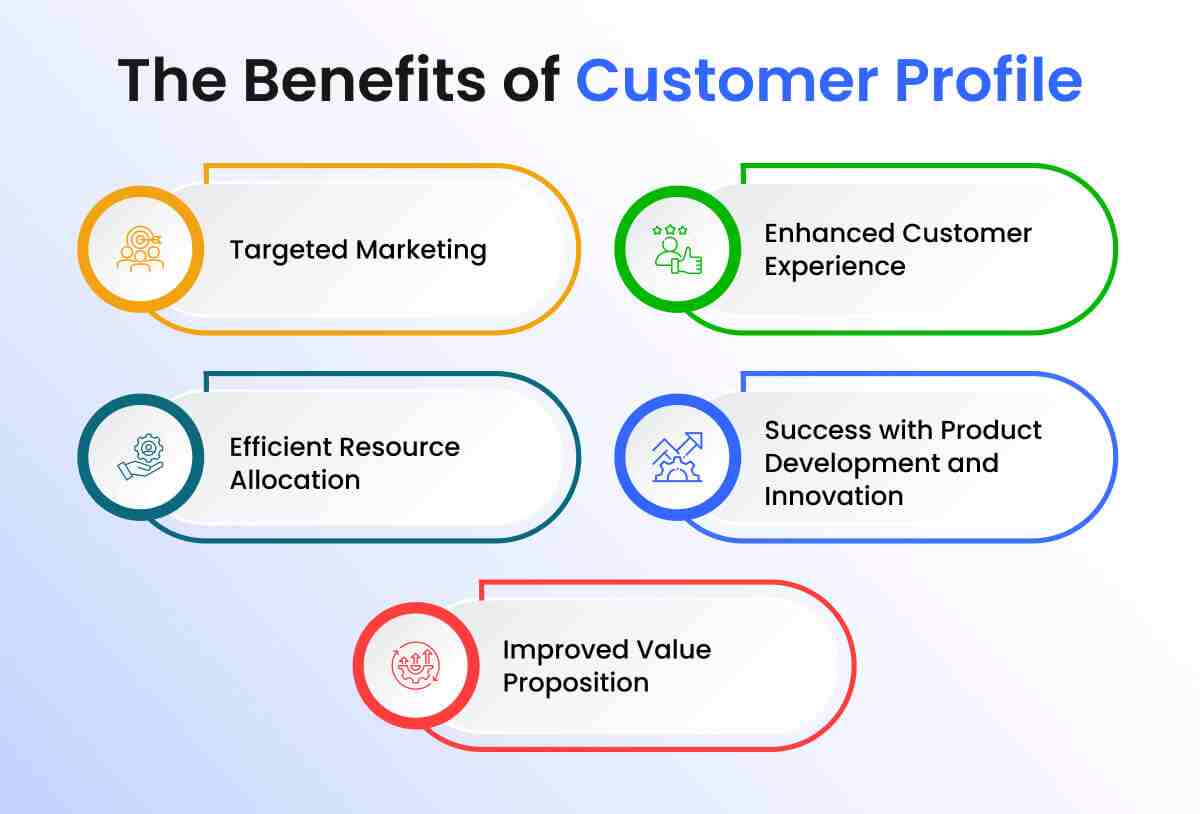
Creating and using custom profiles can offer a number of benefits to businesses, including –
- Targeted Marketing – A business that creates and utilizes customer profiles is able to effectively tailor its marketing efforts to specific customer segments. These profiles are key to creating personalized campaigns and marketing messages that can enhance the effectiveness of marketing strategies.
- Enhanced Customer Experience – By using customer profiles, a business can better understand customer needs and pain points, and this knowledge could prove crucial to customizing interactions and meeting expectations. When a business consistently delivers a personalized and tailored experience, it stands to gain happy customers who share such experiences with 6 or more people.
- Efficient Resource Allocation – A detailed understanding of customer segments, needs, and preferences is always helpful when it comes to focusing on the most relevant customer groups. This kind of focus can help minimize resource wastage and maximize ROI on marketing, sales, and development budget.
- Success with Product Development and Innovation – Businesses can leverage customer profile data to develop new products in a way that better meets customer preferences. When product development is aligned with the customer profile, it always boosts the chances of product success in the market.
- Improved Value Proposition – Using customer profiles is synonymous with having a better understanding of customers. This knowledge could prove essential in developing unique marketing strategies and improving the value proposition for customers. All this can give the business a competitive edge in the market.
Methods of Creating Ideal Customer Profiles
There are several methods that can be used to create ideal customer profiles. A business can use a combination of quantitative and qualitative research techniques to gain a deep knowledge of their customers.
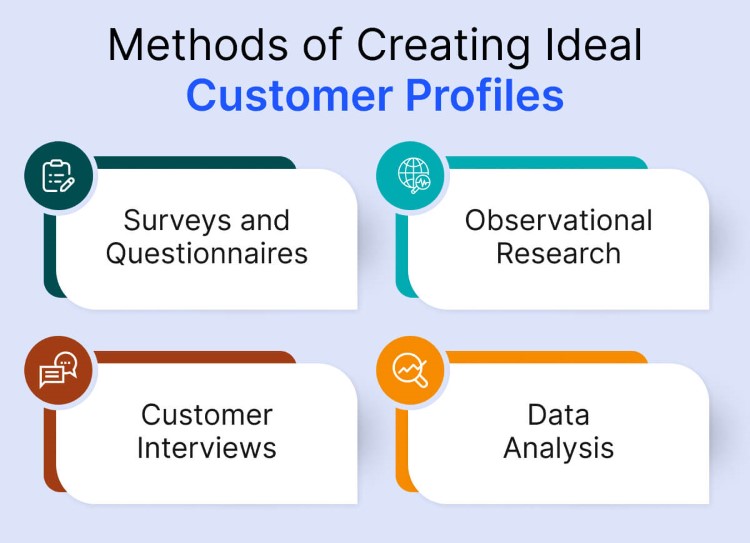
Here are the key methods for creating a customer profile –
- Surveys and Questionnaires – These methods are apt when it comes to collecting direct feedback from customers. A business can use emails, online forms, or physical interviews to do surveys and gather relevant customer data.
- Observational Research – A business can observe how customers engage and interact with their brand, products, or how they make purchasing decisions. Based on such observations, it’s possible to gain vital data about customer preferences and behavior.
- Customer Interviews – Interviews with existing customers are very helpful tools to gain in-depth qualitative information and understand customer pain points and motivations. Like an interview, organizing focus groups with customers can prove equally valuable for gaining key data and building accurate profiles of the audience.
- Data Analysis – Leveraging the existing customer data from various sources such as websites, social media, interactions, etc., could give deep insights. In fact, data analysis has long been a popular method to understand customer behavior and then use the information for creating profiles.
Steps to Create an Ideal Customer Profile
Creating an ideal customer profile relies on identifying your best customers and then learning about them. The profiling should be done before the sales prospecting and lead qualification stages so that it could be leveraged optimally.
Here is a step-by-step guide to creating a customer profile –
1. Use Customer Profile Templates
Pre-made customer profile templates are easy to find. They make the entire process of creating a profile easy and simple. When templates are used, there is not much to do except fill in the blanks based on the specific criteria for your business.
These profiles are very helpful when it comes to gathering and organizing information about your customers. With them, you can easily find a structured format to fill in relevant details about your audience and then cater to their needs.
More so, customer profile templates give a systematic approach to understanding the customers and then tailoring your marketing efforts accordingly. They can also help a lot with product development and ensuring quality with customer service.
2. Define Your Target Market
Defining the target market is a key step in creating an ideal customer profile. In this step, the focus is to identify and specify the individuals that are most likely to be interested in your product or service.
To define the target market, you need to understand many things, including –
- Get a clear understanding of your products, their features, benefits, and USP so that you can match them with what your target audience would be looking for.
- Analyze the demographics and purchase behavior of your existing customers, as this will give some patterns and trends in regard to your prospective customers.
- Do research and find out which demographic groups are likely to be interested in your product or service.
- Understand the preferences and motivations of your customers and see how your offers align with their values and lifestyle.
3. Conduct Market Research
The process of building a customer profile is not complete without market research. It helps you understand your target market better and collect valuable insights. You can collect tons of useful data about your industry, competitors, and potential customers.
More so, a business needs to regularly update and revisit its research to stay informed about market dynamics and industry trends. It will also help in understanding changed customer needs and preferences.
Conducting marketing research needs to involve various aspects, including –
- Always start the research with a clearly defined objective as it will help you gather the kind of data and customer information necessary for creating profiles.
- Choose a research method that best fits your objective, as there are different ways to research such as surveys, focus groups, interviews, etc.
4. Review Your Customer Journey Map
Using the customer journey map can help a lot when you start examining and analyzing your customer profile data. With a journey map, you will get a document that outlines every step and touchpoint that a customer may go through to meet their target with your company.
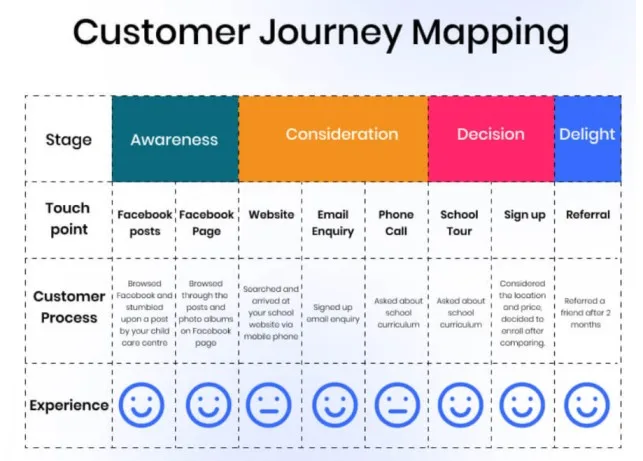
Reviewing a customer journey map can serve you well in understanding how and where customers engage and interact with your brand the most. This engagement will prove key when you design a customer profile. After all, 52% of marketers devise and adapt strategies based on customer interactions and feedback.
More so, a customer journey map can help you understand who you’re looking to target. You can also get a good knowledge of what your customer wants from your business, and how they felt at each step of the journey with the brand.
5. Study Customer Demographics in Detail
The purpose of creating a customer profile is to understand your prospects and align your products or service with their needs and expectations. To know the customer better, you can leverage your CRM tool and analytics tool and gain a deep insight into their behavior to some extent.
For a B2B business, key aspects of demographic data include –
- Location – Understand the location of your customer, where they are based, and whether their identity is local, regional, or national.
- Strength – How big your potential customer is, how many people are employed with them, etc.
- Revenue – Gain information on how much revenue they are generating as this piece of information will help you know the extent you can go to serve them better.
- Tools – It’s important to understand what tools they use and whether your product or software could be the value proposition they need.
6. Create a Behavioral Profile of Your Customer
When all the data and insights are collected, you can go ahead with the review process. The purpose is to review and analyze the data compiled thus far and create a behavioral profile of your ideal customer.
By looking at the data, you will find patterns and commonalities that can give a peek into your ideal customer base. Before building the profile, make sure you have sorted the list and found a similar set of customers, and grouped them based on common traits.
Now, you can name each segment and highlight the common traits that appear most often.
7. Compare with Customer Profile Examples
Crafting an effective customer profile can be both exciting as well as challenging, depending on how you look at it. Once you create it, it will help you get a deep knowledge of the customer’s needs and behaviors.
This deep knowledge is a key purpose of creating a customer profile. Most businesses create customer profiles as they want their marketing and sales strategies to be effective.
This means you will easily find ideal customer profile examples with just a little search and then match and compare them with yours. This comparison can help you prepare a better profile and get improved results with your marketing efforts.
Common Customer Profiles Mistakes
Creating accurate customer profiles is key to effective marketing. When your customer profile is error-free and actionable, it can contribute to the success of your marketing strategies and customer engagement. However, mistakes may happen when you create customer profiles, and that can take away the desired level of accuracy and usefulness of these profiles.
Here are some common customer profile mistakes you should avoid –
Relying on assumptions rather than data
Data is vital when it comes to understanding customers better. When there is enough customer data, it becomes easy to know the preferences, behaviors, and demographics of the audience. However, sometimes assumptions are preferred over data where profiles are created without gathering customer data.
Not segmenting the customer audience on different criteria
Your target audience is never a homogenous group. Rather, it’s always made up of different segments with unique traits and characteristics. So, when you don’t segment the audience, you risk treating all customers as the same. On the other hand, segmenting the audience based on relevant traits can help you target them more specifically.
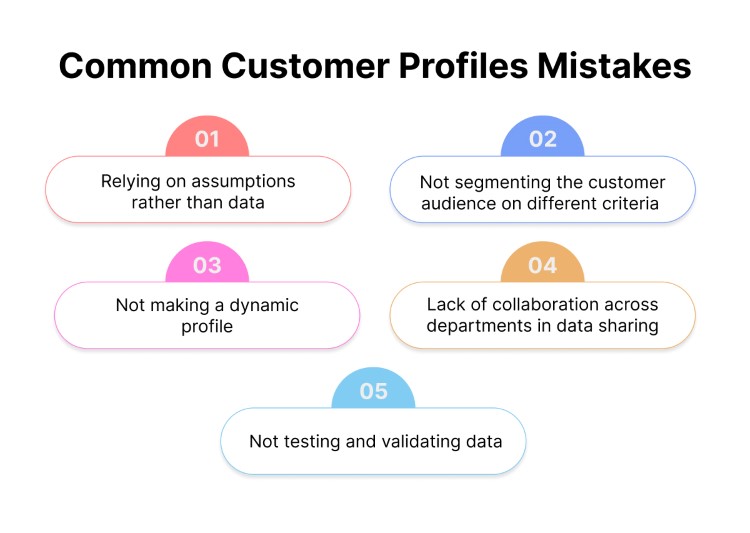
Not making a dynamic profile
We know how customer preferences evolve with time. There are changes in the market and industry trends, which also keep changing from time to time. So, ideally speaking, a customer profile should be dynamic to reflect and consider those changes. However, some businesses create static profiles that don’t reflect various changes in the market and audience.
Lack of collaboration across departments in data sharing
Ideal customer profiles are created when there is a seamless collaboration between different departments. Such profiles may look incomplete and may depict an unclear picture if made without inputs from other departments. So, the goal should be to involve all the departments and gather insights to create a customer profile that gives a complete understanding of the audience.
Not testing and validating data
Regularly testing and validating customer data brings accuracy and adds value to decisions. However, sometimes data is neither tested nor validated through surveys, A/B testing, or customer feedback. This ensures inaccuracy with the data, and when data is not accurate, how can customer profiles depict a real scenario?
Why Use Customer Profile Templates?
Customer profile templates are very helpful for businesses to understand and categorize their customers. They serve as a roadmap to knowing the customers better and engaging with them effectively.
Using customer profile templates can help your business in many ways, including –
- Templates are used to gather and organize essential information about customers, and this data helps a lot in tailoring products or services to meet the specific customer needs.
- Using templates helps create detailed profiles, which allows personalizing marketing efforts.
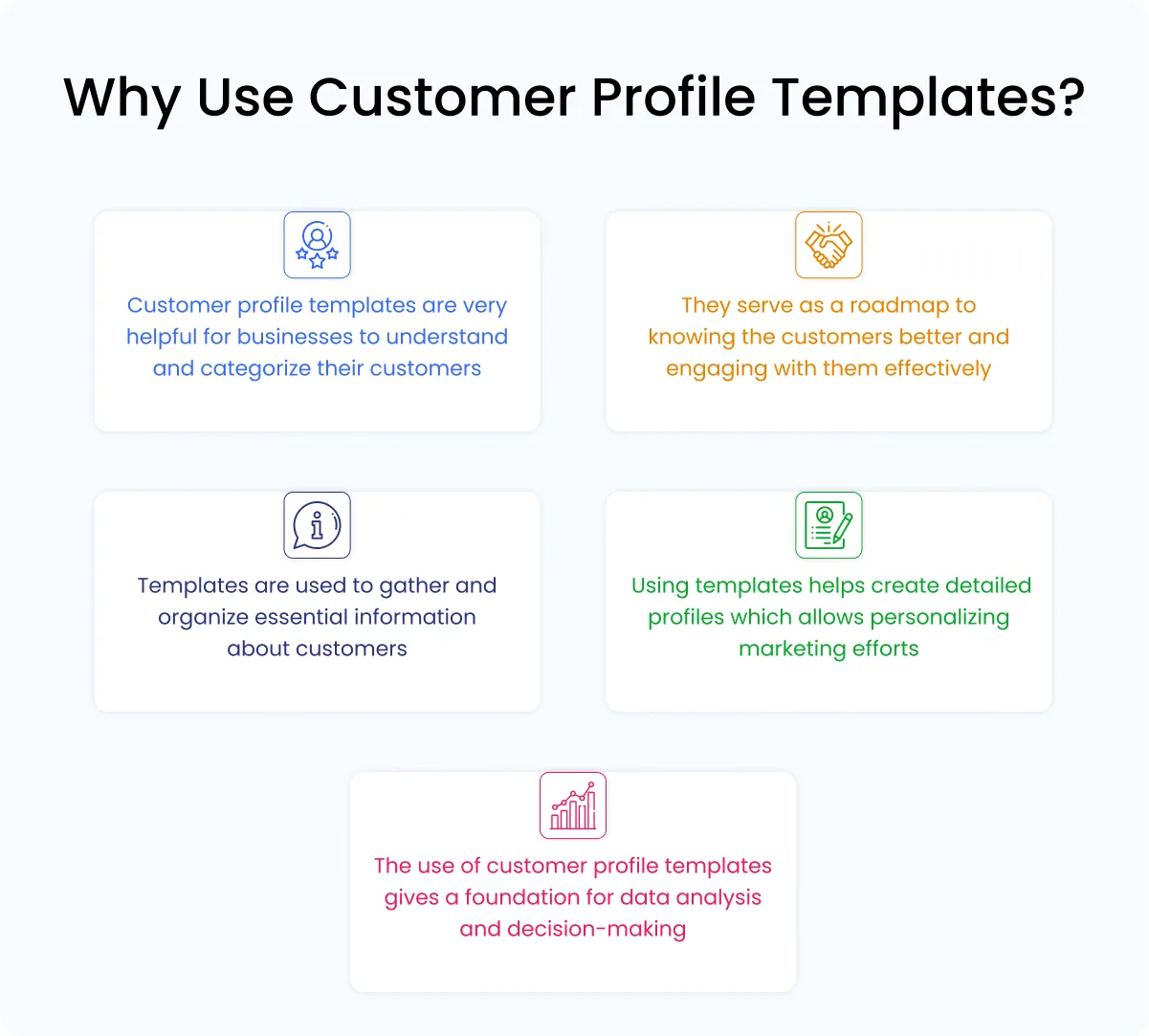
- The use of customer profile templates gives a foundation for data analysis and decision-making.
- When templates are used, they provide guidance about the kind of customer information to collect, and this saves mistakes from the team
- Templates ensure that you don’t have to create a new customer profile every time for marketing and sales strategies, and this saves time and resources
3 Customer Profile Templates You Can Use
Here are some customer profile templates you can use –
1. Basic customer profile template

As the name suggests, a basic customer profile template is easy to understand, and it becomes ideal for a business that has not created a profile before. Obviously, this type of profile will include the basic information, i.e. the most important details. The information it contains includes the customer’s age, location, and interests. It also includes the customer’s preferred communication channels.
2. B2B customer profile template
A B2B customer profile template offers space to add key details about your ideal B2B customers. Such templates use info such as business size, location, revenue, solutions, strengths, and weaknesses. Using this type of template, a business can target the audience in a strategic manner.
3. Ideal customer profile (ICP) template
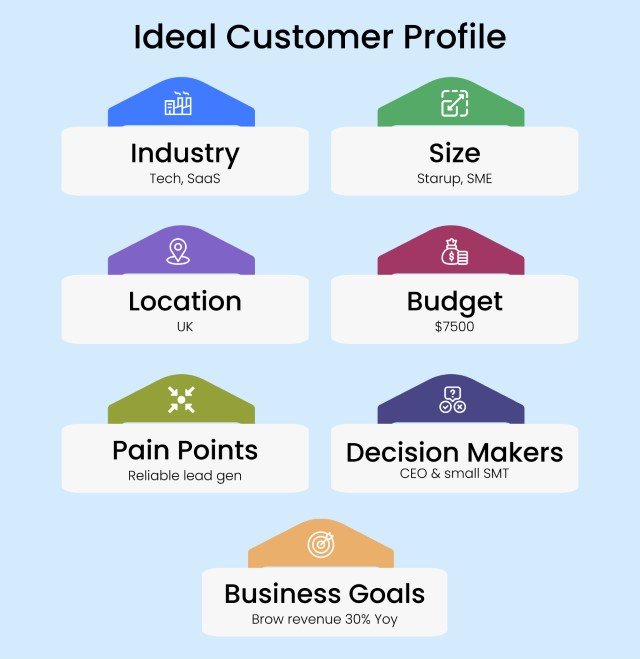
This type of template is suitable for using a scoring system to analyze the potential fit of a customer. It includes all the information that helps in the assessment of a customer’s suitability for the business. It includes different categories for preferences, needs, timelines, and budgets.
Customer Profile Examples
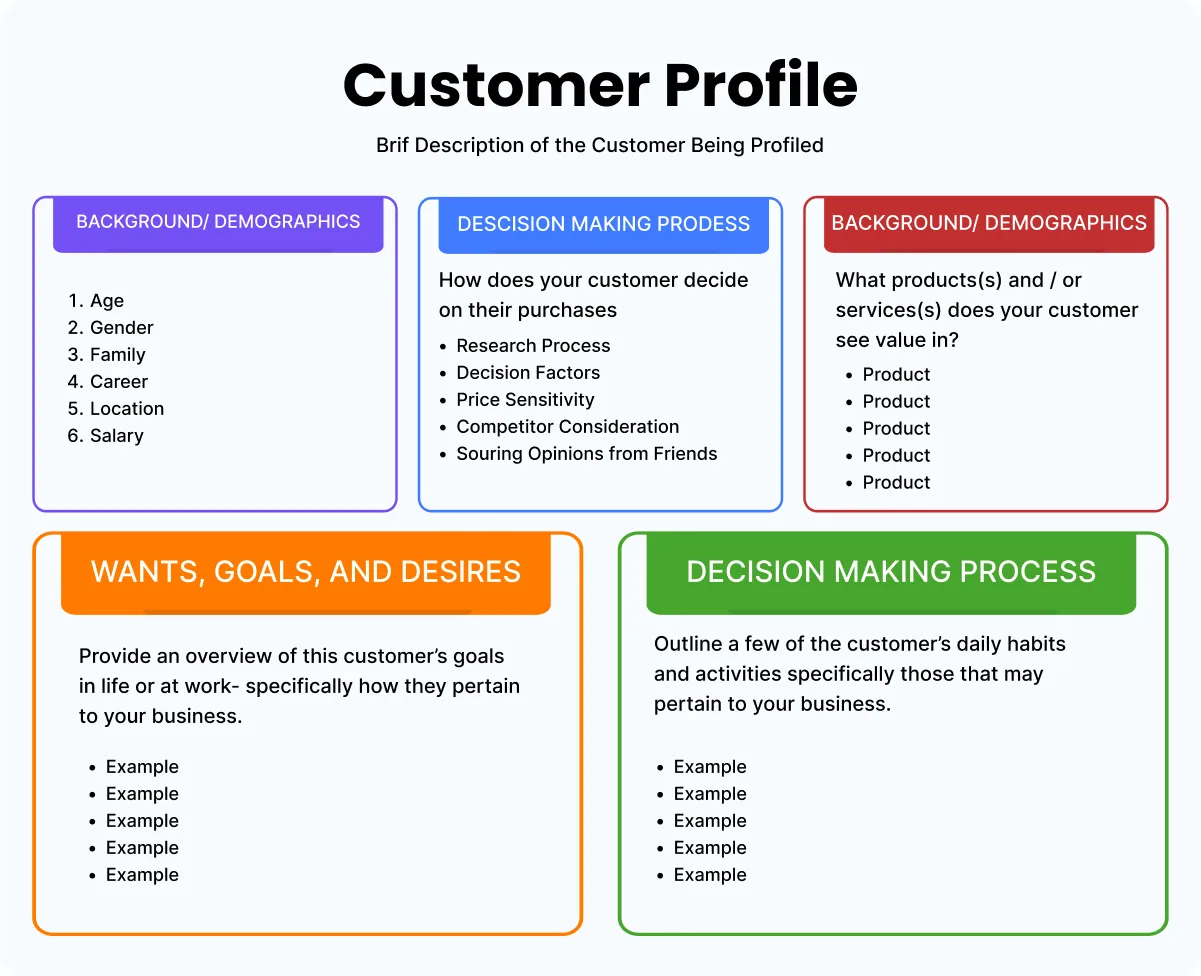
Customer profiles can come in different forms. Here are some customer profile examples –
- Basic customer profile
- Ideal customer profile
Tools You Can Use to Collect Customer Profile Data
Customer profiles become stronger when they are built from real customer data. Businesses can collect this data from different tools and touchpoints, including:
1. Live Chat Software
Live chat conversations reveal what customers need, what problems they face, and what questions they ask before making a purchase. Chat history can help businesses identify common pain points, product interests, and communication preferences.
2. AI Chatbots
AI chatbots can collect customer information automatically during conversations. They can ask qualifying questions, capture contact details, understand intent, and identify frequently asked questions. This makes chatbot data very useful for building customer profiles.
3. CRM Software
CRM tools store customer contact details, deal history, lead status, purchase records, and sales interactions. This information helps sales teams understand which prospects are most likely to convert.
4. Website Analytics
Website analytics tools show how visitors behave on your site. You can see which pages they visit, how long they stay, which content they engage with, and where they drop off. These insights help you understand customer interests and intent.
5. Customer Surveys
Surveys help you collect direct feedback from customers. You can ask about their needs, expectations, satisfaction level, buying motivation, and preferred communication channels.
6. Email Marketing Tools
Email engagement data, such as opens, clicks, replies, and unsubscribes, can show what topics or offers interest your customers most.
7. Social Media Platforms
Social media interactions can reveal customer opinions, interests, complaints, and engagement patterns. These insights can support psychographic and behavioral profiling.
8. Customer Support Data
Support tickets, complaints, live chat logs, and helpdesk conversations can show recurring problems, product confusion, and opportunities to improve the customer experience.
9. E-commerce and Billing Platforms
For online businesses, purchase history, order value, subscription status, payment frequency, and renewal data can help identify high-value customers and buying patterns.
How Often Should You Update Customer Profiles?
Customer profiles should not be treated as one-time documents. Customer needs, preferences, budgets, and behaviors change over time, so profiles must be reviewed and updated regularly.
As a best practice, businesses should review customer profiles at least once every quarter. However, fast-growing companies or businesses with seasonal demand may need to update profiles more frequently.
You should update your customer profiles when:
- You launch a new product or service
- Customer behavior changes noticeably
- Your target market expands
- Sales or conversion rates drop
- You enter a new region or industry
- You collect new survey or feedback data
- Support teams notice repeated customer issues
- Marketing campaigns stop performing well
Keeping profiles updated helps your teams avoid outdated assumptions and make decisions based on current customer behavior.
Customer Profiling Challenges and How to Solve Them
Creating customer profiles is powerful, but it can also be challenging. Here are some common challenges businesses face and how to solve them.
1. Incomplete Customer Data
Many businesses do not have enough data to create accurate profiles. Some customer records may be missing contact details, purchase history, preferences, or interaction data.
Solution: Collect data from multiple touchpoints such as live chat, chatbot conversations, CRM, surveys, website analytics, and support tickets. Use a structured template so every team collects the same essential information.
2. Data Silos Across Teams
Marketing, sales, and support teams often store customer data in separate tools. This makes it difficult to get a complete view of the customer.
Solution: Use integrated tools that allow teams to access shared customer information. A unified customer view helps every department work with the same context.
3. Outdated Customer Profiles
Customer behavior changes over time. A profile created six months ago may no longer reflect current needs, preferences, or buying patterns.
Solution: Review customer profiles regularly and update them based on new conversations, feedback, purchase behavior, and market trends.
4. Relying Too Much on Assumptions
A profile based only on guesses can lead to poor marketing, weak messaging, and inaccurate targeting.
Solution: Use real customer data. Combine quantitative data such as purchase history and website behavior with qualitative data such as surveys, reviews, and support conversations.
5. Over-Segmentation
Creating too many small segments can make campaigns difficult to manage and reduce the overall market opportunity.
Solution: Focus on meaningful differences that affect buying behavior, product needs, communication preferences, or customer value.
6. Lack of Cross-Team Collaboration
Customer profiles become stronger when marketing, sales, support, and product teams contribute their insights. Without collaboration, the profile may remain incomplete.
Solution: Create a shared process for updating profiles. Encourage teams to add new insights from customer conversations, sales calls, product usage, and support interactions.
Role of AI in Customer Profiling
AI can make customer profiling faster, smarter, and more accurate. Instead of manually reviewing large amounts of customer data, businesses can use AI-powered tools to identify patterns, segment customers, and predict future behavior.
AI can help customer profiling in several ways:
1. Identifying Customer Intent
AI chatbots and conversational tools can analyze customer questions and understand what they are trying to achieve. This helps businesses identify whether a visitor is looking for product information, pricing, support, or a quick solution.
2. Detecting Common Pain Points
AI can review customer conversations and identify repeated issues or questions. These insights help businesses understand what customers struggle with most.
3. Improving Customer Segmentation
AI can group customers based on behavior, interests, engagement level, purchase history, or support needs. This makes segmentation more accurate and less dependent on guesswork.
4. Personalizing Customer Experiences
With AI-powered customer data, businesses can recommend relevant content, offers, products, or support responses based on each customer’s profile.
5. Supporting Real-Time Decisions
AI can analyze customer behavior as it happens. For example, if a visitor repeatedly checks pricing pages or asks product-related questions, your team can identify them as a high-intent lead and respond faster.
For businesses using live chat and chatbot solutions, AI-powered profiling can help teams understand customers better, respond with more context, and deliver personalized experiences at scale.
Customer Profile Example in Action
Let’s say an e-commerce business wants to improve conversions and reduce cart abandonment. After analyzing customer data from live chat, chatbot conversations, website analytics, and purchase history, the company identifies one high-value customer segment.
Customer Segment: Repeat visitors who browse product pages, ask questions about delivery time, and abandon carts before checkout.
Profile Insights:
- They are interested in buying but need more confidence before completing the purchase.
- Their main concerns are shipping time, return policy, and payment security.
- They prefer quick answers through live chat or chatbot support.
- They often visit the pricing, product comparison, and FAQ pages before making a decision.
Action Plan:
The business can use this customer profile to improve conversion by:
- Adding proactive live chat messages on product and checkout pages
- Creating chatbot answers for shipping, returns, and payment questions
- Showing trust badges and delivery information near the checkout button
- Sending personalized follow-up emails to cart abandoners
- Training support agents to handle common objections faster
This is how a customer profile moves beyond basic customer information and becomes a practical tool for improving marketing, sales, and customer experience.
How To Gain Useful Data for Your Customer Profiles
Creating ideal customer profiles is easy when your business has useful data at hand. In fact, you can create a better customer profile when you track and analyze customer interactions and engagement at each stage of the journey.
At REVE Chat, we understand the huge value of data in building a powerful customer profile for your business. Our support and engagement tools are world-class and they will prove very helpful in collecting, analyzing, and tracking all sorts of customer data.
You can use our AI-powered chatbot and automate tasks and conversations. The bot can bring tons of useful data to your business that you would need in creating a customer profile. Similarly, we have tools such as video chat software and co-browsing software for visual engagement.
Our powerful live chat software can be paired with the chatbot to offer hybrid support. With this type of support, you not only gain quality data but can also ensure human help for complex matters and automation for routine queries.
Final Thoughts
Building an ideal customer profile is key to understanding and targeting your potential customers. Without this profile, your business might waste resources on marketing and sales.
With REVE Chat, you get the support of quality engagement tools that can give you useful data and analytics about your customers. This can take away a lot of the burden that comes with creating a customer profile.
So, you can sign up with us and check our tools and see how they could be a great value addition to your business.
Frequently Asked Questions
A customer profile should include demographic data like age, location, gender, etc.
You can analyze a customer profile by:
- Identifying customer demographic
- Analyze buying patterns
- Perform surveys
- Map out a customer’s journey
By monitoring sales and other business actions, you can analyze whether your customer profiles are working. This means conversion rates and other metrics are the key indicators to see if customer profiles are effective.
Customer profiles should be updated on a regular basis to refine sales and marketing strategies.
Build AI-powered support with Wize AI
Connect business knowledge, automate support conversations, and improve response quality without managing a complex AI stack.
Explore Wize AI Agent Rate the article

Juwel Rana
Senior Content Writer
Juwel is a Sr. Content Writer at REVE Chat. He specializes in writing about customer service and customer engagement. He is passionate about helping businesses create a better customer experience.
He strongly believes that businesses will be able to understand their customers better and ultimately create more meaningful relationships with them.
View all articles