




Table of Content
Consumer data is a valuable resource for organizations as it can help in making smarter business decisions. However, most companies suffer from data inaccuracy as they lack a proper data management strategy in place. While some are collecting the data in the wrong way, others are not able to manage it properly. All this leads to too much useless data that can create confusion at various levels and may also pose data security issues.
A good customer data management strategy is key to not only strengthening customer communication but also ensuring great experiences across the customer journey. When the data collection and data management are error-free, they can always add to the bottom line. On the contrary, a faulty customer data management system could erode customer trust in your brand, resulting in a loss of goodwill and revenue over time.
In this blog, we will explore customer data management in detail, see its definition and benefits, and also understand some best practices and platforms.
But first, let’s get started with understanding what exactly customer data management is…
What Is Customer Data Management?
Customer data management is the systematic process or practice of collecting, organizing, and using customer data to gain an accurate view of each customer. It is done to better understand customers and serve them more efficiently.
The three key elements of customer data management are –
- The tools
- The framework
- Security measures
An organization can use these elements together or separately to collect and manage customer data, which can help increase conversion and retention.
With effective customer data management, a business can enhance customer relationships and provide personalized experiences. Additionally, it can prove helpful in driving targeted marketing efforts. When organizations use up-to-date customer data, they are able to make informed decisions and improve operational efficiency, resulting in better outcomes for the business.
Types of Customer Data Businesses Should Manage
To build a strong customer data management strategy, businesses first need to understand what types of customer data they collect.
1. Demographic Data
Demographic data includes basic customer information such as:
- Name
- Age
- Gender
- Location
- Job title
- Company size
- Industry
This data helps businesses understand who their customers are and create broad customer segments.
2. Behavioral Data
Behavioral data shows how customers interact with your business. It may include:
- Website visits
- Pages viewed
- Chatbot interactions
- Live chat conversations
- Email clicks
- Product browsing history
- Feature usage
- Abandoned carts
This type of data is useful for understanding customer intent and personalizing communication.
3. Transactional Data
Transactional data includes information about purchases and payments, such as:
- Order history
- Subscription plan
- Payment method
- Average order value
- Refunds
- Renewals
- Cancellations
This data helps businesses identify high-value customers, repeat buyers, and churn risks.
4. Communication Data
Communication data includes all customer conversations across different channels, such as:
- Live chat messages
- Chatbot conversations
- Email conversations
- WhatsApp messages
- Support tickets
- Call records
- Social media messages
For customer support and sales teams, communication data is one of the most valuable sources of insight because it shows customer questions, objections, pain points, and expectations.
5. Feedback and Sentiment Data
This includes customer opinions and satisfaction signals, such as:
- Survey responses
- Product reviews
- CSAT scores
- NPS responses
- Complaint history
- Social media comments
Feedback data helps businesses improve products, services, and customer experience.
Key Customer Data Activities and Strategies
Customer data management is the sum total of gathering, maintaining, and organizing customer data with the purpose to have an accurate view of each customer. It comprises various activities and strategies that collectively contribute to the systematic management of customer information.
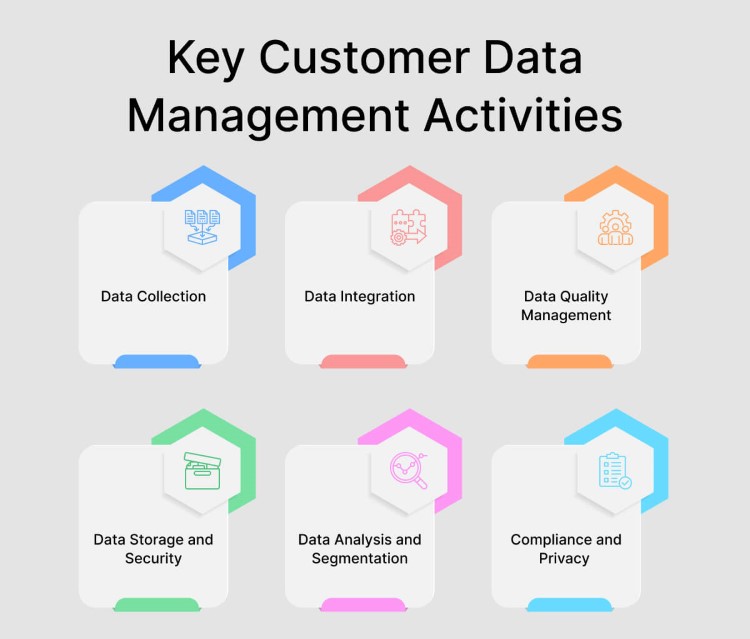
Here are the key activities and strategies that are part of an effective CDM strategy –
- Data Collection – It involves collecting customer data from various sources such as websites, social platforms, surveys, customer interactions, and CRM systems. With data collection, an organization can gather key details such as demographic information and browsing history.
- Data Integration – The purpose of data integration is to combine the different types of data and create a unified view of each customer. When data from various sources are combined and integrated, it gives a complete view and understanding of the customer’s journey with the business.
- Data Quality Management – This activity is done to achieve the consistency and accuracy of data so that they give a complete picture. Here, errors and redundancies are removed through validation and standardization to ensure the quality of the data.
- Data Storage and Security – The goal of data storage and security is to implement a reliable and secure system in place to keep customer data safe. Utilizing standard data storage solutions and implementing robust security measures are key parts of this stage to safeguard sensitive customer information.
- Data Analysis and Segmentation – The customer data thus collected and stored needs to be analyzed and segmented to gain insights. Such an analysis could help give a peek into customer behavior. A business can also identify patterns and then segment customers accordingly for tailored marketing and personalized customer service.
- Compliance and Privacy – Any customer data that is collected should adhere to the standard compliance and privacy to ensure customer privacy. Here, the goal for organizations is to comply with relevant laws such as GDPR and adopt the right procedures and policies for data governance.
Common Customer Data Management Challenges
Even though customer data management brings huge value to a business, implementing it is not always easy. Many organizations collect data from multiple touchpoints, but struggle to organize, secure, and use that data effectively.
Here are some common customer data management challenges businesses face:
1. Data Silos Across Teams
Customer data often sits in separate tools used by sales, marketing, support, finance, and operations teams. For example, the marketing team may have campaign engagement data, while the support team has chat history and complaint records.
When these systems are not connected, teams end up working with incomplete customer information. This makes it harder to deliver personalized experiences, resolve issues faster, or understand the full customer journey.
How to solve it:
Use integrated customer engagement tools, CRM systems, and customer data platforms that allow teams to access a unified customer profile from one place.
2. Poor Data Quality
Bad data can be worse than no data. Duplicate records, outdated phone numbers, invalid email addresses, incorrect purchase history, or inconsistent naming formats can reduce the value of your customer database.
Poor data quality can lead to wrong segmentation, irrelevant marketing campaigns, inaccurate reporting, and poor customer experiences.
How to solve it:
Create a process for regular data validation, deduplication, and cleansing. Automating data entry through live chat forms, chatbots, and CRM integrations can also reduce manual errors.
3. Difficulty Integrating Data from Multiple Sources
Businesses collect customer data from websites, live chat, chatbots, social media, email campaigns, ecommerce platforms, CRM systems, ticketing tools, and offline interactions. The challenge is bringing all this data together in a usable format.
Without proper integration, businesses may have a lot of data but very little insight.
How to solve it:
Choose tools that support integrations with your CRM, helpdesk, ecommerce platform, analytics tools, and communication channels. This allows your business to create a complete view of every customer interaction.
4. Data Security and Privacy Risks
Customer data often includes sensitive information such as names, email addresses, phone numbers, location, purchase history, and support conversations. If this data is not protected, it can lead to data breaches, legal issues, and loss of customer trust.
How to solve it:
Apply strong security practices such as data encryption, role-based access control, secure storage, regular audits, and compliance with privacy regulations such as GDPR or CCPA where applicable.
5. Collecting Too Much Unnecessary Data
Some businesses collect data simply because they can. But collecting unnecessary data can increase storage costs, create compliance risks, and make customer profiles harder to manage.
How to solve it:
Before collecting any customer data, ask:
- Why do we need this data?
- Which team will use it?
- How will it improve the customer experience?
- Is it legally and ethically collected?
- Can we achieve the same goal without collecting it?
The best CDM strategy focuses on collecting useful, relevant, and consent-based customer data.
Benefits of Customer Data Management
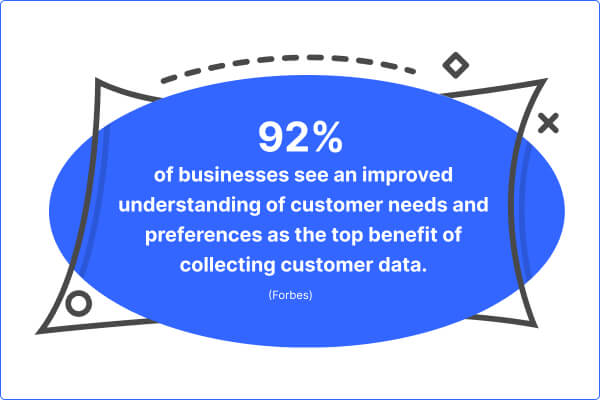
Data-driven companies are 23 times more likely to acquire new clients. This shows how effective customer data management is vital for not only delivering personalized experiences but also for building stronger customer relationships. It can help businesses optimize their operations and benefit from the power of customer insights.
There are several benefits to organizations when they have an efficient CDM in place –
- Collecting, consolidating, and analyzing data from multiple touchpoints can offer a holistic view of customers.
- A business that collects and analyzes customer data is better able to understand the needs, preferences, and behaviors of its customers.
- Customer data is always essential for personalized marketing and tailored offerings.
- Effectively managing customer data is important for segmenting customers based on different parameters such as demographics, search history, and purchase preferences.
- A business can increase conversion rates and drive higher revenue only when it segments customers and offers them targeted marketing campaigns.
- Customer data management is key when it comes to engaging with customers in a meaningful and personalized manner.
- Effective management of customer data is essential for streamlining operations by eliminating data silos and centralizing the data.
- Analyzing customer data vital for is gaining customer insights and making informed decisions related to engagement, marketing, and product development.
- A business can achieve improved cross-channel integration and provide uniform experiences to customers across channels and touchpoints only if it does manage customer data.
Popular Customer Data Management Platforms
There are quite a few popular and powerful customer data management platforms available for organizations that can help them provide key customer insights and analytics. The key is to choose a platform that is the right fit for the specific needs and business goals.
Here are some popular customer data management platforms –
Microsoft Dynamics 365 Customer Insights
It’s a powerful CDM solution that enables businesses to unify customer data and gain actionable insights. Using this tool, an organization can create customer profiles and also leverage its AI-driven analytical capabilities.
Key Features
- It allows connecting and integrating customer data from various sources, including CRM systems, websites, and third-party applications.
- It uses AI and ML capabilities to generate deep insights from customer data.
- Real-time analytics and visualization tools are available.
- Seamless integration with Microsoft Ecosystem is possible.
Salesforce Customer 360
It’s a comprehensive customer management platform that helps businesses unify customer data and create a holistic view. One of the key highlights of this platform is the availability of different tools for analytics, data integration, and segmentation.
Key Features
- It allows for connecting and integrating data from external systems and apps.
- It supports various integration methods, including APIs.
- Real-time data synchronization across connected systems is possible.
- AI-Powered insights to get valuable insights from customer data.
Adobe Experience Platform
It’s a cloud-based data management platform (DMP) that allows businesses to unify and centralize customer data from various sources. Using this platform, it’s possible to create a 360-degree view of the customers across touchpoints and channels.
Key Features
- It can integrate with various data sources, such as CRM systems, and allows data gathering from multiple channels.
- Can allow the aggregation of data from different sources.
- Has AI-powered features that can help in analyzing data patterns and optimizing marketing campaigns.
Customer Data Management Best Practices
Your business needs the right strategy to manage customer data effectively. It’s also important to adhere to the industry norms in data management. There are some rules and principles which if adopted can add great value to your customer data management efforts.
Here are the best practices for customer data management –
1. Develop a Robust Data Management Strategy
Collecting customer data should be a strategic affair. If it’s done without a strategy, all its intended benefits might be lost in transition. The right way is to make a robust strategy for not only collecting but governing the data as well.
- Developing a strategy means standardizing data collection so that all your teams and departments follow the same rules for data collection.
- When data is collected in a strategic manner, it greatly minimizes errors and confusion across departments.
- It’s equally important to validate customer data before making use of them.
The purpose of developing a strategy for customer data collection is to ensure efficiency, quality, and compliance with the entire process. This can minimize risks and errors with data and ensure the real benefits of the data.
2. Focus Only on Critical Data
Not all data would be useful for your organization. So, there is no point in collecting data that strains your customer data platform (CDP) and makes it overloaded. In fact, collecting needless data might also be not liked by your customers.
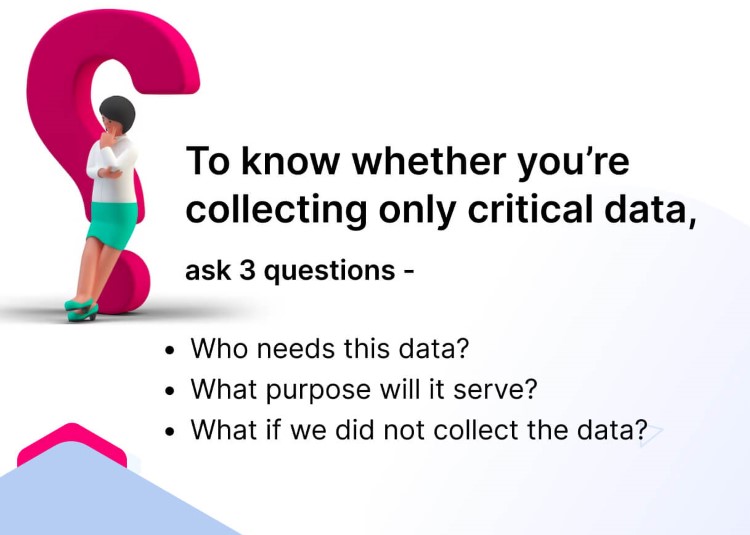
Every piece of data should be collected with a focus on key aspects, such as –
- Who needs this data?
- What purpose will it serve?
- What if we did not collect the data?
The right strategy is always to collect data that address specific business needs. This will avoid wasting resources on useless data and keep your team focused on critical data only.
3. Prioritize Data Sharing Across Departments
Many businesses lack a proper data governance strategy so they witness data silos. In this situation, different departments collect customer data yet don’t share it with each other. This can lead to confusion.
Data silos are never good for any organization as they show how different teams and departments are not leveraging the data despite collecting it. After all, if data is not shared across departments, not everyone will have a complement understanding of the customer journey and touchpoints.
Sharing data is key for many things, including –
- Making unified customer profiles
- Meeting customer expectations
- Creating personalized marketing campaigns
- Ensuring a better customer experience
4. Give More Emphasis to Data Security
Did you know, 61% of consumers are ready to trust only those companies that use relevant personal information transparently?
Collecting customer data comes with great responsibility. Organizations must ensure that the data is secure and never compromised. The focus should always be on ensuring that customer data is protected from unauthorized access and use.
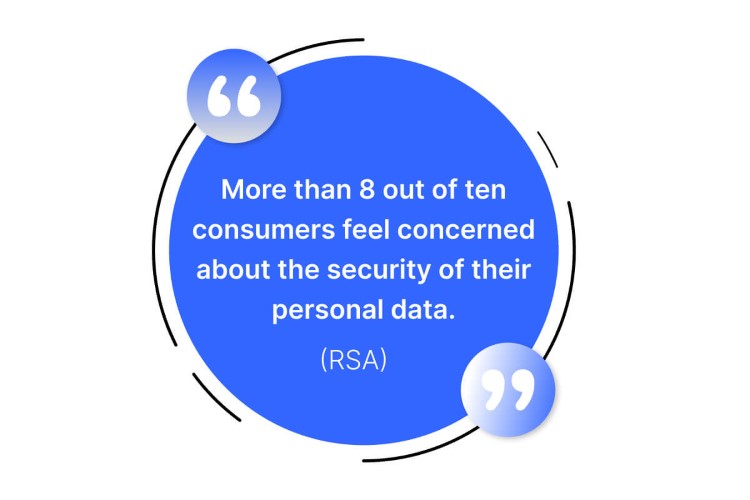
Similarly, customers always expect that the data and information collected from them are safe and away from any breach. To secure customer data, it’s important to use a data platform that follows high-security standards.
The platform you use for customer data must be one that regularly reviews and refines its security practices. If the platform is not improving its security practices, it might not ensure the kind of safety you expect for data.
5. Validate Data for Accuracy
Data decay is natural. It happens over time and can also happen at the point of data collection. Since data changes over time, chances of inaccuracy are always high. When data is not accurate, it shows that the organization lacks a defined data governance strategy in place. Using automatic data validation can help minimize data inaccuracy to some extent.
Validating data on a consistent basis can keep it accurate and also ensure the right information at the disposal. One way to validate data is by clearing up the data of customers your business has not engaged in months.
6. Make Your Customer Data Actionable
One of the essentials of customer data management is to combine different sets of data into a single customer view for a better understanding of the audience. To do this, you can think of combining transaction data with interaction data as it will provide a unified view of the customer.
It’s equally important to keep the data consistent and complete so that teams can take action based on it. When customer data is standardized, it becomes fit for you, resulting in improved efficiency with productivity. You can also automate data management tasks using AI tools and get key insights about customers.
Role of AI in Customer Data Management
Artificial intelligence is changing the way businesses collect, manage, and use customer data. Instead of manually reviewing thousands of customer records and conversations, AI-powered tools can help businesses automate repetitive tasks and uncover insights faster.
Here are some ways AI improves customer data management:
1. Automated Data Collection
AI-powered chatbots and live chat tools can collect customer information during conversations. For example, a chatbot can ask qualifying questions, capture contact details, identify customer needs, and send the information to a CRM automatically.
2. Data Cleaning and Validation
AI can help detect duplicate records, missing fields, inconsistent formats, and outdated information. This improves data quality and ensures teams work with accurate customer profiles.
3. Customer Segmentation
AI can analyze customer behavior, purchase history, chat conversations, and engagement patterns to group customers into meaningful segments. This helps businesses send more relevant messages and offers.
4. Predictive Insights
AI can help predict customer behavior, such as:
- Which leads are most likely to convert
- Which customers may churn
- Which customers need proactive support
- Which products a customer may be interested in next
These insights help sales, marketing, and support teams take action at the right time.
5. Personalized Customer Communication
AI can help businesses personalize responses, recommendations, and support experiences based on customer history and intent. For example, if a returning customer asks a question through live chat, the support agent can view previous conversations and provide faster, more relevant help.
6. Workflow Automation
AI can automate routine tasks such as assigning chats, routing tickets, tagging conversations, sending follow-up messages, and updating customer records. This reduces manual work and improves team productivity.
Customer Data Management vs CRM vs CDP vs Customer Analytics
Many businesses use terms like customer data management, CRM, CDP, and customer analytics interchangeably. However, they are not the same.
Customer Data Management
Customer data management is the overall process of collecting, organizing, securing, maintaining, and using customer data. It is the broader strategy that defines how customer data should be handled across the business.
CRM
A CRM, or customer relationship management system, stores and manages customer interactions, sales activities, contact details, and relationship history. It is mainly used by sales, marketing, and support teams to manage customer relationships.
CDP
A customer data platform collects data from multiple sources and creates unified customer profiles. CDPs are often used for advanced segmentation, personalization, analytics, and marketing automation.
Customer Analytics
Customer analytics focuses on analyzing customer data to find patterns, trends, and insights. It helps businesses answer questions such as:
- Which customers are likely to churn?
- Which campaigns generate the best leads?
- Which products are most popular?
- Which customer segments bring the most revenue?
In simple terms, CDM manages the data, CRM tracks customer relationships, CDP unifies customer data, and customer analytics turns that data into insights.
Data Governance in Customer Data Management
A strong customer data management strategy needs proper data governance. Data governance defines who owns customer data, who can access it, how it should be used, and how it should be protected.
A good data governance framework should include:
1. Data Ownership
Every business should clearly define who is responsible for customer data. For example, marketing may own campaign data, sales may own lead data, and support may own conversation data. However, all teams should follow the same rules for data quality, security, and usage.
2. Access Control
Not every employee needs access to every type of customer data. Businesses should use role-based access control so team members only see the information required for their work.
3. Data Usage Policies
Create clear rules for how customer data can be used. This includes guidelines for marketing campaigns, personalization, support interactions, reporting, and third-party integrations.
4. Compliance Management
Customer data practices should align with relevant privacy laws and industry regulations. Businesses should collect consent where required, explain how data will be used, and allow customers to manage their preferences.
5. Data Retention and Deletion
Customer data should not be stored forever without a clear reason. Define how long different types of data will be kept and when they should be deleted or anonymized.
Practical Tips to Maintain Customer Data Quality and Security
Managing customer data is not a one-time activity. Businesses need to maintain it regularly to keep it accurate, secure, and useful.
Here are some practical tips:
1. Validate Data at the Point of Collection
Use proper form fields, dropdowns, email validation, and required fields to reduce incorrect entries. Chatbots can also guide users to provide complete and accurate information.
2. Remove Duplicate Records
Duplicate customer records can confuse sales and support teams. Regularly check for duplicate names, email addresses, phone numbers, and company records.
3. Update Customer Profiles Regularly
Customer information changes over time. People change jobs, phone numbers, locations, and preferences. Make it a practice to refresh customer records after major interactions.
4. Use Secure Integrations
When connecting customer data tools with CRM, ecommerce, helpdesk, or marketing platforms, make sure integrations are secure and reliable.
5. Audit Data Access
Regularly review who has access to customer data. Remove access for former employees or team members who no longer need it.
6. Train Your Team
Even the best CDM tools will fail if teams do not know how to use them properly. Train your sales, support, and marketing teams on data entry standards, privacy rules, and security practices.
Boost Your Business’ Customer Data Management Capabilities with REVE Tools
Managing customer data is essential for getting a complete view of each customer and personalizing communication at each stage of the journey. When a business manages customer data effectively, it’s able to serve them well, resulting in improved conversion and profits.
We, at REVE Chat, are aware of how customer data holds immense value for an organization and how its management is equally important. We have the right tools and technology that can help businesses in their customer data management journey.
Using our AI-powered chatbot, a company can automate tasks across sales, marketing, and support and gather key customer data without involving any human personnel. In addition, we have visual engagement tools such as video chat and co-browsing software for helping customers in a collaborative manner and ensuring them a great experience.
Our live chat software can be paired with the chatbot to engage customers better and get key data out of such conversations.
Final Thoughts
A powerful customer data management system is vital in today’s time to get a holistic view of your customers and serve them excellently. To manage customer data effectively, it’s important to invest in the latest AI-powered technology and solutions.
This is where REVE Chat tools could prove useful.
You can sign up with us and test our various engagement tools that can also help in getting important customer data.
Frequently Asked Questions
Customer data management is the process of collecting, organizing, storing, securing, and using customer data to understand customers better and deliver more personalized experiences.
Customer data management is important because it helps businesses create a unified view of customers, improve personalization, strengthen customer relationships, make better decisions, and maintain data privacy.
The main types of customer data include demographic data, behavioral data, transactional data, communication data, and customer feedback data.
The biggest challenges include data silos, poor data quality, integration issues, data security risks, compliance requirements, and collecting unnecessary data.
AI can help collect customer data, clean records, segment customers, detect patterns, predict customer behavior, automate workflows, and personalize customer communication.
Customer data management is the overall strategy for managing customer data, while CRM is a tool used to manage customer relationships, interactions, and sales or support activities.
Build AI-powered support with Wize AI
Connect business knowledge, automate support conversations, and improve response quality without managing a complex AI stack.
Explore Wize AI Agent Rate the article

Ehsanur Rahman
Head of Customer Communication
Ehsanur Rahman, the Head of Customer Communication at REVE Chat is dedicated to implementing advanced solutions that boost customer interactions and satisfaction. Ehsanur's passion for technology and customer service drives his commitment to delivering exceptional experiences.
View all articles