




Table of Content
“Patience is a Virtue”, many of us know this phrase. But will your customers be fine with it if you make them wait for hours to resolve their issues or reply to their queries?
The answer will be a big ‘NO.’ In this fast-paced world, for online communication, everyone expects an immediate response and that’s why Real-Time Communication (RTC) comes into the picture.
Real-time communication didn’t develop overnight. It first began with the telegraph and then evolved to the telephone, and later led to a new era of real-time chat interactions.
So, what’s RTC all about? Is it really helpful for businesses? What are the different types and RTC tools? In this blog post, I will explain everything. So, keep reading!
What is Real-Time Communication?
Let’s look into the definition first!
“Real-time communication (RTC) refers to a form of online communication that allows users to interact with one another in real-time without any significant delay. With RTC, information is transmitted instantaneously between senders and receivers, even across vast geographical distances, without being stored or buffered at any intermediate points.”
In technical terms, RTC involves live telecommunications without any transmission delays, typically utilizing a peer-to-peer connection that minimizes latency. Real-time communication applications facilitate the direct transmission of data between the source and destination, without intermediaries or buffering along the way.
Real-time communication has become increasingly vital in today’s fast-paced economy, where we always expect an instant response.
This technology has revolutionized the way we interact and share information, turning the world into a global society where communication and data exchange occurs at lightning speed, regardless of distance.
Real-Time Communication vs Asynchronous Communication
Real-time communication is different from asynchronous communication because the exchange happens instantly or with very little delay. In real-time communication, both sides can respond in the moment, just like a live conversation.
Asynchronous communication, on the other hand, does not require both people or systems to be active at the same time. Email, voicemail, support tickets, and forum replies are common examples. The message is stored first, and the receiver responds later.
Here is a simple comparison:
| Factor | Real-Time Communication | Asynchronous Communication |
|---|---|---|
| Response time | Instant or near-instant | Delayed |
| User expectation | Immediate reply | Reply later |
| Common examples | Live chat, voice call, video call, instant messaging | Email, voicemail, support ticket, forum post |
| Best for | Urgent questions, live support, sales conversations, collaboration | Detailed updates, documentation, non-urgent communication |
| Customer experience | Fast and interactive | Slower but structured |
For businesses, both are important. Real-time communication helps when customers need fast answers, quick decisions, or immediate support. Asynchronous communication works better when the issue requires deeper investigation, internal review, or a detailed written response.
The best customer communication strategy usually combines both. A customer can start with live chat or an AI Agent for instant help, and if the issue needs more time, the conversation can move into a ticket without losing context.
How Does Real-Time Communication Work?
Real-time communication works by creating a fast communication path between two or more users, devices, or systems. The goal is to reduce delay so that messages, audio, video, or data can be exchanged almost instantly.
A simple real-time communication flow looks like this:
- The user starts a communication request
This can be a live chat message, voice call, video call, WhatsApp message, or in-app conversation. - The platform connects the sender and receiver
The RTC system identifies where the message or media should go. In customer communication, this may mean connecting a website visitor to a support agent, AI Agent, chatbot, or routing workflow. - Data is transmitted with low latency
The message, voice, video, or file is sent as quickly as possible. In many RTC systems, the data is not stored for later delivery before reaching the receiver. The communication happens live. - The receiver responds in the same session
The other person or system can reply instantly. This creates a continuous two-way interaction. - The conversation context is maintained
In a business environment, the communication platform can preserve customer details, previous messages, page activity, order information, or support history so the next response is more relevant.
Real-time communication can happen in two main modes:
Half-Duplex Communication
In half-duplex communication, both sides can send and receive information, but not at the same time. A simple example is a walkie-talkie. One person speaks while the other listens, and then they switch.
Full-Duplex Communication
In full-duplex communication, both sides can send and receive information at the same time. A phone call or video call is a common example. Both people can speak and listen simultaneously.
For modern businesses, full-duplex communication is especially important because it creates a natural, interactive customer experience. It allows customers, agents, and AI systems to exchange information without unnecessary waiting.
A History of Real-Time Communication: From Morse Code to Modern Technology
RTC was first introduced to the general public in America with the development of the public switched telephone network (PSTN) in the early 1900s, which brought about a significant transformation in long-distance communication.
In 1915, the launch of a transcontinental telephone line marked a historic moment, as it enabled users located over 3,000 miles apart to engage in interactive conversations as if they were physically present in the same room.
Real-time communication underwent further revolutionary changes in the latter part of the 20th century, thanks to the advent of smart devices, high-speed internet connection, and mobile telephony.
These technologies enabled the development of new modes of communication, such as instant messaging (IM), video calls and conferences, Internet Protocol (IP), and more.
RTC technology reached another significant milestone in 2011 with Google’s release of the open-source WebRTC project. WebRTC utilizes JavaScript application programming interfaces (APIs) to facilitate peer-to-peer (P2P) audio and video communication directly within web browsers, without requiring any special plugins or standalone applications.
Examples of Real-Time communication
Emailing and chatting are two distinct forms of communication. Email is a time-shifting mode of communication where the expectation is to send messages and receive responses later, and data is stored between the sender and receiver.
Email communication prioritizes delivering information reliably rather than how fast it reaches there. In contrast, chatting involves real-time communication where we expect instant responses as if we were interacting face-to-face. This is just one example to make you understand the concept. Now let’s look into other forms of RTC.
1. Voice calls and Video Chat
Voice and video chat enable users to have a peer-to-peer interaction experience, regardless of their physical distance, and are effective in personalizing communication between parties.
Whether it is for customer service, dating, advisory services, healthcare, or concierge services, integrating online chat service into your app helps you to provide personalized services, leading to increased engagement and customer retention.
2. Chatbot
It’s an AI-powered customer service solution that lets your customers get instant assistance on your website, mobile app, or even other messaging platforms. It automates your customer support and other business operations and frees up your support team to concentrate on other complex tasks.
Chatbots can be programmed to understand natural language and respond to users in a conversational manner, providing assistance or information on a range of topics.
3. Live Chat
Live chat is an example of real-time communication that enables users to interact with customer support representatives, sales representatives, or other users in real-time via text-based messaging.
You can easily integrate an AI-assisted live chat into your websites, mobile applications, and other social media platforms, to offer quick and efficient service to your customers.
4. Live Broadcast
The live broadcast is a real-time communication tool that allows users to transmit live audio and video content over the internet to a remote audience. It is a form of live streaming that enables users to share experiences, events, or messages in real-time.
The live broadcast is commonly used for broadcasting live events, sports matches, news, concerts, or conferences. It provides a sense of immediacy and engagement, allowing users to connect with their audience in real-time and interact with them through comments, polls, or Q&A sessions.
5. Instant Messaging
It is another great real-time communication tool that enables us to send and receive text messages over the Internet. It allows users to have private or group conversations with other users who are also online, creating a sense of immediacy and interactivity.
Instant messaging has become increasingly popular as a tool for personal and business communication, as it provides a quick and efficient way to exchange information and stay connected with others.
6. Social Media
It allows us to connect with each other online and share information, ideas, and interests. Social networking platforms such as Facebook, Instagram, LinkedIn, and Twitter have become popular ways among us to build relationships, find new opportunities, and stay connected with our friends and colleagues.
Social networking has many benefits for different businesses too including facilitating communication and collaboration, building professional networks, promoting brands, and creating brand awareness.
Real-Time Communication Use Cases for Businesses
Real-time communication is not only useful for personal conversations. It has become an important part of how modern businesses support customers, convert leads, manage teams, and deliver faster service.
1. Customer Support
Customers usually contact a business when they need help quickly. Real-time communication allows support teams to answer questions, troubleshoot issues, share links, collect details, and guide customers without making them wait for email replies.
Live chat, AI Agents, chatbots, video calls, and co-browsing can all improve the support experience. For example, if a customer is stuck during checkout, a live chat agent or AI Agent can step in immediately and help them complete the purchase.
2. Sales and Lead Generation
Real-time communication can also improve sales conversations. When a visitor is exploring pricing, comparing products, or asking about availability, a fast response can make a big difference.
Instead of waiting for a contact form reply, businesses can use live chat, AI Agents, or messaging channels to qualify leads, answer product questions, recommend the right option, and route high-intent prospects to the sales team.
3. Ecommerce Assistance
In ecommerce, customers often need quick answers before buying. They may ask about product size, stock availability, delivery time, return policy, payment options, or discounts.
Real-time communication helps online stores reduce hesitation. With an AI Agent connected to product data, the business can answer product-related questions instantly and help customers move from browsing to checkout.
4. Remote Team Collaboration
For internal teams, real-time communication supports faster decision-making. Messaging apps, video meetings, screen sharing, and live document collaboration help employees work together even when they are in different locations.
This is especially useful for remote teams, global teams, customer support teams, and businesses that need quick coordination across departments.
5. Healthcare and Telemedicine
Healthcare providers can use real-time communication for virtual consultations, appointment support, patient follow-ups, and urgent communication. Video calls, secure messaging, and live chat can make healthcare access faster and more convenient.
6. Online Education
Real-time communication is also valuable in education. Teachers, students, and support teams can connect through live classes, chat, video calls, and instant messaging. This helps create a more interactive learning experience.
7. Banking, Finance, and Insurance
Customers in banking, finance, and insurance often need quick answers about applications, claims, transactions, documents, and account-related questions. Real-time communication helps businesses provide faster support while maintaining a more personalized experience.
For regulated industries, the platform should also support security, role-based access, conversation history, and proper data handling.
Benefits of Real-Time Communication
Undoubtedly, real-time communication has become an essential aspect of our lives, both personally and professionally, as we can easily connect with our loved ones through instant messaging, voice calls, live video calls, and so on. In addition to this, people also acknowledge other advantages of real-time communication such as:
Instant Response
Real-time communication enabled individuals to make faster decisions with just one swing, as there was minimal response time from peers and no interruptions or delays. This resulted in efficient response management and improved overall agility.
In situations where time is of the essence, such as in emergency response scenarios or time-sensitive business deals, instant response through real-time communication can be particularly valuable for both business and personal purposes.
Secured
It provides a secure platform for individuals and teams to exchange information and collaborate in real-time. This is particularly important when we deal with sensitive or confidential information, as it helps to ensure that data remains secure and protected from unauthorized access.
Real-time communication platforms often come equipped with security features such as end-to-end encryption, two-factor authentication, and access controls, which help to ensure that data is only accessible by authorized users.
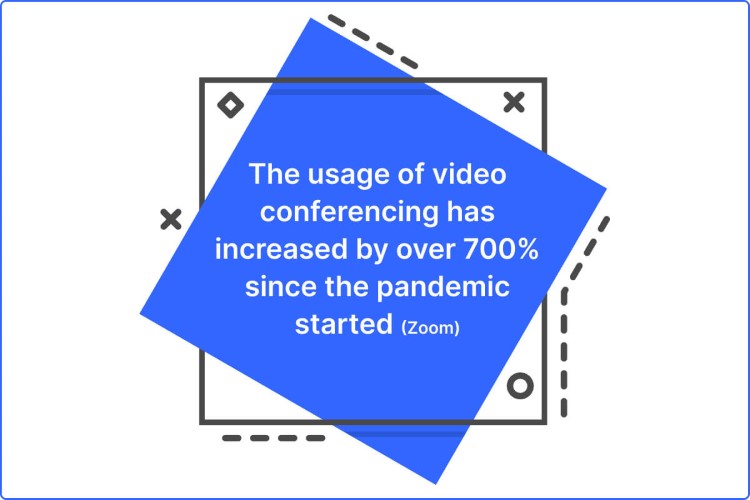
Following the Covid-19 pandemic, when many companies shifted to work from home jobs, the use of real-time communication (RTC) technologies experienced a surge, particularly with the availability of video conferencing options.
Currently, many businesses continue to utilize group calling methods due to their secure nature, resulting in increased employee satisfaction and productivity.
Connect from Anywhere
Web real-time communication provides the prime advantage of remote access, enabling us to connect from any location across the globe. Regardless of whether you are in a car going to the office to drop kids off at school, real-time communication offers a mode of interaction that is both convenient and free from delays.
This can be beneficial for different businesses where you need to collaborate with your remote colleagues, or when working on projects that involve team members from different geographic regions.
By enabling us to connect from anywhere, real-time communication helps to break down barriers to collaboration and promotes more seamless and efficient communication.
Increased Efficiency
Real-time communication also provides the benefit of increased efficiency, allowing us to exchange information and collaborate in real-time. This can help to reduce delays and bottlenecks in communication, which can often occur with other communication methods such as email or messaging.
As we can communicate in real-time, issues are addressed quickly, and decisions can be made faster. This can result in increased productivity, improved customer service, and a more agile and responsive organization.
Additionally, real-time communication can help you to reduce the need for in-person meetings or travel, which can save time and resources for both individuals and your company.
How Real-Time Communication Improves Customer Experience
Real-time communication improves customer experience because it reduces waiting, uncertainty, and repeated effort.
When customers contact a business, they usually want more than a reply. They want clarity. They want to know what is happening, what to do next, and how quickly their issue can be resolved.
Here is how real-time communication helps:
Faster Answers
Live chat, instant messaging, voice calls, and AI-powered support can reduce the time customers spend waiting for help. This is especially important when customers are trying to complete an action, such as buying a product, booking a service, or solving an urgent issue.
Less Repetition
A good real-time communication platform keeps the customer’s conversation history and context in one place. This means customers do not have to explain the same issue again when they move from chatbot to live agent, or from one channel to another.
More Personalized Support
When agents can see previous messages, customer details, page activity, or order information, they can give more relevant answers. This makes the conversation feel less generic and more helpful.
Better Sales Opportunities
Real-time support can help businesses answer buying questions while the customer is still interested. For example, if a visitor asks about pricing, delivery, or product comparison, an instant answer can help move them closer to a purchase.
Smoother Omnichannel Experience
Customers may contact a business from the website, WhatsApp, Facebook Messenger, Instagram, or mobile app. Real-time communication becomes more powerful when all these conversations are managed from one inbox. This helps teams respond faster and maintain a consistent experience across every channel.
What is WebRTC?
When it comes to Real Time Communications, a buzzword you may encounter is WebRTC. WebRTC, which stands for Web-based Real Time Communications, is an HTML5 technology that fulfills the potential of real-time communication by enabling peer-to-peer connections for plugin-free communication via a web browser.
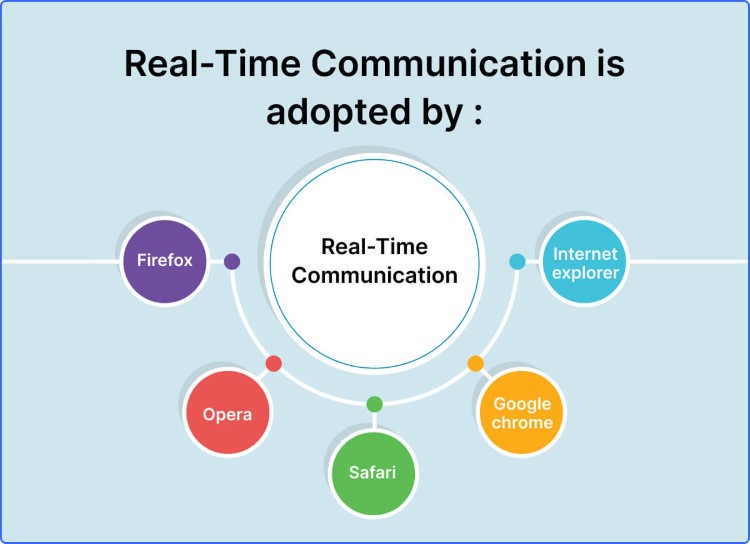
WebRTC is supported by several popular web browsers including Chrome and Opera. Developing a WebRTC application involves using three key APIs: getUserMedia (MediaStream) for accessing data streams like a camera or microphone, RTCPeerConnection for secure audio or video calling with bandwidth management features, and RTCDataChannel for peer-to-peer data communication.
WebRTC is widely used for web conferencing, online gaming, remote education, and telehealth, among other applications.
Real-Time Communication Tools
Real-time communication (RTC) tools are software applications that enable us to communicate and collaborate with others in real time over the Internet. These tools can be used for a variety of purposes, including remote work, online learning, customer support, and socializing with friends and family.
There are many different types of RTC tools available today, each with its own unique features and benefits. Let’s discuss it!
Instant Messaging
Instant messaging (IM) allows us to send and receive text messages, multimedia content, and files in real time over the Internet. IM tools are commonly used for team collaboration, customer support, and social networking.
Some popular examples of instant messaging tools include WhatsApp, Slack, Facebook Messenger, and Microsoft Teams. Each tool has its own unique features and benefits, so it’s important to choose the one that best fits your needs and goals.
Voice Calls
Voice calls enable users to make phone calls over the Internet using Voice over Internet Protocol (VoIP) technology. VoIP is a method of transmitting voice communications over the internet, rather than traditional phone lines. VoIP technology is often cheaper than traditional phone lines, making it a cost-effective option for businesses and individuals.
Some popular examples of VoIP tools include Skype, Zoom, Google Voice, and WhatsApp.
Live Streaming
Live streaming is a type of real-time communication tool that allows us to transmit live audio and video content over the internet. Live streaming is commonly used for events, webinars, podcasts, and other types of online broadcasts.
It enables real-time communication between the broadcaster and the audience, making it possible to engage with viewers in real-time.
Many live-streaming platforms include interactive features such as chat rooms, polls, and Q&A sessions, making it possible to engage with viewers and create a sense of community.
Some popular examples of live streaming platforms include Facebook Live, YouTube Live, Twitch, and Periscope.
Chatbots
AI chatbots are great real-time communication tools for companies that want to offer best-in-class customer service and automate many of their operational tasks for better productivity and cost savings.
Through chatbots you can be available 24/7, making it possible to provide instant support and assistance to your customers at any time. As it can handle a large volume of inquiries and requests at once, the chatbot serves a large number of customers simultaneously.
You can also configure your chatbot to provide personalized responses based on customer data and preferences, making it possible to provide a more tailored customer experience.
Some popular examples of chatbot platforms include REVE Chatbot, Chatfuel, Tars, ManyChat, and MobileMonkey.
How to Choose the Right Real-Time Communication Platform
Choosing the right real-time communication platform is important because it directly affects customer experience, team productivity, and support quality. A simple messaging tool may be enough for small conversations, but growing businesses need a platform that can manage multiple channels, automate responses, and keep customer context organized.
Here are the key things to look for:
1. Omnichannel Support
Your customers may contact you from different channels. Look for a platform that supports website live chat, mobile app chat, WhatsApp, Facebook Messenger, Instagram, and other messaging channels from one place.
2. AI and Automation
A modern RTC platform should do more than connect people. It should help answer common questions, qualify leads, route conversations, create tickets, and support customers even when your team is offline.
AI Agents and chatbots can handle repetitive questions instantly, while human agents can focus on complex or high-value conversations.
3. Human Handover
Automation should not block customers from getting human support. The platform should allow smooth handover from AI Agent or chatbot to a live agent when the conversation requires human attention.
The handover should include conversation history, customer details, and previous responses so the customer does not have to repeat everything.
4. Security and Access Control
Real-time communication often includes customer data, business information, and private conversations. Choose a platform with security features such as encryption, role-based access, authentication, and proper data handling.
5. Scalability
As your business grows, the platform should be able to handle more agents, more conversations, more channels, and higher message volume without slowing down the customer experience.
6. Integrations
The best RTC platforms connect with your existing tools, such as CRM, ecommerce platforms, helpdesk, knowledge base, analytics, and marketing tools. This helps your team work faster without switching between too many systems.
7. Reporting and Analytics
You should be able to measure how well your real-time communication strategy is working. Look for reports on response time, resolution time, missed chats, agent performance, customer satisfaction, chatbot performance, and conversion.
Key Metrics to Measure Real-Time Communication Success
Adding real-time communication to your business is not enough. You also need to measure whether it is helping customers and improving team performance.
Here are the most important metrics to track:
First Response Time
This shows how quickly your team or AI system responds after a customer starts a conversation. A shorter first response time usually creates a better first impression.
Average Response Time
This measures how quickly responses are sent throughout the conversation. It helps you understand whether customers are receiving continuous support or waiting too long between replies.
Resolution Time
Fast replies are useful, but resolution matters more. Resolution time shows how long it takes to solve the customer’s problem from the beginning of the conversation.
Missed Chats
Missed chats show how many customers tried to contact your business but did not receive a response. A high missed chat rate may mean you need automation, better routing, or more agent coverage.
Customer Satisfaction Score
Customer satisfaction helps you understand how customers feel after the conversation. It shows whether your real-time communication is actually improving the experience.
Conversion Rate
For sales and ecommerce teams, real-time communication should also be measured by its impact on conversions. You can track how many live chat or AI Agent conversations lead to demo bookings, signups, purchases, or qualified leads.
Handover Rate
If you use AI Agents or chatbots, track how often conversations are transferred to human agents. A high handover rate may mean the automation needs better training, clearer flows, or stronger knowledge base content.
Real-Time Communication – The Future
The definition of real-time communication keeps on changing, and there are numerous trends that will have a significant impact on its development in the coming years.
One of these trends is the growing use of WebRTC, which allows HTML5-enabled browsers to use real-time communication technology without requiring a third-party plug-in.
As we have started using real-time communication more on mobile devices, there is a growing concern about the strain it puts on networks. The current emphasis is on finding ways to efficiently scale these networks and enhance their security measures.
The growth and development of Over-The-Top (OTT) services have also increased significantly. Platforms such as Netflix provide direct consumer services over the Internet, bypassing traditional distribution channels such as cable and phone networks.
Furthermore, advances in artificial intelligence (AI) and natural language processing (NLP) will enable chatbots and virtual assistants to become more sophisticated and personalized, providing users with more natural and intuitive ways to interact with technology.
Overall, the future of RTC will likely involve more integrated and seamless communication experiences, with a greater emphasis on security, privacy, and personalization. As technology continues to evolve, we can expect even more exciting developments in the world of real-time communication.
The Role of AI Agents in Real-Time Communication
Real-time communication is becoming more intelligent with the rise of AI Agents. Traditional live chat connects customers with human agents. Chatbots can answer predefined questions. But AI Agents can take real-time communication further by understanding customer intent, using business data, and helping complete tasks.
For example, an AI Agent can:
- Answer product questions using your knowledge base
- Recommend products based on customer needs
- Check order status
- Collect lead information
- Route conversations to the right team
- Create support tickets
- Trigger workflows
- Hand over complex conversations to human agents
This changes the role of real-time communication. It is no longer only about replying faster. It is about helping customers move forward faster.
For businesses, this means real-time communication can support both customer service and revenue growth. Customers get instant help, while teams spend less time on repetitive questions and more time on complex conversations.
The future of real-time communication will likely combine AI Agents, live agents, automation, voice, video, messaging, and omnichannel support into one connected customer experience.
Over to You!
Real-time communication (RTC) tools have revolutionized the way we communicate with each other. From instant messaging to voice and video calls, live streaming, and chatbots, these tools have made it easier than ever before to connect with people from around the world.
With the rise of remote work and the need for virtual collaboration, RTC tools have become an essential part of our daily lives. As technology continues to evolve, we can expect even more exciting developments in the world of RTC, which will undoubtedly shape the way we communicate and interact with one another in the future.
Build AI-powered support with Wize AI
Connect business knowledge, automate support conversations, and improve response quality without managing a complex AI stack.
Explore Wize AI Agent Rate the article

Juwel Rana
Senior Content Writer
Juwel is a Sr. Content Writer at REVE Chat. He specializes in writing about customer service and customer engagement. He is passionate about helping businesses create a better customer experience.
He strongly believes that businesses will be able to understand their customers better and ultimately create more meaningful relationships with them.
View all articles