





Table of Content
Before discussing our today’s topic on ‘Customer Service Orientation‘, let’s give a thought to this first. We all are familiar with the below-mentioned sayings about customers!
“The customer comes first”
“Your customer is always right.”
Every company owner says this every day. Yet, many businesses ignore this truth and put the requirements and preferences of customers after their business profits.
Companies often find it simpler to concentrate on their own requirements rather than those of their customers. The pressing needs of a business, such as boosting sales or reducing expenses, can be a constant presence throughout the day. Unless you regularly engage with customers, their needs are unlikely to occupy much of your thinking.
I have good news for you. Many of your competitors are making the same mistake too.
You have the chance to offer best-in-class service to customers and cater to their requirements, thus increasing your chances of acquiring and retaining more customers. Here customer orientation will play a vital role.
It’s basically a business strategy that focuses on offering a best-in-class experience to the customers. It can be done in various ways like providing excellent customer support, developing customized product offerings, and always prioritizing customers over everything else.
In this blog, I will discuss customer service orientation, required skills and processes, benefits, and also some great examples of companies that follow such methodology.
What is Customer Service Orientation?
It’s basically a business strategy that focuses on offering a best-in-class experience to the customers. It can be done in various ways like providing excellent customer support, developing customized product offerings, and always prioritizing customers over everything else.
Customer orientation is not always about making them happy or satisfied, its much more than that. This kind of unique approach helps to build a long-term positive relationship with the customers.
If you can get some happy and satisfied customers, chances are that they will come back to you again for business and eventually will be your loyal customers. In today’s highly competitive market, customer orientation can be a big differentiator for many companies.
You have to understand one thing. Prioritizing customers will not harm the profitability of your company. Businesses that take this customer-oriented approach don’t go bankrupt.
Here’s some important stats to look into:
89% of consumers are more likely to make another purchase after a positive customer service experience. (Salesforce Research)
33% of consumers would consider switching companies immediately after poor customer service. (American Express)
Your online conversion rate can improve by roughly 8% when you include personalized consumer experiences. (Trust Pilot)
Importance of Customer Service Orientation
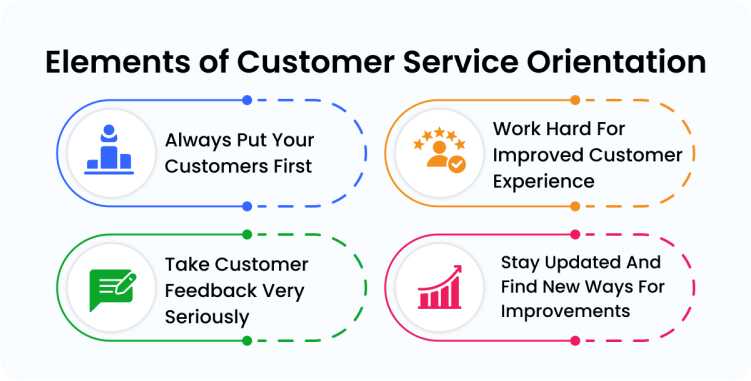
Having a customer service orientation approach means placing the customer’s needs and satisfaction at the center of everything a business does. Such a type of methodology will go a long way than just making customers happy and satisfied. When a business offers high-end services, higher customer retention will be knocking at the door.
Businesses can grow revenues between 4% and 8% above their market when prioritizing better customer service experiences. At the same time, 78% of customers have backed out of purchase due to a poor customer experience.
It’s not difficult to understand that businesses that prioritize their customers tend to be more profitable. When a customer is satisfied with a company, they are more likely to make repeat purchases. By understanding their customers’ feedback and preferences, companies can make targeted improvements to achieve their goals.
Key Customer Service Orientation Skills Every Support Team Needs
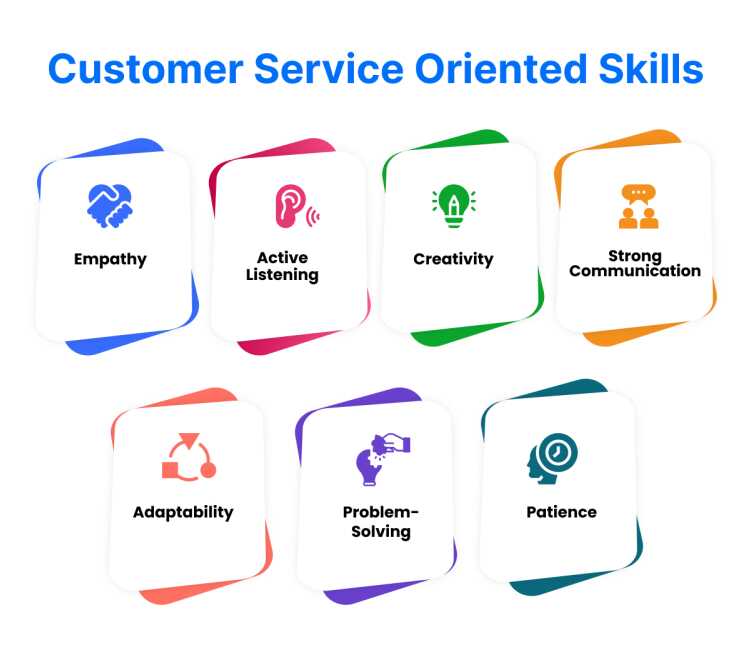
Customer service orientation is not just a mindset. It also depends on a specific set of skills that help employees understand customers, solve problems faster, and create better experiences across every interaction. Here are the most important customer service orientation skills your team should develop.
1. Empathy
Empathy helps support agents understand what customers are feeling, not just what they are saying. A customer may contact your business because they are confused, frustrated, disappointed, or under pressure. When agents acknowledge those emotions and respond with patience, customers feel heard and respected.
For example, instead of saying, “Please wait while we check this,” an empathetic agent can say, “I understand how frustrating this must be. Let me check this for you and find the best possible solution.”
2. Active Listening
A customer-oriented team listens carefully before offering a solution. Active listening means paying attention to the customer’s words, tone, problem history, and expectations. It also means asking the right follow-up questions when something is unclear.
This skill reduces misunderstandings and helps agents solve the actual issue rather than giving a generic answer.
3. Clear Communication
Customers want simple, direct, and useful answers. A customer service-oriented agent should be able to explain policies, product details, troubleshooting steps, and timelines without confusing the customer.
Good communication also means setting the right expectations. If an issue will take time, tell the customer what will happen next, who will handle it, and when they can expect an update.
4. Problem-Solving Ability
Customer-oriented employees do not just pass problems from one team to another. They take ownership of the issue and look for the fastest, most practical solution.
Strong problem-solving includes identifying the root cause, checking customer history, using internal resources, and collaborating with other teams when needed.
5. Proactive Thinking
Being proactive means solving problems before customers repeatedly complain about them. If your team notices the same question coming again and again, it may be a sign that your product, website, help center, or onboarding process needs improvement.
For example, if many customers ask how to use a specific feature, your team can create a help article, tutorial video, chatbot flow, or automated message to guide them in advance.
6. Product Knowledge
A customer service-oriented agent should understand the company’s products, services, pricing, policies, and common use cases. Without strong product knowledge, agents may give incomplete answers or delay resolution.
Regular product training helps support teams stay confident and accurate when helping customers.
7. Patience and Adaptability
Every customer is different. Some may need detailed explanations, while others may want a quick answer. Some may be calm, while others may be upset. A customer-oriented support team should be patient enough to handle different situations and flexible enough to adjust their communication style.
Adaptability is especially important when customer needs change, new technologies appear, or business processes evolve.
8. Collaboration
Customer service orientation should not stay limited to the support team. Sales, marketing, product, billing, and technical teams all influence the customer experience. When these teams share customer insights and work together, customers get faster and more accurate solutions.
Benefits of Following Customer Orientation Approach
“Effective customer service ensures that the customer has a satisfactory experience with your company at every touchpoint, not only with the customer service team, but also across the entire organization, including the website’s user interface, user experience, and the delivery process.”
Jun An, founder of Eezee.sg
With this quote, I want to explain that good customer-orientated support does not only mean how you interact with them over the phone, email, or live chat. It should be consistent and embedded into the organization’s DNA.
Such Customer centric approach brings in several benefits for the companies that follow it including:
Gaining Trust of Your Customers
Your customers will trust you if you value them and make them understand this. There are a couple of ways to do so like offering excellent services, answering their complaints and concerns, and creating custom products that cater to their requirements.
Using customers’ first names as a way of greeting them can create a sense of being valued and accepted. Similarly, implementing a money-back policy for products they wish to return can demonstrate your business’s commitment to meeting their needs.
Better Sales Conversions
Customers love to do business with companies that are trustworthy and have friendly customer-oriented staff members. By offering excellent service, you will surely gain some loyal customers who not only give value to your brand but also come back again and again for doing business.
For example, you can build a long-term relationship with them by offering products or services that cater to their needs and always be there to assist them. Customers do appreciate such efforts and become frequent buyers.
Better Quality Industry Standards
A company that provides excellent customer service consistently goes above and beyond to meet and exceed customer expectations. They prioritize their customers’ needs and take a proactive approach to anticipate and address any concerns or issues.
Fostering a customer-first approach has the potential to set new benchmarks for quality and service within your industry. Developing products or services that offer exceptional value can lead to a higher level of customer satisfaction, which may influence these customers to demand similarly high standards from other companies in the industry. This, in turn, can encourage other companies to adopt a customer-centric approach and prioritize providing high-quality products and services.
For example, you have created a clothing line from sustainable materials that resonate with your customers. As your company expands and attracts a wider audience, you could inspire other brands to adopt sustainable practices. Through this, you could generate a favorable impact on both the industry as whole and individual customers.
Happier Employees
A customer service orientation can lead to more satisfied employees. When a company prioritizes the needs and expectations of their customers, employees tend to feel more engaged and fulfilled in their work. This is because they are provided with the tools and resources necessary to effectively serve customers and meet their needs.
In a customer service-oriented environment, employees may also receive more training and support to improve their skills and abilities, which can enhance their job satisfaction and lead to career growth.
In addition, employees who work in a customer-focused environment may receive more positive feedback and recognition from customers, which can boost their confidence and job satisfaction. This, in turn, can lead to a more motivated and productive workforce, as well as lower rates of employee turnover.
Overall, prioritizing customer service can lead to a more positive and satisfying work environment for employees, which can have a significant impact on a company’s success and growth.
Tips to Become a Customer Oriented Company
It’s clear that prioritizing customers over everything else is important for the success of your business. However, what does it truly entail to be customer-focused? How can you guarantee that your company is presenting itself in the best possible manner when engaging with customers? How can you build a customer-oriented company? Here are some great tips to look into.
Hire the Right Team
The list of skills required to be a perfect customer support agent is too long. Searching for the perfect team members who have them all is tough, so, recruit for aptitude and train them for your required skills.
Developing your own customer-oriented team is all about hiring people who are happy to help, and eager to learn more. Plus, seek out individuals with empathy and strong problem-solving abilities. You have to select carefully as it can either lead to the success or failure of your whole team.
Thank Your Employees
Your employees are the most important part of the company, so make them feel the same. The attitude of your employees towards their work has a significant impact on their response to customers. Happy and dedicated employees tend to work more effectively and provide better customer interactions. They can concentrate on developing long-term positive customer relationships and resolving issues, rather than on thinking about how unfairly they have been treated.
By creating a supportive and positive work environment, employees feel valued and motivated to deliver exceptional service. You can achieve this by promoting teamwork, providing benefits, and offering career growth opportunities for your team members.
Arrange Regular Training Sessions
Just make sure that your team members have an idea about what the company expects from them and its vision and goals. Arrange training sessions on a regular basis that are customer focused, briefing your employees about your target consumers, how they use your products, and ways to address their needs. This training should cover everything from efficient and straightforward complaint resolution to compassionate and personalized customer support.
When all teams are aware of the company’s direction and share its values, they can align their goals with your company’s objectives.
Be an Example First
The customer-oriented approach should not be limited to only the support department. It has to be followed by the whole organization, from the CEO and upper management to the sales staff, from product development to back-end team members. Your entire business should support the customer centric culture.
For instance, when a customer complaint takes too long to get resolved, the agent gets frustrated and tries to end the interaction without even completely satisfying the customer.
When staff members are aware that both their colleagues and superiors value their hard work and are willing to provide the support it fosters an optimal atmosphere for excelling in customer service.
Understand Your Customers
Understanding your customers includes gathering feedback and insights directly from customers regarding their needs, expectations, and preferences. This information can then be used by companies to better understand their customers and tailor their products, services, and overall customer experience to meet their needs.
By using this feedback to inform decision-making and drive continuous improvement, companies can become more customer-oriented and better align their strategies and operations with the needs of their customers. This can lead to increased customer satisfaction, loyalty, and ultimately, improved business performance.
Always be Updated
You can’t make things right on the very first attempt. The preferences of the customers also keep on changing keeping pace with the advancement of different technologies. So, monitor them closely and update your strategies based on that.
As you have taken the customer-oriented approach, always monitor the results. Are they happy and satisfied with your product offerings or need some little changes or adjustments? Keep an eye on these metrics.
How to Measure Customer Service Orientation
To know whether your business is truly customer-oriented, you need to measure how customers feel, how quickly issues are resolved, and how effectively your team acts on customer feedback. Here are the key metrics and methods to track.
1. Customer Satisfaction Score — CSAT
CSAT measures how satisfied customers are after an interaction with your business. You can ask a simple question such as:
“How satisfied were you with the support you received?”
Customers can rate their experience using a scale, emoji, or simple positive/negative feedback. A high CSAT score usually means your team is meeting customer expectations.
2. Customer Effort Score — CES
Customer Effort Score measures how easy it was for the customer to get help. This is important because customers do not only want friendly service; they also want fast and effortless solutions.
You can ask:
“How easy was it to resolve your issue today?”
If customers have to repeat themselves, wait too long, or contact multiple departments, your CES may be low.
3. First Response Time
First response time shows how quickly your team replies to a customer’s first message. A faster response makes customers feel valued and reduces frustration.
Live chat, chatbots, and automated routing can help reduce response time by ensuring customers are quickly connected with the right resource or agent.
4. Resolution Time
Resolution time measures how long it takes to fully solve a customer’s issue. A customer-oriented company does not only respond quickly; it also focuses on complete resolution.
If resolution time is high, review whether your agents have enough product knowledge, internal documentation, authority, and tools to solve problems efficiently.
5. First Contact Resolution
First contact resolution tracks how often customer issues are solved in the first interaction. A high first contact resolution rate means customers do not need to come back repeatedly for the same problem.
You can improve this by giving agents access to customer history, previous conversations, help articles, and internal collaboration tools.
6. Customer Feedback Trends
Do not only look at individual reviews or complaints. Look for patterns. If many customers mention the same issue, that is a signal for improvement.
For example, repeated complaints about delayed replies may indicate that you need better staffing, chatbot automation, ticket prioritization, or clearer service-level targets.
7. Customer Retention and Repeat Purchases
A customer-oriented business should see stronger retention over time. When customers feel understood and supported, they are more likely to continue doing business with you.
Track repeat purchases, renewals, churn rate, and customer lifetime value to understand whether your customer-first approach is creating long-term business impact.
8. Online Reviews and Word-of-Mouth
Happy customers often share positive experiences through reviews, testimonials, referrals, and social media. Monitor review platforms and social mentions to understand how customers publicly describe your brand.
A strong customer service orientation should gradually improve your brand reputation and customer advocacy.
Some Great Examples of Customer Orientation
There are several big brands that have adopted a reliable and enduring customer-focused marketing strategy, and we can learn from their most effective techniques. Let’s look into some beautiful examples and understand how that have done it ‘RIGHT.’
Zappos
The online shoe and clothing retailer is known for its exceptional customer service. This company always believes in serving their customers rather than any other type of advertising. Why? Well, their customers do the advertising for them. Customers are so satisfied with this brand, that through word of mouth, everyone knows about the exceptional customer support provided by this company.
Zappos thinks that having conversations with customers over the phone can develop a close and strong relationship between support agents and customers. This kind of customer engagement meets their desire to feel supported, strengthens their loyalty, and encourages them to spread positive word-of-mouth about the brand.
They always take different initiatives to wow their customers and have a unique way of tracking it. The Zappos call center has a display board with flower stats that track different gifts sent out for their consumers.
After a woman contacted Zappos to return a pair of shoes she had purchased for her father, who had recently passed away, a customer service representative expressed sympathy and assured her that she need not return the shoes in order to receive a refund. Touched by their conversation, the representative sent the customer a bouquet of flowers as a gesture of kindness.
There are lots of other examples too in different social media platforms on how Zappos always walks the extra mile to make its customers happy.
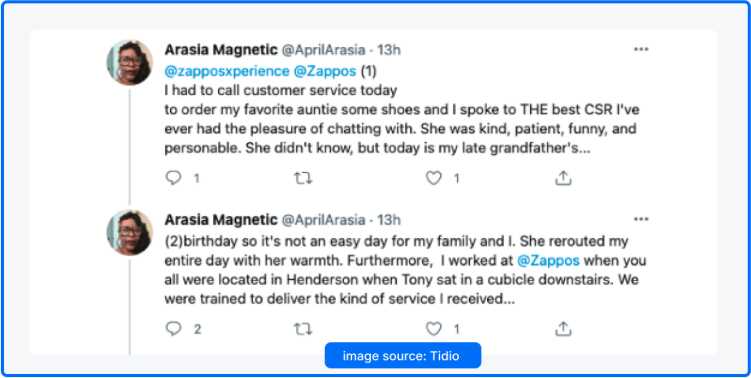
This is the latest tweet posted by a customer who had a significant engagement with the Zappos brand.
Apple
Apple is an excellent illustration of a customer-centric approach to their products. It always comes to know about the customers’ requirements even before they actually express it. Apple has gained a reputation for anticipating and even setting customer preferences.
For instance, Apple created the iPod much before we even knew that we all wanted a small device to save all our favourite music. Technology might not have advanced to its current state without Apple’s customer-centric approach.
They offer a range of support options, including online resources, phone support, in-store assistance, and a robust network of authorized service providers.
In addition to offering support, Apple is also committed to making its products easy to use and intuitive.
Apple also has a strong focus on customer feedback, regularly soliciting input from users to guide their product development and improve the customer experience. They have implemented various programs to collect and analyze customer feedback, such as the Apple Beta Software Program, which allows users to test pre-release software and provide feedback directly to Apple.
Overall, Apple’s customer service orientation is characterized by its dedication to meeting its customers’ needs, providing high-quality support, and continuously striving to improve the user experience.
Amazon
Amazon is the all-time shopping destination for most of us because of its huge variety of products and exceptional customer service. Being a customer-oriented company, it always keeps on updating with latest technologies to provide world class shopping experience and easy access to different products as per customers’ requirements.
Amazon offers a fast-shipping facility with one-day or two days delivery for its prime members making it easier for them to receive products in no time.
Apart from delivery, it’s also flexible with return and replacement policies. Customers can easily return the products in case they are not satisfied. Such an easy process makes customers feel comfortable and more willing to purchase from Amazon.
Amazon uses sophisticated algorithms to recommend products to its customers based on their browsing and purchase history. This helps customers to discover new products that they might be interested in, and it also makes it easier for them to find products that they need.
Overall Amazon’s customer-oriented approach has made it everyone’s favorite. Understanding customer needs and walking the extra mile to fulfil those has helped the company to build a strong and loyal customer base.
How Technology Helps Build a Customer-Oriented Business
Customer service orientation becomes much easier when your team has the right tools. Customers expect fast, personalized, and consistent support across different channels. Without technology, it becomes difficult to manage conversations, track issues, and maintain service quality at scale.
Here are some ways technology can support a customer-oriented approach.
1. Use Live Chat for Instant Support
Live chat helps businesses assist customers in real time while they are browsing a website or using a service. Instead of waiting for an email response, customers can ask questions and get quick answers.
This improves the customer experience because support becomes immediate, convenient, and contextual.
2. Use Chatbots for Common Questions
Many customers ask similar questions about pricing, product features, refunds, shipping, bookings, or account issues. A chatbot can answer these common queries instantly and guide customers to the right information.
This does not replace human support. Instead, it helps agents focus on complex issues while customers get faster answers for simple questions.
3. Manage Conversations from Multiple Channels
Customers may contact your business through website chat, email, Facebook Messenger, WhatsApp, Instagram, or other channels. A customer-oriented company should not force customers to repeat the same issue again and again.
An omnichannel communication platform helps your team manage all conversations from one place and maintain full customer context.
4. Create a Central Ticketing System
When customer issues need follow-up, a ticketing system helps organize, assign, and track them properly. This ensures no customer request gets lost.
With a ticketing system, teams can prioritize urgent issues, monitor progress, and make sure every customer receives a proper resolution.
5. Build a Knowledge Base
A knowledge base gives customers the option to find answers on their own. It can include FAQs, troubleshooting guides, product tutorials, setup instructions, and best practices.
This improves customer orientation because it respects the customer’s time. Some customers prefer self-service instead of contacting support for every small question.
6. Use Customer Data to Personalize Support
When agents can see customer history, previous conversations, purchase records, and past issues, they can provide more relevant support.
Personalized support makes customers feel recognized. Instead of treating every interaction as new, your team can continue the conversation with full context.
7. Set Clear Response and Resolution Standards
Technology also helps you set and monitor service-level expectations. For example, you can define how quickly your team should respond to live chat, email, or tickets.
Clear standards help your team stay accountable and give customers a more reliable experience.
8. Use AI to Assist Agents
AI can help support teams by suggesting replies, summarizing conversations, routing tickets, detecting customer intent, and recommending relevant help articles. This helps agents respond faster and more accurately.
When used correctly, AI improves customer service orientation by making support more efficient while still allowing human agents to handle sensitive or complex issues.
Key Takeaways
If you want to succeed in the long run, adopting a customer centric approach is the key. Here are major points to keep in mind:
- Understand what your customers want. Satisfying their requirements will help you to increase sales conversions and build a loyal customer base.
- Customer centric approach should be followed by each and every team member of the company.
- Customer orientation is to synchronize your business objectives with the needs and preferences of your customers.
- Customer orientation prioritizes the needs of the customers which is different from sales orientation.
- To instill a customer-oriented mindset within your organization, you can arrange regular training sessions to improve the inner skills of your team members.
Build AI-powered support with Wize AI
Connect business knowledge, automate support conversations, and improve response quality without managing a complex AI stack.
Explore Wize AI Agent Rate the article

Rasheek M. Rayat
Customer Success Manager
Rasheek M. Rayat is a dedicated Customer Success Manager at REVE Chat, where he leverages his expertise to empower businesses with innovative live chat and chatbot solutions. Passionate about enhancing customer experiences, he combines strategic insight with a customer-centric approach to drive satisfaction and growth.
View all articles