


Table of Content
Are you missing out on one of the most powerful tools for marketing in the digital age? You surely are if you’re not using WhatsApp – because it’s a platform that is about to reach a 3 billion user base worldwide in a few months.
So, just imagine the possibilities and reach that a WhatsApp marketing campaign will enjoy on this platform!
WhatsApp helps you connect with customers quickly and effectively. You can use it to directly message your customers and receive quick feedback. Marketers can trust WhatsApp to achieve great business growth through personalized communications. Messages on this platform have an exceptionally high open rate, so conversions will remain higher.
In overall, WhatsApp is a platform that can help enhance your brand’s engagement and outreach manifold.
In this blog, we will discuss the WhatsApp marketing campaign in detail and understand its nuances through different examples.
Why Use WhatsApp Marketing?
In recent years, WhatsApp has evolved into a popular and powerful channel for customer engagement and communication. With a constantly growing user base and millions of users logging in multiple times a day, it’s no surprise how WhatsApp is today a valuable marketing asset for businesses.
This platform has redefined the landscape of engagement. Today, brands have a direct line of access to customers’ everyday lives. This gives them a great opportunity to build trust and meaningful relationships.
By leveraging the huge potential of WhatsApp, a business can market itself easily, reach the audience effectively, and build a personal rapport. All this can drive conversions and sales.
Let’s look at some key stats suggesting why you should use WhatsApp marketing –
- Over 100 billion messages are sent through WhatsApp each day.
- Today, some 50 million brands use WhatsApp as a business tool.
- The platform has a staggering open rate of 98% which is about five times more than emails.
- Most WhatsApp users use the app several times a day – an average user does it at least 23 times a day.
What is a WhatsApp Marketing Campaign?
A WhatsApp marketing campaign is a tool that uses the WhatsApp platform to promote products, and services or build brand awareness with the target audience. These campaigns are part of a strategic approach to communicate with customers and drive conversions.
Using a WhatsApp marketing campaign is key to increasing sales through personalized messaging and rich media sharing. Broadcasting to an unlimited audience is one of the key aspects of a WhatsApp marketing campaign.
What Makes a WhatsApp Marketing Campaign Effective?
A successful WhatsApp marketing campaign is not simply about sending a promotional message to a large contact list. Since WhatsApp is primarily a conversational channel, campaigns perform better when messages are relevant to the recipient, arrive at the right moment, and make it easy for customers to respond or take the next step.
Here are some important elements to consider when planning your campaign.
1. Clear Audience Segmentation
Sending the same message to every customer can make a campaign feel generic. Instead, divide your audience into relevant segments based on factors such as:
- Customer lifecycle stage
- Previous purchases
- Product interests
- Location or language
- Engagement history
- Browsing behavior
- Cart activity
- Customer value
For example, a first-time buyer might receive onboarding information, while an existing customer could receive a product recommendation based on a previous purchase.
Better segmentation makes it easier to deliver messages that match the customer’s actual interests and position in the buying journey.
2. Behavior-Based Timing
Timing becomes much more effective when it is connected to customer behavior.
Instead of sending campaigns only according to a fixed marketing calendar, businesses can trigger messages when customers perform—or fail to perform—specific actions.
Typical triggers include:
Abandoned cart: Remind a shopper about products left behind.
Product browsing: Recommend relevant products after repeated visits to a category.
Purchase completion: Send complementary product recommendations.
Customer inactivity: Re-engage customers who have not purchased recently.
Subscription renewal: Remind customers before a subscription expires.
Appointment approaching: Send a timely reminder or confirmation.
This approach makes the message relevant to something the customer has recently done rather than making the campaign feel like an unrelated broadcast.
3. Personalization Beyond the Customer’s Name
Adding a customer’s first name is useful, but effective personalization can go much further.
WhatsApp campaigns can be personalized around a customer’s product interests, previous conversations, purchase history, language, location, lifecycle stage, or recent actions.
For example:
“Hi Sarah, the running shoes you viewed yesterday are now available in your size.”
is considerably more relevant than:
“Hi Sarah, check out our latest products.”
The objective is to use available customer context to make every message feel purposeful.
4. A Conversational Call-to-Action
WhatsApp gives marketers an opportunity to create interactions rather than simply sending customers to another webpage.
Instead of relying exclusively on CTAs such as “Shop Now,” businesses can invite customers to reply, select an option, request more information, or continue a guided conversation.
For example, a beauty retailer could ask:
What are you looking for today?
- Skincare
- Makeup
- Hair care
The conversation can then continue based on the customer’s choice.
Interactive buttons, quick replies, media, product information, and automated conversational flows can transform a campaign from a simple notification into an engagement journey.
5. Permission and Relevance
WhatsApp is a highly personal communication channel. Businesses should therefore build campaigns around customers who have agreed to receive relevant communications and make it easy for recipients to stop receiving messages when they no longer want them.
Campaign frequency also matters. More messages do not automatically create more conversions. Sending useful communications to carefully selected audiences generally provides a better customer experience than repeatedly broadcasting promotions.
Businesses should always follow the latest WhatsApp Business Messaging Policy and applicable local regulations when running campaigns.
WhatsApp Marketing Campaign Examples
Creating an attractive and unique marketing campaign is key to catching the attention of your target audience. WhatsApp is a wonderful platform to launch memorable marketing campaigns and build long-lasting relationships with customers.
Let’s look at some great examples of WhatsApp marketing campaigns –
1. Unilever’s “I’ll bring you back your beloved clothes” campaign
Unilever is a leading FMCG company known for a wide variety of products including beauty products, energy drinks, baby food, etc. Its products are available in over 190 countries.
Goal
In 2019, Unilever was planning to launch a new fabric softener brand “Comfort” in Brazil. So, it was exploring options for an engaging marketing campaign.
Campaign
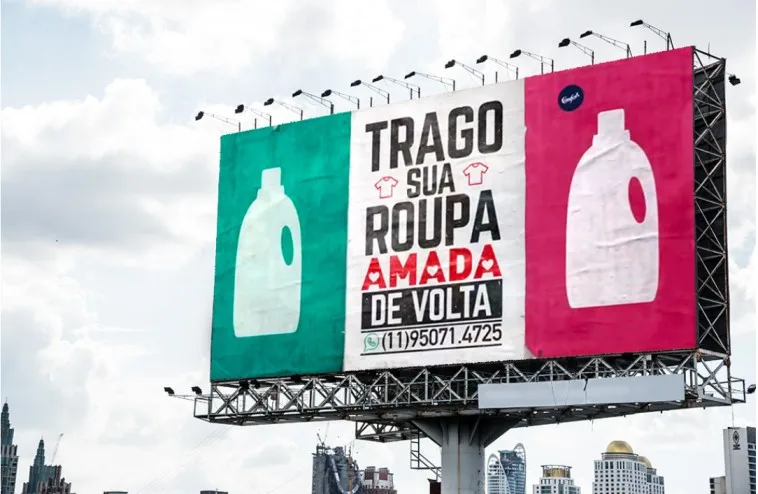
The main focus of the campaign was to tap into the emotional bond people have with their clothes. The company put up 10,000+ hoardings around São Paulo with the message “I’ll bring you back your beloved clothes.” A WhatsApp number was also provided so that people could connect back with the brand. And when they did a bot shared tips on how to care for clothes. The bot then showed new products using images and videos. It also offered a 50% discount on the new product with a free shipping option.
Result
The campaign was hugely successful as it helped the company win hundreds of unique customers and 290k messages from 12k unique customers. Sales also witnessed a massive 14x jump that proved the effectiveness of the entire campaign.
How Did they Do it?
This campaign was possible with the use of WhatsApp Business API through a service provider that allowed the creation of chatbots for WhatsApp. While WhatsApp features made it easy to engage with customers, it’s the chatbot that automated the conversations and ensured answers to repeat queries.
2. Netflix’s “I’m In” Campaign
Netflix is a leading streaming service that offers a wide range of TV shows, movies, documentaries, and more to people across the globe.
Goal
Netflix was losing subscribers and facing account cancellations. So it decided to launch a campaign aimed at incentivizing customers who returned to the platform.
Campaign
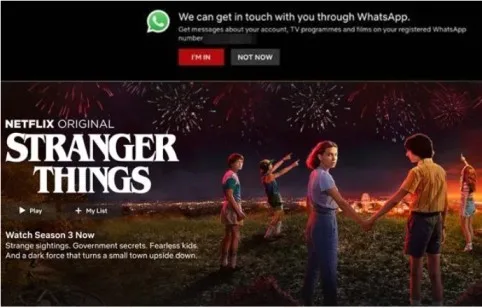
The company chose WhatsApp as it knew how most of its subscribers used the platform. It launched a campaign that allowed users to stay in touch with Netflix via WhatsApp. The idea was to send regular updates and reminders to users and get their attention.
Result
The campaign was a big success as the company was able to retain its existing customers. At the same time, the campaign also helped it encourage passive customers to re-subscribe to their platform.
How Did they Do it?
Netflix sent timely movie and series recommendations to WhatsApp users. It encouraged users to click “I’m In” and those who did get new suggestions, announcements, and notifications regularly.
3. ADAC “Don’t Call Mom” Campaign
ADAC is a popular automobile club in Germany that is known for providing roadside assistance to its members.
Goal
The company had a big loyal customer base with the older generation comprising the majority part. Somehow the young audience did not relate to the brand and ADAC wanted to change that. So, they decided to launch a campaign on WhatsApp and gain relevance amongst the audience that did not own a car yet.
Campaign
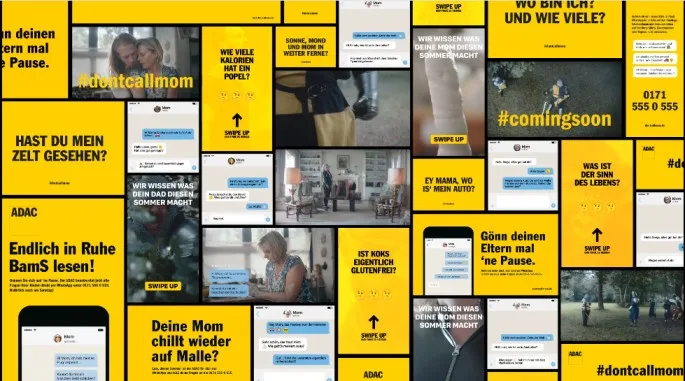
The company launched a unique ‘Don’t Call Mom – Call ADAC” campaign on WhatsApp. The purpose was to give young people a channel to ask any questions and encourage engagement. The company deployed experts to handle queries all day long and also collaborated with influencers to reply to messages.
Result
The campaign ran for six weeks and garnered 20 million impressions. Apart from a barrage of messages, ADAC got thousands of impressions on its campaign video.
How Did they Do it?
ADAC leveraged the WhatsApp Business API and took the help of a third-party service provider with shared inbox functionality.
4. Hellmann’s “WhatsCook” Campaign
Hellmann’s is a popular brand recognized worldwide for its mayonnaise and other condiment products.
Goal
The company was looking to increase brand awareness and engage with customers. It planned a campaign that would help people choose cooking items and provide a solution to those who found cooking a challenge.
Campaign
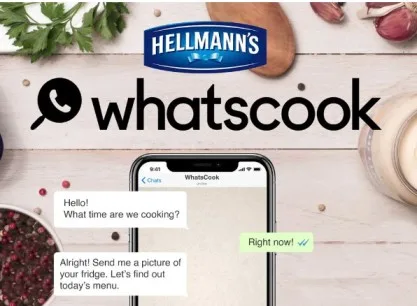
It decided to leverage the popularity of the WhatsApp channel and set up a campaign on it. The idea was to help customers cook meals by using the items in their fridges.
Result
The campaign was successful as it achieved hundreds of registrations on the company’s website. It reached 4 billion people in 10 days, garnering an average of 65 minutes of brand interaction per user. It not only succeeded in helping people make the best of their existing ingredients but also increased familiarity with Hellmann’s product.
How Did They Do It?
The company encouraged customers to register for a WhatsApp campaign on their website. Those who did would receive a message from the chef with advice on using ingredients to cook food.
5. Flipkart “A Personal Shopper” Campaign
Flipkart is a leading ecommerce platform that offers a huge catalog of products ranging from electronics, gadgets, apparel, and groceries to books, and much more.
Goal
During festival times, Flipkart hosts a big online sale called “Big Billion Days” which is a massive hit with people across India. This sale brings exciting offers and discounts for buyers. So, the company wanted to create excitement for the event in 2020 and gain maximum attention.
Campaign
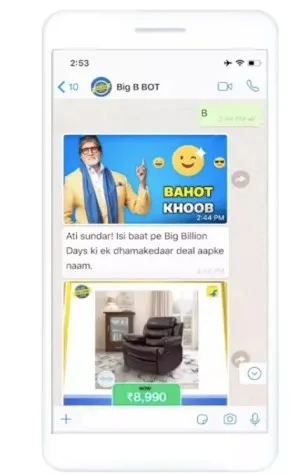
The campaign was created to ensure a more engaging and interactive shopping experience for buyers. The company launched an automated chatbot on WhatsApp and did a fabulous job of personifying it with cinema superstar Amitabh Bachchan. The idea was to give users the feeling of conversing with the superstar himself while shopping.
Result
The result was fantastic as Flipkart witnessed 3.5 times more conversions and 7 times more quality visitors.
How Did they Do it?
The company leveraged the WhatsApp platform and its features in full to create a memorable campaign. It created rich media interactions using images, audio, videos, puzzles, and games within WhatsApp. All this boosted engagement.
6. Airtel Xstream Campaign for Customer Communication
Airtel is India’s leading telecom provider and its video streaming platform, Xstream, has revolutionized the way people consume digital entertainment through OTT.
Goal
The Growth team at Airtel Xstream planned to increase its reach and take its content to more people. It knew WhatsApp would be the right platform to inform its customers about Airtel Xstream and spread awareness about how they can watch their favorite movies and TV shows all in one place.
Campaign
The company created a robust and secure WhatsApp communication channel and then integrated it with a service provider to send timely updates to customers. The plan was that every recharge an Airtel customer did, they received a WhatsApp message informing them about the Xstream and its OTT capabilities.
Result
The result was excellent as Airtel Xstream managed 30% conversions and a 4X increase in engagement compared with in-app.
How Did they Do It?
They used WhatsApp as an immersive engagement tool and integrated a CTA that landed customers on the brand’s platform. They used WhatsApp as a channel for lead generation.
7. Maggi Germany, Chef In Your Kitchen Campaign
Maggi products are popular all over the world. It’s a global brand of instant soups, noodles, and seasonings.
Goal
Maggi was looking to boost brand awareness subtly. It wanted to launch a marketing campaign that would become memorable not for the visuals or message, but for the essence of being part of people’s daily lives.
Campaign
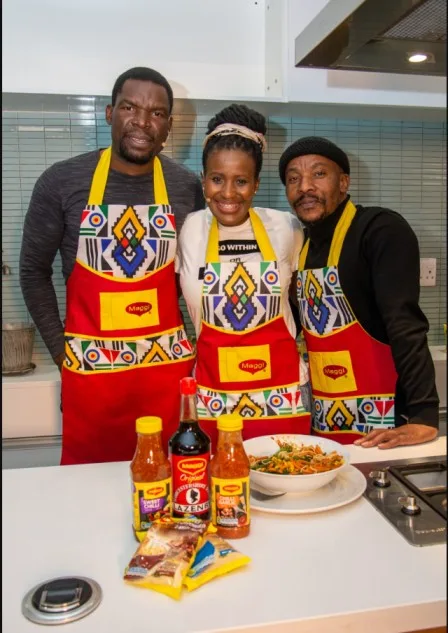
The company chose WhatsApp channel to launch its marketing campaign to personally connect with consumers of all ages. The idea was to create a free digital cooking guide on WhatsApp and let people use it to prepare dishes in just a few steps.
Results
The campaign was a big success as it ensured a 3X boost in campaign awareness and 4X brand recall. The best part, the campaign saw some two hundred thousand messages sent in the first two months.
How Did they Do it?
A WhatsApp-powered virtual assistant was created and named Kim that was used to deliver the free cooking guide to users. It also shared videos with step-by-step instructions.
What Can We Learn From Successful WhatsApp Marketing Campaigns?
The campaigns from Unilever, Netflix, ADAC, Hellmann’s, Flipkart, Airtel Xstream, and Maggi may have different objectives, but several common patterns emerge.
Deliver Value Before Making the Sale
Hellmann’s helped customers decide what to cook. Maggi created a digital cooking experience. Unilever provided clothing-care advice before introducing its product.
These campaigns demonstrate an important principle: WhatsApp does not always have to start with a sales pitch.
Educational content, recommendations, useful information, entertainment, and personalized assistance can create engagement first and introduce the commercial message naturally afterward.
Turn Broadcasts Into Conversations
The strongest campaigns use WhatsApp as more than another notification channel.
Quick replies, chatbots, interactive questions, product recommendations, images, videos, and human conversations give customers opportunities to participate rather than simply read.
A campaign therefore becomes much stronger when marketers ask:
“What should the customer be able to do after receiving this message?”
rather than only:
“What message should we send?”
Use Customer Context
Successful campaigns become more relevant when the message reflects what the customer is currently doing.
A cart recovery message should appear after an abandoned purchase. A renewal reminder should arrive close to the renewal date. A recommendation should reflect products the customer actually cares about.
Combining segment + context + CTA helps marketers create campaigns that feel connected to the customer’s journey.
Make Personalization Meaningful
Personalization should influence the actual campaign experience.
Businesses can personalize:
- Products being recommended
- Promotional offers
- Message language
- Campaign timing
- Content
- Conversation flows
- Calls-to-action
This approach is more meaningful than simply inserting a customer’s first name into a generic broadcast.
Connect Marketing and Customer Service
WhatsApp campaigns can generate questions immediately.
A customer receiving a product promotion may want to ask about delivery, sizing, features, availability, pricing, or payment before purchasing.
Businesses should therefore consider what happens after the customer replies.
Automation can handle predictable questions, while more complex conversations can be transferred to human agents. This creates a smoother path between marketing engagement, customer assistance, and conversion.
WhatsApp Advertising Campaign Use Cases
WhatsApp advertising is growing popular by the day as businesses understand its huge value for direct and personalized communication. It’s now widely used to enhance customer interaction and improve service delivery.
Let’s look at some of the major WhatsApp advertising user cases –
1. Promotional Offer
WhatsApp campaigns are key to segmenting audiences and sending tailored messages. It helps a business send time-sensitive offers directly to a customer’s smartphone. You can use the platform’s direct communication to deliver promotional offers and also use rich media to enhance the effectiveness of those offers.
2. Order Updates
You can use a WhatsApp campaign to notify customers about many things such as order status, shipping delivery, order tracking, and so on. These updates provide you an engaging way to keep the customers informed about their purchases. You can send real-time notifications for order updates and enhance the customer experience with your brand.
3. Appointment Reminders
You can use a WhatsApp marketing campaign to send automated and personalized appointment reminders to clients and boost engagement. This way you can minimize the chances of a no-show on appointments and also help your clients stay informed and prepared. You can include various key details with the reminder, such as the time, location, date, schedule, and any detail worth sharing.
4. Event Invitations
You can send event invitations directly to the user’s phone and enhance their audience better. Sending event invites via WhatsApp is also a great way to drive attendance and make your event well-attended. It’s also possible to create visually compelling messages by using rich media like videos, images, and event details to make the invitations highly interactive and personalized.
5. Customer Surveys
Using a WhatsApp marketing campaign is an excellent way to gather valuable feedback and insights. The platform helps you send surveys to understand customer satisfaction and know them and their pain points better. You can send short, interactive surveys through the chat and encourage customers for real-time interaction. The best thing, you can also personalize the surveys and achieve higher response rates.
6. Abandoned Cart Recovery
WhatsApp campaign is an effective way to re-engage potential customers and recover lost sales. You can send personalized reminders to customers who did not complete their purchases and encourage them to take action. You can also add special discount codes and links to the checkout page and personalize the cart recovery.
7. Product Recommendation
WhatsApp marketing campaigns can help you send or suggest targeted recommendations to customer based on their purchase history, preferences, and browsing behavior. Such suggestions for related products can boost your cross-selling and upselling strategy. Product recommendation via WhatsApp is also an excellent way to deliver highly personalized shopping experiences to customers and drive sales.
8. Birthday Greetings
Sending birthday greetings via WhatsApp campaign is a great way to make customers feel valued and special. You can use a highly personalized approach to make birthdays special for your customers. What’s more, you can add special offers and exclusive deals with tailored birthday messages and drive engagement and sales.
How to Plan a WhatsApp Marketing Campaign Before You Launch
Before creating your template or scheduling your campaign, define the marketing strategy behind it.
Step 1: Define One Campaign Objective
Start with a clear goal.
Your campaign might aim to:
- Generate sales
- Recover abandoned carts
- Promote a new product
- Collect leads
- Increase event registrations
- Re-engage inactive customers
- Encourage repeat purchases
- Gather customer feedback
Avoid trying to achieve several unrelated goals with the same message.
Step 2: Identify the Right Audience
Next, determine exactly who should receive the campaign.
For example, instead of:
Audience: All customers
try:
Audience: Customers who purchased women’s footwear during the past six months but have not purchased during the past 60 days.
A more precise audience allows you to create a more precise offer and message.
Step 3: Identify the Campaign Trigger
Determine why the customer should receive the message now.
The trigger might be:
- A customer action
- Customer inactivity
- An approaching event
- A product launch
- A seasonal sale
- A renewal date
- A completed purchase
- An abandoned checkout
Matching the campaign to a trigger can make the communication more timely and relevant.
Step 4: Map the Conversation
Think beyond the first message.
For example:
Campaign message → Customer selects a product category → Product recommendations → Customer asks a question → AI or agent responds → Customer completes purchase
Mapping the next steps helps turn a WhatsApp campaign into a complete customer journey rather than an isolated broadcast.
Step 5: Define the Success Metric
Choose the metric that reflects your objective before launching the campaign.
If your objective is engagement, reply rate might matter.
If your objective is ecommerce revenue, conversion rate and campaign-generated revenue are more meaningful.
Once these strategic decisions are complete, you can move to campaign execution, including creating the WhatsApp message template, selecting the audience, scheduling the campaign, and monitoring its results.
How to Grow Your WhatsApp Marketing Audience
A successful WhatsApp strategy depends on building an audience that genuinely wants to hear from your business.
There are several ways businesses can encourage customers to start or opt into WhatsApp communication.
Website and Checkout Opt-Ins
Invite website visitors or existing customers to receive updates through WhatsApp.
Opt-in opportunities can be added around relevant touchpoints such as registration, checkout, account creation, lead forms, or subscription pages.
Be clear about what customers can expect to receive.
For example:
“Get order updates and exclusive offers on WhatsApp.”
is more transparent than simply asking customers to enter their phone number.
Click-to-WhatsApp Ads
Businesses can use advertisements that encourage users to begin a WhatsApp conversation directly.
This can be especially useful for campaigns involving:
- Product discovery
- Lead generation
- Consultation requests
- Limited-time promotions
- High-consideration purchases
Once the conversation begins, automation or an agent can answer questions, qualify the lead, recommend products, or guide the customer to the next step.
QR Codes
WhatsApp QR codes can connect offline experiences with digital conversations.
Businesses can place them on:
- Product packaging
- Store displays
- Receipts
- Event materials
- Brochures
- Restaurant tables
- Business cards
Scanning the QR code can take customers directly into a WhatsApp conversation.
Email and Social Media
Existing marketing channels can also help businesses grow their WhatsApp audience.
For example, an email newsletter might invite subscribers to receive faster updates on WhatsApp, while Facebook, Instagram, or other social profiles can encourage followers to start a conversation.
The objective should be to create a high-intent WhatsApp audience—not simply the largest possible contact database.
WhatsApp Marketing Campaign Metrics You Should Track
Launching the campaign is only the beginning. Tracking performance helps marketers understand what customers respond to and how future campaigns can be improved.
| Metric | What It Tells You |
|---|---|
| Delivery Rate | How many campaign messages successfully reached recipients |
| Read Rate | How many delivered messages were read |
| Reply Rate | How many recipients responded to the campaign |
| Click-Through Rate | How many recipients clicked a link or CTA |
| Conversion Rate | How many recipients completed the desired action |
| Opt-Out Rate | How many recipients chose to stop receiving communications |
| Block/Complaint Signals | Whether campaign relevance or frequency may be creating a poor experience |
| Revenue Generated | How much attributable revenue the campaign produced |
| ROI | Whether the campaign generated sufficient return compared with its cost |
Do not evaluate every campaign using the same metric.
A feedback campaign may have no direct revenue objective, so response rate and completion rate matter more. An abandoned cart campaign, on the other hand, should ultimately be evaluated by recovered conversions and revenue.
Test and Optimize Your Campaigns
Campaign performance can also improve through experimentation.
Consider testing one variable at a time, such as:
Message opening: Benefit-led vs. urgency-led copy
CTA: “Shop Now” vs. “View Your Offer”
Format: Text vs. image
Offer: Discount vs. free delivery
Timing: Morning vs. evening
Audience: Broad segment vs. behavioral segment
Comparing results helps marketers identify what actually influences customer behavior instead of relying on assumptions.
Over time, these insights can be applied to audience segmentation, message content, timing, offers, and campaign journeys.
How to Execute A Powerful WhatsApp Advertising Campaign with REVE Chat?
Many businesses use WhatsApp marketing campaigns to engage and connect with their customers better. The better you engage with your customers, the higher be conversion. At the same time, you will need a reliable third-party platform like REVE Chat.
Executing a powerful WhatsApp advertising campaign REVE Chat is a three-step process –
Step 1 – Set Up Your WhatsApp Business Account
Setting up your WhatsApp Business Account is pretty straightforward.
To set up the WhatsApp Business account –
- You first need to connect with REVE Chat
- You need to be logged into your Facebook account in the same browser
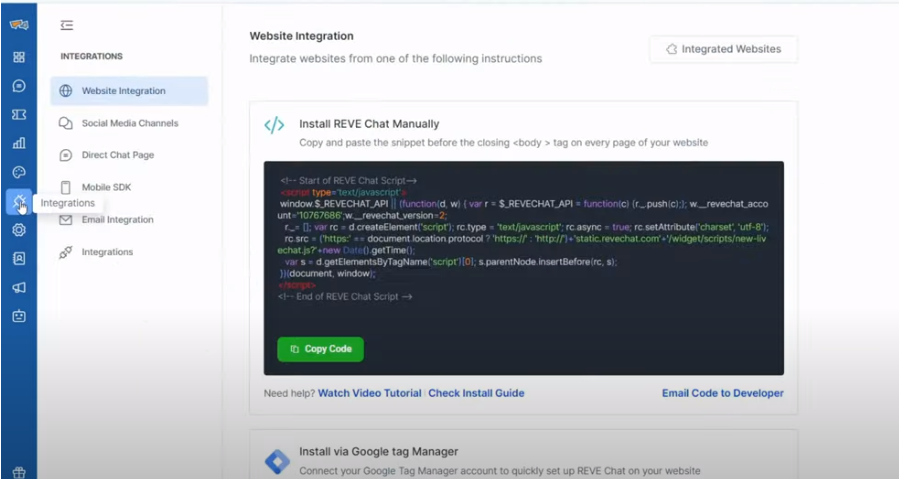
You can create or add your existing WhatsApp account by following the below steps –
- Navigate to the WhatsApp integration page by clicking the Integration module (left nav bar)> Social Media Channels > WhatsApp
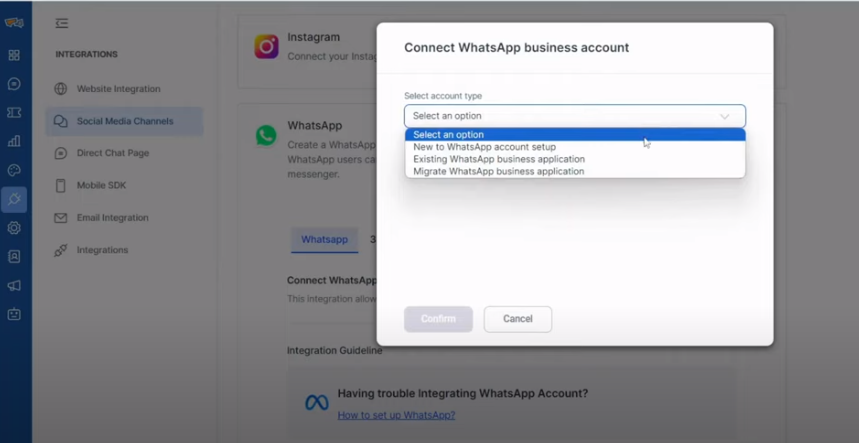
- Click Add WhatsApp Account. You will see a new pop-up that will ask you to select between three options.
- Once you select the option applicable to you, click Continue. This will direct you to the Meta Business Web Page to connect your WhatsApp business account.
- Select the Facebook account you wish to connect to your WhatsApp number and click Continue.
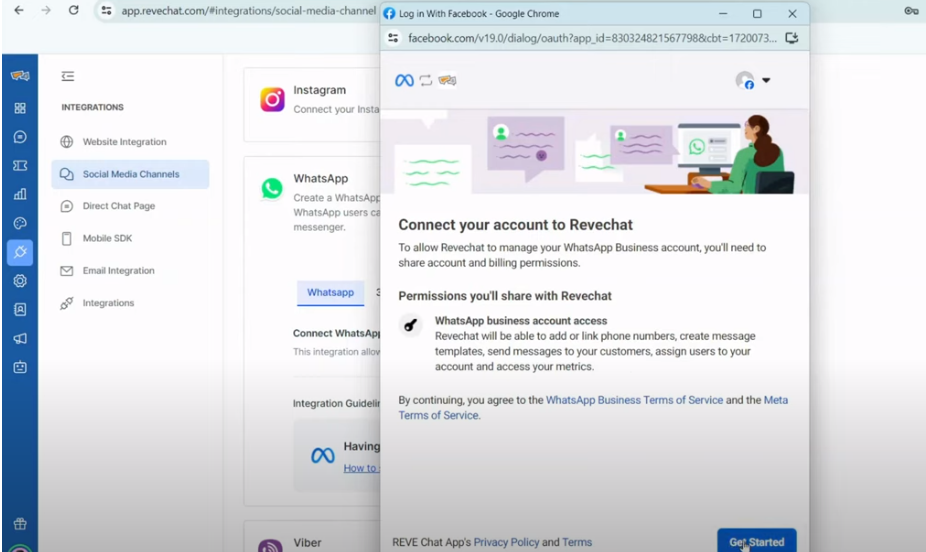
In the next step, you will be asked for permission that REVE Chat can access WhatsApp Messages from now on(which you can change after viewing the actual pop-up). Click Get Started to start the process.
You can now create or select your business profile. In case you don’t have a business portfolio, you can easily create one by selecting the Create new business portfolio option.
At the time of creating a new WhatsApp business account and profile, you need to provide a phone number and select how you want to receive the verification code. After that, you need to verify the phone number.
Finally, your WhatsApp Business account is connected with REVE Chat! You can now use this omnichannel platform to reply to any new customer query.
Step 2 – Create a Template Message
Once you’re done with setting up your WhatsApp account with REVE Chat, you will now have to create a template message. This step aligns with the policy of WhatsApp that allows the sending of only templated messages to recipients, and that too, after prior permission.
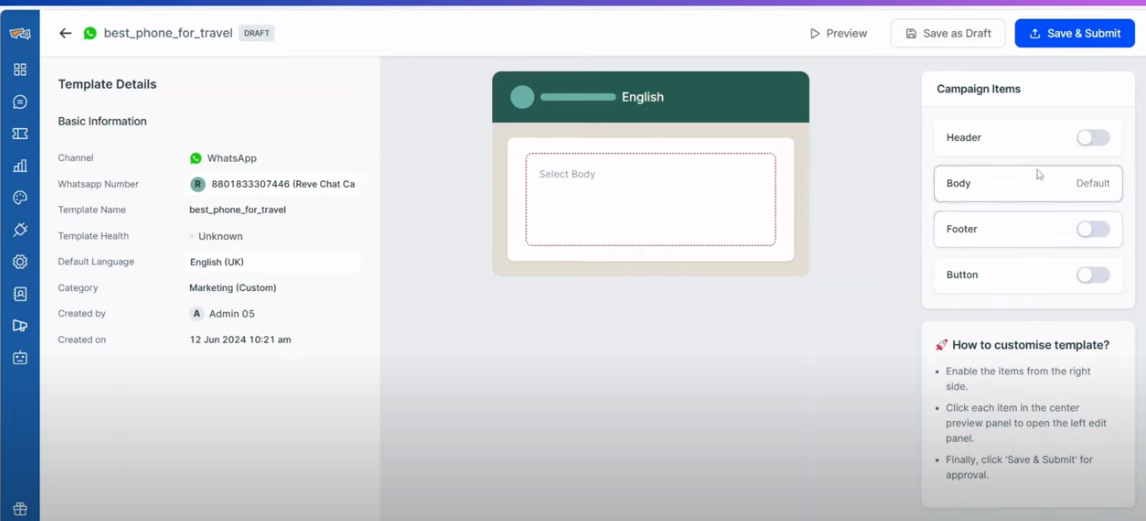
To create a template, you can navigate to the template tab under broadcast & click “Create Template” at the top right corner. You need to fill out the pop-up form and select WhatsApp as the communication channel and the number through which the template will be sent.
- The selection will take you to the template builder page like below where you can add a header, footer, and buttons to your template.
- In the header part, you need to add text, image, video, file, or location. In the body element, you can add text to better convey your message.
- The footer element is optional where you can add text, such as a disclaimer or additional contact information. You can add button elements to let receivers interact with your campaign.
- Once the template message is ready, you need to get it approved by Meta. The approval normally takes a couple of minutes max. Post that, you’re ready to send a campaign.
Note – A campaign message can’t be sent unless there is a payment method added to the account. So, first, consider adding a payment method before sending the message.
Step 3 – Create a Campaign
What next after your template is approved and the campaign sent? You can move on to creating a new campaign.
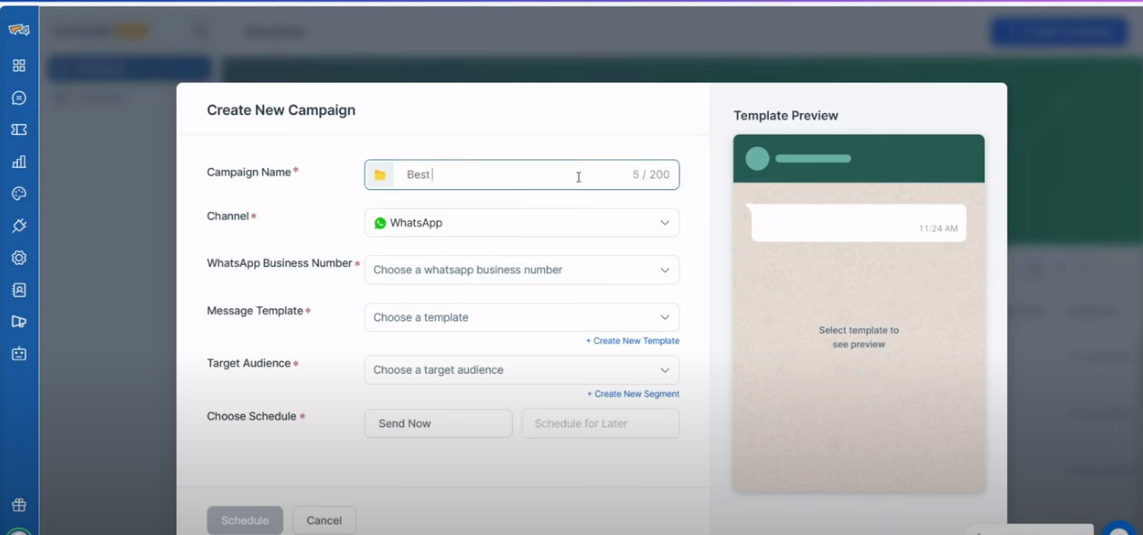
To create a new campaign, follow these steps –
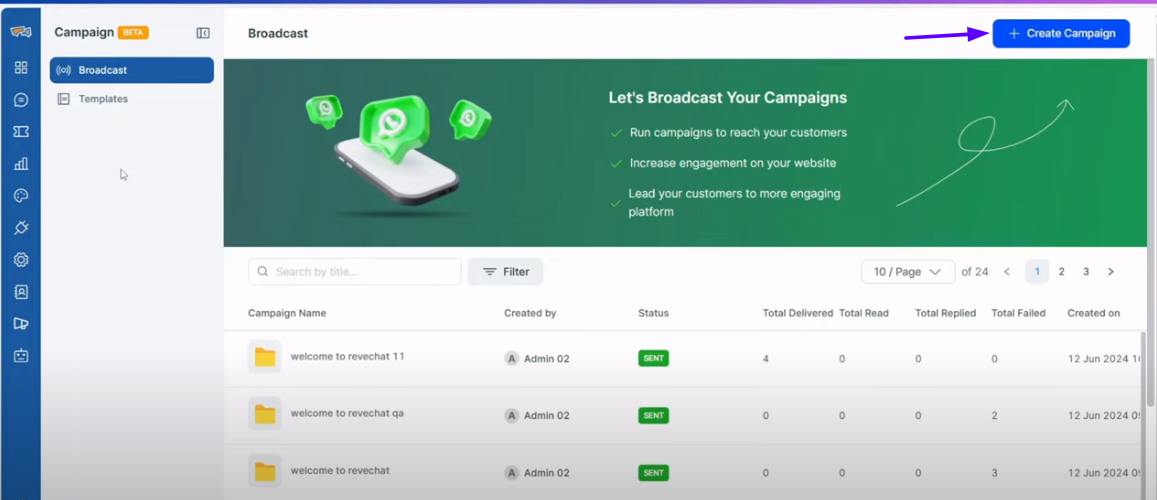
- Go to the campaign tab
- Click the “Create Campaign” button at the top right corner
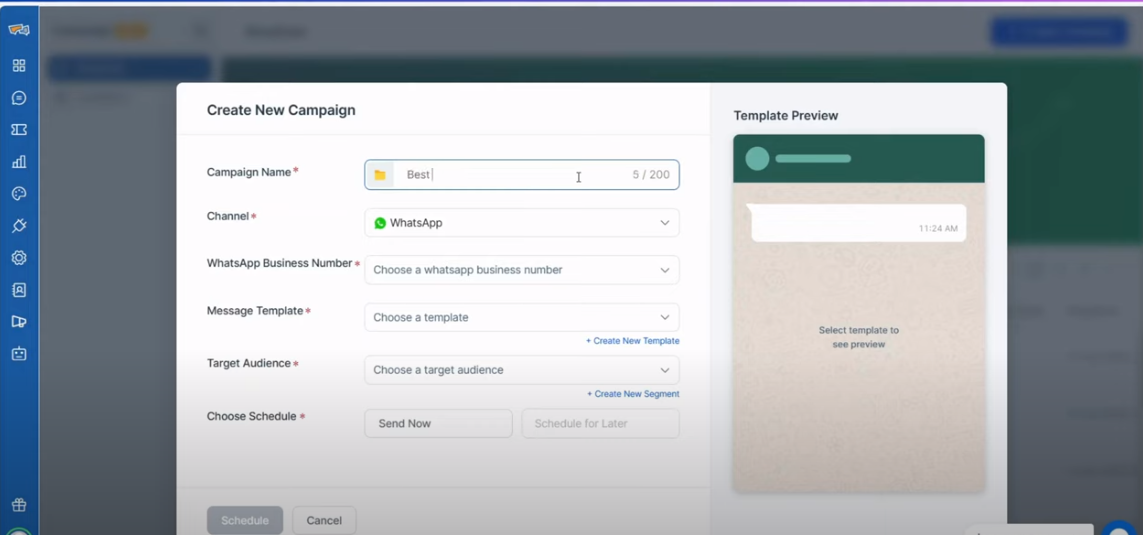
- A new pop-up will appear, asking you to provide various information like:
Campaign Name: Choose a descriptive name for your campaign.
Channel: Select WhatsApp as currently, we can only have a campaign for the WhatsApp channel.
WhatsApp Account: Select the number you wish to use for sending the campaign
Template Message: Select an approved template (Templates are account-specific). After selecting a template, you can see a preview of the message on the right side of the panel.
Define Target Audience: Use existing audience segments you want to send the campaign message(group of contacts, you need to create a segment beforehand). If you don’t have a segment, learn how you can create a segment.
Send Now/ Schedule: At last, click send if you want to send the campaign immediately or schedule if you want to send it in the future time.
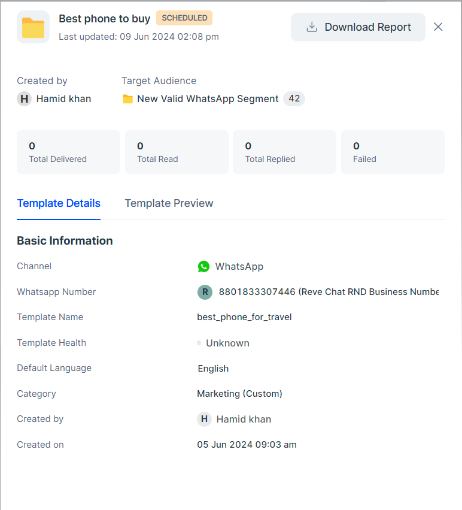
Your campaign is created. After that, you can easily view campaign details by clicking on any campaign. The click will show the details panel appearing from the right side. From here, you can download a report from the top right button ( containing each contact’s delivery time, status, failure reason, and if any contacts reacted- their response).
Creating WhatsApp templates within the system is a streamlined process. It ensures better management and customization of your marketing campaigns.
By following this guide, you can easily create effective templates that meet your communication needs and add value to your marketing efforts.
WhatsApp vs. Email vs. SMS for Marketing Campaigns
WhatsApp does not necessarily need to replace email or SMS. Each channel can play a different role in the customer journey.
| Channel | Best Suited For |
|---|---|
| Personalized, interactive, conversational, and behavior-triggered customer engagement | |
| Newsletters, detailed content, longer-form communication, and broader nurturing | |
| SMS | Short, urgent, time-sensitive alerts and simple notifications |
WhatsApp becomes particularly valuable when the customer may need to reply, ask a question, view rich content, choose an option, or continue a conversation.
Instead of sending identical campaigns through every channel, businesses should consider the objective, customer preference, urgency, and type of interaction required before choosing the channel.
Final Thoughts
It’s quite obvious that WhatsApp marketing campaigns are very effective tools to harness the potential of the world’s most popular platform. It opens the window of opportunity to tap into a vast network of users, that too, directly to their phones. On WhatsApp, a well-executed marketing campaign can give you amazing results whether you use it to send updates, notifications, surveys, or product recommendations.
We’ve seen how industry giants like Unilever, Netflix, Maggi Germany, and Flipkart have successfully leveraged WhatsApp marketing. They can now quickly connect with their audiences and drive growth. Now, it’s your turn to tap into this potential.
With REVE Chat, you can easily run targeted WhatsApp marketing campaigns that maximize your returns. Our omnichannel engagement platform is designed to transform conversations into conversions, offering you a seamless way to manage your campaign workflow from start to finish. From creating templates to securing approvals, REVE Chat simplifies the entire process, empowering you to execute high-impact campaigns with confidence.
Don’t just communicate—convert. Start using REVE Chat today and unlock the full potential of WhatsApp marketing for your business.
So, sign up now to run your marketing campaigns on WhatsApp as effectively as you’d imagine!
Frequently Asked Questions
A WhatsApp marketing campaign is a planned series of business communications delivered through WhatsApp to achieve a specific objective, such as generating sales, promoting products, recovering abandoned carts, collecting leads, increasing engagement, or retaining customers.
Effective campaigns typically combine audience segmentation, personalization, timely messaging, and clear calls-to-action.
Start by defining your campaign objective and target audience. Then build an appropriate opted-in contact audience, create your message and conversation flow, prepare the required WhatsApp message template, select the audience, schedule or launch the campaign, and measure its performance.
Campaign tools such as REVE Chat can help businesses manage templates, customer segments, campaign scheduling, and campaign reporting from one platform.
Businesses can promote WhatsApp communication through their website, checkout experience, social media, email campaigns, QR codes, physical locations, and Click-to-WhatsApp campaigns.
The opt-in message should clearly explain what type of communication the customer is agreeing to receive.
Important metrics include delivery rate, read rate, reply rate, click-through rate, conversion rate, opt-out rate, revenue generated, and ROI.
The most important metric depends on the objective of the campaign.
Start by improving audience relevance.
Segment customers based on lifecycle stage, interests, purchase history, or behavior. Use contextual triggers rather than relying entirely on mass broadcasts, personalize the message, keep the CTA simple, and test variations of your content, timing, and offers.
Campaign results should then be used to improve future campaigns.
Businesses can use WhatsApp for marketing communications, but campaigns should follow WhatsApp’s current Business Messaging Policy, applicable consent requirements, and relevant regulations.
Businesses should also ensure customers can control whether they continue receiving marketing communications and avoid sending irrelevant or excessive messages.
Build AI-powered support with Wize AI
Connect business knowledge, automate support conversations, and improve response quality without managing a complex AI stack.
Explore Wize AI Agent Rate the article

Rahat Hassan
Product Marketing Manager
Rahat Hassan is a strategic Product Marketing Manager at REVE Chat specializing in customer experience & communication. He is passionate about creating compelling content for diverse audiences. Beyond work, he enjoys reading articles and watching videos on trending technological shifts in the IT industry.
View all articles