




Table of Content
It’s becoming increasingly important for companies to understand and cater to their customer’s diverse needs and preferences. One powerful tool for achieving this is customer segmentation. By dividing their customer base into distinct groups based on shared characteristics, behaviors, or preferences, companies can create more targeted and effective marketing strategies that resonate with each group.
In this blog post, we’ll explore some of the most effective customer segmentation strategies, how they work, and the benefits they offer.
What is Customer Segmentation?
It is the process of dividing a larger group of customers into smaller, more homogeneous groups based on shared characteristics such as demographics, behaviors, needs, or preferences. The goal of customer segmentation is to identify groups of customers with similar characteristics and needs so that companies can tailor their marketing strategies and offerings to meet those specific needs.
By segmenting customers, companies can better understand their customers and their behavior, and develop more effective marketing campaigns that are targeted toward specific customer groups. This can lead to improved customer satisfaction, increased sales, and ultimately, better profitability for the company.
There are several different methods and techniques for customer segmentation, including demographic segmentation, psychographic segmentation, behavioral segmentation, and geographic segmentation. Companies may use one or a combination of these methods depending on their specific needs and goals. There is also the customer segment business model canvas to understand segmentation in detail.
Customer Segmentation Strategy Types
There are several different types of customer segmentation strategies that companies can use to divide their customer base into more homogeneous groups.
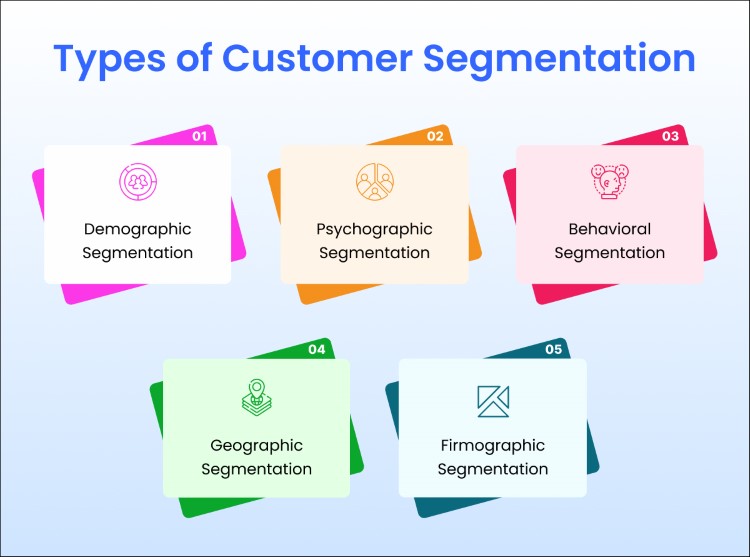
Here are some common types:
- Demographic Segmentation: This involves dividing customers based on demographic factors such as age, gender, income, education, and occupation. For example, a clothing retailer might segment its customers by age group, offering different styles and promotions to teenagers versus middle-aged adults.
- Psychographic Segmentation: This involves dividing customers based on their personality, lifestyle, values, and attitudes. For example, a luxury car brand might segment its customers by personality type, targeting thrill-seekers who value speed and performance, versus more conservative customers who prioritize comfort and safety.
- Behavioral Segmentation: This involves dividing customers based on their behavior and actions, such as purchasing history, frequency of purchases, and brand loyalty. For example, a grocery store might segment its customers based on their buying habits, offering personalized coupons and promotions to frequent shoppers.
- Geographic Segmentation: This involves dividing customers based on their location, such as country, region, city, or neighborhood. For example, a restaurant might segment its customers based on their proximity to the restaurant, offering different promotions to local residents versus out-of-town visitors.
- Firmographic Segmentation: This involves dividing customers based on their company or organization characteristics, such as industry, company size, revenue, and location. For example, a software provider might segment its customers by industry, offering tailored solutions for healthcare, finance, and retail companies.
The specific behavioral segmentation strategy used will depend on the company’s goals, resources, and target market.
How Does Customer Segmentation Work?
Customer segmentation involves the process of dividing a company’s customer base into smaller, more homogeneous groups based on shared characteristics such as demographics, behaviors, needs, or preferences.
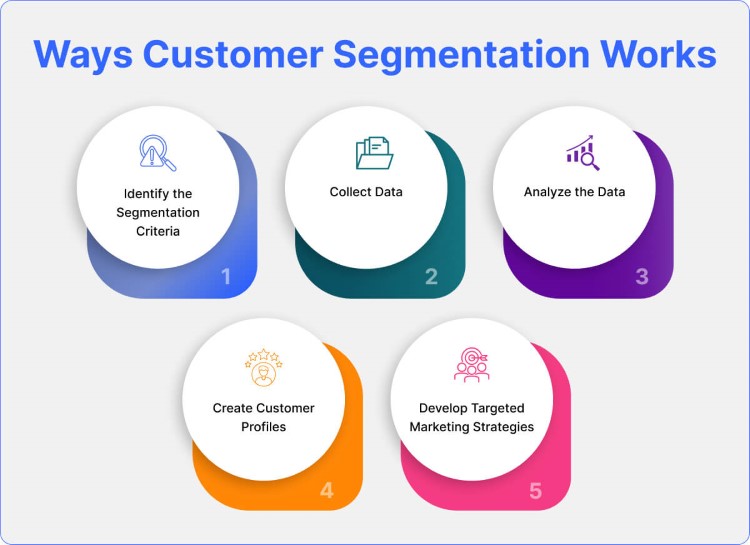
Here’s how the process typically works:
- Identify the segmentation criteria: The first step is to determine which characteristics to use as the basis for customer segmentation. This could be demographic factors like age or gender, behavioral factors like purchase history, psychographic factors like attitudes and values, or a combination of these.
- Collect data: Next, the company needs to collect data on its customers that relate to the chosen segmentation criteria. This can include customer surveys, purchase history, website analytics, social media data, and other sources of customer information.
- Analyze the data: Once the data is collected, the company needs to analyze it to identify patterns and trends among its customers. This helps to identify the different segments of customers and their shared characteristics.
- Create customer profiles: Based on the analysis, the company can create profiles for each segment of customers, describing their characteristics, needs, and behaviors. This helps the company to better understand each group of customers and tailor its marketing strategies and offerings to meet their specific needs. Customer profile helps in understanding the types of customers in marketing strategy.
- Develop targeted marketing strategies: Finally, the company can develop targeted marketing strategies for each segment of customers, using the information from the customer profiles to create personalized promotions, messaging, and experiences. This helps to improve customer engagement, satisfaction, and loyalty.
Customer segmentation helps companies to better understand their customers and develop more effective marketing strategies that are tailored to meet the specific needs of each customer group.
Benefits of Customer Segmentation
There are several benefits to using customer segmentation, including:
A better understanding of customers: Customer segmentation helps companies gain a deeper understanding of their customers and their needs, behaviors, and preferences. This enables the company to create more personalized and targeted marketing strategies that resonate with each customer group.
Improved customer engagement: By tailoring marketing messages and experiences to specific customer segments, companies can improve customer engagement and satisfaction. Customers are more likely to respond positively to marketing campaigns that speak directly to their needs and interests.
Increased sales and profitability: It can lead to increased sales and profitability for the company. By focusing on the most valuable customer segments and tailoring offerings and promotions to their specific needs, companies can generate more revenue and increase their bottom line.
Cost savings: It can help companies to save money by avoiding unnecessary marketing expenses. By targeting only the most valuable customer segments, companies can avoid wasting resources on ineffective campaigns and channels.
Competitive advantage: Companies that use customer segmentation to create more personalized and targeted marketing strategies can gain a competitive advantage over their rivals. By better understanding their customers and offering tailored solutions, companies can differentiate themselves and attract more loyal customers.
5 Steps to Build Your Customer Segmentation Models
While there are different approaches to building a customer segmentation strategy, here are five steps that can guide the process:
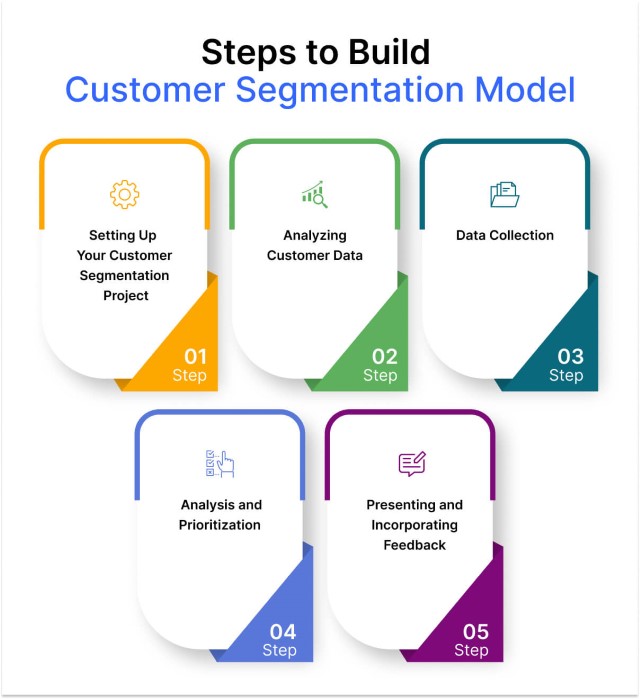
Step 1: Setting Up Your Customer Segmentation Project
Define the goals of your segmentation project, determine who will be involved, and establish timelines and budgets. Identify the segmentation criteria and the specific customer data that will be needed for the analysis.
Step 2: Analyzing Customer Data
Collect and analyze customer data, which may include demographic, geographic, psychographic, behavioral, and transactional data. This may involve using data analysis tools and techniques such as clustering, regression analysis, and decision trees to identify patterns and trends.
Step 3: Data Collection
Ensure that data is accurate, complete, and up-to-date. Data may be collected through surveys, focus groups, customer feedback, social media listening, or other sources. The data collection method will depend on the segmentation criteria and goals.
Step 4: Analysis and Prioritization
Analyze the data to identify customer segments based on the segmentation criteria. Prioritize the segments based on their value to the business, such as revenue potential or strategic importance. Develop customer profiles for each segment, describing their characteristics, needs, behaviors, and preferences.
Step 5: Presenting and Incorporating Feedback
Present the findings to stakeholders and incorporate feedback. Use the segmentation insights to inform marketing, sales, and product strategies. Continuously monitor and refine the segmentation strategy based on feedback and new data.
By following these steps, companies can build a customer segmentation strategy that enables them to better understand and engage their customers, improve customer satisfaction, and drive business growth.
Customer Segmentation vs. Market Segmentation
Customer segmentation and market segmentation are closely related, but they are not the same.
Market segmentation looks at the broader market. It divides a large market into groups based on factors such as industry, location, product demand, or buyer behavior. Businesses use market segmentation to understand where opportunities exist and which audience groups are worth targeting.
Customer segmentation, on the other hand, focuses on your existing or potential customers. It divides them into smaller groups based on shared traits, needs, preferences, behaviors, or value to the business. This helps companies personalize marketing campaigns, improve customer support, recommend relevant products, and create better customer experiences.
For example, a software company may use market segmentation to target small businesses in the ecommerce industry. Within that market, it may use customer segmentation to separate high-value customers, first-time buyers, inactive users, and customers who frequently contact support.
In simple terms, market segmentation helps you decide which market to enter, while customer segmentation helps you understand and serve the customers inside that market.
Additional Types of Customer Segmentation
Technographic Segmentation
Technographic segmentation groups customers based on the technology they use. This may include device type, browser, operating system, preferred communication channel, software tools, or how they access your website or app.
For example, an ecommerce business may find that mobile users prefer WhatsApp support, while desktop users are more likely to use live chat. Based on this insight, the business can personalize support channels and marketing messages for each group.
Needs-Based Segmentation
Needs-based segmentation divides customers according to their specific problems, goals, or expectations. Instead of focusing only on who customers are, it focuses on what they need.
For example, some customers may want faster support, some may need product guidance, while others may look for discounts or flexible payment options. By identifying these needs, businesses can create more relevant offers, support flows, and product recommendations.
Value-Based Segmentation
Value-based segmentation groups customers according to their economic value to the business. This may include purchase frequency, average order value, customer lifetime value, subscription plan, or potential revenue.
For example, high-value customers may receive priority support, loyalty rewards, or personalized account management, while low-engagement customers may receive reactivation campaigns.
This type of segmentation helps businesses focus resources where they can create the highest impact.
Data Sources for Customer Segmentation
To create accurate customer segments, businesses need reliable data. Some of the most useful data sources include:
- CRM data, such as customer profiles, deal history, and contact information
- Website and app analytics, such as page visits, clicks, and session behavior
- Purchase history, including order value, frequency, and product preferences
- Customer support conversations, including complaints, questions, and common issues
- Surveys and feedback forms
- Social media comments, reviews, and brand mentions
- Live chat, chatbot, and messaging interactions
- Email engagement, such as opens, clicks, and replies
The best segmentation strategy often combines multiple data sources. For example, a business can combine purchase history with live chat data to identify customers who buy often but still need frequent support. This segment may need better onboarding, product education, or proactive assistance.
Common Customer Segmentation Challenges
Customer segmentation can deliver powerful results, but businesses often face a few challenges while implementing it.
1. Incomplete or Outdated Data
Segments are only as strong as the data behind them. If customer information is outdated, duplicated, or incomplete, the segments may not reflect real customer behavior.
2. Too Many Segments
Creating too many small segments can make campaigns difficult to manage. Businesses should focus on meaningful segments that are large enough to target and valuable enough to act on.
3. Relying Only on Demographics
Demographic data is useful, but it does not always explain customer intent. Two customers of the same age and income level may have completely different needs. That is why businesses should combine demographic, behavioral, psychographic, and needs-based data.
4. Lack of Clear Goals
Segmentation should always support a business objective. Before creating segments, define what you want to improve, such as conversion rate, customer retention, support efficiency, customer satisfaction, or lifetime value.
5. Not Updating Segments Regularly
Customer behavior changes over time. A loyal customer may become inactive, a first-time buyer may become a repeat customer, and a low-value customer may become a high-value account. Businesses should review and update customer segments regularly.
How Technology Improves Customer Segmentation
Modern customer segmentation is easier and more accurate when businesses use the right technology. CRM software, live chat platforms, chatbots, analytics tools, and AI-powered systems can collect and organize customer data automatically.
For example, a live chat or chatbot platform can help identify customers based on conversation history, frequently asked questions, location, purchase intent, and support needs. These insights can then be used to send personalized messages, assign customers to the right support team, or recommend relevant products.
AI can also help detect patterns that may be difficult to find manually. It can identify high-intent visitors, predict customer needs, group similar customers, and trigger automated responses based on behavior.
By using technology, businesses can move from static segmentation to dynamic segmentation, where customer groups update automatically as behavior changes.
Customer Segmentation Examples
Customer segmentation is a powerful tool for companies seeking to understand their customers better and improve their marketing strategies. Here are some examples of customer segmentation in action:
- Netflix: Netflix segments its customers based on their viewing history and preferences. This allows them to create personalized recommendations for each user and tailor their marketing campaigns to specific customer segments. For example, they might target users who enjoy romantic comedies with ads for a new rom-com release, while targeting users who enjoy documentaries with ads for a new documentary series.
- Coca-Cola: Coca-Cola segments its customers based on their age, lifestyle, and behavior. For example, they might target younger consumers with vibrant packaging and social media campaigns, while targeting older consumers with more classic packaging and traditional advertising channels.
- Amazon: Amazon segments its customers based on their purchase history and browsing behavior. This allows them to create personalized product recommendations and targeted marketing campaigns. For example, if a customer frequently purchases books on cooking, Amazon might recommend a new cookbook or offer a discount on kitchen appliances.
- Marriott: Marriott segments its customers based on their travel behavior and preferences. This allows them to create personalized promotions and experiences for each customer group. For example, they might target business travelers with complimentary airport shuttle services and conference rooms, while targeting leisure travelers with spa packages and family-friendly amenities.
- Spotify: Spotify segments its customers based on their music preferences and listening habits. This allows them to create personalized playlists and recommendations for each user. For example, they might create a personalized playlist for a user based on their favorite artists and songs, or recommend new music releases based on a user’s listening history.
Conclusion
By identifying and targeting specific customer groups based on shared characteristics, behaviors, or preferences, companies can create more personalized and effective marketing campaigns that drive customer engagement, loyalty, and revenue growth.
Whether you’re a small business or a multinational corporation, incorporating customer segmentation into your marketing strategy can help you better serve your customers, gain a competitive advantage, and drive long-term success.
Frequently Asked Questions
An example of customer segmentation is grouping ecommerce customers into first-time buyers, repeat customers, high-value customers, and inactive customers. Each group can receive different messages, offers, and support experiences.
The most common types are demographic, geographic, behavioral, psychographic, firmographic, technographic, needs-based, and value-based segmentation.
Customer segmentation helps businesses understand different customer groups and personalize marketing, sales, and support strategies. It can improve engagement, customer satisfaction, retention, and revenue.
Customer segments should be reviewed regularly, especially when customer behavior, market trends, product offerings, or business goals change. For fast-moving businesses, monthly or quarterly reviews are useful.
CRM platforms, analytics tools, live chat software, chatbot platforms, email marketing tools, customer survey tools, and AI-powered customer engagement platforms can all support customer segmentation.
Build AI-powered support with Wize AI
Connect business knowledge, automate support conversations, and improve response quality without managing a complex AI stack.
Explore Wize AI Agent Rate the article

Juwel Rana
Senior Content Writer
Juwel is a Sr. Content Writer at REVE Chat. He specializes in writing about customer service and customer engagement. He is passionate about helping businesses create a better customer experience.
He strongly believes that businesses will be able to understand their customers better and ultimately create more meaningful relationships with them.
View all articles